Case Study
Increasing Climate Change Adaptation Capacity in Arctic Protected Areas through Cross-border Collaboration
Contact name
Anna Berhan
Institution name
The County Adminstrative Board of Norrbotten
Region & country
Northern Sweden, Norway and Finland.
Summary
Climate change impacts on protected areas are being addressed through a cross border Scandinavian collaboration that strengthens managers’ skills in climate adaptation and visitor communication. Using the U.S. National Park Service’s planning methodology, the project has developed training, pilot plans, and a handbook that improve managers’ capacity to handle changes in nature, recreation, and visitation.
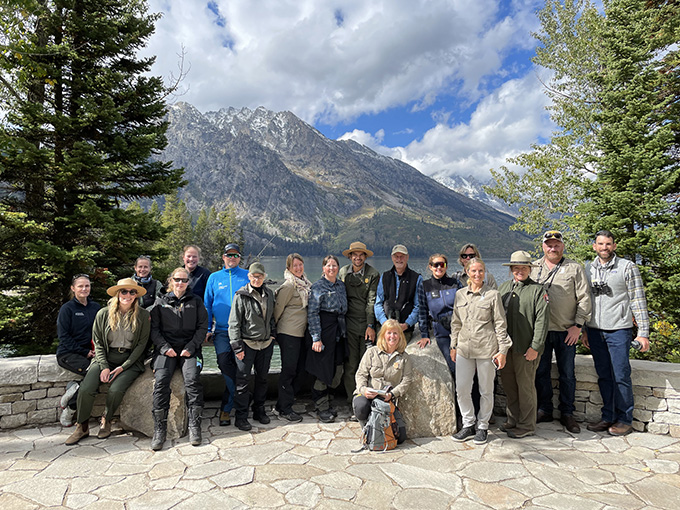
Group picture with project partners
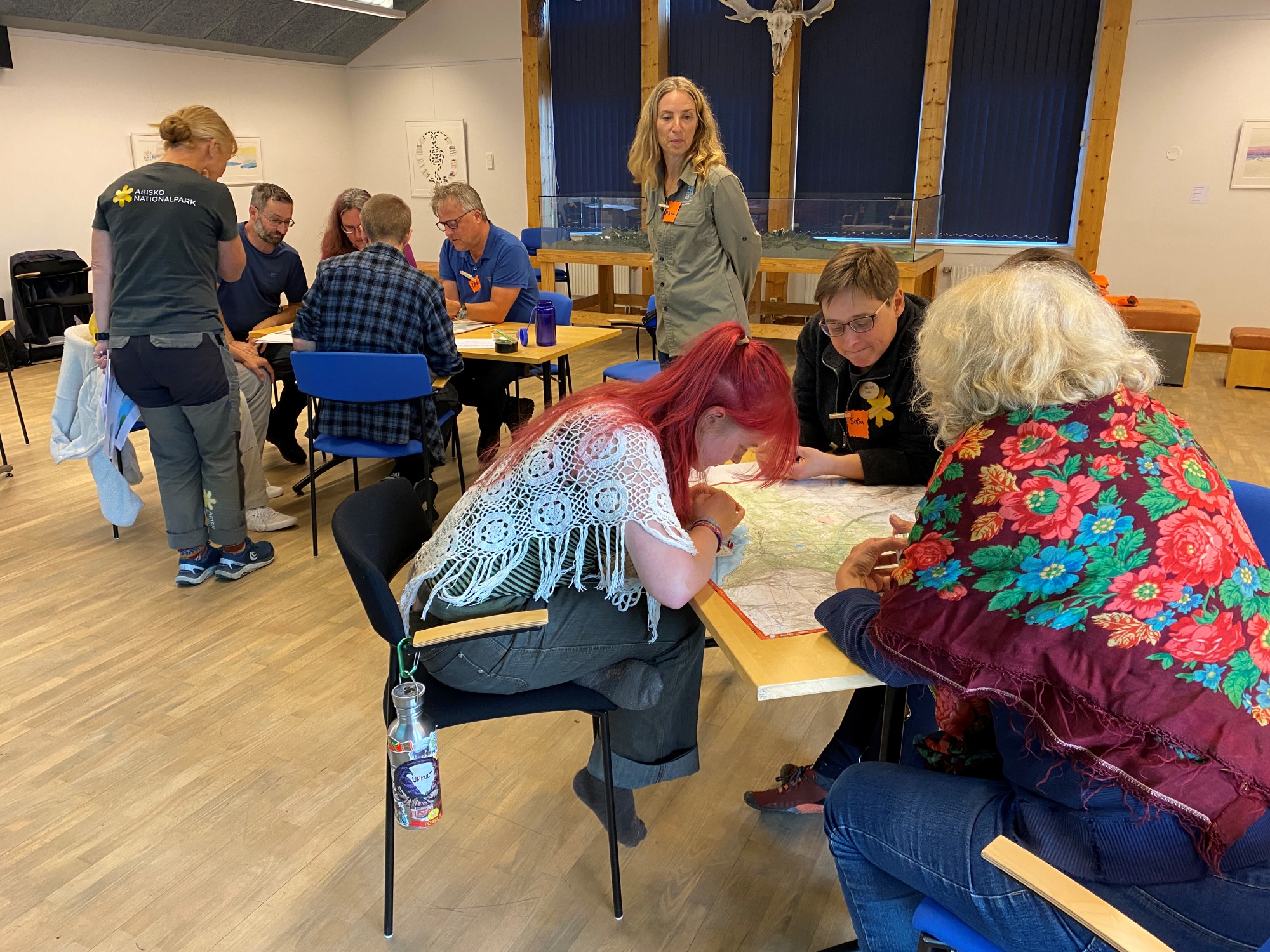
Public workshop in Abisko NP
The County Administrative Board of Norrbotten
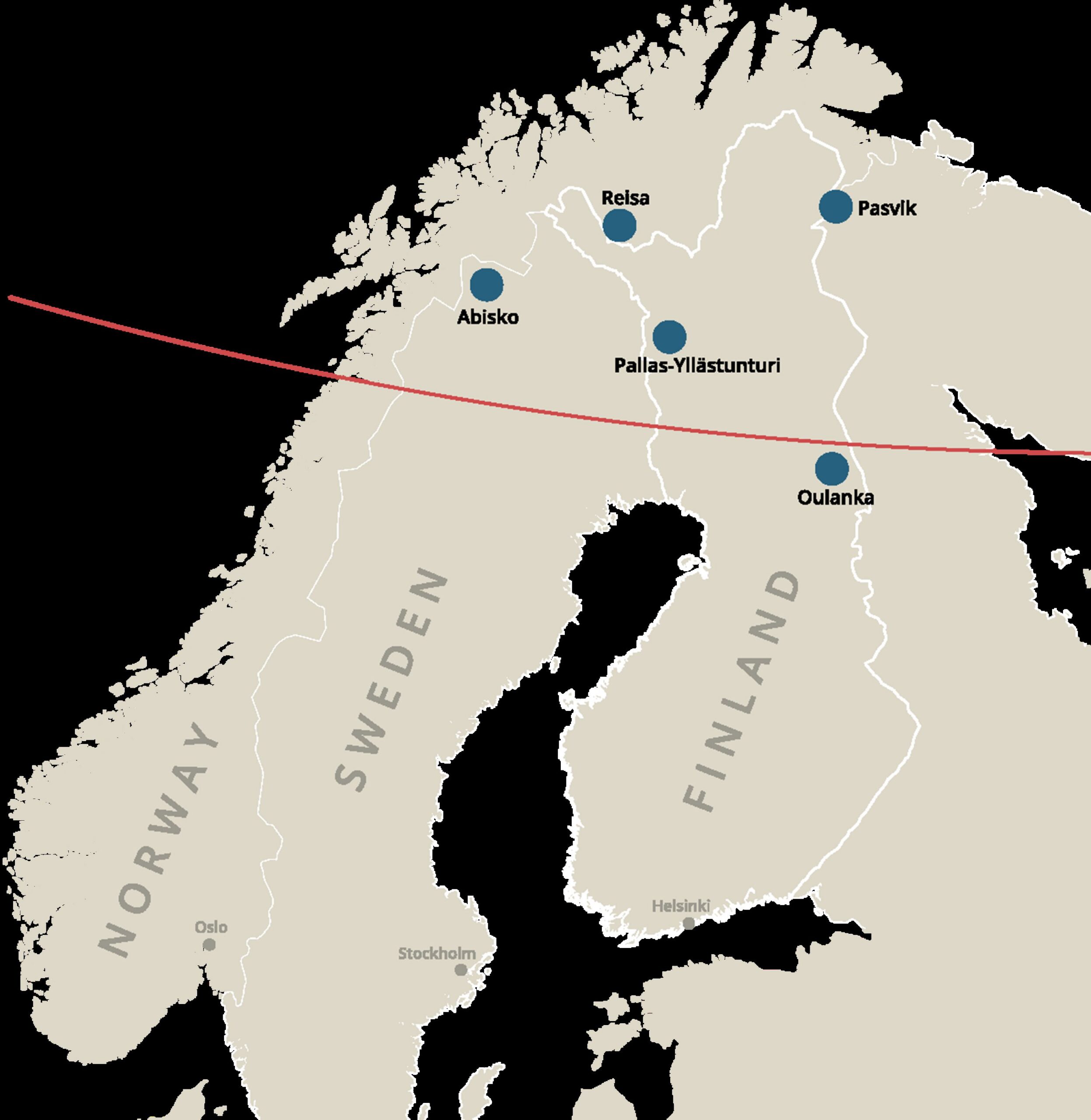
Map CLAP Pilots
Illustration: Petra Wikström
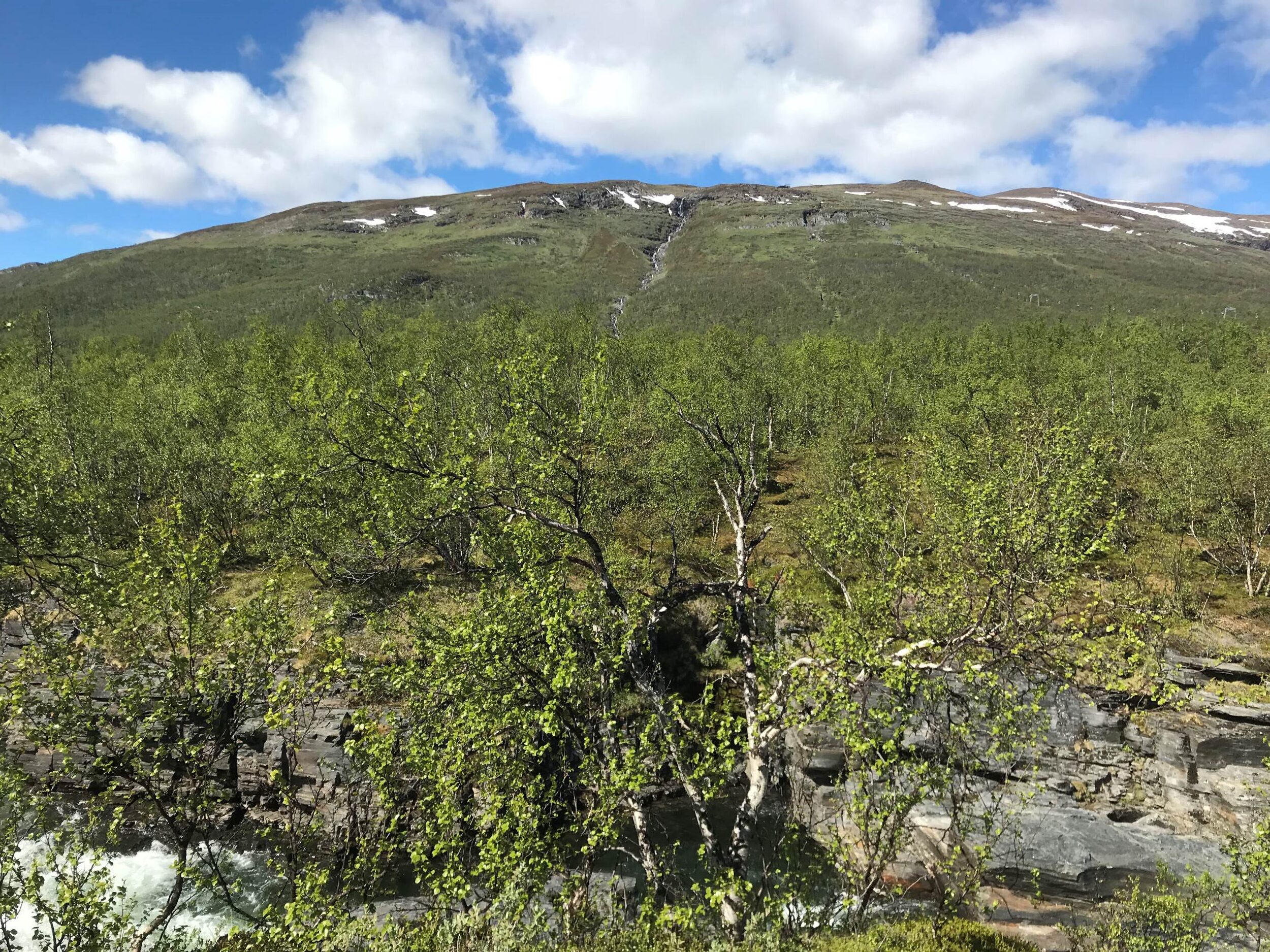
Abisko mount Njulla getting more trees
The County Administrative Board of Norrbotten
Background of the project
Global warming goes faster further north, and the greatest change occurs during winter season. The shorter and warmer winters affect possibilities for on-snow transportations and winter activities and have a large impact on winter ecology. Effects also include vegetation changes and an increased risk of flooding and trail erosion. To address these issues, managers in northern Finland, Sweden and Norway identified a need to include climate change and its effects in their management.
• Build knowledge and capacity for climate change adaptation in management.
• Find and implement a methodology for adaptation planning that could be integrated into organization´s own planning processes.
• Develop visitor communication, including visitor safety, information about adaptation actions, raising awareness on climate change and its effects and inspire people to act.
• How to operate field work sustainably and safely in a changing climate.
Solution and actions taken
• Capacity building through a cross border EU project.
• The U.S. National Park Service´s Climate Change Response Program provided a methodology for scenario-based Climate Change Adaptation Planning.
• We piloted the methodology to adapt it to a Scandinavian context and to specific planning requirements.
• Visitor communication was tested, starting with a survey asking visitors what they would like to know about climate change.
• Piloting solutions to mitigate emissions from management.
• We made a Climate Change Adaptation Planning Training Program for managers, and piloted adaptation planning in five protected areas.
• Learnings are documented in a Handbook.
• Climate communication included science-based art, climate workshops, new folders, bulletin boards with climate-friendly tips and material for younger generations.
• Mitigation efforts included testing electric snowmobiles and bikes, trail-building workshop, and a concept for a climate-smart campsite construction.
Other institutions or parties involved
CLAP Project partners include: The County Administrative Board of Norrbotten in Sweden, Metsähallitus Parks and Wildlife in Finland, and Reisa National Park Board, Halti National Park Center and County Governor of Troms and Finnmark in Norway. Staff categories included: field work, nature conservation, protected area management and visitor centers. External stakeholders involved are e.g. nature experts, researchers, Sami reindeer herders and national environmental agencies.
Results
• Nature managers have increased capacity in planning for a changing climate.
• Continued work is facilitated through the Handbook in CCAP and the training program (with modules for self-studies or in a group).
• Climate change awareness and electric snowmobile testing supports development of sustainable and safe field operations.
• A climate-smart campsite has been built in Oulanka National Park.
• Visitors in protected areas are generally interested in climate change and want to learn more.
Challenges
Acquiring Climate Futures for protected areas was difficult: How can managers access and visualize climate futures in an easy and affordable way? Which climate metrics are relevant to include for various protected areas and planning focuses?
Finding a CCAP method and applying it to existing planning processes. Applying CCAP in an organization takes time, especially the first time.
Lessons learned
•In climate change adaptation work, collaboration and communication are key.
•Including a broad range of perspectives in the planning process facilitates finding robust and resilient solutions for adaptation.
•Lack of knowledge about effects on ecosystems can be frustrating – qualified guesses are often the best we can do to prepare for the changing and unknown future.
•Adaptation strategies include choosing to resist, accept or direct change.
Contact name
Anna Berhan
Institution name
The County Adminstrative Board of Norrbotten
Website(s)