SoilSparks Project
Healthy soil is the foundation of our food, climate, and future, but more and more soil is lost and degraded. Protected Areas are not immune to the trend of overlooking soil conservation in favour of other priorities. With this project, we want to spark a change and increase soil literacy in young people interested in nature conservation and protected areas across Europe.
We’re making a hands-on soil literacy campaign that is built BY youth FOR youth!
This project is lead by Bantani and EUROPARC and is just one of a group of creative soil literacy projects in the SOILSCAPE Consortium.
Project Stages
Design Phase
The first 6 months include co-creating much of the campaign and content together with a group of 30 young people from diverse backgrounds. It included a broader youth consultation, a 4-week long summer school into the EU Mission Soil and a 5-day co-creation camp in Reims, France.
Read the full report of the Co-creation process here: Report
Implementation Phase
The implementation Phase is almost a year long and is split into the educational campaign development and it’s launch and use. Currently, we are building the campaign platform which will host challenges and user experiences, and we aim to launch on World Soil Day (December 2026).
In 2027 we will be running the full campaign and aim to have over 1000+ participants join in, with 250+ completing the microchallenges. Both individualy aged 16 – 30 can participate as well as teachers and mentors of groups of children under 16 years old. There will be an online training on the European Nature Academy to train environmental educators on the toolkit (February 2027) for their own activities and initiatives.
Evaluation Phase
From May to August 2027, the campaign will be evaluated to see how participation has helped increase awareness and potentially change behavours.
SoilSparks Scientific Panel
The SoilSparks project is supported by a small group of experts from various fields. They provide feedback and assistance throughout the project, from giving expert lectures to researching potential citizen science activities and reviewing learning modules.
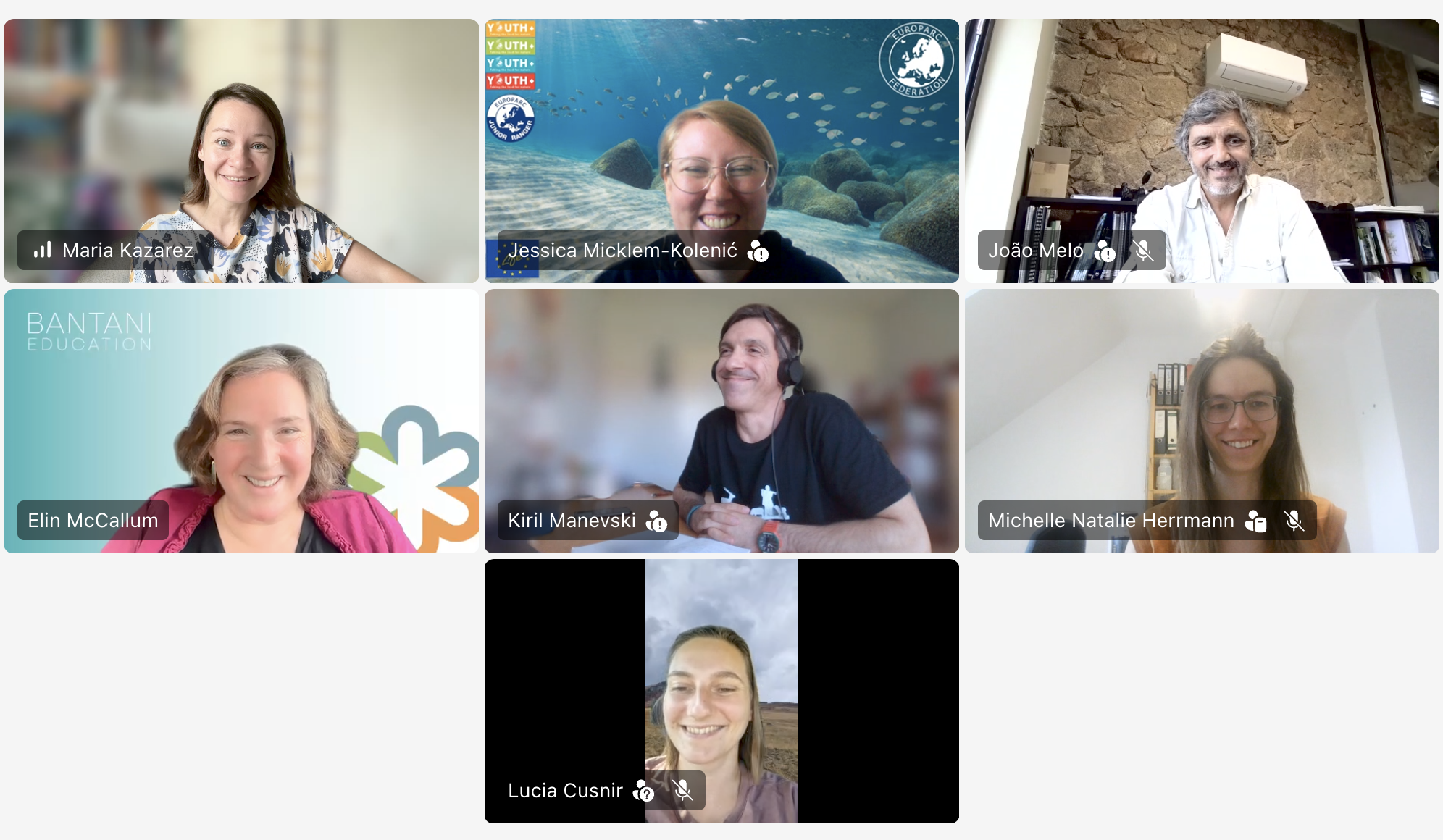
First meeting of the SoilSparks Scientific Panel
Dr Michelle Herrmann
- Researcher in agricultural sciences, specialising in sustainable fertilisation and the circular economy (University of Hohenheim, Germany)
- Environmental educator in Bliesgau Biosphere Reserve Youth Network
- EUROPARC Youth Representative and Youth Council member
Joanna Bojczewska
- Collaborator in inner and outer regeneration
- member of Education Working Group with Permaculture Great Britain
- participant in the EchoSoil project
Dr Kiril Manevski
- Agroecology researcher at the University of Aarhus (Denmark)
- Specialisation in water-nitrogen-carbon cycles
- Involved in the EIT Foods Network
João Cardoso de Melo
- Director na Cascais Ambiente – Empresa Municipal de Ambiente de Cascais (Portugal)
- Qualified Landscape Architect
- Member of the EUROPARC Council
Lucia Cușnir
- Active ranger in the European Ranger Federation and Romanian Ranger Association
- Expert in lang management and pastoralist communities
- Director of the EcoEdu Nature NGO working on youth environmental education
Promotion and Dissemination
Read latest newsOur team will be attending the EU Mission Soil Week in Dublin on the 17th and 18th of November 2026. Their experiences will be shared on the EUROPARC Youth Instagram @europarc.youth so follow to find out more!
What is SOILSCAPE?
SOILSCAPE is a consortium of partners coming together to increase soil literacy using a diversity of creative media. It brings together many artists and scientists to create 8 Soil Orchestras and Community Working Boards. Each highlights the essential connection between soil, science, art and community, inspiring hundreds of arts-based initiatives. Together, this collective symphony tackles the challenge of shifting societal perceptions, engaging artists, citizens, soil experts and institutions through innovative communication campaigns, participatory art-science activities, cultural initiatives and creative, science-driven soil projects.
Funded by:
