Case Study
Development of a toolkit to support Sustainable Tourism in Wallonia
Contact name
Charlotte Mathelart
Institution name
Federation of Walloon Natural Parks
Region & country
Wallonia, Belgium
Summary
An increasing number of tourists, tourism operators, and nature organisations, are developing sustainable and nature-based tourism projects. However, there has been a lack of tools (such as brochures and testimonials) to support these tourism stakeholders in this process, particularly tools that encourage participation in the development of territorial strategies for sustainable tourism, such as the European Charter for Sustainable Tourism in Protected Areas.
To address this gap, we developed a wide range of tools to support both stakeholders who want to implement individual sustainable tourism actions and those seeking to progress towards a comprehensive sustainable tourism strategy for their site or territory.

Deux Ourthes Natural Park
Thomas Meunier
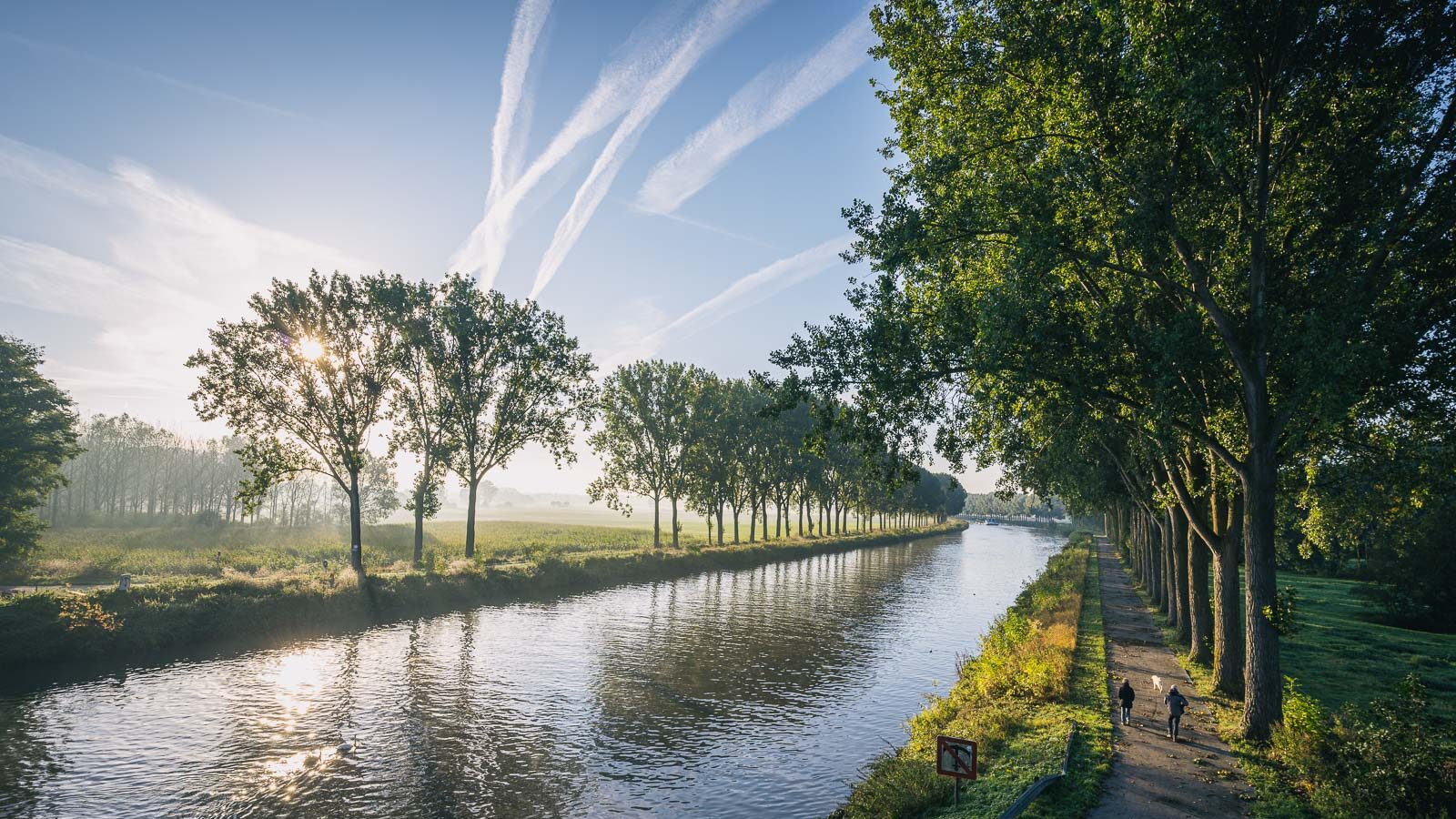
Plaines de l'Escaut Natural Park
Thomas Meunier
Background of the project
In recent years, tourism stakeholders and nature organisations have increasingly developed sustainable and nature-based tourism projects, such as tourism offers centred on local products, carbon-neutral initiatives, and the creation of nature trails. However, these projects are still too rarely integrated into broader territorial strategies for sustainable tourism development.
Tools were needed both for stakeholders taking their first steps towards implementing sustainable tourism actions and for more experienced stakeholders wishing to engage in a broader sustainable tourism strategy, whether at the level of their site or across an entire territory. These needs were highly diverse, reflecting the equally varied target audiences, which include public and private stakeholders from the tourism and nature sectors operating at different territorial scales.
Solution and actions taken
We developed a set of practical and adaptable tools designed to respond to different situations, regardless of territorial scale—whether for a single tourist site, a municipal or multi-municipal territory, or a regional territory—and regardless of the intended level of sustainable tourism implementation.
These tools can support an individual sustainable tourism project within a conventional tourism offer, developing a dedicated action plan or progressing towards a comprehensive sustainable tourism strategy. In this way, the tools enable a wide range of actors to benefit from relevant guidance and become more actively engaged with the topic.
The materials are available online, including practical brochures, and testimonial videos and webinars.
We first consulted tourism and nature stakeholders in 2019 to better understand their expectations and needs regarding sustainable tourism development. Building on this input, we subsequently worked to address these needs as effectively as possible, with support from Tourisme Wallonie (the regional tourism administration) as well as from sustainable and nature-based tourism experts from Walloon universities and colleges and experienced stakeholders from the tourism and nature sectors.
Other institutions or parties involved
This project was made possible thanks to the support of the regional tourism administration, Tourisme Wallonie. It also benefited from the involvement of the Robert Schuman and Charlemagne university colleges; the University of Liège – Gembloux Agro-Bio Tech; several tourism offices (including the Pays des Lacs Tourism Office), as well as nature organisations, and natural parks.
Results
Following the initial phase of developing support tools, which was largely theoretical, a more practical stage began in 2025 with targeted support for the first four Walloon natural parks preparing their applications for the European Charter for Sustainable Tourism.
In parallel, support is also being provided to projects aimed at developing tourism linked to natural sites, while efforts are being made to strengthen collaboration between the tourism and nature sectors.
Challenges
The main difficulties encountered included:
- the diversity of the target audiences;
- the very broad scope of the topic, and
- the lack of truly effective indicators for monitoring the implementation of sustainable tourism.
As a result, time was devoted to developing indicators that are simple for field stakeholders to use, with the aim of facilitating progress towards the implementation of a comprehensive sustainable tourism strategy.
Lessons learned
The main lessons learned include the following:
- the importance of creating opportunities for dialogue between the tourism and nature sectors, as well as
- the need to take into account the expectations of both sectors before and after the initial tool-development phase.
The most important lesson, however, was the need to strike an appropriate balance between the theoretical and replicable nature of the tools and their practical, user-friendly application by field stakeholders
Contact name
Charlotte Mathelart
Institution name
Federation of Walloon Natural Parks
Website(s)