

Find us on: Facebook Flickr

Salter Going South in Forest of Bowland AONB (UK)

Home

Welcome, Bienvenue, Willkommen!


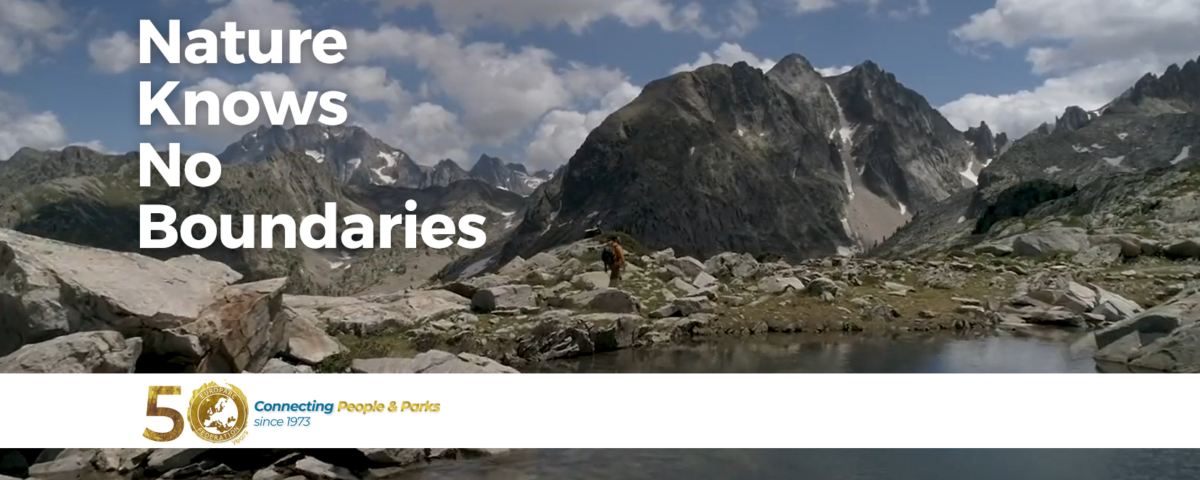
EUROPARC Federation currently represents some 400 members. These include protected areas, governmental departments, NGO's and businesses in 35 countries, who themselves manage the green jewels of Europe's land, sea, mountains, forests, rivers and cultural heritage. Nature knows no boundaries and we therefore facilitate international co-operation in all aspects of protected area management to further and improve and conserve our shared natural inheritance. We endeavour to exchange expertise, experience and best practise as well as to collaborate with others to ensure the value and meaning of protected areas is at the heart of Europe.

If you want to find out more about who we are or what we do please follow these links or use the menu at the top of the page to navigate through the EUROPARC network and its work. Within the site you will also find interesting information about whats on and new within the Federation and Brussels and downloadable copies of some of our publications in our library.

Follow this link for address of the Regensburg office, the Brussels office and staff contact details.

Latest News

Nature, without barriers - a green control system for Europe

Traffic routes connect people. For many animals and plants are roads and tracks insurmountable barriers. Therefore, habitats need to be better connected on a European and national level

by Uwe Grinzinger

Only between 1990 and 2003, a total of 15.000 km new highways were constructed in the EU. Road traffic alongside game fences on highways and super highways limit the action radius of wild animals. Even for small animals, country side roads constitute a massive barrier – just think about interrupted spawning migration of amphibians. In addition, human settlement, intensive agriculture and forestry or „hard“regulations of waters cut habitats. Remaining areas are often too small and not appropriate for wild animals, and they can only migrate in a very limited area. Genetic exchange between animals’ decreases and as a consequence their ability to adjust to environmental conditions. In the end, biodiversity is at risk.

Red deer can easily walk distances of 125 km, while wild boars do so over more than 250 km, brown bears or lynch even more. Those large mammals are mainly affected when their habitats are cut off. In order to protect those species, separate protected areas that are often created by chance are by far not enough – despite the 26.000 Natura2000 sites covering almost 20 % of the EU´s surface.

Especially on the remaining, not protected 80 % of the surface, it is indispensable to connecting habitats over large scale migration corridors. Even more as the original core habitats´ size are shrinking. This principle is anchored, for instance, in the Alpine Convention, the Convention on Biodiversity, the White Book on climate change adaptation and the EU Action plan on biodiversity.


Green Infrastructure, SURF Nature

The international project „SURF Nature“analysed between 2010 and 2012 some 50 EU regional development programmes for their potential to promote nature and biodiversity conservation. The central results comprise 5 areas as summarized in the „Thematic Booklet“: Sustainable tourism, Natura 2000 management, environmental education, forests and biodiversity as well as green infrastructure.  For a habitat network, green infrastructure is most important, including all landscape elements that maintain ecosystems, and connecting them. Habitats provide a high quality of life and economically important ecosystem services such as edible plants, drinking water, clean air. A research study of the Swiss Ministry of Environment found that those services depend in particular on 3 factors: a minimum size, the distribution and connection of ecosystems. Furthermore, functioning habitats are more resilient toward climate change and extreme weather conditions. It makes more sense, also from an economic perspective, to safeguard the cost free natural capital with a relatively small input than to search for expensive technical solutions – if they are applicable at all.

However, first of all some investment is needed: in the coming EU programme period, the ELER funded protects will probably have to focus more on agriculture and forestry. As a consequence, funding via EFRE regional development funds will become more and more important for green infrastructure and ecosystem services, in addition to LIFE + funding.  „SURF Nature“ showed that the connection of habitats is, in principle, possible within the  EFRE framework. However, SURF recommends that future EU policy focus more on supporting ecosystem services: directly by creating or maintaining green infrastructure, and secondly indirectly by reducing negative impacts of existing or planned infrastructure.


ECONNECT

Also the EU-project ECONNECT and the ETC Alpine Space  programme are funded by EFRE. From 2008 - 2011, sixteen project partners (protected areas, nature conservation NGO, academe, administration) from all Alpine nations collaborated in the preservation and reconstruction of the ecological network of the Alpine region. Based on the analysis of important migration corridors and space related barriers an improvement project was started in 7 pilot regions.

One of them is the Northern limestone Alps („Nördliche Kalkalpen“) on the border of Lower Austria (Niederösterreich), Upper Austria (Oberösterreich) and the Steiermark: Since 2012, 6 partners are volunteering for at least 10 years, including the National Parks Gesäuse and Kalkalpen.

ECONNECT elaborated recommendations for political decision makers to disseminate the project results, and also commented on current controversial and insufficient legal regulations.


Austria works with´Horizont 2020´

Pressure on natural areas is likely to increase through more leisure sports and recreation. This situation might push the ungulates further into (protected) forests. The risk of browsing damage might increase then, as will the potential for conflict between the forestry, hunting and leisure sector.

Environmental ministries, such as the Austrian Bundesforste aims to contribute to a natural forestry and introduces measures of natural areas management, protecting habitats for wild animals and connecting them. In their role as forest managers, however, special attention has to be given when leasing grounds for hunting or recreation purposes.

The current management concept Horizont 2020 of the Austrian Bundesforste is anchored in the promotion of habitat connection.


Counter strategies

It is clear that nature needs free space, and at the same time these areas often bear a high usage pressure.  It would be desirable if from the very beginning of any infrastructure planning, the needs of wild animals would be taken into account, be it with regards to traffic, settlement or other infrastructure:

  • Un-cut regions must be designated as core habitats, with the aim to preserve and improve them
  • Existing corridors need to be registered and secured in order to connect them and possibly extend them
  • Barriers must be identified and neutralized. Therefore, it is crucial that all actors collaborate and attune

Planning must not stop at administrative frontiers. And in the end, who decides which usage is given priority?  Can substitute habitats and corridors we provide to animals at all replicate their original living areas?

Certainly, a lot of awareness still needs to be raised with planers and decision makers when it comes to see if green infrastructure is needed. It is granted that by the way we plan and modify landscapes we set the course for the coming decades now.


Web links of interest:

www.surf-nature.eu

www.econnectproject.eu

www.alpine-ecological-network.org

www.iene.info

www.eeconet.org/eecone

http://de.alparc.org

www.bundesforste.at/index.php?id=165

www.umweltbundesamt.at


Click here for the Article in German


English translation: Julia Schönhärl, EUROPARC

Read more

Forthcoming events

European Maritime Day 2013

21st May 2013

The 6th edition of the European Maritime Day Conference and Stakeholders Workshops will be held in ...

Find out more
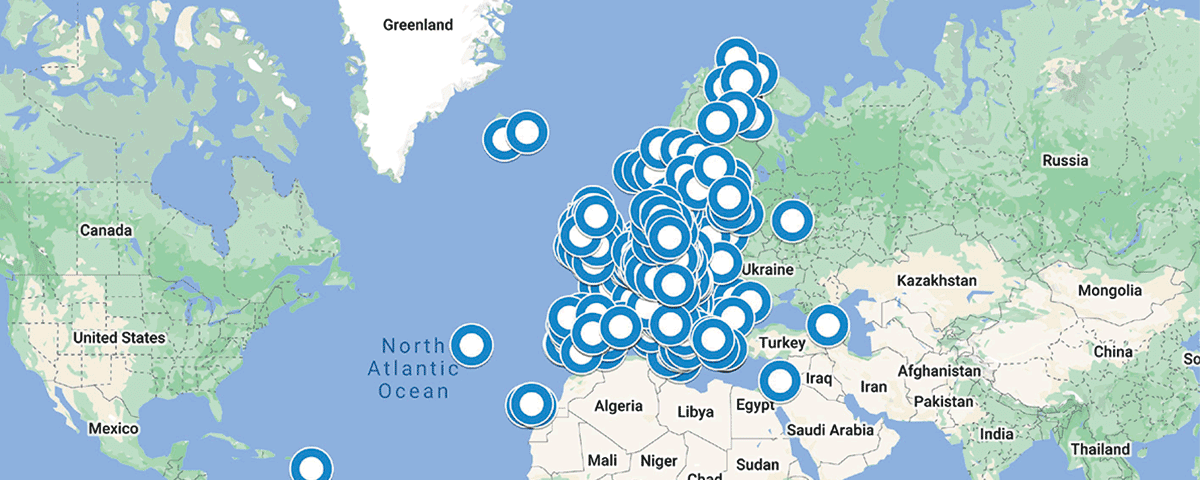
Find our members worldwide

The EUROPARC Federation website is supported by: European UnionAlfred Toepfer Stiftung

Title by Photographer