Evaluation of Germany’s National Parks shows positive progress
The effectiveness of all 16 German National Parks was reassessed. The results are now available and they show a positive trend.
Management Effectiveness Assessment in German National Parks
During the period 2022 – 2024, an external evaluation committee was appointed to assess the Management Effectiveness of all 16 German National Parks. This is the second assessment, after an initial evaluation (2009 – 2012). As part of an interim survey (2015 – 2018), the extent to which the recommendations from the initial evaluation had already been implemented — or at least had begun to be implemented — was examined.
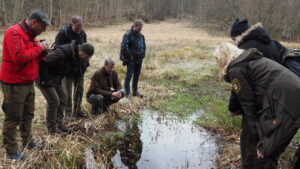
Site Visit in National Park Jasmund
The assessment is timely: Protected Area Management Effectiveness (PAME) is a cornerstone in all leading biodiversity strategies, like the EU Biodiversity Strategy or the Kunming-Montreal Global Biodiversity Framework. PAME assessments help identify strengths and weaknesses in Protected Area Management, ensuring nature managers can respond to deliver the best results for biodiversity.
In Germany, the assessment follows the Quality Criteria and Standards for German National Parks. It consists of a self-assessment by the park administration, and on-site visits and interviews with the park administration and the relevant state ministry or ministries by the external evaluation committee. The involvement of relevant stakeholders is key and is intended to strengthen acceptance of and appreciation for the National Parks. The external advisors also surveyed various stakeholders to obtain a broad picture of the current situation in the National Parks. On this basis, the committee prepared a detailed evaluation report for each national park, which are primarily published on their websites.
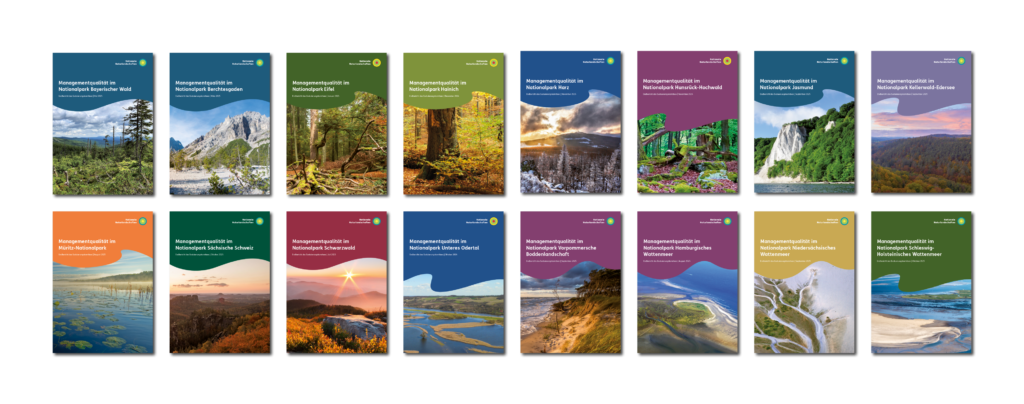
The evaluation reports
A Promising Trend, But Growing Pressures
The evaluation shows that, overall, Germany’s National Parks have developed positively since the first evaluation. Particularly noteworthy are improvements in the expansion of natural dynamic zones. As a result, numerous National Parks have come significantly closer to the central goal of leaving at least 75 percent of their area to natural dynamics.
Nevertheless, challenges remain. In several National Parks, for example, unfavorable land configurations, third-party usage rights, excessive visitor pressure, or fragmenting roads and utility services hinder the full implementation of this goal. Management measures — such as those aimed at reducing wildlife populations — also still take place in some cases within the natural dynamic zones.
Budget Cuts Threaten Wins For Biodiversity
The financial and human resources available to National Parks, as well as the dedication and qualifications of the staff in the National Park administrations, are crucial to their success. These last two points in particular stand out very positively in all National Parks; in addition, many volunteers are actively involved, including in Protected Area monitoring, visitor assistance in the field, and practical species and habitat conservation. Nevertheless, all National Park administrations face at least some staffing shortages, for example in area control, the ranger service, research and monitoring, or environmental education. This underlines that adequate financial resources are needed to ensure National Parks are delivering on their many goals and objectives.
 LIFE PAME-Europe
The project was managed by the German Section of the EUROPARC Federation, Nationale Naturlandschaften e. V. (NNL e.V). They served as a mediator between the interests of the federal government and the states, while also acting as a liaison between the scientific community and administrative practices in the National Parks.
NNL e.V. is also a partner in the EUROPARC-led LIFE PAME-Europe project. Their experiences are feeding directly into the PAME-Europe Framework developed within the project, to assess management effectiveness in Protected Areas. The aim of the project is to produce a Framework that can be applied throughout Europe. The project is currently in its piloting phase, with 47 Protected Areas applying the Framework and providing extensive feedback on its use.
 Learn More
A summary of these findings across all the German National Parks is provided in the brochure “Management Quality of German National Parks – Results of the Second Evaluation.”, discover it here: