The second cohort of the EUROPARC Youth Council is off to a good start!
News from the EUROPARC Youth Council as they start their 2-year Mandate!
The second cohort of the EUROPARC Youth Council is off to a good start!
The second cohort of the EUROPARC Youth Council were invited to Gut Siggen for the second part of the Siggen Seminar, an annual event dedicated to capacity building and further developments in the EUROPARC Federation. The group were selected by their peers in November 2025 and have met online over the last 3 months ahead of the event.
As a group they are well-balanced and bring a diverse range of perspectives. The group consists of 7 young professionals (from contractors to dedicated staff) working on topics including transboundary parks, sustainable development, nature restoration, community engagement, education, and landscape management. The remaining 3 members are very active Youth+ers, working with non-formal youth engagement and the Junior Ranger programme. They also have regional diversity with all sections having at least 1 Youth Council member active in their area except for Federparchi.
The core criteria for a youth council member:
- Young (19-28 years old)
- Good English competencies
- Active in their local Protected Area as staff or Youth+ or Junior Ranger Alumni
- Passionate about conservation, culture and sustainability in Protected Areas
- From a range of diverse countries and backgrounds (9 countries represented)
- Dedicated to volunteering for 2 years (2025-2027)
- Able to work together online
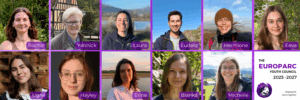
As members of the Youth Council, they came together through a shared passion for Protected Areas, driven by a common goal to support their legacy while fostering collaboration, networking and connection among young people across borders. Through advocacy, learning and active engagement, they aim to empower youth, strengthen our network and contribute to a more sustainable future built on growth, progress and continuous improvement.
The role of the Youth Council: To represent and be the voice of young people of Protected areas and the EUROPARC Federation
Supporting the work of EUROPARC
During their time on the Youth Council, they aim to amplify youth voices across all EUROPARC spaces, engage and empower young people in conservation, build stronger human-nature connections, and create inclusive communities, ultimately making a meaningful impact and growing together as confident leaders for nature. Similarly, as a network and the directorate, it is up to us to help them develop their competencies by creating opporunities for them to learn and participate.
The Youth Council members play an important role as a bridge to ‘on-the-ground’ members and activities, playing a similar role as a section. They are the link to young professionals or stakeholder groups such as Junior Rangers and Youth + . They bring energy and new experiences sharing these with the youth representative sitting on the EUROPARC Council, in the sections in which they can be actively included, and also in the newly established working groups.
They can also promote EUROPARC and its work as ambassadors, by being active voices in conferences, workshops, in their own organisations and in their studies. They play an active role in the European Youth in Parks Day (15th of September), determining a youth priority for the theme and actively organising youth-led activities within their own Protected Areas.
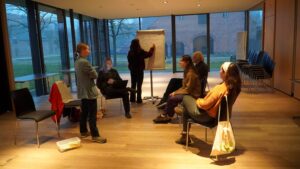
First in-person meeting in Gut Siggen
The in-person meeting at Gut Siggen proved to be an essential and transformative step in strengthening the foundations of the Youth Council. While online collaboration enables continuity, coming together physically has allowed them to build trust, deepen connections, and engage in more meaningful and productive discussions. This shared experience enhanced our understanding of one another, clarified our collective role within the EUROPARC Federation, and reinforced our shared responsibility to represent and amplify the voices of young people in Protected Areas across Europe.
Such in-person collaboration is an investment into effectiveness, cohesion, and long-term impact of the Youth Council. With renewed motivation and shared direction in place, they are well-positioned to contribute meaningfully to EUROPARC’s mission and to actively participate in shaping a more inclusive and sustainable future for Protected Areas across Europe.
Stay tuned to their activities by following EUROPARC on social media (and @youth.europarc on Instagram)!

If anyone wants to make a direct connection with a member of the youth council, reach out to Jessica Micklem-Kolenić from the EUROPARC Directorate who can assist you further.
Protected Area Management Effectiveness – A new chapter in Europe begins!
From 10-12 March, over 70 Protected Area professionals gathered in Prague for the LIFE PAME-Europe Training Seminar for Pilot Sites. Learn more about why they were in Prague!
What is LIFE PAME-Europe?
The LIFE PAME-Europe project is a EUROPARC led project to support the development of a Framework to assess Management Effectiveness in European Protected Areas. Building on the best of what already exists globally and nationally, the PAME-Europe Framework will ensure that across Europe we can collect robust data to measure the effectiveness of our Protected Areas, and support Protected Area managers in delivering better outcomes for biodiversity.
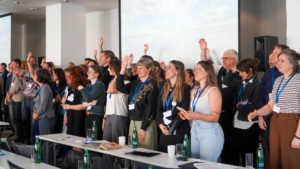
Participants at the Training Seminar in Prague.
Why Management Effectiveness?
Biodiversity is declining. This has serious impacts on the health of our planet and people. From food security to fresh water – humans rely on biodiversity and well-functioning ecosystems.
Protected Areas have a vital role to play to halt biodiversity loss. That is why European and global targets aim to protect at least 30% of land and sea. However, designating Protected Areas is not enough. We need to ensure that these spaces are effectively managed. The PAME-Europe Framework will help Protected Area Managers, as well as national authorities, to assess how effective their management is: more than just a reporting system, this self-assessement Framework will help adapt management plans to ensure they are delivering on the best results for nature.
What happened in Prague?
To ensure that the Framework is fit for purpose, 47 Protected Areas across Europe are putting it to the test! After an open call, Pilot Sites were carefully selected to represent a broad geographical range, as well as various degrees of experience with PAME.
Representatives of these LIFE PAME-Europe Pilot Sites came together in Prague to kick-start their co-learning journey. Over the course of 2 days, 75 Protected Area professionals were able to dive into the draft LIFE PAME-Europe Framework and provide their feedback. Through interactive sessions and presentations from the project’s Advisory Board, the event served as the starting point for the Pilot Sites to familiarise themselves with the project, its objectives, and also get to know their peers starting this journey with them.
What will success look like?
Apart from an extensive interrogation of the draft PAME-Europe Framework, participants could also provide their feedback on what success would look like for the project. In an interactive session led by Ben Ross from NatureScot, who is also part of the project’s Advisory Board, the main outcomes identified by participants include:
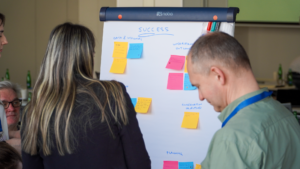
Participants at the Training Seminar in Prague.
- Site managers define success primarily in terms of better management, not better reporting.
- The main barriers to effective management relate to resources, governance and stakeholder context rather than lack of knowledge.
- The Framework must be simple, useful and flexible if it is to be widely adopted.
- Participants favoured a system that supports learning and improvement rather than one focused primarily on accountability.
- Managers expect the Framework to help demonstrate the value of Protected Areas and support decisions at multiple levels.
These insights are incredibly valuable for the project partners. They provide a good understanding of what is required to ensure the outcomes of the project are of use for practitioners, and also to inform the training needs for Pilot Sites.
What next?
The feedback gathered will now be assessed by the LIFE PAME-Europe project partners, resulting in a second draft of the PAME-Europe Framework and accompanying documents. The draft Framework will though continue to be developed and evolve based on the Pilot Sites’ experiences throughout the remainder of 2026. Furthermore, to ensure that the Pilot Sites are well-equipped to start the piloting of the Framework, they are receiving tailor-made online training delivered through the European Nature Academy. Until the end of June, this training will prepare the Pilot Sites for their implementation of the PAME-Framework. Over the Summer, they will begin the Framework self-assessments and provide feedback on its strengths and weaknesses.

Based on this feedback, the LIFE PAME-Europe project partners will adapt the Framework. All this will ensure that the final result will be of actual benefit to Protected Area managers and – by extension – biodiversity. Equally, working in close collaboration with DG Env of the European Commission and the European Environment Agency, the project aims to produce a Framework that can enhance PAME reporting so that we are able to measure more confidently the state of progress towards biodiversity targets and priorities.
Want to stay involved?
If you’d like to remain informed on the project and all its developments, we invite you to subscribe to the Management Effectiveness Community (MEC) mailing list here:

LIFE PAME-Europe project partners
From Science to Action: Strengthening Europe’s Protected Areas through the Trans-European Nature Network (TEN-N)
In January 2026, the EUROPARC Federation, as part of the NaturaConnect project, co-organised a 1.5- day in person workshop in Brussels, bringing together stakeholders from across Europe to discuss the future of ecological connectivity and Protected Areas. The workshop, titled From Science to Action, focused on translating scientific research results from the project into practical strategies for the Trans-European Nature Network (TEN-N). This network is a cornerstone of the EU Biodiversity Strategy 2030, aiming to create a resilient and connected system of Protected Areas across Europe.
The event highlighted the urgent need to improve the quality, connectivity, and management of Protected Areas to meet the EU’s ambitious protected area restoration targets. Participants, including conservation practitioners, representatives from the European Commission, NGOs, and Protected Areas, provided feedback on the NaturaConnect mapping results, shared insights from their own experience, discussed regional or national challenges, and provided recommendations for upscaling NaturaConnect’s work in the remaining months.
Discussions highlighted the vital role of Protected Areas and Parks in addressing biodiversity loss, climate change and land degradation – and, crucially, the need to ensure these areas are coherent, resilient and well connected across borders.
Key Takeaways for Protected Areas
-
The importance of ecological connectivity
Europe’s Protected Areas, while extensive, are often fragmented and too small to support long-term biodiversity. Discussions and project presentations made it evident that ecological connectivity (the ability of species to move across landscapes) is essential for climate resilience and the survival of the threatened species.NaturaConnect’s research shows that strategic expansion of Protected Areas, combined with the restoration of ecological corridors, can more than double the protected share of suitable species ranges (O’Connor et al., 2025).
-
Transboundary cooperation
Many priority areas and corridors cross national borders, making transboundary cooperation critical. NaturaConnects pan-European connectivity analysis highlights that some of the most important ecological connectivity is concentrated in transboundary and mountainous areas and within the Mediterranean bioregion.
The maps produced by the project and shown in the event “can be used in combination with information about the distribution and condition of habitats within the Natura 2000 network to further explore conservation threats from fragmentation. This makes them directly applicable to supporting EU and national biodiversity strategies, green infrastructure planning, and transboundary conservation initiatives, with particular relevance for the design of ecological corridors, restoration zones, and areas of strict protection.” (Dertien et al., 2025)
Learn more about EUROPARCs Transboundary Programme here.
-
Quality over quantity
Participants agreed that the quality of protection, such as management effectiveness, addressing underprotected habitats, and reducing fragmentation, matters more than simply meeting percentage-based targets. The focus should be on fair responsibility-sharing among countries, ensuring that Protected Areas are representative, connected, and resilient. (Learn more about EUROPARC’s LIFE PAME-Europe project).
This is also why NaturaConnects approach follows the CARE principles: Protected area networks need to be comprehensive, adequate, resilient and effective. Only when addressing all of these, can we secure long-term positive biodiversity outcomes.
Next Steps
The NaturaConnect project will integrate participants’ feedback from the workshop into a strategy document with recommendations for EU and Member State action for TEN-N implementation.
The project is now in its final phase and will close in September 2026. EUROPARC and the project partners will work hard together to finalise the remaining outputs and disseminate them among the different stakeholder groups.
Read the full workshop report to learn about key messages from NaturaConnect and the discussions during the workshop.
Read the Report!Watch the summary video about the event and the vision of NaturaConnect.
Check out the digital photo-album for more highlights:
To stay up to date and learn more about the project outputs, sign up for the NaturaConnect newsletter or visit our website.
Expanding the Junior Ranger programme through Erasmus+ projects
The Latvian national parks paired up to help a Croatian National Park start their own Junior Ranger programme.
Expanding the Junior Ranger programme through Erasmus+ projects
The Erasmus+ project “Environmental awareness-raising of young people from protected areas” was a small-scale partnerships project between Gauja National Park Fund (Latvia), Ķemeri National Park Fund (Latvia), Krka National Park (Croatia) and Leader Sepra (Finland). Over the course of two years, it aimed to inform and raise interest of young people about environmental issues in Europe, partner countries and local territories and create possibility to participate and express their opinion through existing youth organisations such as the Junior Ranger Programme, scouts and others.
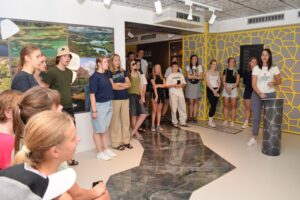 The project included research into good practices from junior rangers in Latvia, scouts in Finland, and pilot activities in Croatia in the field of non-formal methods, looking at how to involve the teenagers in nature protection and increase their environmental awareness. Not just that, the project also looked even deeper, exploring a the motivations for youth engagement and incorporating them into their youth programmes.
Download the new guide for the EUROPARC Junior Ranger programme and read all about it!
Download it here: Guide
During last two years the project partners had three successful study visits and an international final event in Krka National Park, developing a Junior Ranger Programme and a motivation system for young people which resulted in Krka National Park being the first Croatian Protected Area to implement a EUROPARC Junior Ranger programme in recent years. This programme focused on a first cohort of 20 young people and was strengthened by the project partners, improving environmental knowledge and creating visibility materials. In addition to the establishment of a junior ranger group in Croatia, the number of young rangers and volunteers also grew in Latvia.
The successful realisation of project activities brought numerous benefits to all project partners, involved participants as well as participant organisations. The initiative, aimed at young people aged 13 to 30 (including both Junior Rangers and Youth+), focused on nature protection, environmental restoration, and sustainability. Designed to be inclusive and engaging, the activities encouraged participants to develop practical skills needed for biodiversity monitoring, deepen their understanding of environmental issues such as pollinator declines, and strengthen their motivation to protect nature by building a sense of connection to Protected Areas.
Beyond environmental education, the programme fostered valuable social connections. Participants not only made new friends locally but also built international ties, learning about each other’s countries, cultures, and languages. These exchanges enriched the experience, broadening horizons and inspiring continued collaboration across borders.
Partner organisations reported strengthened youth programmes and expanded professional networks, alongside the adoption of innovative educational methods. The project’s strong visibility in local communities further inspired reflection among young people and their families, helping to spread a culture of environmental responsibility.
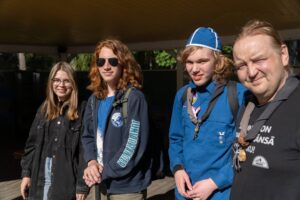
Participating schools, particularly those connected with the Junior Ranger and Scout movements, benefited from additional extracurricular activities that attracted new students and strengthened community ties. Municipalities gained from the public attention surrounding environmental education, with hopes that some participants may pursue future careers in nature conservation as biologists, foresters, or park rangers.
Protected Areas near the project sites also played a key role, sharing their expertise with participants and expecting that some will one day return as employees or advocates for conservation. Educational workshops with Junior Rangers and scouts are set to continue, with the newly established Junior Ranger group in Krka National Park already planning future activities and seeking to welcome new members.
The project’s success has set a strong foundation for future initiatives dedicated to youth education and environmental stewardship—demonstrating that engaging young people in hands-on learning can inspire both local and global impact.
 Co-funded by the European Union. Views and opinions expressed are however those of the author(s) only and do not necessarily reflect those of the European Union, European Commission. Neither the European Union nor the granting authority can be held responsible for them.