Learning across borders: Dutch National Parks visit Denmark
Facilitating international exchange is at the core of EUROPARC’s work. As such, it’s always a great pleasure to see our members connecting across borders. In this guest article, learn more about the Dutch National Parks visit to Denmark.

Adriaan Buitink
This is a guest article written by Adriaan Buitink, Senior Advisor, Dutch National Park Office.
The EUROPARC network connects!
From 13 to 16 May 2025, a delegation from Dutch National Parks and partner organisations embarked on a study visit to Denmark. The exchange focused on two Protected Areas: Thy National Park in the northwest and Mols Bjerge National Park in the southeast of Jutland.
Despite their geographic proximity and cultural similarities, Denmark and the Netherlands differ in key respects, as the Netherlands is far more densely populated, and Denmark has more space for nature. Yet both face common challenges: balancing conservation with intensive agriculture, responding to climate change, and navigating evolving societal expectations.
Exploring Thy National Park

Exploring the Danish dunes
In Hanstholm, the group was warmly welcomed by Else Østergaard Andersen and members of the National Park’s board. During an introductory dinner, Board Chair Karen Louise Erichsen shared insights into the National Park’s governance and recent developments.
The next day offered a deep dive into the National Park’s diverse themes: dune conservation, cultural heritage, sustainable tourism, and collaboration with local entrepreneurs. A standout moment was the visit to an “outdoor school,” where young people, many from urban environments, spend two years immersed in nature. The programme helps them find direction and inspiration in life through direct contact with the landscape. You can learn more about the programme here (in Danish).
Participants experienced the National Park’s raw beauty during a hike near the Lodbjerg lighthouse, where sweeping dunes meet dramatic cliffs. They also appreciated the inclusive design of minimalist overnight huts, accessible even to those with disabilities.
Discovering Mols Bjerge National Park

The Dutch delegation in Denmark
On 15 May, the delegation travelled southeast to Mols Bjerge National Park. Here, CEO Birgitte Lamp welcomed them to a distinctly different landscape: rolling green hills framed by the sea.
Discussions centred around sustainable tourism and the National Park’s growing focus on nature and public health, particularly mental well-being. One innovative programme, developed in cooperation with local municipalities, offers nature retreats aimed specifically at men. This initiative reflects a broader trend in Denmark to embed nature more fully into healthcare and social support systems. These efforts are backed by both policy and financial resources.
The delegation also visited Agri, where a form of nature restoration and rewilding is being trialled in close collaboration with landowners. Unique biodiversity thrives here, shaped by both soil conditions and the inaccessibility of certain hilltops to modern machinery. Glacial boulders are being returned to the landscape to preserve its geological history and cultural memory. Interestingly, the area features minimal signage, inviting a more intuitive and immersive experience of the National Park.
There is a broader trend in Denmark to better embed nature into healthcare and social support systems.
Key Takeaways for National Parks Across Europe
This visit sparked rich exchanges and offered valuable insights for Protected Area professionals working across Europe:
- Strategic Commitment: Long-term vision and consistent funding from central government are key to achieving tangible results.
- Volunteer Power: Engaging volunteers in meaningful ways strengthens both National Park operations and public connection to nature.
- Health & Nature: There’s untapped potential in aligning health systems – governmental and insurance-based – with the therapeutic value of natural landscapes.
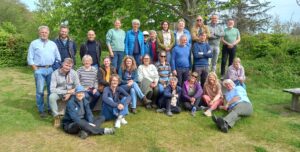
The Dutch delegation in Denmark
- Integrated Policy: National Parks can serve as vital hubs in implementing cross-sector policy on agriculture, nitrogen, recreation, education, public health, and the regional economy.
- Funding and Outreach: There is room to expand both “fundraising” and “friendraising,” including through EU-level opportunities.
A Promising Start to Lasting Collaboration
Study visits like these highlight the importance of peer learning and exchange. They remind us that Protected Areas are not only landscapes to be conserved but also platforms for innovation, inclusion, and inspiration.
Contacts have been established and I am happy to say a return visit to the Netherlands may soon be on the horizon!
The EUROPARC Federation thanks Adriaan for providing these valuable insights!
Welcome ERA – Malta’s Environmental Regulator Joins EUROPARC!
Welcome ERA – Malta’s Environmental Regulator Joins EUROPARC!
We’re thrilled to welcome the Environment and Resources Authority (ERA) of Malta as a new member of the EUROPARC Federation. As the national authority responsible for Protected Areas, ERA plays a vital role in conserving the natural heritage of the Maltese Islands.
With 37 terrestrial Natura 2000 sites and 18 Marine Protected Areas (MPAs) under its care, ERA is actively shaping Malta’s environmental future. Their work spans across land and sea, making them a dynamic addition to the EUROPARC network.
To learn more, we spoke to ERA about their mission, priorities, and innovative conservation strategies.
Interview with ERA – Malta’s Guardian of Nature
1. What are ERA’s top environmental priorities at the national level?
ERA’s mission is simple yet powerful:
“To safeguard the environment for a sustainable quality of life.”
To achieve this, ERA focuses on:
- Integrating environmental targets across all levels of government and society
- Advising national policymakers and contributing to international negotiations
- Developing data-driven policies through continuous research and monitoring
- Regulating, licensing, and monitoring activities that affect the environment
In addition, ERA works closely with stakeholders to encourage responsible environmental management. Their top priorities include:
- Protecting biodiversity on land and at sea
- Improving air and noise quality
- Promoting sustainable waste management
- Addressing desertification, soil degradation, and landscape conservation
By combining strategic planning with active enforcement, ERA ensures that Malta’s environmental goals become a national priority.
2. Which protected sites stand out for their ecological value?
Among Malta’s Protected Areas, several are particularly noteworthy.
For example, the Rdumijiet Natura 2000 site stretches along the western cliffs of mainland Malta. It’s home to endemic cliff-dwelling species and critical seabird nesting sites, making it one of the most ecologically significant landscapes in the country.
Moreover, smaller islands and islets within the terrestrial Natura 2000 network are home to unique species such as the Maltese Wall Lizard, which has evolved distinct island morphs.
At sea, Malta’s Marine Protected Areas feature:
- Posidonia oceanica seagrass meadows
- Underwater caves and coral reefs
- Habitats for dolphins, sea turtles, and seabirds
Importantly, the connection between terrestrial and marine zones supports species across their life cycles. Additionally, ERA manages other nationally and internationally designated areas, expanding its conservation impact.

Dwejra, Gozo, ERA
3. How is ERA advancing marine conservation in Malta?
Marine conservation is a key national priority. Following the 2023 adoption of site-specific conservation objectives, ERA is actively implementing marine protection strategies.
These efforts are supported by the European Maritime, Fisheries and Aquaculture Fund (EMFAF). This funding enables ERA to manage MPAs effectively while addressing broader marine challenges.
In parallel, ERA contributes to Malta’s River Basin Management Plan and the Marine Strategy Framework Directive (MSFD). These programmes aim to restore aquatic ecosystems by:
- Managing anchoring and mooring practices
- Developing hydrographical models for coastal waters
- Implementing a moratorium on sea urchin harvesting
ERA is dedicated to protecting this natural heritage, despite the pressures of development. We believe collaboration is key, and we’re excited to exchange ideas and experiences with our fellow EUROPARC members.
4. What innovative tools does ERA use for monitoring?
ERA increasingly relies on advanced technology to improve environmental monitoring.
Their tools include:
- Satellite imagery and drones to track land use and ecosystem health
- Web-GIS applications (developed in-house with ESRI tools) to support digital mapping and real-time data collection
- CCTV cameras at sensitive sites to boost regulatory compliance
In addition, ERA promotes citizen science, encouraging the public to report species sightings. A great example is the Malta Pollinator Monitoring Scheme (MPOMS), which engages volunteers to monitor pollinator populations.
Marine monitoring involves more specialised commissioned studies, including seabed habitat assessments, which are currently underway through national procurement projects.
5. What message would you like to share with EUROPARC members?
“Malta may be small, but its biodiversity is incredibly rich and unique. Our islands host a range of Mediterranean habitats, with species found nowhere else in the world.
Discover Malta: A Small Island with Big Biodiversity
From towering limestone cliffs to pristine underwater seagrass meadows, Malta is full of ecological wonders. Thanks to ERA’s efforts, these natural assets are not only protected but actively managed for the benefit of future generations.
We are proud to welcome ERA as part of the EUROPARC Federation, and we look forward to building a greener future together.
We warmly invite you to visit Malta, explore our protected areas, and join us in preserving Europe’s shared environmental legacy.

Ghadira wetland area, ERA
Bavarian Forest and Šumava National Parks Undergo 2025 Re-Evaluation for Transboundary Certification
Zhůří near Keply, Šumava National Park (CZ) © Štěpán Rosenkranz

Following Nature’s Design
The Bavarian Forest National Park in Germany and the Šumava National Park in the Czech Republic have recently completed their official 2025 re-evaluation under the EUROPARC Transboundary Parks programme.
This process takes place every five years and assesses the quality of transboundary cooperation between Protected Areas. The re-evaluation ensures that both parks continue to meet the highest standards in joint conservation, education, tourism, and management practices.
A Strong Cross-Border Partnership Since the 1990s

Martin Stary, Sumava Forest National Park. (c) Arto Ahokumpu
Located in the scenic Bohemian Forest, the Bavarian Forest National Park was established in 1970 as Germany’s first National Park. Its Czech partner, Šumava National Park, was created in 1991, and the two began collaborating almost immediately.
Their partnership was formalised in 1999, when the Environment Ministries of both countries signed the Memorandum of Common Work and Cooperation. Since then, the cooperation has grown stronger and more structured.
In 2009, the Parks were officially certified by EUROPARC as a Transboundary Park. They have successfully passed evaluations in 2015 and 2020, and in 2025 they completed their fourth review.
The 2025 Re-Evaluation Mission
The re-evaluation process began in November 2024 with the joint submission of a progress report. EUROPARC nominated Mr Arto Ahokumpu to lead the mission. He had also been involved in the Parks’ first evaluation in 2009.
An on-site visit took place on 3–4 July 2025, including meetings, field trips, and presentations.
On the first day, the team visited the core and extended zones of Bavarian Forest National Park, reviewing management practices and nature conservation efforts. The second day focused on environmental education and plans to renew exhibitions at visitor centres.
The evaluation was well-organised and supported by both Parks’ directors and staff. Ursula Schuster and Pavel Hubený, directors of the two Parks, played leading roles, along with coordination and education specialists.
Key Achievements in Transboundary Cooperation

Special NP card. (c) Arto Ahokumpu
The re-evaluation highlighted many positive developments:
- Harmonised zoning and visitor management strategies were implemented.
- Public understanding of non-intervention forest management has grown.
- Wolves and lynx have returned and are now being regularly monitored.
- The Parks continue to share research, data, and monitoring tools.
- Collaboration with local communities supports sustainable tourism.
- Joint field patrols, funding efforts, and educational programmes are ongoing.
These actions show that cooperation is not only active but embedded in the Parks’ daily management.
Evaluation Results and Next Steps
The evaluation confirmed that all 14 EUROPARC transboundary criteria have been fulfilled. These include a shared vision, staff and stakeholder involvement, effective communication, conservation success, and education efforts.
Most of the previous recommendations have been successfully addressed. One was retained, and two new ones were added for future guidance.
The full report has been submitted to the EUROPARC Steering and Evaluation Committee (STEC) and the EUROPARC Council. A final decision on certification renewal will be made in the coming months. While we await the outcome, the Parks’ long-term commitment to cross-border cooperation remains clear.
Looking Ahead
The Bavarian Forest and Šumava National Parks continue to serve as a model for other Protected Areas in Europe and beyond. Their dedication to nature conservation, education, and sustainable tourism shows how effective transboundary cooperation can be when rooted in trust, shared goals, and long-term planning.
You can also read about their projects and other Transboundary Protected Area Projects here!
Finally, don’t forget to check out the video from the previous annual TransParcNet meeting, where this Transboundary Area shared its climate challenges and local community involvement practices here.
Here is your chance to become a Certified Transboundary Area, too:

Verification process. (c) Bavarian Forest National Park and Šumava National Park TBA.
The Burren and Cliffs of Moher UNESCO Global Geopark Joins EUROPARC Federation
(c) Burren and Clifs of Moher UNESCO Global Geopark
There is power in numbers! We are proud to introduce the newest EUROPARC member: The Burren and Cliffs of Moher UNESCO Global Geopark. Get to know the Park!
A new member from Ireland!
We are thrilled to welcome The Burren and Cliffs of Moher UNESCO Global Geopark as a new member of the EUROPARC Federation! Located in County Clare on Ireland’s wild Atlantic coast, this breathtaking region is world-renowned for its karst landscape, rich biodiversity, and deep cultural heritage.
The Geopark encompasses a variety of stunning natural features, including limestone pavements, underground cave systems, and the iconic Cliffs of Moher. It is home to rare plant and animal species, historic monuments, and a vibrant local community dedicated to sustainability.
A Clear Goal: Reducing Tourism’s Impact
The primary mission of the Geopark is to reduce the environmental and cultural impact of tourism, both within and beyond the Geopark boundaries. To achieve this, they have developed the Geopark Code of Practice for Sustainable Tourism Businesses, an online platform currently used by 69 local businesses.
This tool helps businesses track a range of sustainability metrics such as:
- Carbon footprint
- Energy usage
- Waste management
- Biodiversity actions
- Staff education
- Community cleanup initiatives
All submissions are externally audited by qualified experts, and participation in the Code is mandatory for membership in the Burren Ecotourism Network.
The Burren and Cliffs of Moher UNESCO Global Geopark are currently in the process of applying for the European Charter for Sustainable Tourism (ECST). We look forward to welcoming them and all their experience in the EUROPARC Sustainable Tourism network!
Learn more about the ECST here.
Education at the Heart of Conservation
The Burren and Cliffs of Moher Geopark strongly believes that education is essential to protecting natural, geological, and cultural heritage.
Key educational initiatives include:
- The publication of “Stone, Water and Ice,” an illustrated book explaining the geology, archaeology, and biology of Geopark sites.
- Outdoor educational signage placed throughout the Geopark to engage visitors on-site.
- The Geopark Academy, an annual conference bringing together researchers, community members, and stakeholders to share new insights and foster local engagement.
Interview Spotlight: What EUROPARC Membership Means
We spoke with Carol Gleeson, the Manager of the Tourism Department at the Geopark, to learn more about their vision and how joining EUROPARC supports their goals.
What does this new membership mean for the Burren and Cliffs of Moher Geopark?
Joining the EUROPARC Federation strengthens our commitment to sustainable tourism. The European Charter for Sustainable Tourism (ECST) gives us a globally recognized framework to deepen partnerships with national agencies like the National Parks and Wildlife Service (NPWS) and to further empower local communities and businesses in conservation-focused development.
Balancing Tourism and Nature

(c) Burren and Cliffs of Moher UNESCO Global Geopark
The Burren receives large numbers of visitors each year. Balancing that popularity with protection efforts is no small task.
“We take a dual approach: a regional destination management plan and our sustainable business code. Our action plan addresses infrastructure, mobility, business sustainability, climate action, and heritage protection, guided by measured indicators. This has helped County Clare become the first GSTC-Certified Tourism Destination in Ireland and the UK (certified April 2025).”
 Learn more here. Sustainable Tourism Code.
Community-Driven Innovation: Shuttle Bus Service

One of the Geopark’s most exciting recent projects is the Burren & Cliffs Explorer Shuttle Service. This free hop-on, hop-off bus connects the Cliffs of Moher Visitor Centre and Burren National Park with local towns.
“This service reduces car traffic in protected areas and boosts local economies. It’s a joint effort by Clare County Council and the NPWS to provide a more sustainable visitor experience.”
 Featured stops:
- Miltown Malbay
- Liscannor
- Doolin
- Kilfenora
- Lisdoonvarna
- Corofin
- Ballyvaughan
Details: cliffsofmoher.ie/burren-and-cliffs-of-moher-explorer
A Decade of Impact: Achievements in Conservation and Research
Over the past decade, the Geopark has gained international recognition for sustainable tourism management and geological research.
- Established in 2008, the Burren Ecotourism Network now includes 65 businesses and has won multiple international awards.
- Their Code of Practice, introduced in 2019, is a unique, evidence-based model fully managed by the Geopark and Clare County Council.
- Academic partnerships have led to notable fossil discoveries, including a shark tooth fossil find featured by RTÉ Science. Read more
- Over 500 local residents have participated in their evening geology courses.
- The Geopark Academy brings research to life for the public and strengthens ties between academia and community.
Welcome to the EUROPARC Family!
We are proud to count the Burren and Cliffs of Moher UNESCO Global Geopark among our members. Their innovative, community-led approach to conservation and tourism is a model for Protected Areas across Europe.
Together, we move forward in our shared mission to protect nature while building resilient, sustainable communities.