Welcome to Comapedrosa Natural Park, Andorra
(c) Comapedrosa Natural Park
We are delighted to welcome Comapedrosa Natural Park in Andorra to the EUROPARC community!
Established in 2006, Comapedrosa Natural Park is the largest natural park in Andorra, covering 1,542.6 hectares. The park protects a spectacular high-mountain landscape, including the country’s highest summit, Alt de Comapedrosa (2,942 m), as well as some of Andorra’s highest glacial lakes.
A high-mountain landscape rich in biodiversity
Comapedrosa Natural Park is home to six groups of glacial lakes. Among them is Més Amunt dels Forcats, located at 2,714 metres and recognised as the highest lake in Andorra.
The park also has remarkable ecological diversity. Its landscapes include features from two major Western European biogeographical regions: the Boreo-alpine and Euro-Siberian regions.
This diversity supports a rich range of wildlife and plants. The park’s vascular flora includes around 700 taxa, including several species that have not been recorded anywhere else in Andorra. More than 140 vertebrate species have also been identified in the park. These include threatened species and species that are endemic to the Pyrenees.
One of the park’s most distinctive species is Aurelio’s rock lizard, a small reptile found only in a very limited area of the Pyrenees.
Working together for effective park management
Comapedrosa Natural Park brings different institutions and local interests together in its management and planning.
The park’s Governing Body (Òrgan Rector) brings together the institutions with jurisdiction within the Protected Area. The Advisory Committee (Comitè Consultiu) represents groups with interests in the park, including hunters, livestock farmers and the tourism sector.
Together with the Managing Body (Òrgan Gestor), these bodies contribute to the management and planning of the park.
Education is another important part of the park’s work. The Managing Body actively collaborates with Andorra’s three education systems. Between 2021 and 2025, 2,455 students took part in the park’s educational activities.
During the summer months, environmental wardens also work with visitors and mountain users. Alongside checking compliance with regulations, they focus on raising awareness and encouraging responsible behaviour in the park.
Building cooperation across the Pyrenees
Comapedrosa Natural Park is also strengthening cooperation beyond Andorra’s borders.
The Protected Areas involved are interested in developing this cooperation further, with most of them considering the possibility of becoming part of a Transboundary Park.
The partners are also looking to improve and expand their monitoring activities. Sustainable tourism certification is another area of interest as they continue to develop cooperation across the Pyrenees.
Looking ahead
By joining EUROPARC, Comapedrosa Natural Park becomes part of a wider European network of Protected Areas working together for nature, people and sustainable development.
Its experience in high-mountain conservation, environmental education, participatory management and cross-border cooperation brings valuable perspectives to the EUROPARC community.
We look forward to learning more about Comapedrosa Natural Park and supporting its continued cooperation with Protected Areas across the Pyrenees and Europe.
Welcome to EUROPARC, Comapedrosa Natural Park!
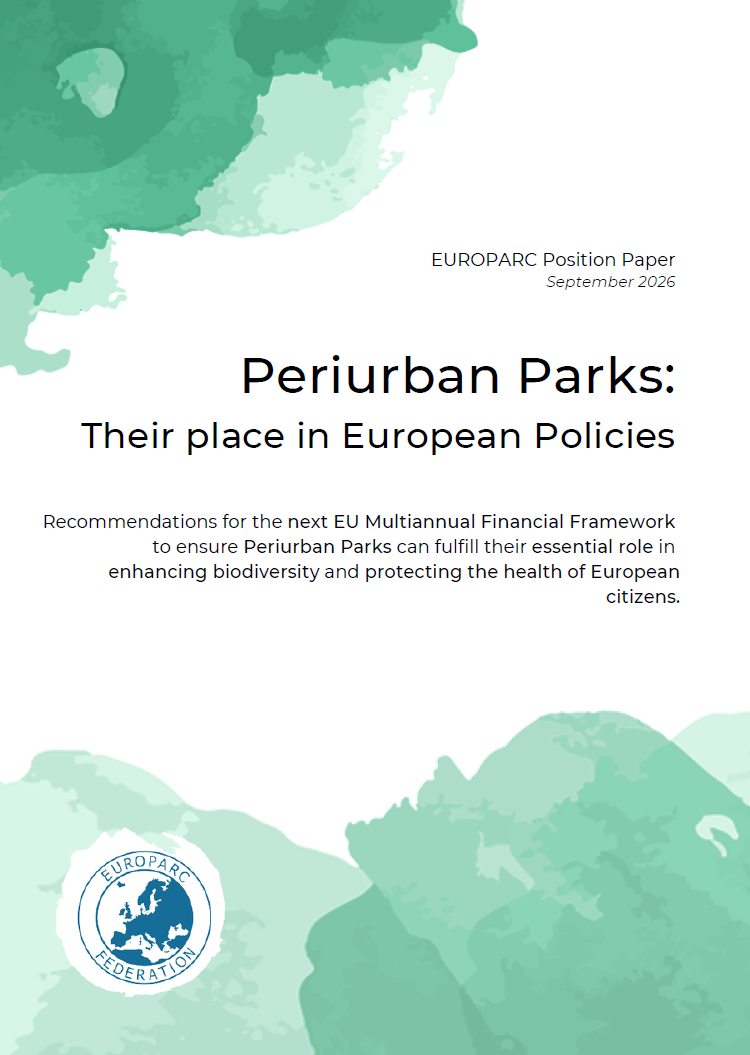
New Position Paper – Periurban Parks: Their place in European Policies
EUROPARC’s Periurban Parks Working Group has developed a position paper highlighting the role of Periurban Parks in European policies and providing recommendations for the next EU Multiannual Financial Framework.
The heart, soul and lungs of urban life
Periurban Parks are wilder, more biodiverse, and significantly larger than typical urban parks. As a result, they provide a wide range of benefits, including cleaner air, temperature regulation, fresh water, healthy food and vital habitats for biodiversity.
As Europe looks back on another exceptionally hot summer, the importance of these green spaces becomes increasingly apparent.
Periurban Parks are essential to urban resilience and sustainability. They play key roles in safeguarding natural processes and providing safe, frontline spaces during climate emergencies and environmental urban crisis.
Given the many roles these spaces fulfil, dedicated financial resources are needed to deliver the best outcomes for the health of both nature and people. The new Position Paper ‘Periurban Parks: Their place in European Policies’, developed by the EUROPARC Periurban Parks Working Group, outlines the many European policies to which Periurban Parks contribute.
Supporting these spaces, means supporting the health of European citizens and the planet.
To ensure Periurban Parks can continue to fulfil their vital roles, the EUROPARC Federation welcomes the European Commission to:
- Consider the development of a focused strategy for safeguarding and enhancing ecologically significant green spaces near urban areas.
- Set up dedicated funding mechanisms for nature conservation and restoration to support the effective, long-term management of Periurban Parks as part of the Trans-European Nature Network and green and blue infrastructure.
A full list of recommendations for the next EU Multianual Financial Framework can be found in the position paper here:
Outcomes from the Horizon Europe NaturaConnect Project
Image: Sandra Grego | EUROPARC Federation
Since 2022, through the NaturaConnect project, EUROPARC has worked hand in hand with scientists, policy experts and NGOs across Europe to produce novel scientific analysis, and related communication and capacity building materials needed to enhance our existing Protected Area network in Europe.
As part of the Horizon Europe NaturaConnect project, 22 partner organisations developed scientific guidance and tools for establishing a comprehensive, adequate, resilient and effective Trans-European Nature Network (TEN-N), one of the key ambitions of the EU Biodiversity Strategy 2030. The TEN-N complements and expands the current Protected Area network towards 30% of the EU’s land and seas by 2030, closing gaps for under-protected habitats and species, boosting connectivity and resilience, and expanding strict protection. NaturaConnect’s outputs also support the Kunming-Montreal Global Biodiversity Framework, moving beyond area targets towards ecological representation, resilience and connectivity.
Using high-resolution (1 km²) spatial prioritisation, the project mapped current and future distributions of 1,406 terrestrial species, 214 habitats of conservation concern, key areas for ecosystem services, and climate-resilient areas and ecological corridors, identifying where conservation and restoration can best support European and global biodiversity targets.
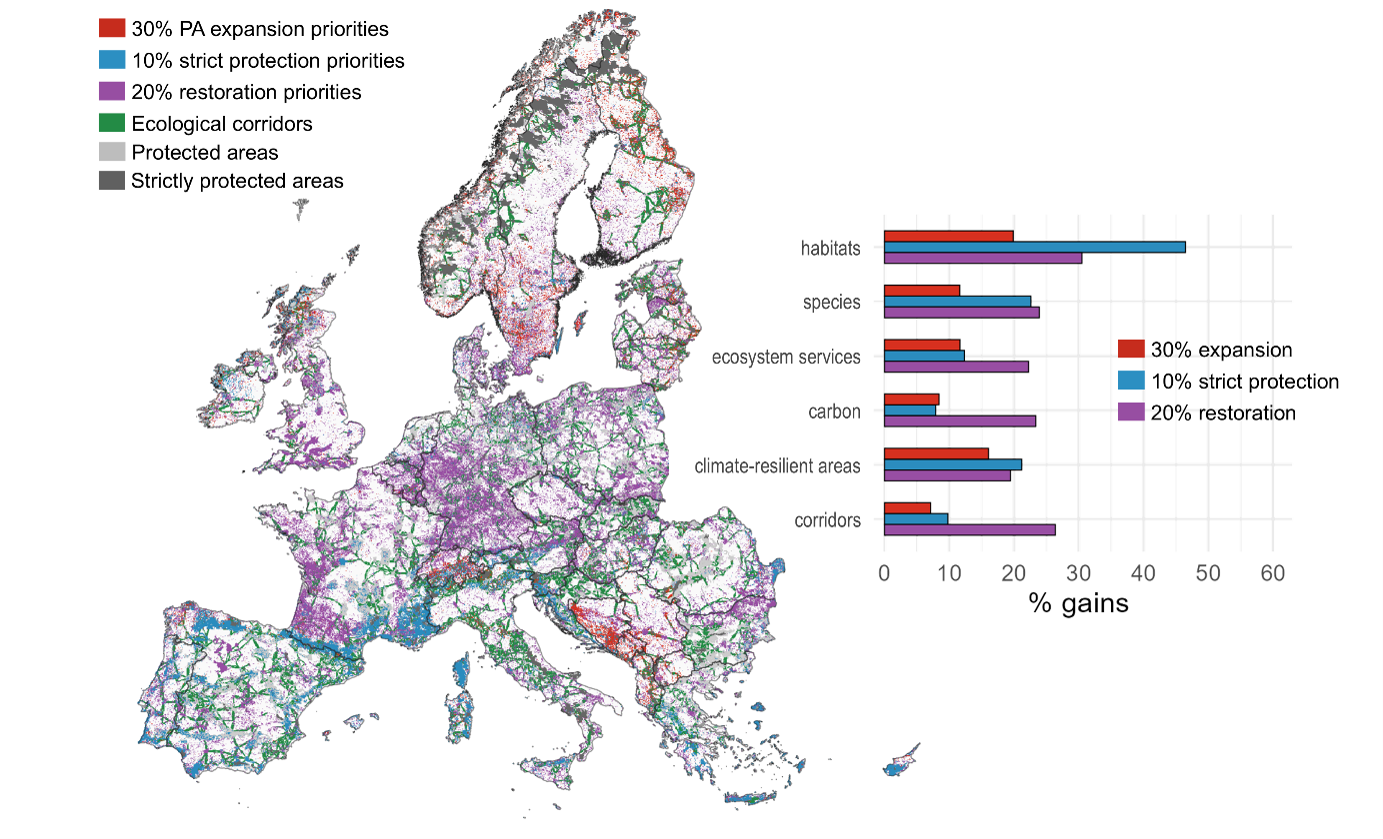
Image: Source: O’Conner et al. 2026.
The illustrated map shows consensus priority areas, meaning those which were consistently selected across scenarios considering ecological, structural and socio-economic indicators. The map created by O’Conner et al. represents a blueprint for TEN-N, showing:
- Priorities for 30% Protected Areas (red, covering 5% of Europe’s land)
- Priorities for 10% strict protection (blue, covering 6% of Europe’s land)
- Priorities for 20% restoration (purple, covering 20% of Europe’s land)
- Critical ecological corridors (green)
Check out the “Scientific Guidance on planning and implementation of a Trans-European Nature Network (TEN-N)” to read the summary of all research components and the key findings from the project.
Over the years, the project produced over 20 scientific reports and policy papers, generated key data, involved hundreds of stakeholders in scientific and communication activities, and disseminated its results through key policy forums such as the CBD, IPBES and the EU Biogeographical Seminars, as well as across a diverse range of other international, national and sub-national contexts. Yet, the Trans-European Nature Network remains to be established as a concrete policy instrument.
Turning the vision of a coherent TEN-N into reality requires more than science: it needs inclusive, participatory governance, dialogue between science, policy and practice, and international coordination. Responsibility is shared among authorities, conservation agencies, NGOs, communities and landowners. Building a climate-resilient, well-connected network of Protected Areas requires adequate staffing, specialised technical, financial and conflict-management skills, and stronger professional capacity across all actors.
EUROPARC supports an effective Protected Area network through capacity building and participatory processes. As part of NaturaConnect, EUROPARC and partners developed a comprehensive, self-paced training course, freely available upon registration on the European Nature Academy (ENA), with 13 modules covering concepts, governance and technical tools.
Access the NaturaConnect Learning Platform!
NaturaConnect Learning Platform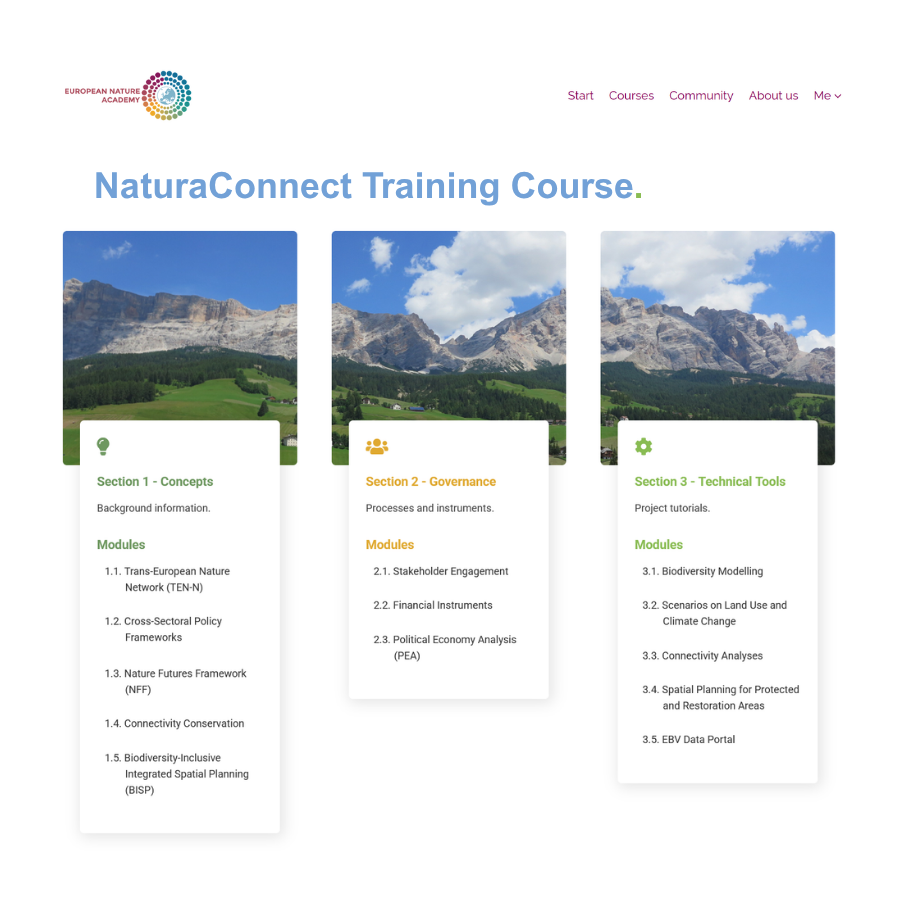
Image: Outline of the NaturaConnect training course available free of charge on the European Nature Academy (ENA).
While the formal project is ending, EUROPARC will continue to thrive for a better connected, resilient network of Protected Areas across Europe. We hope the tools, data, the new training course and recommendations developed through the project will continue to support our members as well as the global efforts in nature conservation.
Thank you for being part of the journey!
Explore all resources:
All project outputs are now ready for uptake by planners, authorities and Protected Area managers, including open-access spatial planning tools and 1 km resolution layers, such as opportunity costs and key ecological corridors across Europe. These resources help identify where conservation is economically feasible and where corridors are most needed.
The NaturaConnect Learning Platform
A self-paced online training course, hosted on EUROPARC Federation’s European Nature Academy. This is our capacity-building hub, designed to strengthen professional skills for designing and implementing the Trans-European Nature Network, with easy access to training modules and learning resources covering all of the project’s outputs.
The Essential Biodiversity Variables (EBV) Data Portal
A repository of spatial biodiversity datasets covering relevant model-based biodiversity variables, dimensions and scales.
A repository for all project results that are not spatial in nature, alongside our spatial datasets, with free downloads of our datasets and maps.
A repository bringing together all peer-reviewed articles and scholarly publications linked to the project.
The repository for all project deliverables and outputs, including reports, datasets and other resources.
An interactive visualisation and decision-support platform, hosted and maintained by the International Institute for Applied Systems Analysis (IIASA). Explore spatial scenarios for protecting, restoring and connecting nature across Europe, under current and future climate and land-use conditions.
Rohkunborri National Park Joins the Network
Asgeir-Blixgard
We are delighted to welcome Rohkunborri National Park as our newest member. Located in northern Norway, between the cities of Narvik and Tromsø, it brings one of the region’s wildest and most varied landscapes to our community.
A landscape of extremes
Ida S Bjerka
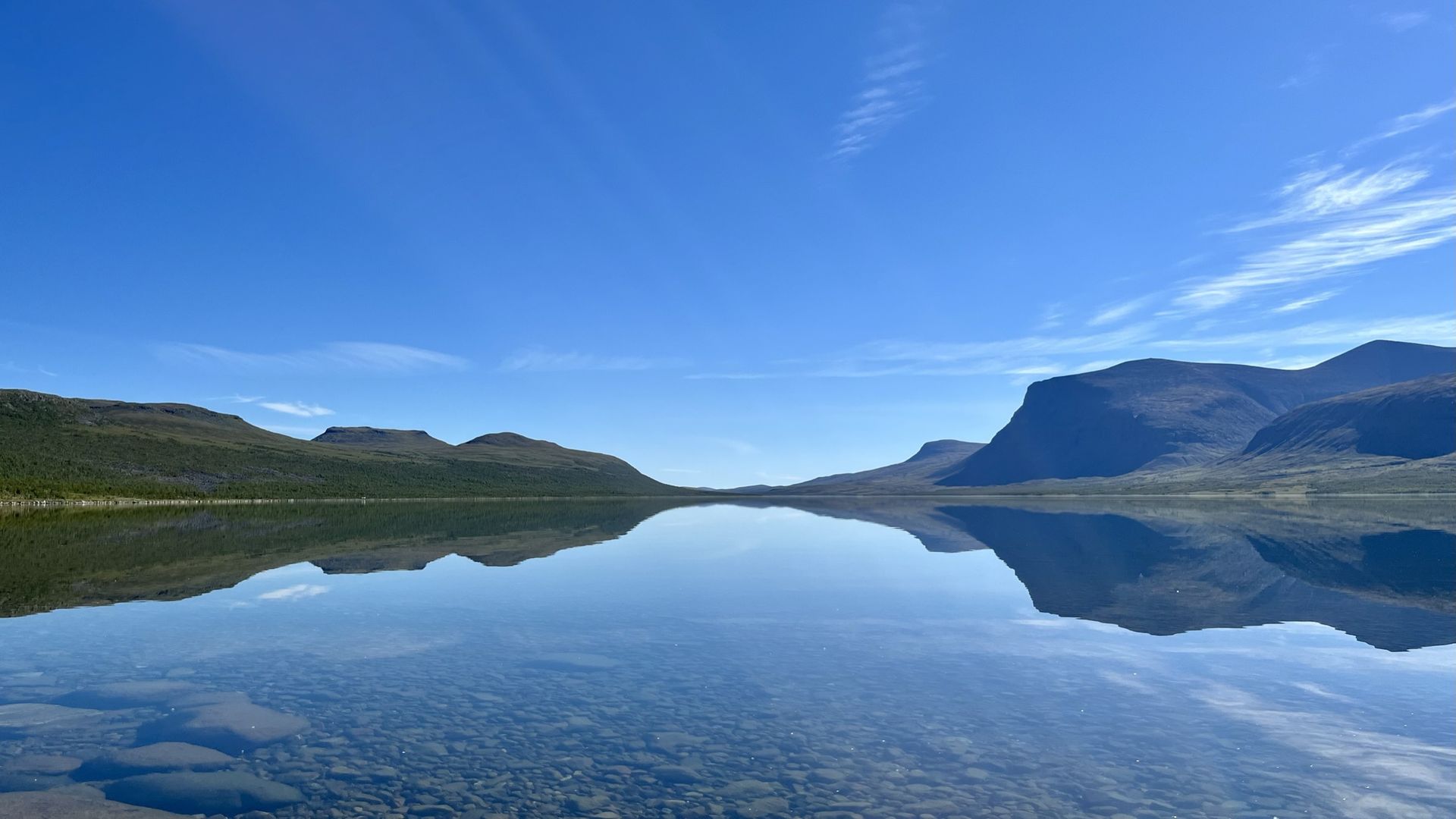
Rohkunborri covers a remarkable range of habitats. Snow- capped mountains and glaciers give way to a spectacular canyon, while vast wetlands and ancient forests provide sanctuary for plants and animals. Today, the park protects one of the wildest areas in the region, safeguarding natural habitats that have changed little over the centuries.
Rohkunborri is a habitat for wolverine, lynx and bear. In addition, golden eagle, rough-legged buzzard, gyrfalcon and kestrel nest there.
A living cultural landscape
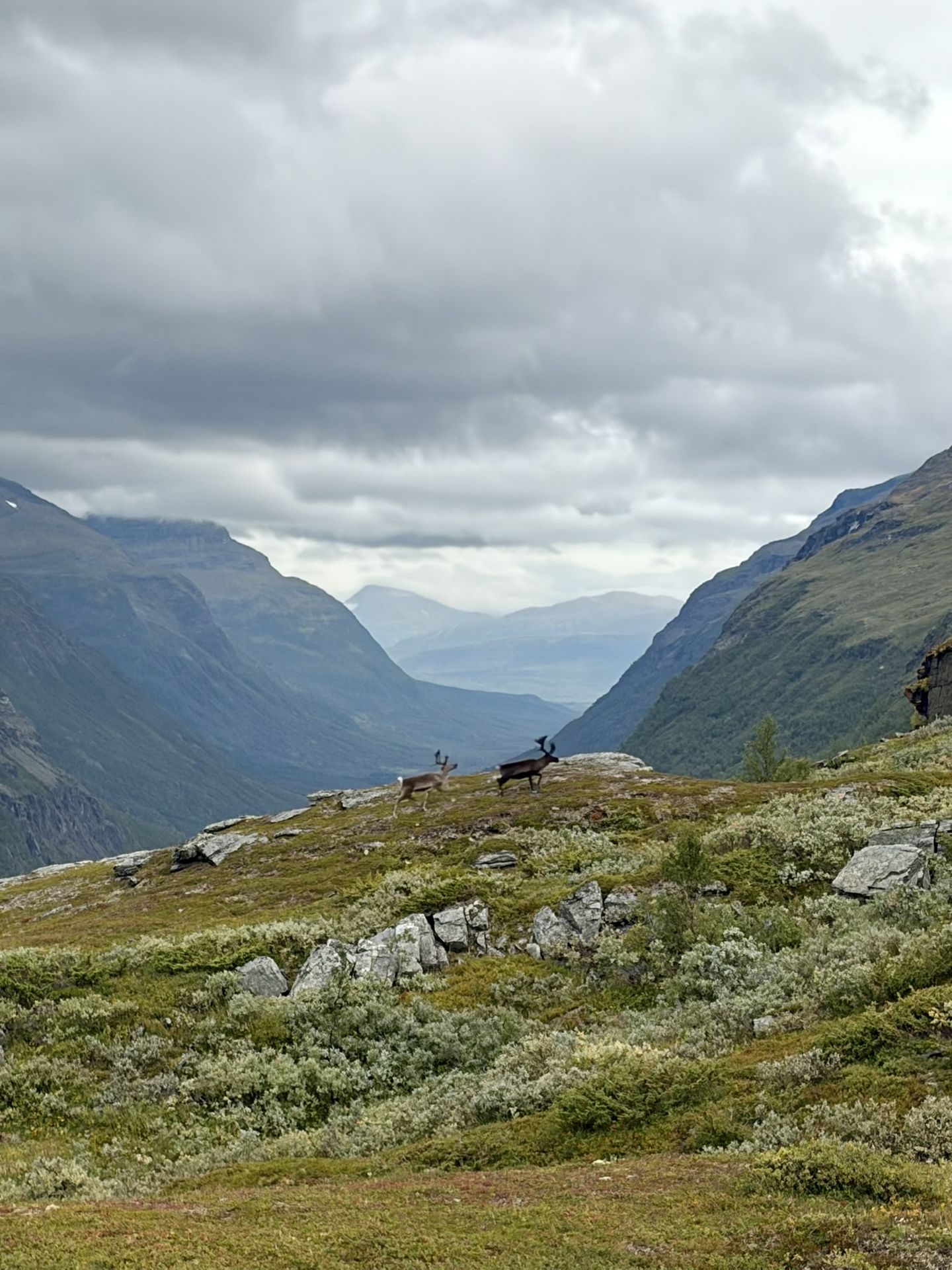
People have left their mark here since the Stone Age, and reindeer have long been part of the landscape, shaping it over generations. Today, both Norwegian and Swedish Sámi herders continue to graze their reindeer within the park.
The Sámi connection with this area is deep and enduring, and it is reflected in how the park is run. Both Norwegian and Swedish Sámi reindeer interests are represented on the governing board, placing them at the heart of decision-making. The board and the park administration work closely with Sámi interests on all relevant matters, recognising that open and constructive dialogue is essential to supporting Sámi use of the area, protecting cultural heritage and safeguarding natural values.
Ida S Bjerka
Meeting the challenges of a changing climate
Tor Erling
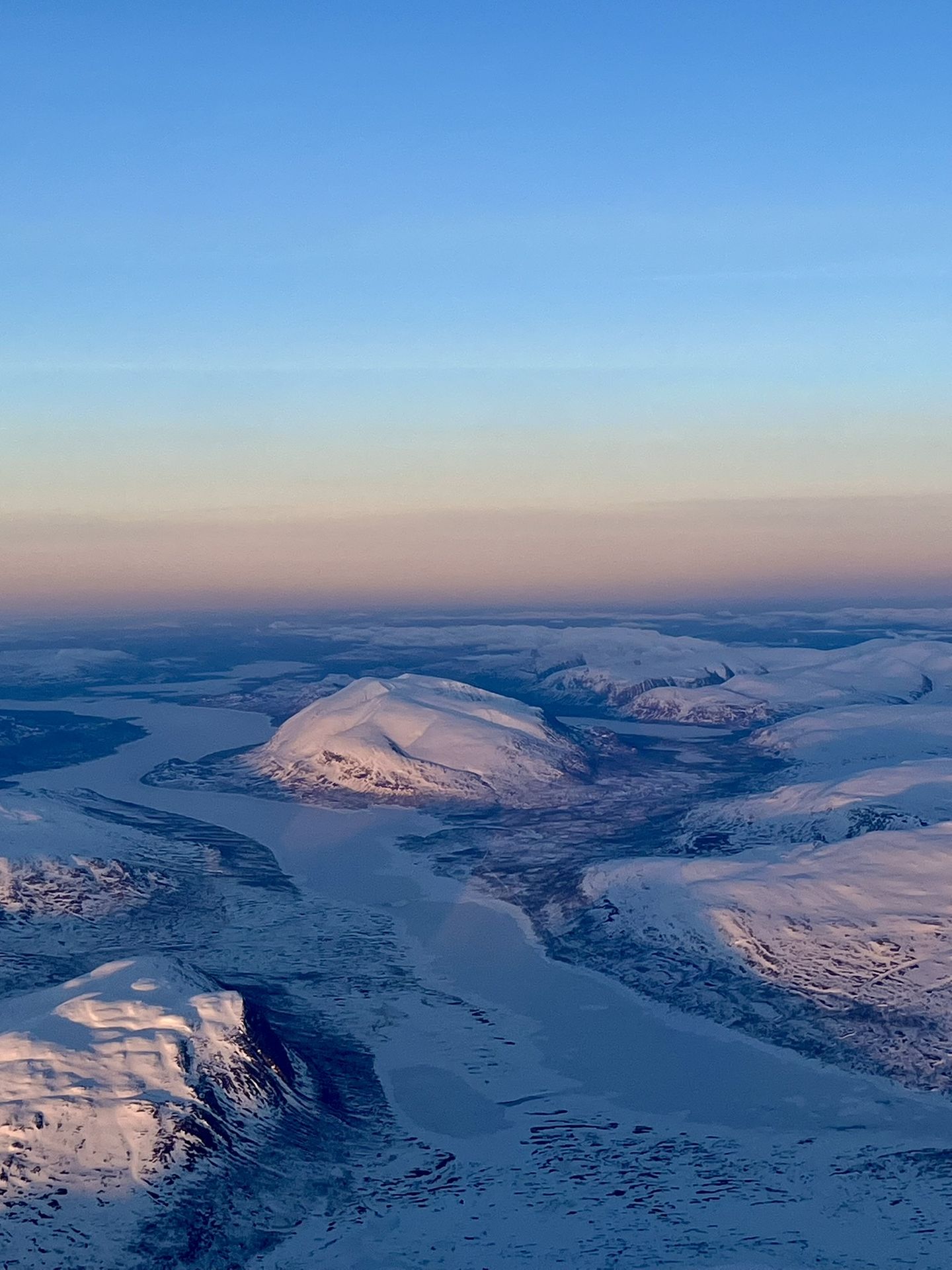
As a northern Protected Area, Rohkunborri is already feeling the effects of climate change, particularly through increased precipitation and more frequent flood events. The park is responding by building new infrastructure and upgrading existing facilities, both inside and outside its boundaries, to a robust standard. The aim is to reduce future maintenance needs and costs while keeping the park accessible and resilient.
Looking ahead
Rohkunborri joins us with a clear appetite for collaboration. The park team is keen to learn from colleagues across Europe, particularly on climate adaptation and visitor management, and to share its own experience of Sámi co-governance and robust infrastructure in a challenging northern climate.
Welcome to EUROPARC! We look forward to the knowledge, perspective and partnership this collaboration will bring to our Network!