New Member | Welcome Van Gogh National Park
Photo: Hans Avontur
In the Dutch province of North Brabant, nature, cultural history, agriculture, residents and visitors come together in a landscape that shaped one of the world’s most celebrated artists. Meet one of our newest Members: Van Gogh National Park.
A landscape full of inspiration
Vincent van Gogh was deeply moved by this landscape as a child, and it went on to inspire him throughout his life. Among the forests, moors and fields, he discovered the raw beauty of nature and the simplicity of farm life.
That bond between people and place is the foundation of the Park today:
Here we build together on a future in which nature and agriculture reinforce each other, and in which cultural heritage is not only protected but also actively experienced.
Van Gogh National Park is the youngest park and has had official park status since October 2024.
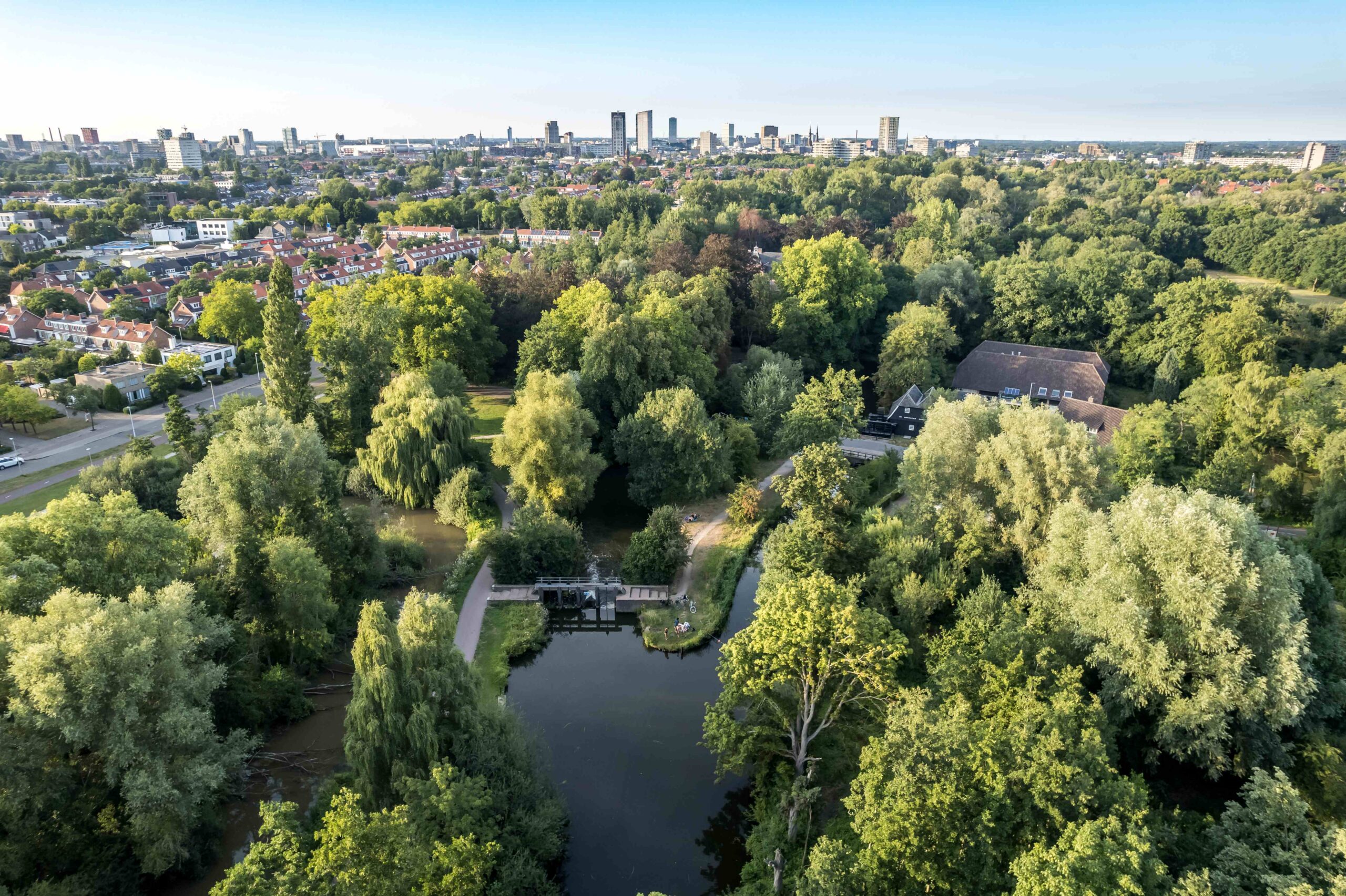
Photo: Hans Avontuur
Working together across the landscape
The objectives of the Park include:
- strengthening the connection between nature, agriculture, heritage, recreation and the built environment;
- promoting sustainable development and encouraging collaboration in the landscape through innovative ideas and stronger alliances;
- creating a visible and tangible link with Vincent van Gogh, as an inspiration for a greener, more valued living environment.
To achieve this, the Park develops and delivers projects that restore biodiversity and landscape, support nature, inclusive agriculture and sustainable development, and promote education about nature and heritage. It also develops tourism rooted in natural experience and cultural history. Its network includes 80 partners drawn from governments, business and education.
Innovation incubator
Since 2021, the Van Gogh National Park Academy has acted as an incubator for innovative local initiatives, selecting a group of people each year, whether or not they are connected to a partner organisation, and giving them the chance to develop and explore their ambitions. The Academy brings together passionate initiators, public authorities and institutions, accelerating plans and giving creativity free rein. Ideas grow into projects that enhance the landscape, the living environment and regional identity. After seven editions, the most recent of which took place successfully in 2026, the Academy has built a committed network of nearly 90 initiators, with the park acting as a catalyst and connector.
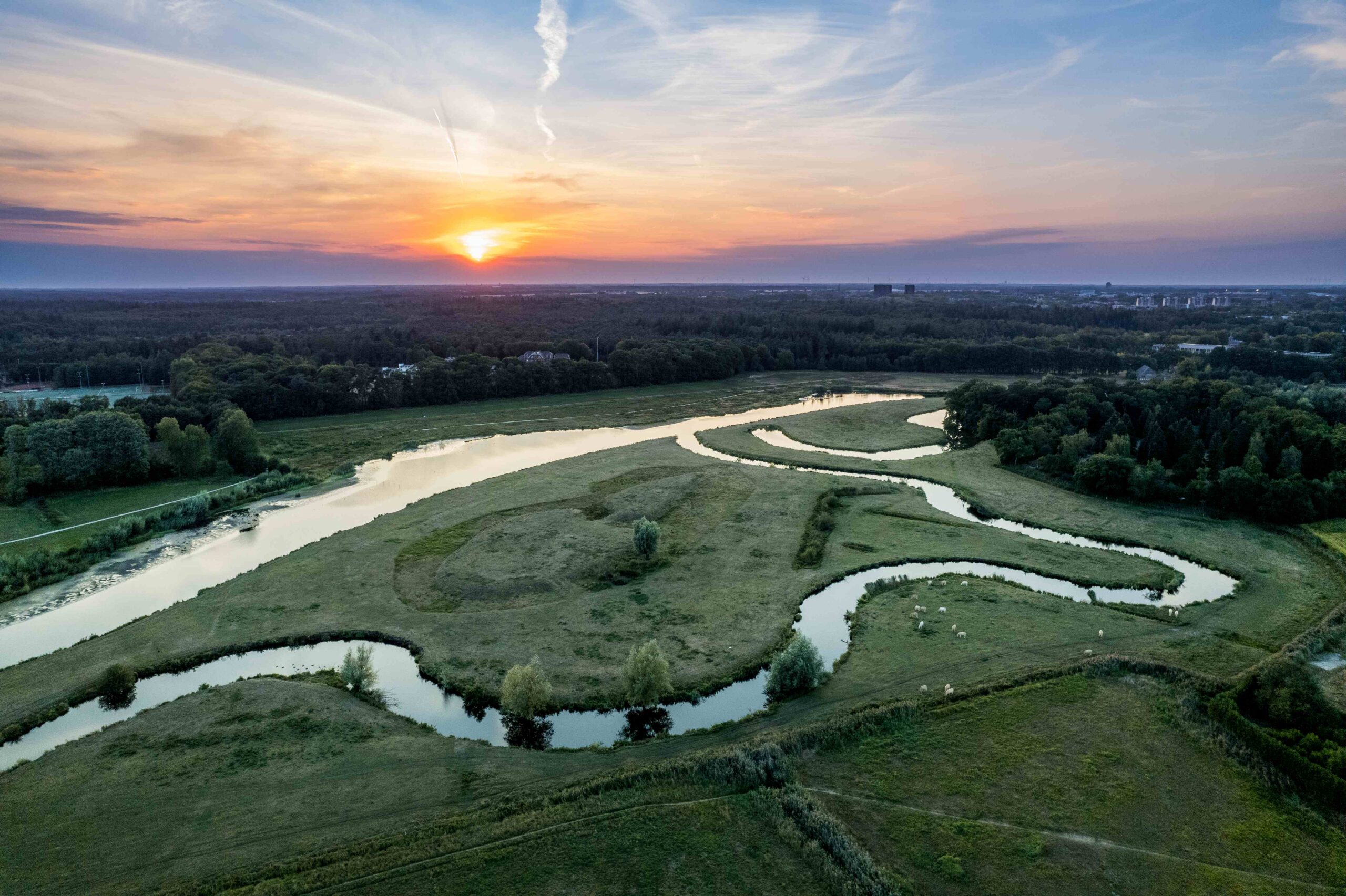
Photo: Hans Avontuur
By joining EUROPARC, Van Gogh National Park hopes to exchange knowledge and experience with Protected Areas across the continent. The park is keen to learn about: creating a more nature-inclusive and greener landscape; managing and guiding visitor behaviour; using nature, landscape and culture as storytelling tools to engage and activate citizens and entrepreneurs; health programmes that connect people with nature for both physical and mental wellbeing.
Van Gogh National Park also brings valuable experience to the network, particularly in linking cultural heritage, farming and community-led innovation.
Welcome to EUROPARC! We look forward to learning from one another!
Spotlight Story: How Transboundary Protected Areas Drive Joint Conservation
(c) Mauro Casalboni, TransParcNet 2025
1. Saxon-Bohemian Switzerland: Harmonised Management and Shared Science
Core Achievements in Joint Conservation
- Harmonised Zonation & Management: Czech nature conservation laws were updated to better align cross-border zonation. As a result, non-intervention core zones expanded up to 75% in key areas.
- Joint Scientific Governance: Furthermore, both countries established a common Scientific Board. This board created a unified Research Concept to guide shared ecological studies.
- Coordinated Ecosystem Protection: Joint teams carry out crucial safety measures. For example, they remove dangerous dead trees along the shared Kirnitzsch/Křinice gorge to protect visitors and forest health.
- Regional Networks: Additionally, both parks co-founded the Elbe Parks Network. This network connects 5 National Parks, 4 Biosphere Reserves, and 3 Protected Landscape Areas along the Elbe River.
2. The Halti Transboundary Area: Arctic Wilderness and Shared Stewardship
Key Areas of Cross-Border Collaboration
- Joint Wildlife Monitoring: Active cross-border programs focus on large carnivore monitoring (bear, wolf, lynx, and wolverine). Likewise, teams work together on arctic fox preservation and palsa mire conservation.
- Biosecurity & Risk Prevention: Partners also run coordinated campaigns to prevent ecological threats across the shared watershed. Consequently, they effectively control the parasite Gyrodactylus salaris to protect wild Atlantic salmon in Norway’s Reisa River.
- Unified Visitor Management: Moreover, both nations synchronised their visitor survey tools. They created joint information along shared routes like the North Calotte Trail to balance tourism, Sami reindeer herding, and wilderness protection.
3. Neusiedler See – Seewinkel / Fertő-Hanság: Operating as One Park
Bilateral Conservation Highlights
- Unified Identity & Zonation: The two park administrations share a joint logo and IUCN Category II standards. Therefore, they manage land use and wildlife as a single functional unit.
- Targeted Species Restoration: Supported by EU LIFE and Interreg projects, joint conservation targets habitat restoration. Specifically, teams focus on the Root Vole (Microtus oeconomus mehelyi), sodic grasslands, and wildfowl protection.
- Shared Infrastructure & Ranger Services: In addition, joint research stations (Vogelwarte) and the NeduNet project support coordinated ranger services. These programs also drive habitat monitoring and public environmental education across borders.
Key Lessons in Transboundary Success
-
Strategic Funding Alignment: First, utilising EU Interreg and LIFE frameworks provides essential funding for cross-border infrastructure and research.
-
Community & Stakeholder Integration: Second, involving local municipalities, indigenous Sami herders, research institutes, and regional tourism boards ensures long-term support.
-
Adaptive Environmental Governance: Finally, joint scientific boards and shared management plans convert high-level agreements into daily conservation work on the ground.
Here is your chance to become an accredited Transboundary Area:
National summaries of the EU Birds and Habitats Directives reporting are now available
Natura 2000 Area in Nationalpark Neusiedler See - Seewinkel
The latest report on how EU Member States are achieving the objectives of the EU Birds and Habitats Directives are now out!
Check out how your country is doing in protecting nature!
The Birds and Habitats Directives are the cornerstone of the EU’s nature conservation legislation. They are the foundation on which the Natura 2000 network is built on protecting the Europe’s most valuable and threatened nature. According to these so called Nature Directives, each EU Member State is obliged to report every six years on how it is achieving the objectives of these Directives. The latest reporting covers the period 2019‒2024.
And the results are out! The results contain a wealth of information, and you can browse all the information in the Biodiversity Information System for Europe. You can check out how your country is doing in protecting birds and habitats by downloading your country’s summary report. You can also dive into a plethora of dashboards that give you interesting overview of the whole of EU or a specific country. Dashboards for birds and for habitats are available.
You can see for example what the conservation status of habitats and species in France is:
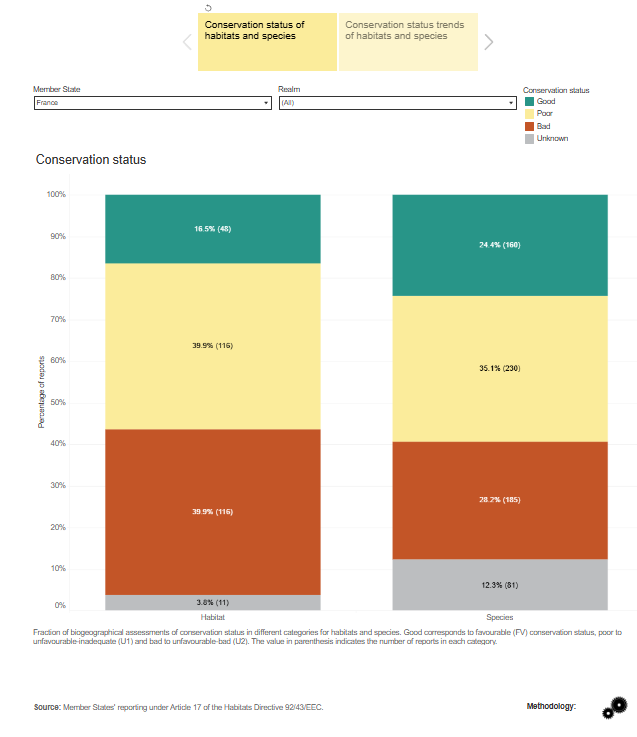
The Nature Directive reporting is an important tool to monitor how we are succeeding in protection our invaluable nature. The European Environment Agency (EEA) will compile all the reported information into a State of Nature report that will be published next year.
How can we achieve a multidimensional approach to Protected Area Management Effectiveness?
Participants of the event.
Over 60 Protected Area managers, researchers and practitioners gathered in Camaldoli, Italy, on 26–27 October 2026 to explore what makes Protected Area management effective. The discussions highlighted the importance of good monitoring, collaboration with local communities and recognising the wider value of Protected Areas.
A multidimensional approach to PAME
Protected Area Management Effectiveness (PAME) is often associated with assessment frameworks, indicators and monitoring tools. However, effective management depends on a much wider set of factors. Governance, relationships with local communities, socio-economic conditions and the ability to translate monitoring results into management decisions all play an important role.
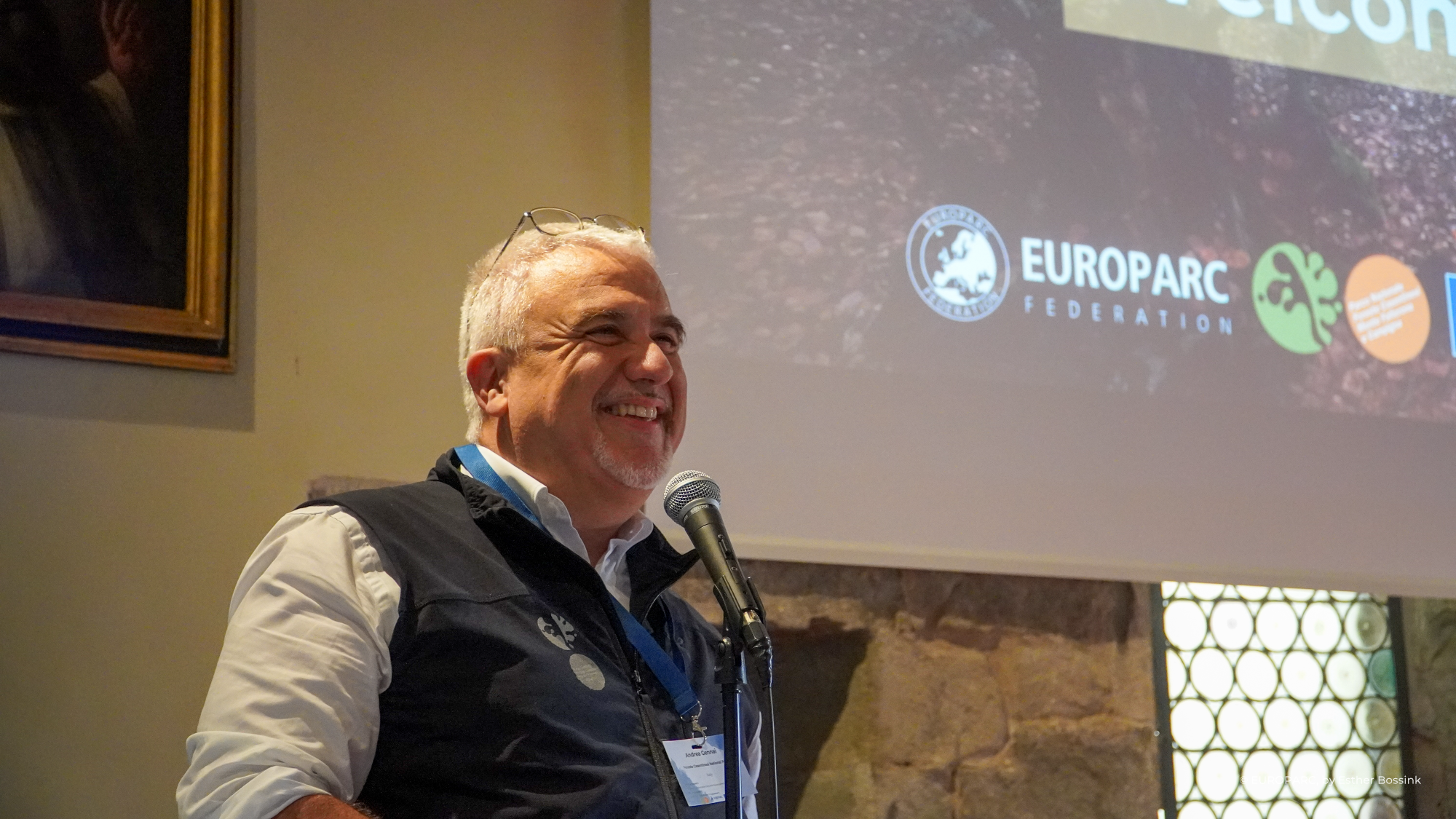
Andrea Gennai, Director of the host park National Park Foreste Casentinesi
These topics were at the centre of the EUROPARC event Protected Area Management Effectiveness: how do we achieve a multidimensional approach?, organised in Camaldoli, Italy, thanks to the generous support of Parco Nazionale delle Foreste Casentinesi, Monte Falterona e Campigna.
Bringing together Protected Area managers, representatives of different national environment agencies, researchers and practitioners, the event provided space to exchange experiences, discuss practical challenges and explore how different dimensions of management effectiveness can be better connected.
Access the full programme here.
Networking and knowledge exchange was at the core of the event. As such, participants could actively shape the programme with their interventions. The 1,5 day event saw a range of presentations from practitioners from across Europe: from new approaches to monitoring, to measuring the socio-economic impact of Protected Areas, participants truly looked at PAME from a multidimensional approach.
The event was also an excellent opportunity to update participants on the EUROPARC-led LIFE PAME-Europe project, which is creating a new Framework for assessing Management Effectiveness in Europe. The draft Framework is currently being tested by 47 Pilot Sites across Europe.
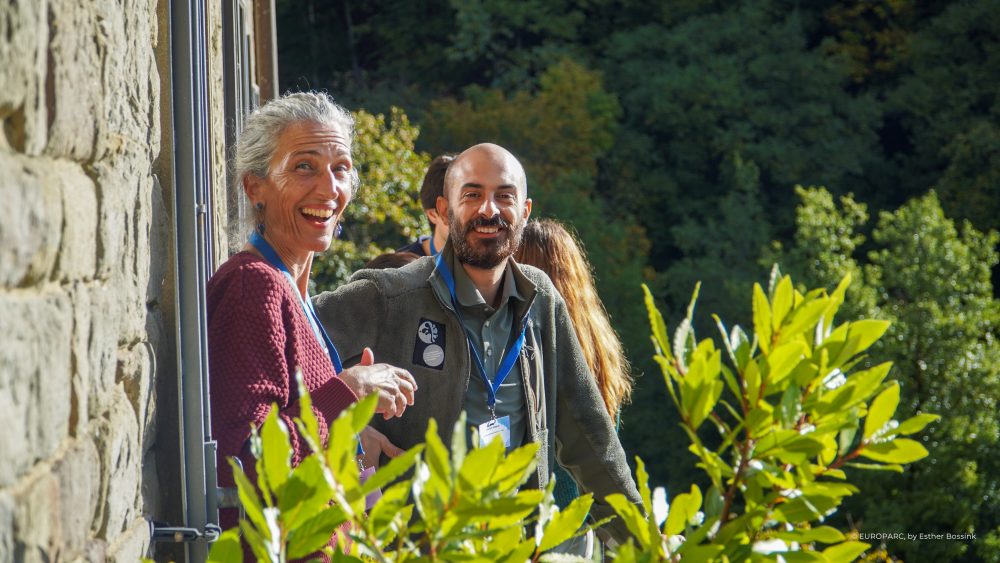
Networking under the Italian sun.
Workshops
Knowledge exchange continued in the interactive workshops. Preceded by five case studies, participants were able to take part in two workshops of their choice focussing on Governance, Stakeholder Engagement, Monitoring and Data, and Socio-economic Impact of Protected Areas. The main outputs from these discussions are summarised here:
Governance & Stakeholder Engagement – Who decides, and how do we bring people with us?
The effectiveness of any Protected Area largely depends on how it is governed and how well established relationships with key stakeholders are. However, Protected Areas often face significant challenges. These include:
- Lack of coordinated approach to Protected Area Management, due to the governance being spread across different entities.
- Lack of legislative or inconsistent legislation.
- Competing interests in governance bodies for Protected Areas.
- Multiple landowners resulting in fragmentation.
- Lack of continuity due to changes in governments and political cycles.
There is not a one-size-fits-all solution to these challenges, however establishing effective communication channels, building trust and ensuring that you are meaningfully engaging with communities in and outwith Protected Areas is essential.
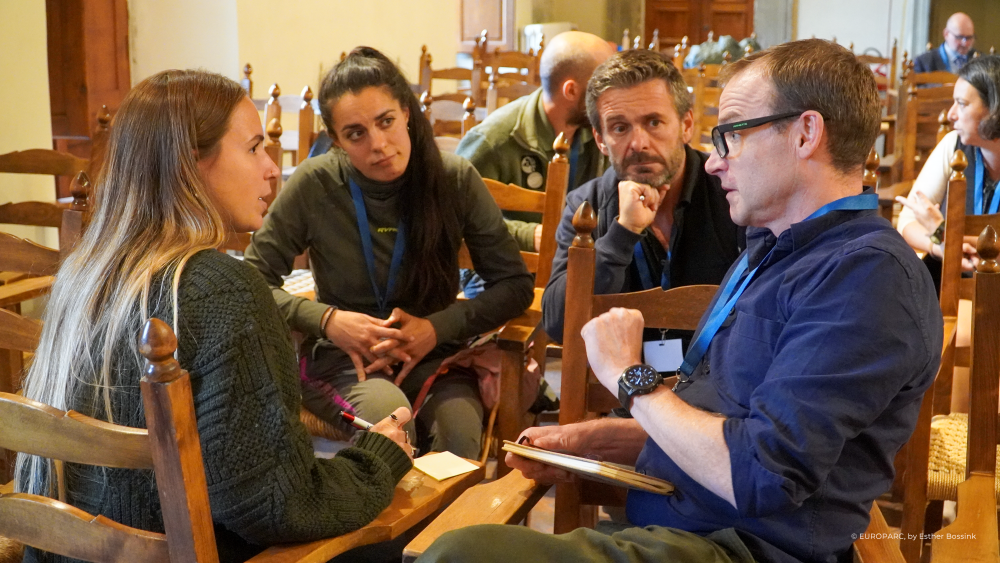
Workshop discussions
For that, it is important to have a strong story: being able to provide evidence on the effectiveness of management measures is important to substantiate and explain conservation actions. Furthermore, working together with stakeholders and communities on, for example, Retention Plans and Management Plans can support buy-in from key audiences: participants from Iceland and Scotland reported positive results from these approaches. In addition, ensuring there are tangible benefits for landowners and communities, and not just restrictions, continues to be an important feature. At the same time, it was acknowledged that it is not always feasible to build consensus with everyone. Being strategic with (human) resources when it comes to governance and stakeholder engagement is essential, especially considering the ever-shrinking budgets for nature conservation.
From monitoring data to better management decisions
Monitoring is an essential part of understanding whether Protected Areas are achieving their objectives. During this workshop, participants discussed the tools currently used to monitor their parks and the information that should be collected.
The in-workshop audience poll showed that field sensors, such as camera traps, acoustic sensors and GPS tracking, are already widely used: remote sensing, satellite data and GIS also feature prominently. At the same time, spreadsheets remain a common way of storing information, while integrated digital platforms and dashboards are still relatively rare.
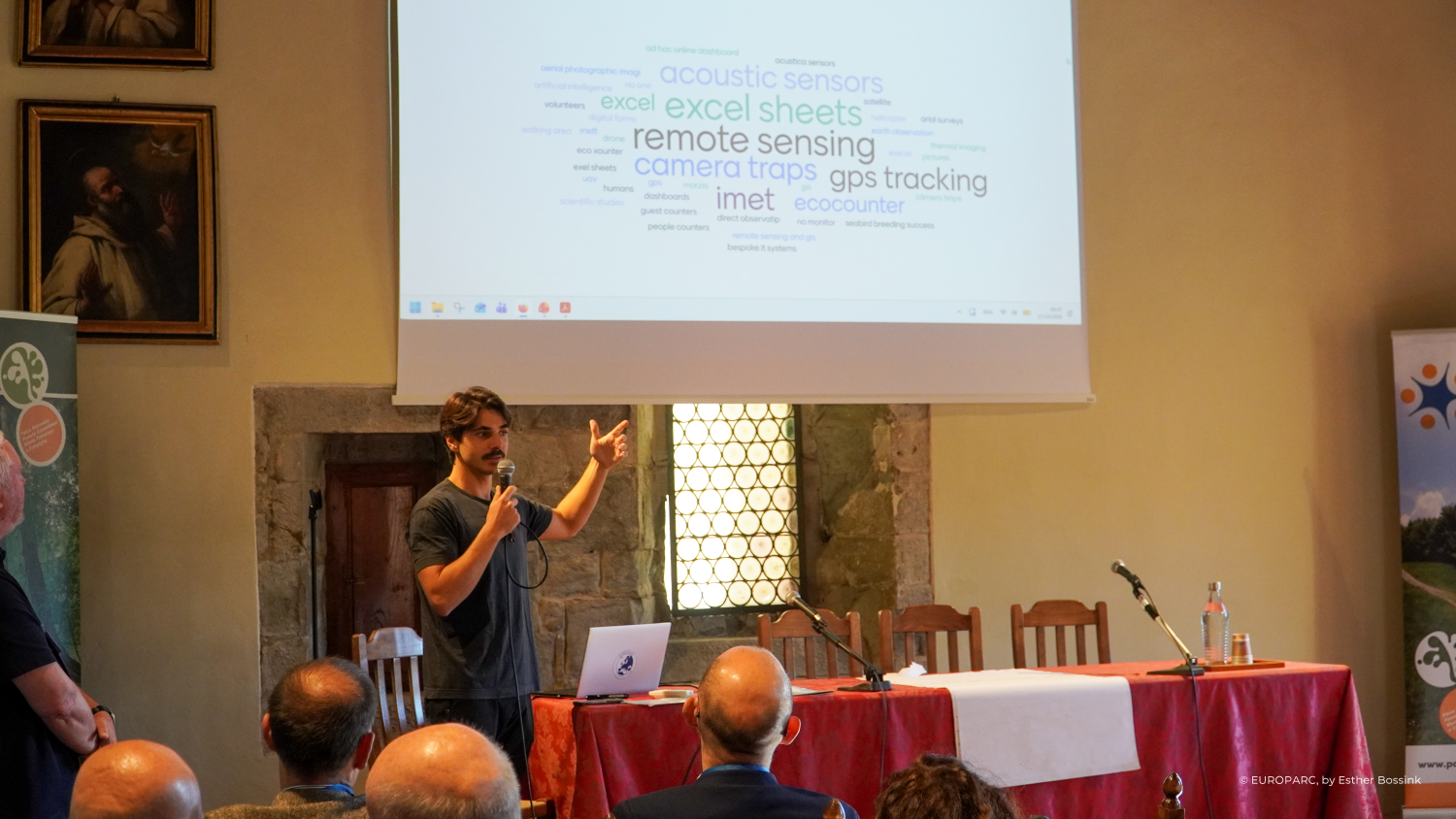
Results of the workshop on data and monitoring.
The discussions highlighted a recurring challenge: Protected Areas often collect considerable amounts of data, but this information is not always connected with or used to inform management decisions. Participants stressed that monitoring should be guided by management objectives and should assess whether management actions are having the intended results. This means looking beyond the state of biodiversity and habitats to include human pressures, visitor use, peoples’ perceptions and the wider social and economic context.
Better coordination between institutions, shared standards and improved data exchange were also identified as important steps. However, monitoring frameworks need to remain flexible enough to respond to the different contexts and needs of individual Protected Areas.
Ultimately, monitoring needs to feed into planning and decision-making. Collecting more data is of limited value if it does not help managers to understand what is working and where adaptive actions are needed.
Balancing nature conservation and local development
This workshop focused on the relationship between Protected Areas and sustainable economic development. Participants discussed how Protected Areas can contribute to local economies while maintaining their primary role in nature conservation.
Tourism and outdoor recreation can bring economic benefits to surrounding communities, creating opportunities for local businesses, accommodation providers and other services. Participants also highlighted the potential to communicate and demonstrate the wider economic value of Protected Areas, including the benefits of ecosystem services, health and well-being.
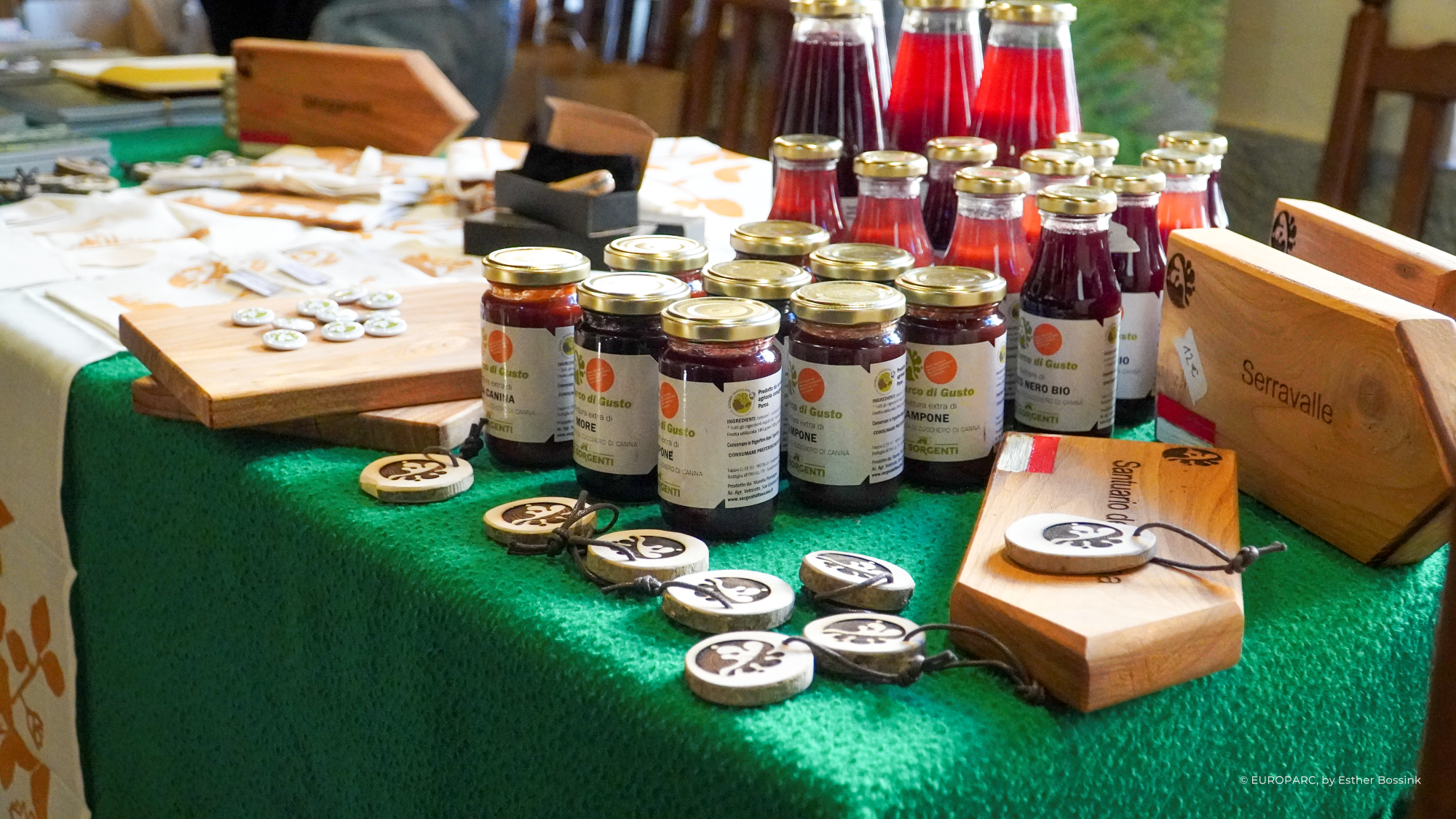
Products from the Foreste Casentinesi National Park
Ideas included for products from Protected Areas, creating stronger links between local producers and markets, and finding ways to bring the value of natural capital into local and regional accounting systems. The host of the event, National Park Foreste Casentinesi, led by example and showcased a range of ‘Park products’ to participants.
Visitor pressure was another important topic. The increasing popularity of many Protected Areas, particularly since the COVID-19 pandemic, can create challenges for sensitive sites. Management responses might include limiting visitor numbers, directing visitors towards less vulnerable areas and developing attractive recreational opportunities outside the most pressured parts of a Protected Area.
However, participants emphasised that economic benefits should not become the measure of nature’s value. Nature has intrinsic values, and not every conservation action needs to demonstrate an economic return.
Nature has intrinsic values, and not every conservation action needs to demonstrate an economic return.
Local communities as partners in conservation
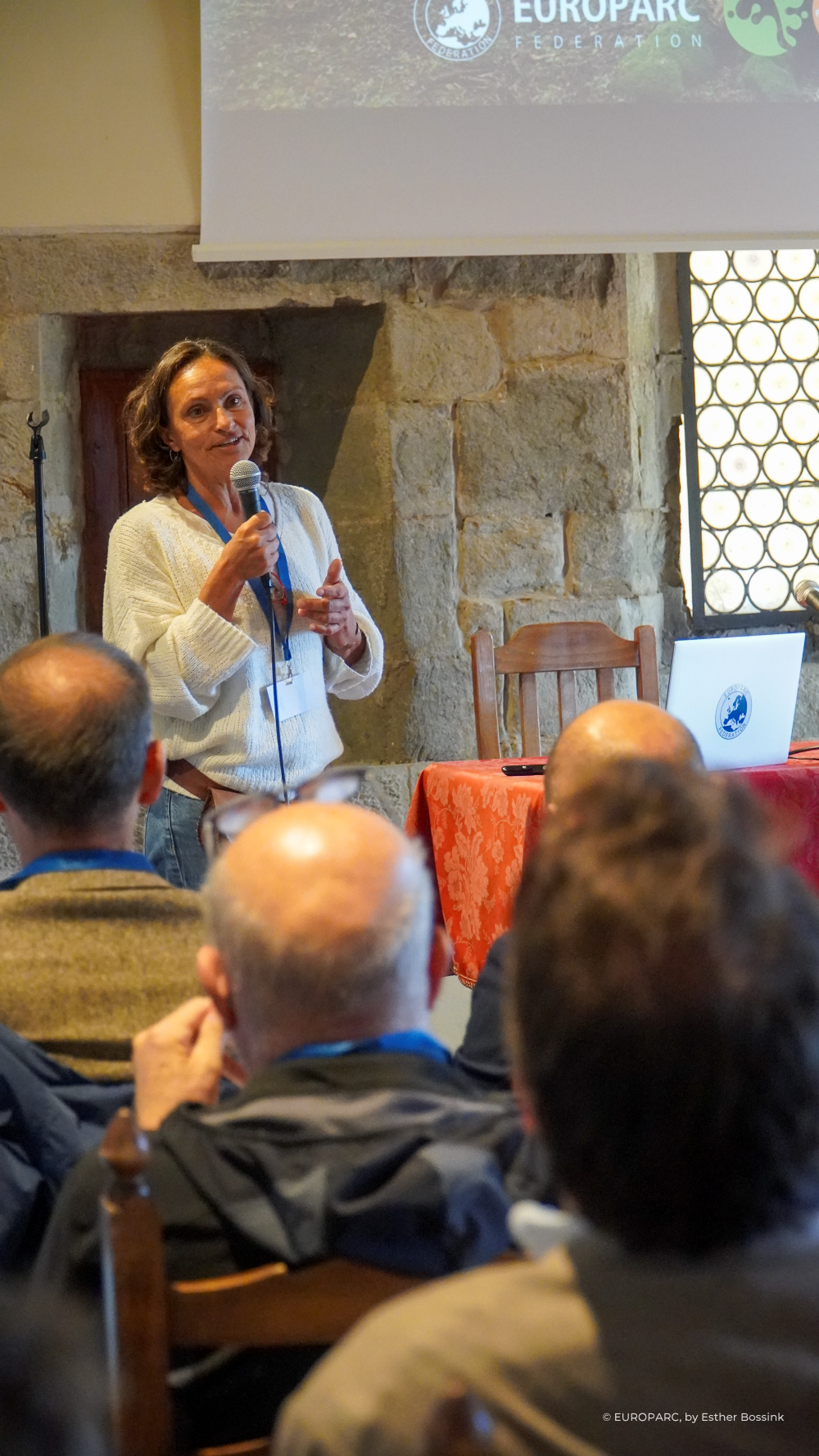
Ana Carla Cabrita da Conceição from Portugal details the experience as a LIFE PAME-Europe Pilot Site
A recurring message throughout the discussions was the importance of building good relationships with people living in and around Protected Areas.
Participants stressed that local communities, landowners and farmers need to be involved from an early stage. Understanding their concerns, listening to their experiences and communicating openly can help build trust and create stronger support for conservation. There are different ways to achieve this. These include involving local stakeholders in projects, making use of their knowledge, providing accessible information about the role of Protected Areas and creating opportunities for people to express their views. Peer exchanges between Protected Area managers can also help share positive experiences and practical approaches, as well as support the collection of ‘evidence’ to substantiate Protected Area management.
The discussions further highlighted the potential of co-management and shared stewardship, as well as opportunities for landowners to engage voluntarily in conservation, supported by appropriate compensation and funding mechanisms. The underlying principle was clear: Protected Areas need to work for nature and people. Local communities should experience the benefits of conservation and have a meaningful role in shaping how their Protected Areas are managed.
Towards a more connected approach to management effectiveness
The event demonstrated how closely the different dimensions of management effectiveness are linked. Monitoring needs to support management decisions, governance needs to enable cooperation, and conservation measures need to take account of the people and economies connected to a Protected Area. There is no single approach that will work everywhere. Protected Areas differ in their ecological conditions, governance structures, resources and relationships with local communities. Learning from one another and adapting approaches to local circumstances will therefore remain essential.
The exchanges in Camaldoli provided an opportunity to reflect on these challenges and share practical experiences from across Europe. They also reinforced the importance of looking at management effectiveness as an ongoing process, supported by good information, cooperation and a clear understanding of the different values and responsibilities involved in managing Protected Areas.
This event was made possible through the generous support of Parco Nazionale delle Foreste Casentinesi, Monte Falterona e Campigna.
