Evaluation of Germany’s National Parks shows positive progress
The effectiveness of all 16 German National Parks was reassessed. The results are now available and they show a positive trend.
Management Effectiveness Assessment in German National Parks
During the period 2022 – 2024, an external evaluation committee was appointed to assess the Management Effectiveness of all 16 German National Parks. This is the second assessment, after an initial evaluation (2009 – 2012). As part of an interim survey (2015 – 2018), the extent to which the recommendations from the initial evaluation had already been implemented — or at least had begun to be implemented — was examined.
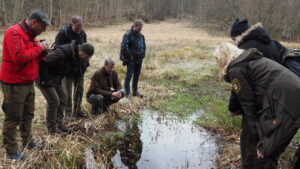
Site Visit in National Park Jasmund
The assessment is timely: Protected Area Management Effectiveness (PAME) is a cornerstone in all leading biodiversity strategies, like the EU Biodiversity Strategy or the Kunming-Montreal Global Biodiversity Framework. PAME assessments help identify strengths and weaknesses in Protected Area Management, ensuring nature managers can respond to deliver the best results for biodiversity.
In Germany, the assessment follows the Quality Criteria and Standards for German National Parks. It consists of a self-assessment by the park administration, and on-site visits and interviews with the park administration and the relevant state ministry or ministries by the external evaluation committee. The involvement of relevant stakeholders is key and is intended to strengthen acceptance of and appreciation for the National Parks. The external advisors also surveyed various stakeholders to obtain a broad picture of the current situation in the National Parks. On this basis, the committee prepared a detailed evaluation report for each national park, which are primarily published on their websites.
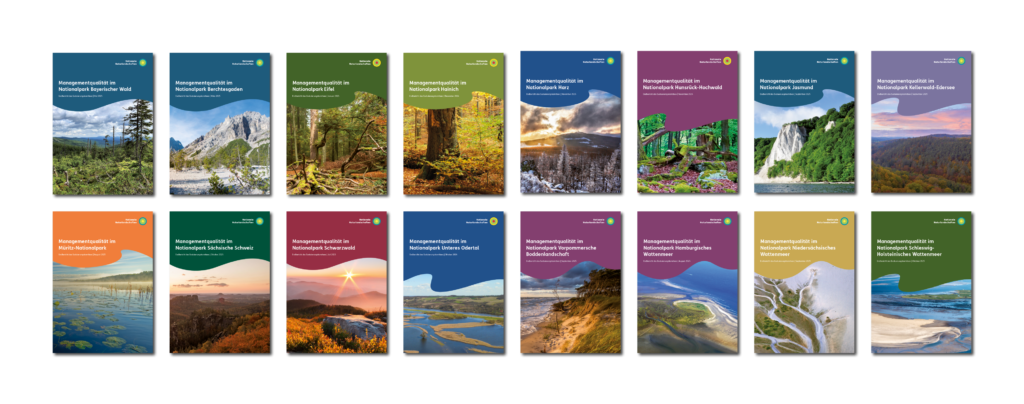
The evaluation reports
A Promising Trend, But Growing Pressures
The evaluation shows that, overall, Germany’s National Parks have developed positively since the first evaluation. Particularly noteworthy are improvements in the expansion of natural dynamic zones. As a result, numerous National Parks have come significantly closer to the central goal of leaving at least 75 percent of their area to natural dynamics.
Nevertheless, challenges remain. In several National Parks, for example, unfavorable land configurations, third-party usage rights, excessive visitor pressure, or fragmenting roads and utility services hinder the full implementation of this goal. Management measures — such as those aimed at reducing wildlife populations — also still take place in some cases within the natural dynamic zones.
Budget Cuts Threaten Wins For Biodiversity
The financial and human resources available to National Parks, as well as the dedication and qualifications of the staff in the National Park administrations, are crucial to their success. These last two points in particular stand out very positively in all National Parks; in addition, many volunteers are actively involved, including in Protected Area monitoring, visitor assistance in the field, and practical species and habitat conservation. Nevertheless, all National Park administrations face at least some staffing shortages, for example in area control, the ranger service, research and monitoring, or environmental education. This underlines that adequate financial resources are needed to ensure National Parks are delivering on their many goals and objectives.
 LIFE PAME-Europe
The project was managed by the German Section of the EUROPARC Federation, Nationale Naturlandschaften e. V. (NNL e.V). They served as a mediator between the interests of the federal government and the states, while also acting as a liaison between the scientific community and administrative practices in the National Parks.
NNL e.V. is also a partner in the EUROPARC-led LIFE PAME-Europe project. Their experiences are feeding directly into the PAME-Europe Framework developed within the project, to assess management effectiveness in Protected Areas. The aim of the project is to produce a Framework that can be applied throughout Europe. The project is currently in its piloting phase, with 47 Protected Areas applying the Framework and providing extensive feedback on its use.
 Learn More
A summary of these findings across all the German National Parks is provided in the brochure “Management Quality of German National Parks – Results of the Second Evaluation.”, discover it here:
Birds and Habitats Directives undergo Stress Test
Retezat National Park, Romania - Claudia Dănău
For decades, the Birds and Habitats Directives have protected nature and biodiversity in the European Union. Now, they are under scrutiny. Keep on reading to understand why this matters, and what you can do to help!
The Birds and Habitats Directives: A Cornerstone of EU Nature Conservation Policy
Adopted in 1979 and amended in 2009 (Birds Directive) and 1992 (Habitats Directive), these so-called ‘EU Nature Directives’ have a long and successful track record of protecting Europe’s most vulnerable and valuable species and habitats. They led to the establishment of the Natura 2000 network – the largest coordinated network of Protected Areas in the world.
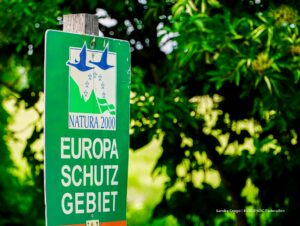
Natura 2000 Area in Nationalpark Neusiedler See – Seewinkel
For decades these Directives have embodied the EU’s commitment to nature protection and preservation of biodiversity, as the foundation of life and human well-being. They have also become an integral part of Protected Area management across EU Member States.
Now, the Directives are undergoing a ‘Stress Test’ to assess whether they “remain fit to achieve their objectives in a cost-efficient way, including by identifying opportunities to reduce unnecessary administrative burden”.
Nature As An ‘Administrative Burden’?
The Stress Test forms part of the European Commission’s broader simplification agenda, which aims to strengthen EU competitiveness. The exercise seeks to identify opportunities to reduce “disproportionate administrative burden” while maintaining the Directives’ ambition and high standards of nature protection. It also aims to identify existing good practices and solutions.
As the largest network of Protected Area professionals in Europe, EUROPARC’s message is clear: The EU Nature Directives are the cornerstone for the work of our members in the European Union. Together with the EU Nature Restoration Regulation they are the most important tool for nature conservation and restoration in Natura 2000 sites. For this reason, they are also indispensable tools for Natura 2000 site managers and practitioners.
The EU Birds and Habitats Directives are simply crucial tools for achieving our European and international biodiversity commitments, not an ‘administrative burden’.
Says EUROPARC Director Alberto Arroyo Schnell.
The Nature Directives are the way for the EU Member States and the European Union to achieve the international biodiversity targets that have been mutually agreed. These commitments have been made “To take urgent action to halt and reverse biodiversity loss to put nature on a path to recovery for the benefit of people and planet”, as it is stated in the mission of the Kunming-Montreal Global Biodiversity Framework. The EU Member States and the European Union have all committed themselves to achieve these goals.
These Directives have driven nature protection through area-based conservation across EU Member States. It is highly unlikely that conservation efforts on this scale would have taken place without them.
Nature Is Not a Luxury – It Is a Necessity
The Directives play a vital role in protecting biodiversity and helping to halt its decline. However, their benefits extend far beyond nature conservation alone.
Healthy ecosystems provide essential services that underpin our economies and societies. Weakening the protection of our natural capital would result in significant economic and social costs. The World Economic Forum has highlighted this connection for years, including in its report Nature Risk Rising: Why the Crisis Engulfing Nature Matters for Business and the Economy. Failing to protect nature is, ultimately, a form of economic asset depletion.
While implementation challenges do exist, like knowledge gaps or a lack of stakeholder engagement, these issues generally arise from shortcomings in national implementation rather than from the provisions of the Directives themselves.
The Nature Directives are currently one of the most effective tools we have in Europe to protect nature. Weakening them would endanger biodiversity, people’s wellbeing and the EU’s position in the world as a global leader on nature conservation.
EUROPARC believes that, rather than reopening or weakening the Directives, attention should focus on addressing the real obstacles to effective implementation: inadequate funding, insufficient human resources, and gaps in skills and capacity.
How can you help?

A public consultation is currently underway to gather the views of stakeholders and citizens on the implementation of the Birds and Habitats Directives.
We strongly encourage those actively working in and managing Europe’s Protected Areas and natural landscapes to respond to the European Commission’s consultation on the Stress Test. The consultation remains open until 10 August.
As nature managers and conservation practitioners, it is essential that we send a clear and united message: nature conservation is not a burden, it is an investment in a resilient, prosperous, and liveable future. All evidence we can gather to convey this message will help.
Your voice matters: provide your evidence!
The Public Consultation particularly looks for good practices related to the implementation of these Directives. It is of great support to have these ready when answering the Consultation. Additionally, you are welcome to share any good practices with the EUROPARC Directorate, so they can feed into our answer to the public consultation.
Next steps
EUROPARC Federation was invited by the European Commission Directorate-General for Environment to take part in the so-called focus group discussions as well as in a targeted survey for stakeholders. Through these, the Commission collects further information on the implementation of the Directives, such as in-depth data, figures and evidence on any disproportionate administrative burden, as well as good practices and potential solutions to reduce it. The Commission conducted these discussions also with selected Member States, and all Member States are invited to answer to the targeted survey.
EUROPARC Federation has provided and will provide information through these different channels, including the public consultation. There will also be in-person “Reality check” events for stakeholders and Member State representatives in Brussels in September.
The Commission aims to have a report on the Stress test results ready by the end of 2026.