The Story of Finnish Nature Day – How Finland Brings People Closer to Nature
Photo: Metsähallitus/ Aino Jylhänlehto
At the EUROPARC Conference 2025, Tiina Hakkarainen Manager, Corporate Relations, Parks & Wildlife Finland presented the Finnish Nature Day! Learn more about this initiative that aims to bring nature and people closer together again.
Article written by Tiina Hakkarainen.
A Day for Nature and People!
Finnish Nature Day is celebrated every year on the last Saturday of August. This special day dedicated to nature offers concrete ways to enjoy the outdoors together. Positive nature experiences – such as spending a night in a forest hotel or enjoying art in a natural setting – increase people’s appreciation of nature and their willingness to protect it. Finnish Nature Day receives wide media attention and provides an excellent opportunity to highlight the importance of nature to broad audiences. Social media also fills with greetings and beautiful outdoor photos shared in honour of the day.
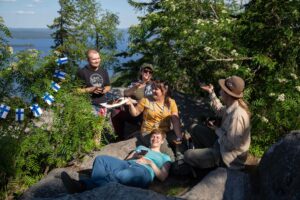
Photo: Metsähallitus/ Saara Lavi
Finland is the first country in the world to fly its national flag for nature. The aim of the day is to increase appreciation for nature and strengthen the relationship Finns have with the natural world in our increasingly urbanised society.
In Finland, many national celebration days come with traditional pastries that reflect the season and cultural heritage. A popular way to celebrate Finnish Nature Day is to bake a blueberry pie using berries picked from the wild.
Finnish Nature Day is not only a celebration – it also raises awareness of the importance of nature and strengthens people’s desire to protect it. When people recognise the value of nature and celebrate it, a positive attitude towards conservation follows naturally.
History of Finnish Nature Day
Finnish Nature Day was celebrated for the first time in August 2013. The last Saturday of August soon became the established date of the celebration, marking the end of summer and the beginning of harvest season in Finland.
The day’s steadily growing popularity and rapid rise to the ranks of Finland’s important national observances show that nature holds a central place in Finnish culture – something truly worth celebrating and flying the flag for.
From the very beginning, the day has had a relaxed and easy-going atmosphere. Even during the year Finland celebrated its 100th anniversary – when many events were particularly festive and choir concerts were held in all national parks – the mood remained open and joyful. From the outset, everyone has been encouraged to celebrate nature in their own way.
Finnish Nature Day Logo
How the Celebration Is Organised
Finnish Nature Day is coordinated by a steering group with representatives from organisations related to nature, the environment, outdoor activities and public health, from across the country. The day has its own website that provides information, tips for organising events, and materials for day-care centres, schools and the media. In the early years, public excursions organised for Finnish Nature Day were collected into a shared event calendar, and event organisers stayed in touch through a dedicated Facebook group. Over time, the day has grown into an established tradition, and coordination is now needed less than before.
On Finnish Nature Day, public events and local nature trips are organised, people hug trees, take part in nature volunteering, and sleep a night outdoors. Excursions are arranged by various nature and outdoor organisations, friends’ associations of national parks and partner enterprises. The day can also be celebrated simply by heading outdoors alone or with friends to enjoy a campfire snack and the atmosphere. For many Finns, this has been the most meaningful way to mark the occasion.
The day brings together government representatives, citizens, companies and organisations in a cheerful and unifying spirit. Opposition and political tensions are set aside. A few simple elements – such as flag flying, the official celebratory pastry (blueberry pie), and a shared social media hashtag – tie the relaxed festivities together.
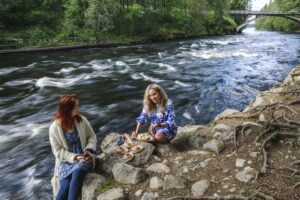
Photo: Metsähallitus/ Ulla Keituri
Inspiring Europe to Celebrate Nature
In Finland, the Priodiversity LIFE project is currently underway, aiming to halt biodiversity loss. The project brings together a wide and diverse group of committed stakeholders who, together, have the potential to find the most effective and cost-efficient means to stop biodiversity loss in Finland. One of the project’s goals is to expand the celebration of a dedicated nature day across the EU with the support of Members of the European Parliament. Finnish Nature Day has grown into a beloved tradition, and now we hope to bring this idea to the whole of Europe. The Priodiversity LIFE project is coordinated by Metsähallitus Parks & Wildlife Finland.
Prodiversity logo
Imagine a day when nature receives the recognition it deserves – when national leaders speak for nature, and people across the continent head outdoors to celebrate the forests, lakes and landscapes that make their home countries unique. If this were to take place all across Europe, nature conservation would gain significant visibility.
A suitable date could be, for example, European Day of Parks on 24 May. EUROPARC coordinates this celebration of Europe’s Parks and Protected Areas, inviting visitors everywhere to spend time in nature – or another day that best fits the climate and seasonal conditions of your own country.
We now invite you to join us: let’s make Nature Day a shared European celebration!
More information:
Tiina Hakkarainen, Manager, Corporate Relations, Parks & Wildlife Finland

Metsähallitus logo
Finnish Nature Day: https://suomenluonnonpaiva.fi/finnish-nature-day-a-flag-flying-day-for-nature/
Priodiversity LIFE: https://www.metsa.fi/en/project/priodiversity-eng/
Celebrating Protected Areas Leading the Way in Sustainable Tourism
Last 19 November, we were proud to celebrate Protected Areas from across Europe that have demonstrated outstanding commitment to sustainable tourism, earning their place as European Charter for Sustainable Tourism Awardees.
Bringing Protected Area excellence to Brussels!
The award ceremony for the European Charter for Sustainable Tourism (ECST) took place in the European Parliament in Brussels. We were honoured to be hosted by MEP Giuseppe Antoci, who was awarded the Alfred Toepfer Medal in 2016 for his extraordinary courage in defending nature against organised crime. He emphasised that initiatives, such as the European Charter for Sustainable Tourism, demonstrate Europe’s capacity and responsibility to advance sustainable tourism, safeguard biodiversity, and support resilient local communities.

We also had the privilege of welcoming two insightful keynote contributions:
- “Sustainable tourism and nature conservation: challenges and opportunities”
by Andrea Vettori, Head of the Nature Conservation Unit, European Commission – DG Environment
- “Towards a new EU Strategy for Sustainable Tourism”
by Ramunė Genzbigelytė-Venturi, Policy Officer for Tourism, European Commission – DG MOVE
Get to know the winners!
This year, 24 Protected Areas were awarded the ECST. This includes 6 new awardees and 18 that have successfully re-applied to the ECST. You can virtually travel through these areas here:
The newly awarded Parks are:
- Antola Regional Natural Park, Italy
- Emilia Western Parks, Italy
- Gauja National Park, Latvia
- Monti Lucretili Natural Regional Park, Italy
- Serralada Litoral Park, Catalonia, Spain
- Weerribben-Wieden National Park, the Netherlands
Get to know all the awardees here!
During the ceremony, the awardees had the opportunity to showcase best practices successfully implemented in their territories, demonstrating the diversity and innovation behind sustainable tourism across Europe. Presentations included:
- Developing and managing the GR60 – Magic Mountains Long-Distance Trail
By João Carlos Pinho, Executive Coordinator, ADRIMAG / Montanhas Mágicas. The Park noted:
The Charter has proved to be of utmost importance in defining the main strategic orientations and the main actions to be developed, for the whole territory, regarding sustainable tourism development.
- Creating a Unified Visual Identity for the Soomaa National Park Charter Area
By Aino Viinapuu, Board Member, Green Riverland Partnership

- Implementing Sustainable Mobility with Shared E-Bikes in Weerribben-Wieden National Park
By Sharon Jagt, Project Manager for Sustainability and Economy, Weerribben-Wieden National Park
- ECST Forum as the Main Tool for Integrating Sustainable Tourism into the Management of the Julian Alps Transboundary MaB UNESCO Biosphere
By Stefano Santi, Director of Prealpi Giulie Nature Park, and Tit Potočnik, Director of Triglav National Park. They said:
ECST is a special journey that allows us to connect parks, local communities, and tourists beyond borders, honoring nature along a shared path of sustainability.
- Park and Operators: Building a Sustainable Future Together
By Franco Locatelli, ECST Responsible – Foreste Casentinesi, Monte Falterona e Campigna National Park. He remarked:
The ECST represents a great opportunity for our Park, and it is therefore an honor to receive this recognition. In recent years, thanks to the ECST, we have built an important network with local operators and other institutions. It has also provided a valuable opportunity for professional and educational growth for our members, as well as for raising awareness about sustainable tourism.
As this year’s celebration came to a close, heartfelt thanks went to all who joined us at the European Parliament in Brussels. Their presence and engagement strengthened the shared commitment to building a more sustainable future.
Warm congratulations to all the awarded Protected Areas for their outstanding leadership and dedication to advancing sustainable tourism across Europe.
Discover the photo album here:
Nature is Good Medicine: Examples from General Care and Dementia Initiatives
© Naturpark Sparbach/Käfer
Nature is Good Medicine
The Healing Power for Nurses, Caregivers, and Patients – Examples from General Care and Dementia Initiatives
In today’s fast-paced world, stress has become a common challenge, particularly for those in caregiving professions such as nurses and caregivers for individuals living with various health conditions, including dementia. The toll of chronic stress can lead to serious health issues, including heart disease, diabetes, and mental health disorders like depression and burnout.
Recognizing this, various initiatives have emerged to leverage the healing power of nature as a remedy for stress relief and mental well-being.
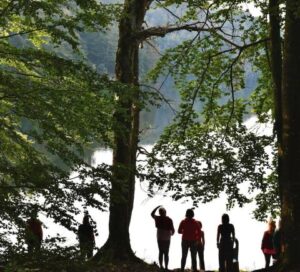
Credits: Lesný kúpeľ KK
One notable example is the collaboration between the AGEL Levoča Hospital, which is linked with hospitals in Kežmarok and Krompachy, Slovakia, and the Forest Pedagogy NGO. This partnership aims to provide forest bath therapy to nurses, allowing them to immerse themselves in a serene natural environment. The calming effects of nature not only help reduce stress but also promote physical and mental health, enabling caregivers to recharge and better support their patients. This initiative is particularly crucial as healthcare workers have faced unprecedented levels of stress during the COVID-19 pandemic.
By cultivating a stronger connection to nature, this initiative not only enhanced the well-being of healthcare professionals—who participated in interviews after each session to assess the effects—but also promotes a holistic approach to healthcare. In 2025, an analysis of a new short form of the Profile of Mood States (POMS) questionnaire. The POMS is a widely-applied measure for the assessment of an individual’s mood. The results on the impact of forest bathing sessions for the participants was extremely positive.
Logo of Lesny Kupel
The curriculum is accredited by the Ministry of Education, Science, Research and Sport of the Slovak Republic and created by the Slovak Association of Forest Bath.
This Good Practice was shared within the Interreg Europe GREENHEALTH project. Here EUROPARC Federation participates as project partner for Capacity Building and Communication and counts on the expertise of the Healthy Parks Healthy People Europe Commission.
Read more about this Good Practice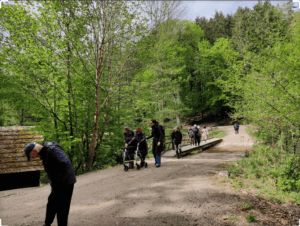
© Naturpark Sparbach/Käfer
Furthermore, our case studies highlight the Nature Park Sparbach, which has implemented the “Miteinander unterwegs” project.
This initiative involves the municipalities in the Biosphere Reserve Wienerwald (Mauerbach, Gablitz, Purkersdorf, Tullnerbach and Wolfsgraben), who joined forces under the “Wir 5 im Wienerwald” network.
We spoke about this initiative at its early stages, during a webinar in July 2023, and things have developed since then. The project invites individuals affected by dementia and their caregivers to explore the beauty of nature together. As part of the “Wir 5 im Wienerwald” network, it fosters collaboration among stakeholders, institutions, and families impacted by dementia. By providing peer-support spaces and training on coping strategies, the project aims to alleviate the emotional burdens faced by caregivers while enhancing the quality of life for those living with dementia.
To the case study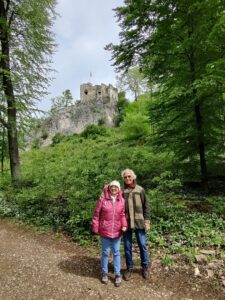
© Naturpark Sparbach/Käfer
If you need more information on the initiative described in this case study, you can visit the article (in German) by Susanne Käfer, Headmaster of the Nature Park Office Sparbach and which was released in the journal Green Care, published by the Competence Centre for Green Pedagogy at the University College of Agricultural and Environmental Education (HAUP), Vienna, Austria
These examples highlight the profound impact that nature can have on mental well-being, particularly for those under significant stress. By creating opportunities for individuals to connect with the natural world, we can promote healing, resilience, and a greater sense of community.
Do you have stories or wish to engage with Healthy Parks Healthy People Europe? You are welcome to contact us and let us know about you and we will be right back!
To the Call to ActionPromoting Accessibility and Sustainability through the ECST in Italian Parks
Paths, La Pineta di Terzigno, Vesuvius National Park
Two case studies highlighting successful approaches to promoting accessibility and sustainability in ECST-recognised Italian parks
Promoting Accessibility and Sustainability through the ECST in Italian Parks
This article presents two case studies of activities developed in Italian parks through their committment to the European Charter for Sustainable Tourism. The case studies showcase practical strategies for sustainable and inclusive tourism, exploring approaches to improving accessibility for visitors with limited mobility and promoting local, sustainable food networks. Together, they demonstrate effective ways to balance visitor engagement, community benefits, and nature protection.
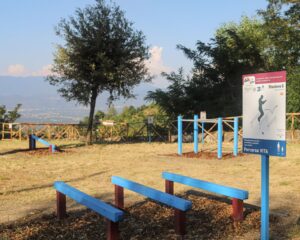
© Vesuvius National Park’s archive
Case Study 1: Accessibility and Wellness for All – Vesuvius National Park Leads Inclusive, Sustainable Tourism
Located in Italy’s Campania region, Vesuvius National Park faced accessibility challenges due to its uneven and unstable terrain, which made it difficult for wheelchair users, families with strollers, and visitors with limited mobility to explore its trails. To address this, the park upgraded “Trail 11 – Terzigno Pinewood” with flat, natural surfaces suitable for all visitors and created the “Percorso Vita Easy” fitness trail. An AI assistant, “Mr Plinio”, now provides information via QR codes to support people with sensory impairments, making outdoor recreation accessible to everyone. Read the full case study here.
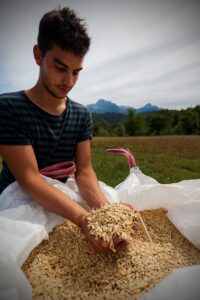
© Erik-Concari
Case Study 2: “Restaurants of the Biosphere”: A network for sustainable catering
Located in northern‐central Italy, the Tuscan-Emilian Apennine Biosphere Reserve recognised a gap in the connection between local food producers and restaurants and the need to promote short supply chains. To address this, the reserve launched a network of restaurants across the Biosphere Reserve, organising a competition for establishments to create menus featuring local, seasonal ingredients sourced from the nearby countryside. Over 16 years of project development, more than 40 restaurants and 100 local producers have participated, strengthening sustainable gastronomy and regional identity. Read the full case study here.
Do you have interesting initiatives that you would like to share with us? Or would you like to submit a case study? Please visit our Knowledge Hub!