It’s time to utilise ethical private finance to tackle our dual crises – Statement
Workshop at the Siggen Seminar 2023
From 20 – 22nd of March, 15 participants from 12 countries came together in Gut Siggen to explore how we can upscale nature restoration through private finance during the 2023 EUROPARC Siggen Seminar.
Parks unlocked; Innovative Financing to Transform Parks across Europe.
The participants took a deep dive into models that attract private finance to unlock and drive nature restoration at scale. In particular, looking at the role Parks can play in building the market for investing in Europe’s natural capital. The time is now to take advantage of that € billion opportunity!
Together, they wrote a statement, underlying the urgency to act now, directed at the Protected Area Community, the European Commission, National and Regional parks Administrations and the Green Investment Sector:
“We, representing a cross-section of Protected Areas in Europe, have come together to unlock emerging opportunities to attract ethical private finance at scale and pace, to meet the challenges of climate change and biodiversity loss and catalyse nature restoration across Europe.
Our 15 participants from 12 countries stress the need for the Protected Area community to become “investment ready”, by creating a shared vision to turn nature restoration projects into investable business models, in order to access private finance from the ethical and green investment sector.
The need to act is now.
Together we aim to develop an innovative financing model, where private investment enhances and supplements public funds, creating social and environmental benefits with a financial return. Looking beyond our boundaries, working across biogeographical zones and utilising national and regional protected area network, we commit to collective thinking and action in order to access the billions of ethical finances available. Partnerships with the financial sector is a necessity. A clear policy and ethical framework will inform who we partner with and support the development of ambitious and high integrity nature restoration projects, in and around Protected Areas.
We will advance the development and testing of a model of innovative financing, to attract investment at scale. We want to test and develop this model to roll it out across Europe.
This process will begin with a two-year project, to map and analyse the market actors, the demand for ecosystem services, the policy environment, including carbon mechanisms and codes to support the design of high-quality natural capital projects, as well as identify pilot sites. Funding from European, national and regional administrations would help and enable your areas to Unlock not just the Parks – but the investment needed to create the resilient, healthy nature that we all need.”
The statement was signed by representatives of
EUROPARC Federation
Palladium
Comissão de Coordenação e Desenvolvimento Regional – NORTE, Portugal
Directorate General of Nature and Biodiversity. Government of Castilla-La Mancha, Spain
National Park Harz, Germany
Czech Society for Ornithology, Czech Republic
Foreste Casentinesi National Park – Italy
Triglav National Park, Slovenia
UNDP/ Sustainability of Protected Areas, Bosnia and Herzegovina
NatureScot, Scotland
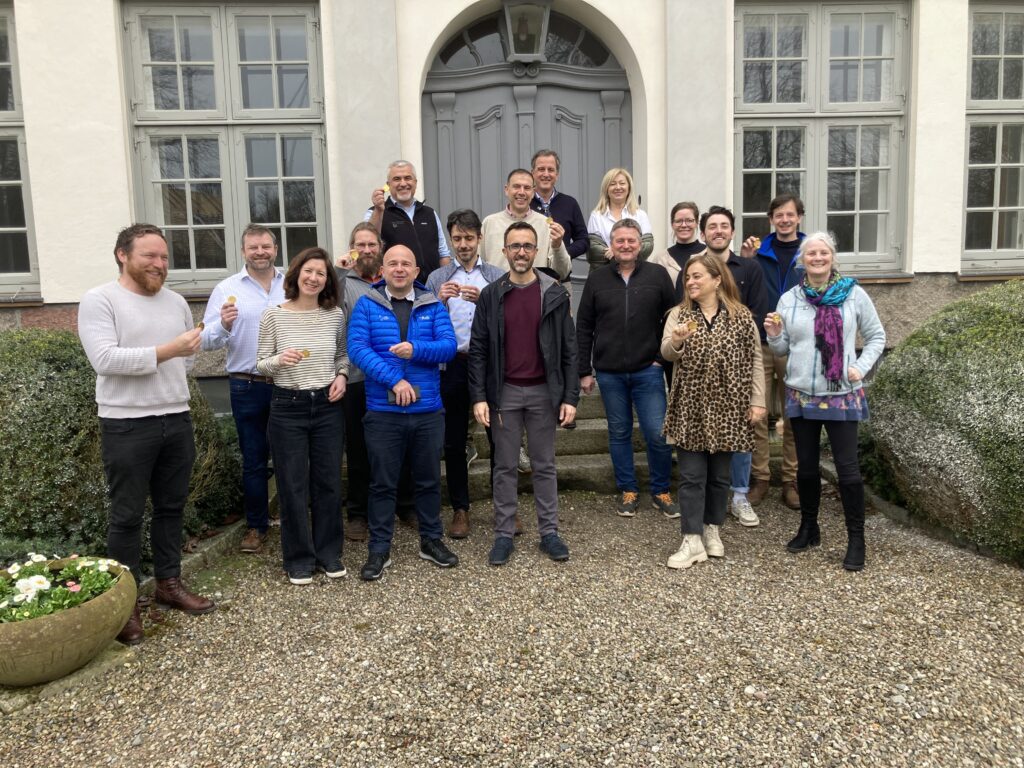
Participants of the Siggen Seminar 2023
The EUROPARC Siggen Seminar is made possible through the generous support of the Alfred Toepfer Stiftung.
We are Building on our Roots this European Day of Parks!
Every year, the European Day of Parks wants to bring People and Parks together. This year’s theme is “Building on our Roots” and we invite the EUROPARC Community to organise events on and around the 24th of May.
Building on our Roots
Our natural heritage encapsulates our identity. As such, we all have the responsibility and the joy to maintain this heritage for future generations, and discover how we can build upon it! That is why we are Building on our Roots, this European Day of Parks.
“In our heritage lies our past, present and future”
By cherishing our heritage, we are strengthening our identity and connecting ourselves to the larger, natural, environment.
This is something that we are particularly aware of at EUROPARC this year, as we are celebrating our 50th Anniversary! That is why we ask the Parks and Protected Area community to come together this year and celebrate the European Day of Parks like never before!
With almost all COVID-19 restrictions lifted in countries across Europe, we can now return to the roots of the European Day of Parks, which is getting people out into nature.
Join us!
Unsure what to do? No worries, we have created guidelines with loads of examples for activities for Parks to organise:
Share your celebration!
So, is your Protected Area ‘Building on our Roots; this European Day of Parks? Then we look forward to seeing your activities! In order for EUROPARC to showcase the amazing work you are doing, you are welcome to share any pictures or videos from your events with us:

We will compile this to help promote the importance of our Protected Areas throughout Europe, and celebrate our anniversary at the EUROPARC Conference. Of course, you can also join the online conversation! Use #EuropeanDayofParks & #EDoP2023 and be sure to tag EUROPARC:
Facebook & Twitter: @EUROPARC
Instagram: EUROPARC_Federation
Linkedin: EUROPARC Federation
Of course, the banner is available in many different languages here. If you are missing your language, just send an email with the translation to the above address.
We look forward to seeing your events!
Updates in the framework of the N2000 biogeographical process – marine conservation
View of a coast of the Orkney Islands, Scotland - 20/10/2008. Photo by Laurent Chamussy
Last March 2nd, EUROPARC Federation attended the European Commission Sub-Expert Group On Marine Issues, known as Marine Expert Group – MEG, a sub-group under the Birds and Habitats Directives created in 2003 to support the implementation of the Directives in the marine environment.
The meeting was facilitated by Vedran Nikolic – Policy Coordinator, Nature Conservation, Directorate General for Environment, and attended by aprox. 75 participants and representatives from national authorities, public agencies, Marine Protected Areas management authorities, fisheries representatives and NGOs from all over Europe. The gathering aimed to provide an update on the latest developments regarding the implementation of the Biodiversity Strategy in the marine environment and the recently published Marine Action Plan.
Like in previous occasions, the Commission collected comments from the participants in relation to these documents, possible considerations on its implementation arising at national, regional or local level and tackle any other business concerning the political framework for the conservation on the marine environment and its application.
Pledges on Conservation and Protected Area targets
After the release of the Biodiversity Strategy 2030, the European Commission called to Member States to prepare and report detailed plans, known as pledges, on the actions that will be implemented for the conservation and restoration of marine habitats and species at national level by the end of February 2023.
The pledges reporting was divided into two main components:
- Pledges for Conservation Status Improvement targets and;
- Pledges for Protected Area targets.
The structure and contents of the pledges was explained during the MEG meeting, and it includes:
- Protected Areas current extent per biogeographical region/ marine region and what is expected to be achieved by 2030 – including detailed explanations on the proceeding through which new Protected Areas have been proposed or designated and the inclusion of information regarding Natura 2000 that contribute to the 10% strict protection.
- Other Area-based Conservation Measures (OECMs) current extent per biogeographical region/ marine region and what is expected to be achieved by 2030 – despite of the existing criteria set by the Convention on Biological Diversity (CBD) to design and clarify what OECMs are, these protection figures have proved to be quite controversary in previous discussions due to the uncertainties these definition and its implementation. However, in the meeting
it was highlighted that their contribution to the Biodiversity Strategy targets is very important and therefore must be included in the pledge reporting process.
- Explanation on the coherence of the network – detailed information on the criteria established for assessing the coherence of MPA networks was provided as follows:
- Representativity – ensuring that the range of marine habitats and species for which MPAs are considered appropriate are protected within MPAs;
- Replication – ensuring that enough occurrences of a given feature are protected within MPAs and ensuring replication reflects what is known about a given feature´s biogeographic range;
- Connectivity – ensuring individual MPAs are well connected in terms of facilitating the exchange of species and their propagules;
- Adequacy – ensuring individual MPAs are of a specific minimum size, especially in relation to pressure of human activities and the needs of specific habitats and species;
- Management – ensuring that effective management plans are put in place, with responsibility assigned for delivery.
Status of Pledges
A detailed revision of the reporting status of these pledges was also presented. As of March 2nd 2023, only Luxemburg and Spain have submitted their pledges on both Conservation Status and Protected Areas.
Among the remaining 25 countries, half of them is expected to be submitted in the following two months. The reasons for the delay in both pledges are mainly limited data available or capacity, length of governmental endorsement process, length of stakeholder engagement processes and obstacles in regards of the coordination between regions. All these reasons, especially the one concerning stakeholder engagement processes, were deemed by the commission as very challenging and that sufficient time should be taken to address them.
Some other difficulties found were concerning the lack of funds to carry out the necessary actions to design the necessary conservation and restoration actions and produce the pledges on time. Since the EU did not provide specific funding for the implementation of the Biodiversity Strategy, these actions should often be articulated through projects that require also time and effort from the hand of the organisations to achieve the necessary results.
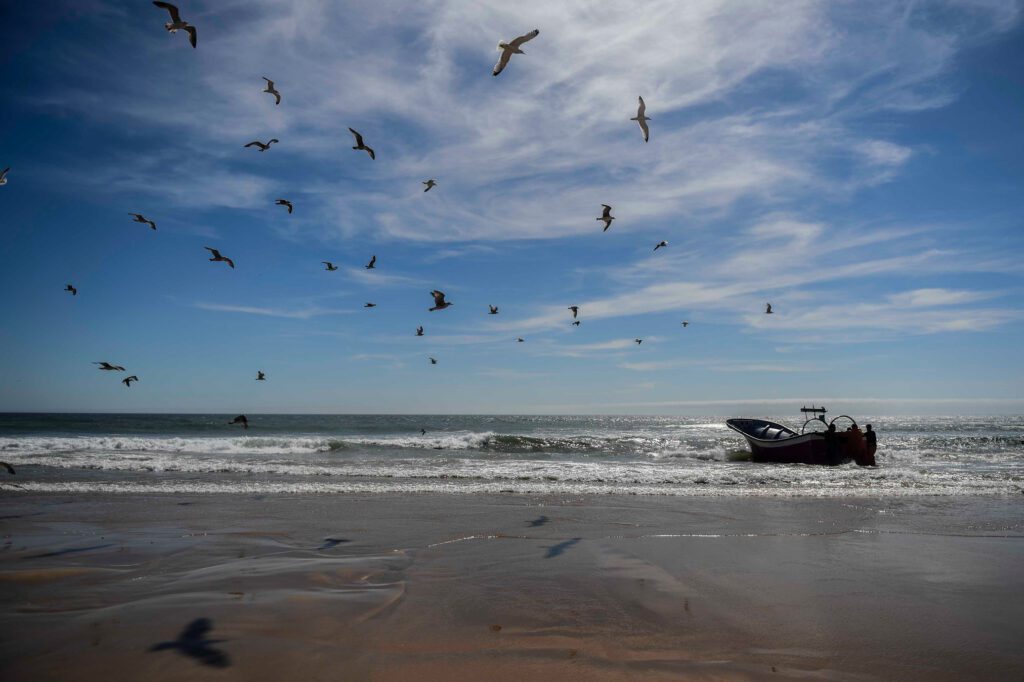
Fishermen pulling their fishing boat to the sea as seagulls fly over, Costa de Caparica, Portugal – 27/05/2019. Photo by Patricia De Melo Moreira
Pledges assessment process
After its submission, the pledges will be reviewed and assessed in order to measure progress towards the achievement of the numerical targets stated in the Biodiversity Strategy and provide initial feedback on network coherence.
The organisation in charge of receiving and managing the pledges is the European Environmental Agency, and during the meeting a representative from the EEA – Elena Osipova – presented a quick revision of the pledges assessment process and some considerations for its reporting.
On the one hand, it is noteworthy that Member States ‘commitments to the Biodiversity Strategy conservation objectives are voluntary and therefore the assessment of the pledges are not an evaluation of compliance. The aim of the assessment is to support Member States in designing and implementing their conservation strategies and to provide them with relevant topics of discussion at events and seminars organised in the framework of the biogeographical process.
On the other hand, as it was stressed during the meeting, the pledges reporting and assessment is a new process for everyone involved, and that “methodologies will develop as the picture unfolds”. Therefore, it is an open process that will be subject to revision and updates.
Additionally, the Commission reminded that the pledges assessment will be carried out during the Biogeographical Seminars that Member States are invited to organise, according to the following biogeographical regions:
- the Baltic Sea region
- Atlantic and Macaronesian regions
- Mediterranean and Black Sea regions
As of today, the call for events to be held during spring 2023 is already closed, but a second call for those events that will take place during the summer is open until April 17th. More information on the organisation of the events can be found here.
The challenges of designing coherent MPA networks
New Protected Areas will need to be designated based on smart and efficient Marine Spatial Planning in order to achieve a coherent network and based on the criteria explained above.
However, the existing species and habitats maps of Europe have proved to not to be sufficient for establishing a baseline with enough and detailed information upon which the planification of a coherent network of protected areas should be carried out. In example, some sub-habitats or habitat patches can be very important to protect but are not mapped due to their small size or distribution. Likewise, there is not enough information on habitats that sustain natural processes on which key species rely, such as reproduction and nursery areas.
For this reason, it is important to drive sufficient efforts into actions that allow us to get a better understanding of where key species, habitats and process are located in our seas in order to protected them. In this line of action, after the pledges status revision, an initiative that aims to contribute to the marine species and habitats mapping and MPAs network design was presented by Mark J. Costello – Nord University, Norway: the Horizon MPA Europe project.
This project, which will conclude in 2026, aims to carry out a wide assessment and mapping of areas that comprehend high biodiversity levels, not just species, and blue carbon storage areas in Europe, and create a model of potential MPAs. During the presentation, a model of the optimal MPA network at global scale that included 30% of the ocean, 70% of the species and 90% of biomes and habitats, was presented.
The new Marine Action Plan to conserve fisheries resources and protect marine ecosystems
The MEG meeting concluded with an overview of the recently published Action Plan: Protecting and restoring marine ecosystems for sustainable and resilient fisheries, which together with three other measures conforms the package that the European Union is putting in place to improve the sustainability and resilience of the EU’s fisheries and aquaculture sector.
This action plan builds over existing legislation and tries to fill some gaps between policies, mainly between the fisheries and environmental world, and to support the implementation of the CFP. The plan has 4 main lines of action:
- Improve gear selectivity and address bycatch of sensitive species;
- Protect the seabed;
- Facilitate knowledge exchange and transition;
- Improve Governance.
A detailed article on the Marine Action Plan can be found in our News section and more information will be available in our website – EU Marine Policies section, soon.
You can also access the whole Communication from the Commission: EU Action Plan: Protecting and restoring marine ecosystems for sustainable and resilient fisheries at the EC’s website here.
Initiating dialogue on how to design a resilient Trans-European Nature Network
stakehoderPhoto credits Valerie Menelec
Reflections from NaturaConnect’s first Stakeholder Engagement Event
How can NaturaConnect help to design a coherent and resilient Trans European Nature Network in the context of the Member States Protected Area pledges?
This was the central question underpinning the first stakeholder engagement event organised by the Horizon Europe NaturaConnect project in Brussels on the 28th of February 2023.
The event gathered over 70 leading EU delegates, governmental representatives, academics as well as international and European conservation organizations to lay the foundation for a bold new vision for Europe’s nature protection.
The event was organised by EUROPARC Federation, who leads the overarching stakeholder engagement and capacity building strategy within the project. In his opening remarks, Neil McIntosh – representing EUROPARC Executive Director at the event – emphasised:
Today is about participation in order to build the dialogue necessary that will help protect and preserve biodiversity, by connecting areas, as well as nature and people.
Frank Vassen, representing DG Environment as well as the project’s Advisory Board, added some important contextual elements about the EU Biodiversity Strategy for 2030, the policy framework underpinning NaturaConnect:
We understand that we cannot continue business as usual. We need both to protect and to restore nature. Consequently, the two big chapters in the Strategy relate to protection and restoration. The protection targets are quite ambitious, as they seek to achieve 30% of protected area coverage (land and sea) across the EU by 2030, one third of which should become strictly protected. Achieving these target will require that additional areas become protected. Also, these targets are not simply about having Protected Areas on paper, it is equally important that they will all be properly managed by 2030.
Essentials of the project
Piero Visconti, NaturaConnect project coordinator (IIASA) and deputy coordinator Nestor Fernandez (iDiv/MLU) kicked off the event by outlining the expected outputs of the project which aim to address the challenges of designing a Trans-European Nature Network. These are not only about placement of new Protected Areas but also about their connection with one another. They also highlighted lack of stakeholder awareness and cooperation; insufficient knowledge with respect to biodiversity data; and access to existing funding mechanisms as some of the main currently known obstacles preventing the full implementation of the EU Nature Directives. It is these elements that are tackled through the NaturaConnect project. By providing technical support and data, tools and knowledge, NaturaConnect can support EU Member States in their planning and implementation of an ecologically representative and connected network of conserved areas, in line with the EU Biodiversity Strategy for 2030. This includes support to Member States in the revision of their protected area pledges in the context of the Strategy, and assistance to the European Commission with the evaluation of the first round of pledges.
Conversations
The event initiated informal conversations between participants representing various sectors including science, public administration, EU-policy makers and non-governmental organisations about enablers and barriers for implementing the EU Biodiversity Strategy for 2030, including the design and management of the TEN-N.
The participants engaged in small groups to identify the many different perspectives in the room, focused around the following questions:
- What are the enablers and barriers to achieving connected Protected Areas in Europe?
- What are we now collectively seeing in terms of enablers and barriers to achieving connected Protected Areas in Europe?
The discussions covered overall perspectives on nature conservation and how different views on nature hinder or encourage its protection. A common question was how nature conservation can become a priority among other land uses and resource needs. How can its value become more visible and valued by policy and decision makers? The discussions continued into both broader aspects, as well as more specific themes such as funding opportunities and the potential of payments for ecosystem services.
In the afternoon, participants built a “live agenda” by proposing topics themselves, which were triggered by the morning’s discussion and were of most relevance for them. The topics were discussed in small interactive groups and the outcomes included specific recommendations for the project.
The selected discussion topics from the groups included:
- funding opportunities,
- governance of connectivity,
- the importance of small areas or landscape features yielding very rare biodiversity and needing better protection,
- capacity building,
- reconciling the need to develop renewable energy systems with the need to build the TEN-N,
- identification of “areas of particular importance for biodiversity” in Europe,
- how science can have an impact – addressing the interface between science and policy,
- monitoring and assessing Protected Areas and corridor effectiveness,
- how an EU-wide process can be initiated to identify a coherent corridor network,
- how to scale up successes and guidance of processes and its format.
The conversations provided valuable perspectives on the various topics, for example,the importance of co-creation of knowledge and guidance for TEN-N together with those responsible for planning and implementation. The need for capacity building on the ground was highlighted, as well as the necessity for a long-term perspective on area-based conservation planning in Europe.
The event brought together a wide range of participants from different sectors and countries, creating dialogue on important aspects of the project. We are looking forward to further engaging with stakeholders on these topics, and supporting them in designing a resilient and well-connected Trans European Nature Network.
Did we catch your interest?
Do you wish to know more about the conversations?
Want to reach out to the project? Please do so and write to marit.schnepf@europarc.org or visit our website: www.naturaconnect.eu
The event was professionally moderated by Maria Scordialos and Linda Mitchell. The harvesting work for the event record was undertaken by Valerie Menelec.


NaturaConnect receives funding under the European Union’s Horizon Europe research and innovation programme under grant agreement number 101060429.