Partners for Conservation: Collaborating Beyond the Conservation Bubble
Pierre Kestemont
Three case studies highlight the importance of working with different partners to achieve holistic conservation efforts.
Partners for Conservation: Collaborating Beyond the Conservation Bubble
There has been much talk in the conservation sector about Public-Private Partnerships to fund nature conservation. In 2022, this was the magic answer to the funding gap for the Kunming-Montreal Global Biodiversity Framework and has since been taken up by the EU and national governments as budgets for traditional nature conservation projects shrink. In order to build these partnerships, we need to consider who our partners are.
Below, the EUROPARC network shares examples of collaborations beyond the conservation bubble to achieve their visions of nature conservation.
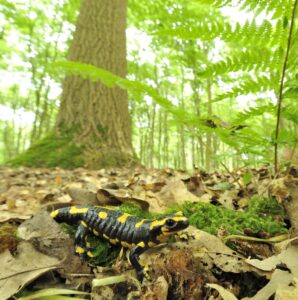
© Vildaphoto – Rollin Verlinde
Case Study 1: Catalysing Scientific research and cooperation in the Forests of Brabant National Park
The Brabant National Park has recognised the critical need to bridge the gap between scientific research and practical conservation efforts and is establishing a scientific council to provide science-based policy advice, translate scientific knowledge to applicable actions, narrow knowledge gaps and promote innovative solutions for conservation and sustainable development.
Full Case StudyCase Study 2: Empowering Park Managers with Tech4Nature
In Catalonia’s Sant Llorenç del Munt i l’Obac Natural Park, a novel partnership between IUCN and Huawei’s TECH4ALL program is using AI, GPS tracking, and solar-powered cameras to protect the endangered Bonelli’s eagle while managing visitor impact. The real-time monitoring system not only alerts managers to immediate threats but also facilitates long-term planning.
Full Case StudyCase Study 3: Green Big Year 2024 Project: Birdwatching around Europe without carbon emission.

©Ponç Feliu
Embarking on an ambitious journey, ornithologist Ponç Feliu had dedicated over a decade to “Green Birding”, a practice of observing birds without relying on fossil fuels. By demonstrating that extensive travel and wildlife observation can be achieved sustainably, Feliu challenges conventional norms and inspires others to consider eco-friendly practices in their pursuits. Engaging with the public has been the key to success, with a crowdfunding campaign to raise funds and engaging with local people through workshops and community events.
Full Case StudyBy working with different stakeholders, like the scientific community, private businesses and the public, conservation efforts can gain more than just funding, they also gain supporters and advocates for our Protected Areas.
Do you have interesting initiatives that you would like to share with us? Or would you like to submit a case study? Please visit our Knowledge Hub!
Welcome to Ohrid Prespa Transboudary Biosphere Reserve: A New Member of EUROPARC
German ambassador visited transboudary biosphere reserve Prespa in Albania/GBF Consulting Group
We are excited to welcome Ohrid Prespa Transboundary Biosphere Reserve as the latest member of the EUROPARC Federation! Nestled between Albania and North Macedonia, the Biosphere Reserve is a haven for lush forest, shimmering lakes, and rare species.
Balancing Conservation and Community Needs
Designated in 2014 under the Man and Biosphere Programme, this cross-border biosphere reserve is home to two national parks: Galicica (North Macedonia) and Prespa (Albania). The area is recognised for its exceptional biodiversity, rich cultural heritage, and its commitment to conservation the nature and infrastructure.
The Ohrid Prespa Transboundary Biosphere Reserve features unique ecological systems and geological formations, shaped by the sub-tropical mountains and three lakes. Among them, Lake Ohrid stands out as the oldest lake in the Mediterranean.
From Alpine meadows and wetlands to dense oak and beech forest, providing habitats for rare species such as the Dalmatian Pelican (Pelecanus Crispus), the Balkan lynx (Lynx lynx Balcanicus), and the Prespa trout (Salmo Peristericus).
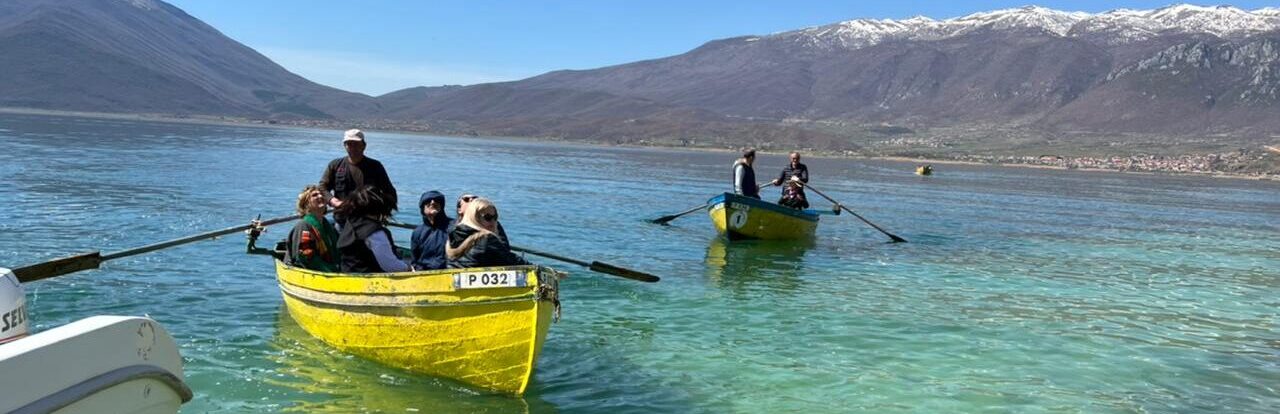
The German ambassador visited the transboundary biosphere reserve Prespa in Albania. (c) GBF Consulting Group
Collaboration with civil society organisations plays a crucial role in conservation efforts, engaging local communities in preserving biodiversity and adopting interdisciplinary biosphere management, such as reforestation programs, and sustainable land-use practises.
Sustainable tourism is a key pillar of the reserve’s long-term viability, with a focus on rural tourism, village tourism, eco-tourism, and eco-friendly food production. In 2023 and 2024, a project was implemented to promote rural tourism in the villages along the banks of the Ohrid and Prespa lakes.
At the heart of the Galicica National Park lies an education centre, serving as a hub for developing and implementing actions plans for the biosphere reserve. The centre hosts practical workshops and educational trainings for the local communities.
Beyond its ecological value, the region has been an important cultural crossroads for centuries. The ancient town of Ohrid, a UNESCO World Heritage Site, is renowned for its medieval churches, including the St. Naum Monastery, and the Church of St. John at Kaneo. The area has deep historical roots, with settlements dating back to the Bronze Age.
Curious to learn more? Click here or here.
Visit their Facebook page.

©Darkocv
Recognising Excellence in Outdoor Sports and Nature Conservation: A New Joint Award by EUROPARC Federation and ENOS
EUROPARC & ENOS Joint Award
In an exciting step towards bridging the worlds of Outdoor Sports and Nature Conservation, the EUROPARC Federation and the European Network of Outdoor Sports (ENOS) have launched a new joint award. This initiative aims to highlight and reward innovative projects that harmonise Outdoor Sports with protecting Europe’s treasured natural landscapes.
Apply Now!Aims of the Award
The joint award has been designed to serve as a recognition of sustainable practices and collaboration, championing efforts that balance the enjoyment of Outdoor Sports with the conservation of natural environments. Its primary objectives include:
- Promoting harmonious coexistence between Outdoor Sports and Nature Conservation within Protected Areas.
- Encouraging collaboration and knowledge exchange between stakeholders in Outdoor Sports and environmental management.
- Recognising innovative practices that demonstrate how Outdoor Sports can actively enhance Nature Conservation efforts.
- Rewarding excellence in sustainable outdoor sports initiatives that contribute to Nature Conservation.
Who Can Apply?
The award is open to organisations, groups, or individuals based in a European Country, including islands and outermost territories.
Eligible initiatives must demonstrate:
- A clear connection between Nature Conservation management and Outdoor Sports organisations.
- Evidence of successful and innovative practices or approaches
- Positive outcomes achieved through projects implemented within the past two years.
- This is an opportunity for those leading change in Europe’s Outdoor Sports and conservation communities to gain recognition and share their successes on a larger platform.
While membership in either EUROPARC or ENOS is not required, our members will receive a slight advantage in the form of extra points in the scoring system that determines the winner.
Would you like to become a member? Learn more here:
Become EUROPARC Member Become ENOS MemberThe Application Process
Applications for the award will be accepted from 18th March until 31st May.
Applicants must provide:
- A detailed description of their initiative, including its objectives, activities, and outcomes.
- Documentation of the environmental and social impacts of the project.
- Evidence of innovative approaches or practices, along with any relevant promotional materials such as photos, videos, or articles.
Celebrating Success
Successful initiatives will be celebrated with:
- A free* participation at the EUROPARC or ENOS Conference (*excluding travel and accommodation), offering a valuable opportunity to broaden their professional network.
- A certificate of recognition.
- Promotion through EUROPARC’s and ENOS’s extensive network of professionals and enthusiasts in both fields.
The award ceremony will rotate between the biennial EUROPARC and ENOS conferences, with winners taking the stage to showcase their work to a diverse audience of conservationists and sports enthusiasts.
By recognising initiatives that combine Outdoor Sports with Nature Conservation, the EUROPARC Federation and ENOS aim to pave the way for a sustainable future where recreation and environmental stewardship go hand in hand. This award is not only a celebration of excellence but also a call to action, inspiring others to reimagine the relationship between people, sports, and nature.
If your organisation, group, or initiative is leading the charge in this space, don’t miss the chance to apply. Let your success story inspire others to protect and enjoy Europe’s nature responsibly.
Apply Now!Would you like to learn more about the collaboration between EUROPARC and ENOS? Discover our Memorandum of Understanding and explore the 10 Good Principles for Outdoor Sports in Protected Areas, designed to foster responsible behaviour and sustainable practices. Join us in promoting harmony between Outdoor Sports and Nature Conservation—get involved and help protect Europe’s natural treasures while enjoying them responsibly.
Submit your own case study
At EUROPARC, we endeavour to find and collect Case Studies of Protected Area management around Europe. Do you want to collaborate? Submit your Case study!
Insights into the resumed 16th Conference of Parties in Rome
©Meandry Krutyni/Waldemar Bzura
From the 25th to the 28th of February 2025, the FAO headquarters in Rome hosted the resumed 16th Conference of Parties (COP) to the Convention on Biological Diversity. Delegates from all around the world gathered to address pressing issues left unresolved from the previous session in Cali, Colombia (Oct 21, 2024 – Nov 1, 2024). The outcomes were a blend of optimism, financial pledges and a few cliffhangers.
Back Story
Biodiversity plays an important role in ecosystem services, and they are crucial to our survival and well-being. It serves as a foundation for building a resilient and sustainable future. However, since the 1970s we have a seen a decline in biodiversity, and dependence on these resources are increasing. Trillions of USD are generated annually through economic activity reliant on nature, yet a significant financial gap of 1 trillion for biodiversity remains, particularly impacting developing countries. Bridging this financial shortfall is imperative to biodiversity conservation and sustainability.
At COP15 in 2022, the Kunming Montreal Global Biodiversity Framework was adopted to counter biodiversity loss. The framework set out four goals for 2025 and 23 targets for 2030. We would like to underline 2 targets which are relevant to EUROPARC and its members, working to manage Protected Areas.
- Target 2 highlights the restoration of 30% of ecosystems by 2030.
- Target 3 calls attention to the conservation of 30% of terrestrial, inland water and of coastal and marine areas by 2030.
Additionally, target 19 which aims to mobilise 200 billion USD per year for biodiversity, including 30bn through international finance.
EUROPARC underlines that we do not just need more Protected Areas, but that our protected spaces need to be effectively managed to achieve their conservation objectives. We are working on advancing this work through the LIFE PAME Europe project, which you can learn more about here.
Cali Fund
To further the progress on bridging the financial shortfall, the Cali Fund was established during COP16. Named after the city where discussion began, the funds will be sources from private sector such as agribusiness and pharmaceuticals that uses genetic materials for commercial purposes. A key achievement of COP16 is the decision to allocate these funds to indigenous peoples and local communities, ensuring their crucial role in biodiversity conservation is recognised and supported.
A Strategy for Resources Mobilisation was adopted to address financial biodiversity gap through mobilising 200bn USD annually, with an additional 20bn USD in international flows by 2025.
Furthermore, a framework was adopted for planning, monitoring, reporting and review (PMRR). The framework enhances accountability in achieving the GBF’s 23 target and four goals. It also includes guidelines for how countries should develop their National Biodiversity Strategies and Action Plans.
Indigenous Voices
A significant outcome of COP16 was the establishment established of a new permanent subsidiary body to ensure the meaningful contributions of Indigenous peoples and local communities in implementing the Convention’s objectives. This development embeds the knowledge and perspectives of indigenous people across global biodiversity efforts.
COP16 was another step towards a world that balances human, economic and biodiversity needs. EUROPARC advocates for Protected Areas to be at the forefront of these discussions.