Coexistence between humans and large predators? It’s a child’s play!
Credit: Alin Ivașcu
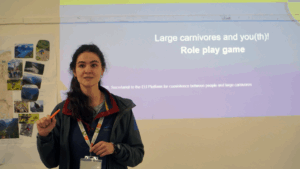
The Casentinesi Forest National Park in Italy hosted the EU Platform for Coexistence between People and Large Carnivores, testing out a new role play game for teenagers during the International Junior Ranger Camp.
Casentinesi Forests National Park: “Coexistence between humans and large predators? It’s a child’s play!”
Credit: Jessica Micklem-Kolenić
The European Platform for Coexistence between People and Large Carnivores has chosen the 2025 International Junior Ranger Camp in the Casentinesi Forests National Park as a laboratory for a new educational method to raise awareness on challenges and solutions for coexistence with wolves and other large carnivores.
The International Junior Ranger Camp is hosted each year in a European protected area by members of the EUROPARC Federation and is open to young people from the EUROPARC Junior Ranger programme. On Sunday the 27th July, the Casentinesi Forests National Park opened its doors to Junior Rangers (aged 14 – 16), Mentors and Rangers from 19 protected areas across 12 countries. They will be staying for 1 week in the heart of the forest, learning about hands-on nature conservation and learning about the history, culture and biodiversity of the region.
Credit: Emanuele Perez
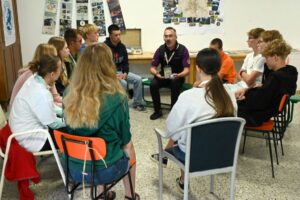
A representative of the EU Platform secretariat, Sophie Evers from adelphi, joined for the first day and shared the efforts of the platform for the 5 large carnivores in Europe: the grey wolf (Canis lupus), the lynx (Lynx lynx and Lynx pardinus), the brown bear (Ursus arctos), the golden jackal (Canis aureus), and the wolverine (Gulo gulo). The conservation and management of these iconic animals is complex as their needs can bring them into conflict with human activities. Recognizing the importance of these issues, the European Commission and a group of organizations representing the major interest groups (protected areas, environmental organisations, landowners, herders, hunters and more) decided to collaborate, creating the EU Platform for stakeholder engagement in 2014 and supporting similar local and regional stakeholder platforms since 2018.
Credit: Jessica Micklem-Kolenić
The Junior Rangers spent the afternoon role playing as stakeholders of a village where wolves made a comeback after 100 years. They had to step into the shoes of different characters including livestock farmers who had lost sheep to the wolves, local citizens worried about their children, nature guides interested in promoting new wolf tourism, the local municipality who received funding for mitigation measures, as well as scientists, hunters, and others. This game aims to raise awareness on the different perspectives as well as showcasing how groups with different interests can come together to dialogue and agree on a path forward all together.
Wildlife Photographer Giorgio Amadori
Credit: Elo Raspel
The facilitators of each group led them through possible mitigation measures and towards consensus on a maximum of three solutions. Almost all groups were able to agree on at least one solution and presented their experience at the end. This new tool is available on the website of the EU Platform in 12 EU languages and is being translated into another 10 EU languages for all to use.
The Casentinesi Forests National Park was a great laboratory and amplifier for this tool and the Junior Ranger Mentors were enthusiastic about taking the game home to play with more young people. The Director of the park, Andrea Gennai, presented the coexistence measures in place in the Casentinesi Forests and mentors from the Protected Area of Maritime Alps (Italy), Endla Nature Reserve (Estonia) and the Julian Prealps Natural Park (Italy) shared their local experiences with wolves as well.
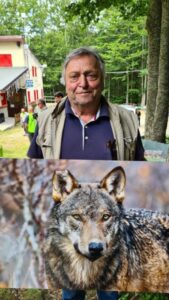
The rest of the week was filled with exciting activities and will be very memorable for the international guests and the local hosting team. They got to meet local wildlife photographer Giorgio Amadori and learnt about monitoring the wolf populations in the Park by the park staff together with the carabinieri.
Welcoming The Lancashire Wildlife Trust to EUROPARC Federation
We are thrilled to welcome The Lancashire Wildlife Trust as a new member of the EUROPARC Federation. With deep roots in Lancashire, Greater Manchester, and North Merseyside, the Trust works tirelessly to protect, restore, and connect nature, while also safeguarding the cultural heritage woven into these landscapes.
Protecting Nature and Cultural Heritage Together
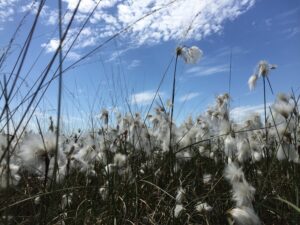
Astley Moss cottongrass by Alan Wright
The Lancashire Wildlife Trust manages over 40 nature reserves and several third-party sites, including nationally and locally designated areas such as Sites of Special Scientific Interest (SSSIs), Local Nature Reserves and Local Wildlife Sites.
Their work goes far beyond habitat restoration. At Lunt Meadows, for example, wetland conservation doubles as a gateway into the past. When the waters recede, visitors can see traces of Mesolithic settlements from around 8,000 years ago. This rare integration of archaeological research and habitat management demonstrates how cultural heritage can enrich conservation.
The Trust invites EUROPARC partners to its new visitor centre at Lunt Meadows, where they can explore how natural restoration and archaeological work continue hand in hand. This approach not only protects biodiversity but also attracts new audiences-people fascinated by history, who then discover the wildlife of the reserve.
Leading Landscape-Scale Restoration
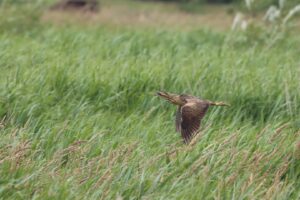
Bittern flying over the reedbed at Lunt by Phil Boardman
Ambitious projects like the Carbon Landscape and Greater Manchester Wetlands showcase the Trust’s leadership in large-scale, multi-partner conservation.
These initiatives were not without challenges-aligning many stakeholders meant finding common ground. Strong leadership, regular communication, and shared events ensured progress. For example, while the Lancashire Wildlife Trust reintroduced the large heath butterfly at Astley Moss, the next reintroduction, the white-faced darter dragonfly, took place at Warrington Council’s Risley Moss. This balance ensured that both Lancashire and Cheshire benefitted, strengthening collaboration.
The Carbon Landscape became a flagship project, uniting thousands of people under its cottongrass logo with outdoor theatre, wildlife walks, art exhibitions, and even a giant floating Earth installation at Pennington Flash. Today, the Greater Manchester Wetlands includes two National Nature Reserves and continues to restore peatlands, willow tit habitat, woodlands, ponds, and waterways-making it a true model for large-scale restoration.
Keeping Traditional Practices Alive
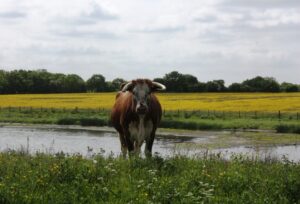
Longhorn cow at Lightshaw Meadows in Wigan by Alan Wright
Conservation at the Lancashire Wildlife Trust also honours traditional land management techniques. Grazing animals such as English longhorn cattle, Hebridean sheep, and Shetland ponies play a vital role in
maintaining habitats. At Cutacre Nature Reserve, for instance, conservation grazing has transformed the site into a sanctuary for curlew, lapwing, and snipe.
By combining age-old techniques with modern restoration-like creating ponds and wetland habitats-the Trust demonstrates how historic practices can coexist with innovation. Plans to integrate carbon credits, Biodiversity Net Gain, and even solar farms show how conservation grazing can adapt to deliver for both climate resilience and biodiversity gains.
Engaging Communities and Inspiring Generations
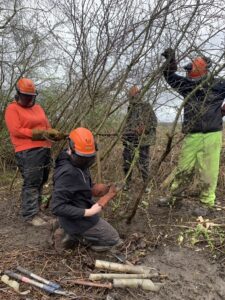
Volunteers hedgelaying at cutacre by Lydia German
Community engagement is at the heart of the Trust’s mission. Their education team welcomes tens of thousand of children, parents, and teachers to reserves like Brockholes, Mere Sands Wood, Lunt Meadows, and Heysham each year.
Flagship programmes such as Forest Schools empower teachers to bring nature education to life, while the School Grounds team creates natural play spaces right in schoolyards. Beyond classrooms, beach schools, pond dipping sessions, and the lively Manchester Festival of Nature bring conservation to local communities in fun, engaging ways.
These activities don’t just inspire individual participants-they also contribute to the Nature Recovery Network, creating wildlife corridors across the UK.
A Shared Vision with EUROPARC
Through partnership, advocacy, sustainable land management, and cultural heritage integration, The Lancashire Wildlife Trust ensures that landscapes are protected, celebrated, and enjoyed for generations to come. Their approach reflects the very essence of EUROPARC’s vision: connecting people, nature, and culture across Europe.
We are proud to welcome The Lancashire Wildlife Trust into the EUROPARC Federation and look forward to learning from their innovative projects, rich heritage, and deep community connections.
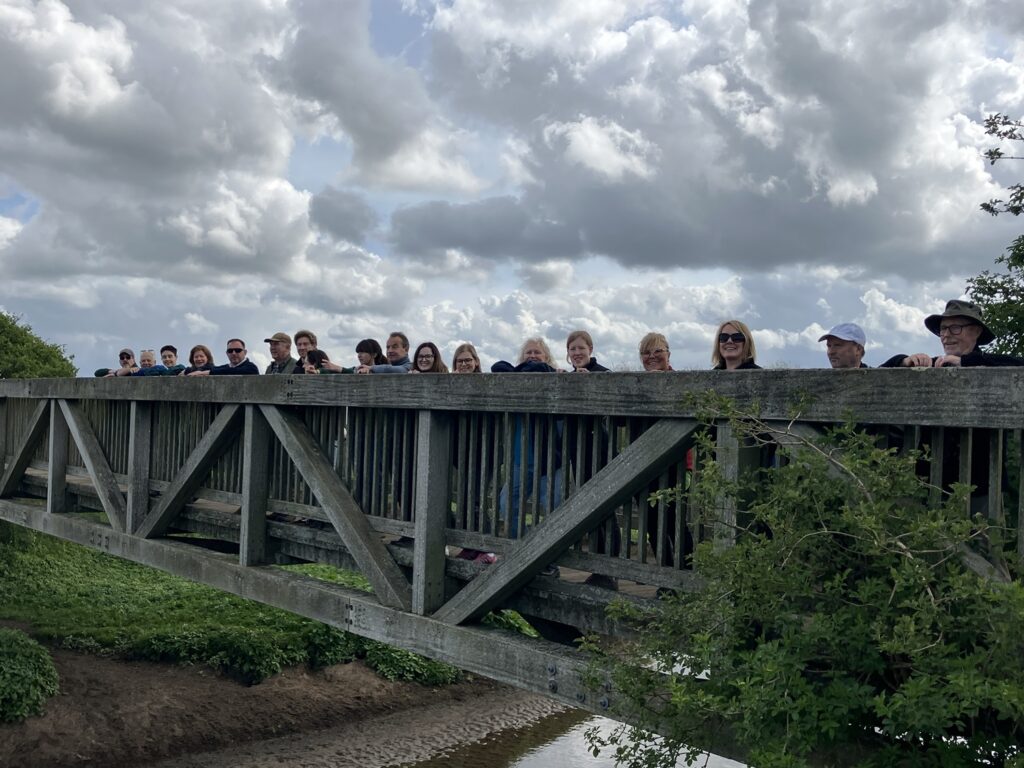
Guests are out and about at Lunt by Alan Wright
MPA4Change | Invitation to tender – external service contract: Communication Consultant
This call for tenders is issued within the scope of the Interreg Euro-MED MPA4Change project (Euro-MED0200736) – Enhancing Marine Protected Areas as Nature Based Solutions for adaptation to climate change: from local actions to Mediterranean basin strategy.
For the purposes of this tender, acting on behalf of the project partners, the contracting authority for this Invitation to Tender is the EUROPARC Federation.
Procurement – External service contract for the provision of Communication Services
EUROPARC Federation is looking to engage with a consultant with proven experience in supporting communications in an international context.
Above all, the project requires a consultant who is innovative, solution-oriented and able to implement the actions described in this invitation to tender. Previous experience of delivering similar work as an external service contractor within the scope of an EU funded project is required: those bidding for this contract should be able to demonstrate familiarity with EU funded project terms and conditions especially in relation to publicity.
Additionally, the consultant must count with strong writing and editing skills in English, be able to manage multiple tasks and meet deadlines and be familiar with the operation of specific tools and programmes, as indicated in the inviation to tender, for: website content management, email marketing, design and videomaking. Knowledge on marine conservation, climate change and/or environmental topics will be an asset.
The contract for which this invitation to tender is launched has a total duration of aproximately four months, with the implementation of activities expected to start on 11 September 2025 and finalising on 31 December 2025. Additionally, the consultant should remain available for a period of three months after the finalisation of the contract to provide any clarification needed about the actions performed in order to support the reporting of the work to the Interreg Euro-MED programme.
Bidders are asked to outline their budget proposal – the VAT amount and rate must be stated separately on bids. Bids must be submitted by 23:59h CEST on 05 September 2025 in English, setting out how the consultant will deliver the contract effectively and efficiently and demonstrate relevant technical knowledge, skills and experience.
Bids must be submitted in the required format and received by 23:59h CEST on 05 September 2025.
A complete description of the offer and contract specifications can be found in the Invitation to Tender document (below):
Download full Invitation to TenderFor further information, please contact Fernando Pinillos, EUROPARC Federation´s MPA4Change Project Manager: fernando.pinillos@…
Out now: EUROPARC Annual Report 2024!
The EUROPARC Directorate is excited to present the Annual Report 2024. Dive into it now to discover all we’ve done to support Europe’s Protected Areas!
Sustainable Nature, Valued by People
The Annual Report follows the structure of the EUROPARC Strategy. It highlights the collective efforts of everyone active in the EUROPARC Network, all working towards our vision of Sustainable Nature, Valued by People.
Curious about the progress of our projects? Want to know what our Commissions and Task Forces have been working on? Interested in how the Directorate represented our members’ interests in policy spaces? Or maybe you’d like a refresher on the many webinars, events, and activities within our Youth, Sustainable Tourism, and Transboundary programmes? Then don’t hesitate – dive in now!
As always, the Annual Report concludes with an overview of the work of our Sections: a great opportunity to learn more about their valuable contributions.
Working together for nature
The 2024 EUROPARC Annual Report is once again a testament to what we can achieve when working together. In times of political uncertainty and unrest, this spirit of cooperation is more important than ever. As our President, Michael Hošek, states in his opening remarks:
Let’s not forget: cooperation, especially across borders, is never guaranteed. It requires commitment, vision, and trust. We’ll need all three in the years ahead.
With over 400 members across Europe, the EUROPARC Network is committed to delivering better outcomes for both nature and people through international cooperation. The achievements showcased in the 2024 Annual Report are proof of that.
The EUROPARC Directorate would like to thank everyone who contributed to and helped shape the 2024 Annual Report.
The publication has been compressed for uploading. If you’d like the high quality version, don’t hesitate to contact us.