Welcoming The Lancashire Wildlife Trust to EUROPARC Federation
We are thrilled to welcome The Lancashire Wildlife Trust as a new member of the EUROPARC Federation. With deep roots in Lancashire, Greater Manchester, and North Merseyside, the Trust works tirelessly to protect, restore, and connect nature, while also safeguarding the cultural heritage woven into these landscapes.
Protecting Nature and Cultural Heritage Together
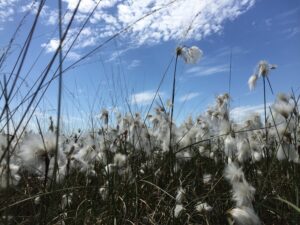
Astley Moss cottongrass by Alan Wright
The Lancashire Wildlife Trust manages over 40 nature reserves and several third-party sites, including nationally and locally designated areas such as Sites of Special Scientific Interest (SSSIs), Local Nature Reserves and Local Wildlife Sites.
Their work goes far beyond habitat restoration. At Lunt Meadows, for example, wetland conservation doubles as a gateway into the past. When the waters recede, visitors can see traces of Mesolithic settlements from around 8,000 years ago. This rare integration of archaeological research and habitat management demonstrates how cultural heritage can enrich conservation.
The Trust invites EUROPARC partners to its new visitor centre at Lunt Meadows, where they can explore how natural restoration and archaeological work continue hand in hand. This approach not only protects biodiversity but also attracts new audiences-people fascinated by history, who then discover the wildlife of the reserve.
Leading Landscape-Scale Restoration
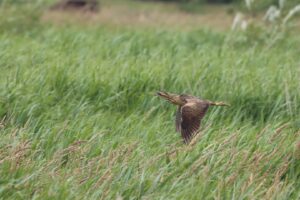
Bittern flying over the reedbed at Lunt by Phil Boardman
Ambitious projects like the Carbon Landscape and Greater Manchester Wetlands showcase the Trust’s leadership in large-scale, multi-partner conservation.
These initiatives were not without challenges-aligning many stakeholders meant finding common ground. Strong leadership, regular communication, and shared events ensured progress. For example, while the Lancashire Wildlife Trust reintroduced the large heath butterfly at Astley Moss, the next reintroduction, the white-faced darter dragonfly, took place at Warrington Council’s Risley Moss. This balance ensured that both Lancashire and Cheshire benefitted, strengthening collaboration.
The Carbon Landscape became a flagship project, uniting thousands of people under its cottongrass logo with outdoor theatre, wildlife walks, art exhibitions, and even a giant floating Earth installation at Pennington Flash. Today, the Greater Manchester Wetlands includes two National Nature Reserves and continues to restore peatlands, willow tit habitat, woodlands, ponds, and waterways-making it a true model for large-scale restoration.
Keeping Traditional Practices Alive
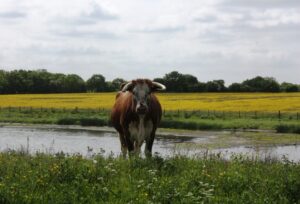
Longhorn cow at Lightshaw Meadows in Wigan by Alan Wright
Conservation at the Lancashire Wildlife Trust also honours traditional land management techniques. Grazing animals such as English longhorn cattle, Hebridean sheep, and Shetland ponies play a vital role in
maintaining habitats. At Cutacre Nature Reserve, for instance, conservation grazing has transformed the site into a sanctuary for curlew, lapwing, and snipe.
By combining age-old techniques with modern restoration-like creating ponds and wetland habitats-the Trust demonstrates how historic practices can coexist with innovation. Plans to integrate carbon credits, Biodiversity Net Gain, and even solar farms show how conservation grazing can adapt to deliver for both climate resilience and biodiversity gains.
Engaging Communities and Inspiring Generations
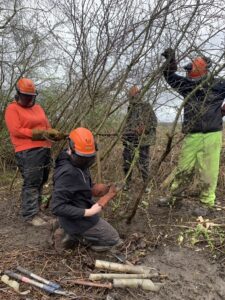
Volunteers hedgelaying at cutacre by Lydia German
Community engagement is at the heart of the Trust’s mission. Their education team welcomes tens of thousand of children, parents, and teachers to reserves like Brockholes, Mere Sands Wood, Lunt Meadows, and Heysham each year.
Flagship programmes such as Forest Schools empower teachers to bring nature education to life, while the School Grounds team creates natural play spaces right in schoolyards. Beyond classrooms, beach schools, pond dipping sessions, and the lively Manchester Festival of Nature bring conservation to local communities in fun, engaging ways.
These activities don’t just inspire individual participants-they also contribute to the Nature Recovery Network, creating wildlife corridors across the UK.
A Shared Vision with EUROPARC
Through partnership, advocacy, sustainable land management, and cultural heritage integration, The Lancashire Wildlife Trust ensures that landscapes are protected, celebrated, and enjoyed for generations to come. Their approach reflects the very essence of EUROPARC’s vision: connecting people, nature, and culture across Europe.
We are proud to welcome The Lancashire Wildlife Trust into the EUROPARC Federation and look forward to learning from their innovative projects, rich heritage, and deep community connections.
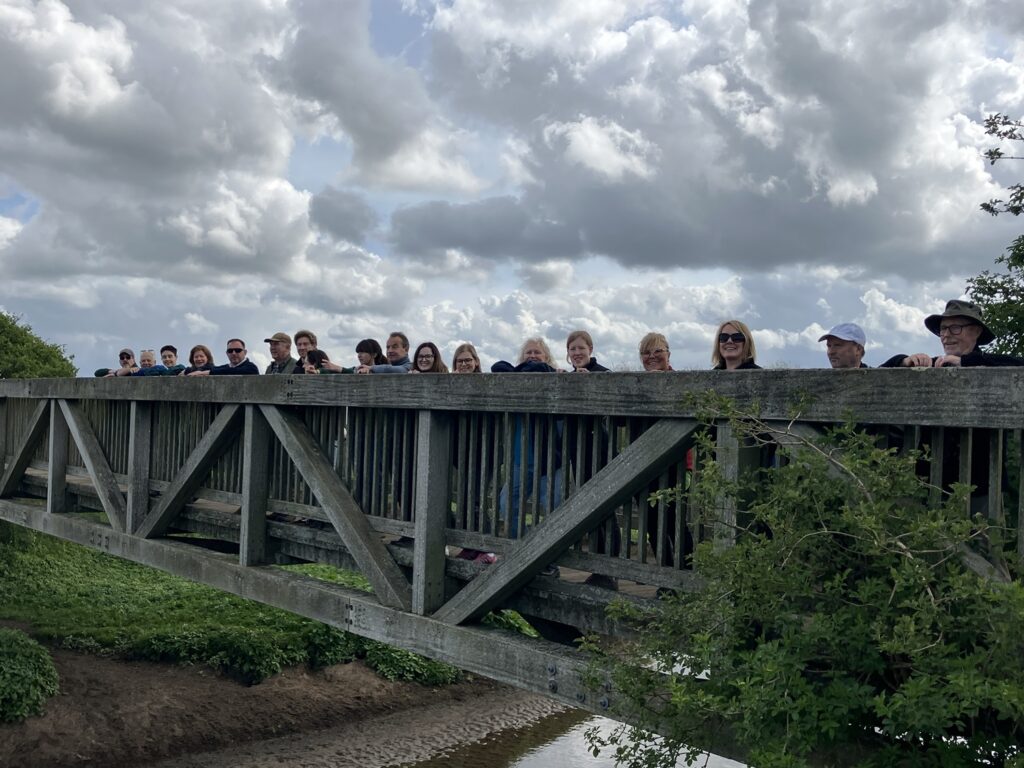
Guests are out and about at Lunt by Alan Wright