Czechs Stand Firm on Nature: New Survey Reveals Support for Biodiversity
Protected Landscape Area Brdy - Běla Komancová, NCA CR
The Nature Conservation Agency of the Czech Republic conducted a comprehensive public survey on the perception of citizens on the natural world. The survey reveals support for biodiversity and nature conservation amongst the population, whilst also highlighting knowledge gaps.

This article was issued and written by Tomáš Růžička of the Nature Conservation Agency of the Czech Republic.
Czechs Stand Firm on Nature: New Survey Reveals Support for Biodiversity
The latest Eurobarometer poll underlines that virtually all Europeans consider that halting biodiversity loss is crucial. For 96% of respondents, it is a moral duty to look after the planet, while 95% recognise that our own health and well-being depend entirely on a thriving natural world.
How does this translate to actions on the ground?
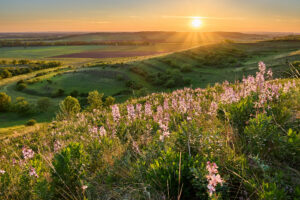
Dunajovice Hills Nature Reserve – Jan Miklín, NCA CR
A comprehensive public survey conducted in Czechia (June 2026) by the Nature Conservation Agency of the Czech Republic has taken a deep dive into how citizens truly perceive the natural world. Organised as part of the IP LIFE PROSPECTIVE project, 1535 people were surveyed and the findings reveal that Czechia’s citizens are deeply committed to safeguarding the country’s natural heritage. However, there remains a lack of general awareness of what biodiversity entails.
Green Ambition Meets Economic Reality
Data gathered from the survey showcases that citizens are ready to prioritise nature, though not without some careful pragmatism:
- Nature Foremost: Three-fifths of the Czech population view nature positively, and a remarkable 66% believe that nature conservation should take precedence over other public interests.
- The 30% Target: Two-thirds (66%) of Czechs support the ambitious Global and EU Biodiversity Strategies to protect 30% of the country’s territory. However, this comes under some conditions: While a passionate 24% would champion this expansion no matter the cost, a larger group (42%) underline that this increase of protected spaces cannot lead to economic disadvantages.
- A Space for Nature: Czechs see Protected Areas as vital havens for biodiversity and high-quality landscapes. Only 11% indicate that view them simply as spaces for recreation and weekend tourism.
Driven by Shared European Fears
These trends are fuelled by a greater awareness of the mounting pressures on the natural world. When it comes to the biggest dangers facing biodiversity, Czech citizens closely mirror wider European anxieties emerging in the Eurobarometer, pointing to four major culprits:
- Environmental pollution (the public’s leading concern)
- Deforestation
- Intensive agriculture and forestry
- The spread of invasive alien species
Due to a growing awareness of the impacts on nature and people of these threats, nature conservation is not considered a trend or luxury in Czechia, but as an essential foundation for the future. One that is well worth safeguarding, even when the economic trade-offs get tough.
Nature and Well-being
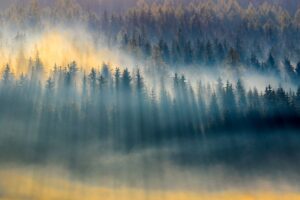
Protected Landscape Area Žďárské vrchy – Lubomír Dajč, NCA CR
Furthermore, the survey underlined the importance of nature for mental well-being. 89% of the respondents indicate that they turn to nature to cheer themselves up when stressed or out of sorts, proving that green spaces are the nation’s favourite therapeutic tonic. This is underlined by the high frequency in which the Czech population visits nature: the survey reveals that 15% of the population head out into the countryside every single day, while over half (54%) do so at least once a week. Protected Areas, such as National Parks and Protected Landscape Areas, are major drawing cards. Nearly four in five citizens (79%) visit these pristine spots at least once a year, with a dedicated quarter making the trip every single month. These findings highlight that the important of protected spaces goes far beyond conservation alone.
Protection vs. Access
It is clear that the Czech public enjoys being out in nature on a regular basis. An interesting finding from the survey is the level of support for protecting nature, even when that means limiting public access.
- Protected Areas: Almost nine in ten respondents (87%) support “no-access” zones where people are excluded to allow wildlife and ecosystems to develop without disturbance.
- The participation gap: Although 77% of respondents say they would be willing to take part in practical conservation activities, only around half have done so in the past year. The most common reasons were a lack of motivation and not knowing about opportunities to get involved locally.
Pollinators: more than honeybees
Most Czechs recognise that pollinators are under pressure and play an important role in nature. Many also understand their importance for food production. However, the survey also highlights gaps in public knowledge: around one in four respondents said they were unaware of how pollinators benefit people, while 16% could not name a single pollinator species.
Among those who could, honeybees were by far the most commonly mentioned, cited by 81% of respondents. Bumblebees followed at 51%, while only 25% mentioned butterflies. The findings suggest that public awareness is heavily focused on honeybees, with many other pollinating species receiving far less recognition.
What Happens Next?
The survey will be repeated in 2031 at the end of the LIFE PROSPECTIVE project, which focuses on biodiversity conservation in Czechia.
Comparing the results will help the Nature Conservation Agency of the Czech Republic assess how public attitudes have changed over time. It will also show whether outreach and communication efforts have improved awareness of biodiversity, increased understanding of pollinators, and encouraged more people to get involved in conservation activities.
Co-funded by the European Union. Views and opinions expressed are however those of the author only and do not necessarily reflect those of the European Union or CINEA. Neither the European Union nor the granting authority can be held responsible for them.
Want to submit an article to the EUROPARC website? We are always looking to promote best practice examples or interesting initiatives from the network: