Protected Areas in Action—Inspiration in the Climate-Nature Nexus
Screenshot
Three case studies of Protected Areas engaging in various climate actions.
Protected Areas in Action—Inspiration in the Climate-Nature Nexus
The interconnectedness of climate and nature is well established: healthy ecosystems underpin climate resilience, and effective climate action secures biodiversity. Yet, translating this understanding into on-the-ground results within Protected Areas often faces practical obstacles—limited funding, competing land uses, policy gaps, and the need for cross-sector collaboration.
This article explores the latest case studies from the EUROPARC members and delves into successful solutions to common challenges.

Volunteers planting sphagnum by Claire Maxted, BMC
Case Study 1: The Climate Project: Sphagnum Planting for Peatland Restoration in the Peak District
The British Mountaineering Council and the Peak District National Park, delivered by Moors for the Future Partnership, have a volunteer programme to bring outdoor sport practitioners into the work of the national park and allowing all to be involved in delivering climate actions through nature restoration. Their lighthouse project won the first ever EUROPARC/ENOS Joint Award so read the full story in our knowledge hub!
Full Case Study
Implementation of Fish census protocol by Vasilis Resaikos, Cavo Greco MPA
Case Study 2: Climate-adaptation tools in N2000 site Cavo Greco MPA, Cyprus.
Cavo Greco MPA on Cyprus’s southeast coast covers 9.62 km² and has been part of Natura 2000 since 2008, becoming a marine protected area in 2018. Due to increasing environmental pressures such as growing tourism, rising human activity along the coast, and the vulnerability of its sensitive marine habitats to climate change, the MPA joined the Interreg-EuroMed MPA4Change project. They implemented a set of seven climate-adaptation toolkits to improve monitoring, management, and stakeholder engagement. Interested in their experience?
Full Case Study
Derek McLoughlin and Marina Xenophontos (European Commission) Natura 2000 award (Working together for Nature) by Michael McLaughlin
Case Study 3: LIFE IP Wild Atlantic Nature: Incentivising peatland restoration via results-based payments
The Wild Atlantic region of Ireland, implemented a Results Based Payment Scheme (RBPS) linking payments to an annual habitat score (0–10) based on ecological indicators. This incentivised maintaining or improving habitat quality and succesfully increased the momentum of landowners of Natura 2000 to restoring and maintaining biodiversity. It was enacted together with multiple partners and building public support such as school programmes, community seed funds, outreach actions which reinforced local buy-in and build capacity. Do you think you could do the same?
Full Case StudyToolkit: Climate Change Adaptation – Toolkit for Protected Area Managers
This toolkit has been produced to support the work of Protected Area managers in doing the necessary commitments and adjustments to minimize the impacts that Climate Change is having, and will continue having, in the natural spaces they safeguard. It can be used both as a first step, for those managers that did not consider yet Climate Change adaptation measures in their Parks, and for those that despite having started with adaptation measures they need to take further steps in order to have a more integrated approach.
ToolkitThese cases showcase successful efforts and actions taken across the EUROPARC network.
Do you also have an example to share? Send us your case study and join the diversity of voices inspiring and promoting good practices across the EUROPARC network!
Join the European Day of Parks 2026 celebrations!
The European Day of Parks is the only day dedicated to celebrating Protected Areas and all they do. Join in on the celebrations this year around the theme ‘Connected by Nature’!
About the European Day of Parks
The European Day of Parks (EDoP) takes place each year on 24 May, bringing Protected Areas and communities across Europe together to celebrate the value and beauty of our natural heritage. Since its launch by the EUROPARC Federation in 1999, this day has become a landmark for parks, nature organisations and local partners to raise awareness and connect people with nature.
The 2026 theme: Connected by Nature
In 2026, the theme “Connected by Nature” highlights the importance of ecological and social linkages. From wildlife corridors and linked habitats to active partnerships between people and landscapes. Parks and Protected Areas do not exist in isolation, and this year’s celebration invites everyone to explore and strengthen the lifelines that support nature throughout Europe.
You can be part of this! Whether you are part of a park authority, community group, school, NGO or simply passionate about nature, the official EDoP Guidelines for Parks are available to help you plan and organise activities around the 24 May. These can range from guided nature walks and educational workshops to community gatherings and awareness campaigns — all tailored to reflect how your local landscapes are connected by nature.
Join the celebration!
Celebrating EDoP is all about getting people out into nature. That is why EUROPARC invites you to organise local events and register them on our website. This will help us showcase how Protected Areas from across Europe are coming together to celebrate this special day! Are you looking for some inspiration? Our Guidelines for Parks will provide you with loads of ideas for events, as well as background information on the theme of this year. Of course, to help the promotion, you can also download the official banner in your language.
Register your event! Guidelines for Parks Get the official banner
Is the official banner not available in your language yet? No problem! Just write the translation to the following email address, and we will be sure to create it for you:

We look forward to seeing your events! All information is available here.
Out now: Protected Areas In-Sight Vol. 17!
The latest version of EUROPARC’s journal Protected Areas In-Sight, features inspiring examples from Nature Restoration activities in Europe.
Protected Areas and the Nature Restoration Regulation
Every year, the EUROPARC Federation publishes its journal ‘Protected Areas In-Sight’. It aims to inspire its readers with success stories from across the EUROPARC Network. This issue of the Protected Areas In-Sight explores the role of Protected Areas in the implementation, and success, of the Nature Restoration Regulation (NRR).
Nature for People, People for Nature
Following the theme of the 2025 Conference ‘Nature for People, People for Nature’, the journal looks at Nature Restoration in and beyond Protected Areas from three different, but connected perspectives: Practical, Financial and Social:
- How can restoration measures be implemented?
- How can we ensure addequate financial resources for restoration activities?
- How can we ensure broad sociatal support?
To answer these questions, the EUROPARC Directorate collected stories and experiences from across our members in Europe. Travel to Ireland, to learn how a new approach to restoration has developed a payment scheme for farmers, or discover how Volunteering Days are putting people at the heart of nature restoration in Lithuania. Furthermore, you will find articles from our projects Horizon Europe NaturaConnect, Interreg Euro-MED MPA4Change and LIFE PAME-Europe, looking at the capacities and data needed to make the implementation of the Nature Restoration Regulation a success.
Exclusive insights from DG Environment
However, that’s not all. Readers will find exclusive insights into the Nature Restoration Regulation, it’s implementation, and the role of Protected Areas through an article written by Andrea Vettori, Head of Unit at Directorate General for Environment at the European Commission. Andrea states:
The Nature Restoration Regulation provides the missing link between existing nature, water, and climate policies, allowing us to build true synergies across sectors.
The examples in the Protected Areas In-Sight prove that Protected Areas are well placed to turn this policy into practice.
Ready to get inspired? Then dive right in! The Protected Areas In-Sight is available in English, French and German:
We would like to thank all authors that have contributed to this edition of the Protected Areas In-Sight.

EUROPARC members will receive a printed copy through post in the upcoming weeks. Are you not a member, but would you also like to receive a copy? Then reach out to EUROPARC’s Communications & Operations Manager Esther Bossink. Discover previous edition of the publication here.

Active Tourism Coalition calls for Active Tourism to become a cornerstone of Europe’s Sustainable Tourism Strategy
Ireland-Mayo Photo: Jimmy-O'Brien
The Active Tourism Coalition, bringing together 20 European organisations representing active travel, has addressed Apostolos Tzitzikostas, European Commissioner for Sustainable Transport and Tourism, to highlight the strategic role that Active Tourism can play in the future of European tourism.
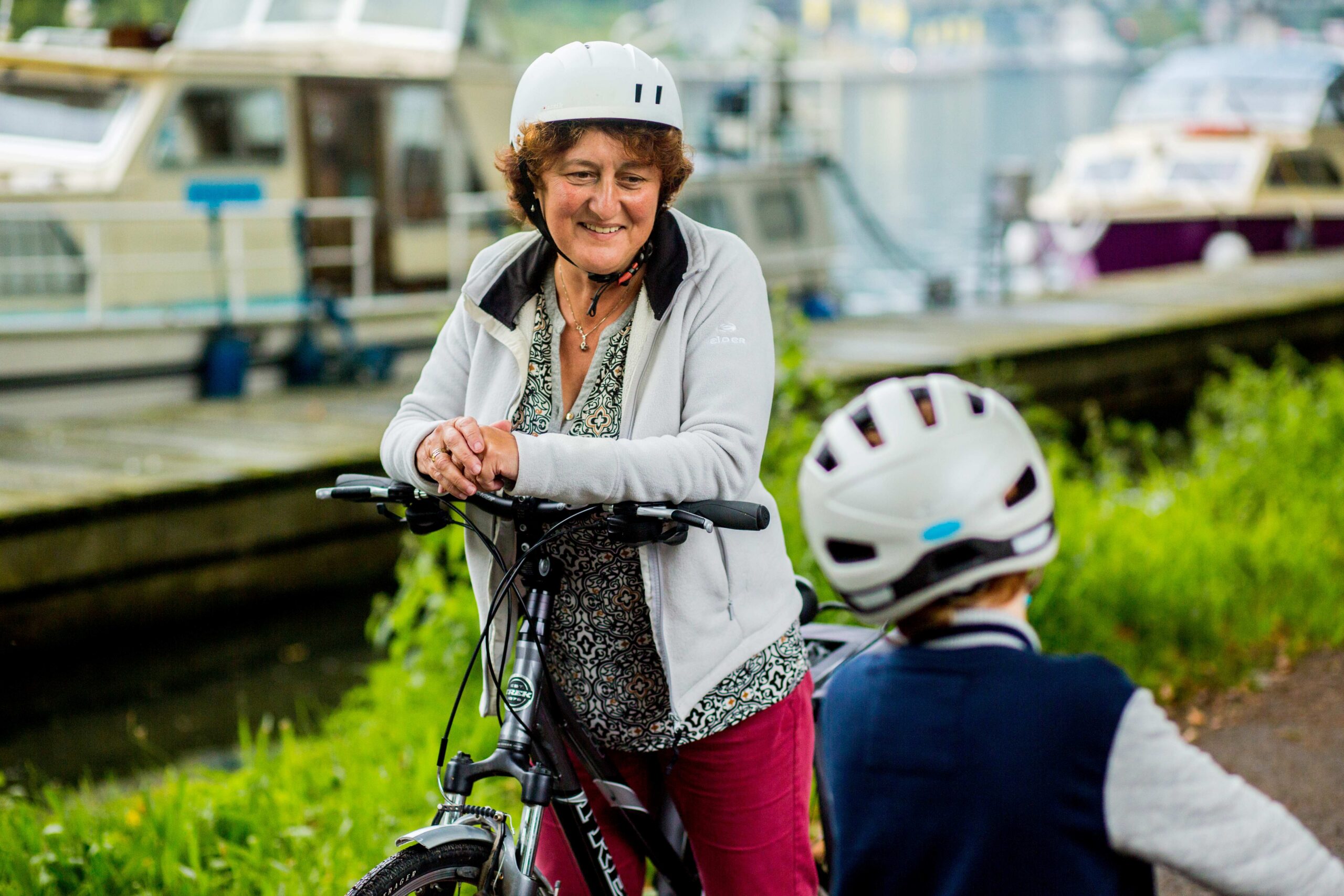
Active Tourism refers to tourism based on accessible physical activity for mobility, recreation and leisure, including cycling, walking and hiking. It enables visitors to experience destinations at a human scale, with low environmental impact, high social value and strong connections to local landscapes, cultures and communities. The sector already demonstrates significant economic relevance, with cycling tourism generating an estimated €44 billion annually in Europe in 2012, and adventure travel representing a global market of around one trillion US dollars in 2025.
The Coalition underlines that Active Tourism offers a concrete and scalable solution to strengthen Europe’s tourism competitiveness, reinforce Brand Europe and address unbalanced tourism flows. It calls for Active Tourism to be positioned at the heart of European tourism policy through four key priorities.
- First, the Coalition urges European and national institutions to recognise Active Tourism as a cornerstone of sustainable tourism. This includes integrating cycling, walking and hiking into destination mobility strategies, multimodal transport planning and last-mile solutions, as well as investing in monitoring the social, environmental and economic impacts of Active Tourism.
- Second, the Coalition recommends establishing Active Tourism as a flagship of Brand Europe by showcasing Europe’s natural landscapes, cultural heritage and extensive long-distance route networks, such as EuroVelo, Greenways, E-Paths and GR footpaths. This positioning should be supported by open and high-quality data integrated into European tourism data hubs, alongside recognition of relevant certification schemes and training programmes.
- Third, the Coalition highlights the need for integrated governance frameworks that bring together local communities, destination management organisations, tourism operators, non-governmental organisations, land managers, transport operators, media and outdoor sport organisations. Such cooperation is essential to deliver Active Tourism that protects natural and cultural landscapes while supporting local economies and communities.
- Finally, the Coalition calls for Active Tourism to be prioritised in the next Multiannual Financial Framework (2028–2034), with dedicated investment in long- and short-distance cycling routes, including EuroVelo, hiking trails and cross-border tourism infrastructure.
Wallonie Tourism | Photo: EuroVelo
The Active Tourism Coalition has expressed its readiness to support the European Commission in developing these priorities and to engage in further dialogue on how Active Tourism can strengthen the resilience and competitiveness of Europe’s tourism sector, enhance its international brand and contribute to more balanced and sustainable tourism development. As Laurianne Krid, Chief Executive Officer at the European Cyclists’ Federation (ECF), underlines:
Read the full Letter here! Coalition's ProposalsActive tourism should be the cornerstone of the European Sustainable Tourism Strategy. By encouraging tourists to move through regions by bike or on foot, it supports healthier lifestyles, low-carbon travel, and stronger local economies.
For more information, please contact Agathe Daudibon, EuroVelo and Cycling Tourism Director: a.daudibon @ ecf.com