Transboundary Parks Award 2018 – Pasvik-Inari Trilateral Park
River Pasvik by Oleg Pershin - Pasvik Inari Trilateral Park - Transboundary Area re-awarded in 2018
The EUROPARC’s Transboundary Parks Programme aims to promote and facilitate transboundary cooperation between European Protected Areas. Since 2003 the Basic Standards evaluation system was launched, 23 European Protected Areas have been successfully certified as 10 Transboundary Parks under the EUROPARC programme “Transboundary Parks – Following Nature’s design”. Every year during EUROPARC Conference we celebrate success with our Transboundary Parks at the Award Ceremony.
In 2018 the Awards goes to…
PASVIK-INARI TRILATERAL PARK
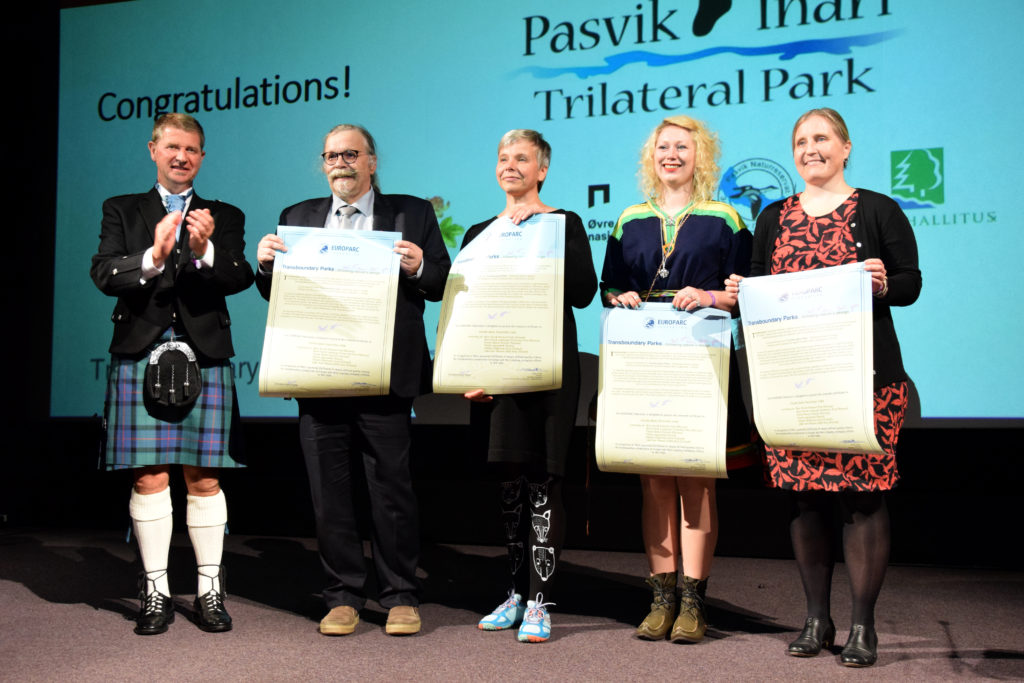
Ignace Schops handing in the Certificates of the Transboundary Awards 2018 to Pasvik-Inari Trailateral Park representatives.
The Pasvik-Inari Trilaterla Park embraces the following 6 Protected Areas:
- Øvre Pasvik National Park (Norway)
- Øvre Pasvik Landscape Protection Area (Norway)
- Pasvik Nature Reserve (Norway)
- Pasvik zapovednik (Russia)
- Vätsäri Wilderness Area (Finland)
- Lake Inari Natura 2000 Area (Finland)
Pasvik-Inari Trilateral Park entity was established in 2008 as a result of long-term cooperation between the nature protection authorities in Norway, Russia and Finland dating back to the early 1990’s. The Trilateral Park consists of six nature protection areas; three areas in Norway, one in Russia and two in Finland and the strengths of the cooperative work lay on the unique connections between Sámi, Norwegian, Russian and Finnish people and their cultural heritage. Nature protection and management, environmental awareness and promotion of sustainable nature-based tourism are the key elements of their work.
The Pasvik Inari Trilateral Park
The lush valley of the Pasvik river stretches from Lake Inari in the south towards the Barents Sea in the north, appearing as a vital nerve in the mosaic landscape of small lakes, mires and wet lands and virgin Taiga forests. The region comprises a unique nature system where European, Eastern and Arctic species meet. Here, some of the species reach the ultimate limits of their distribution. The area is also an important nesting and resting place for a large number of migratory birds.
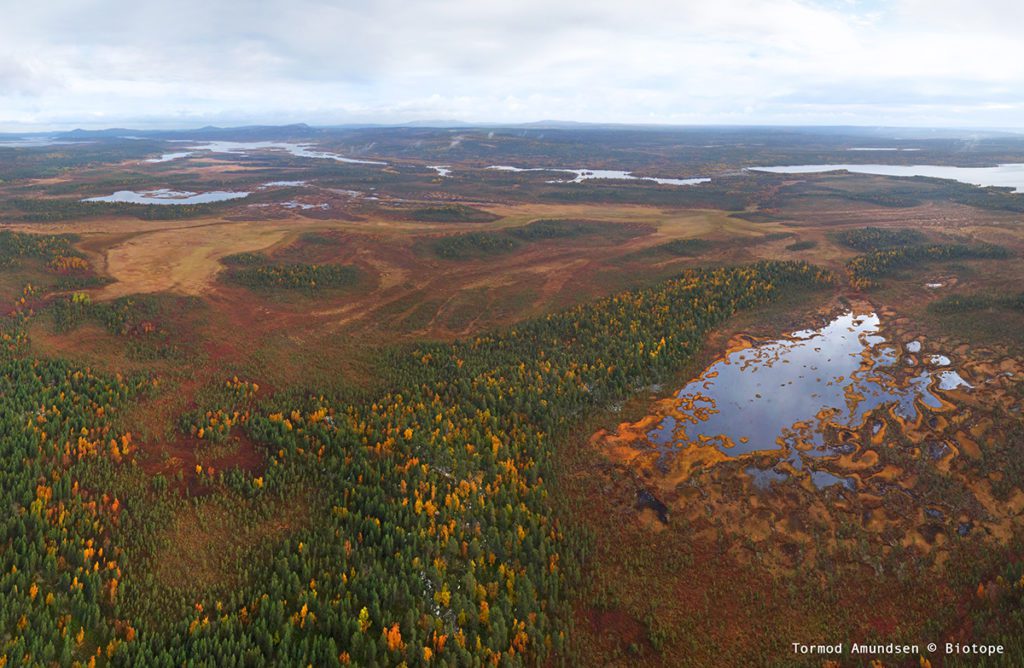
Landscape mosaic by Tormod Amundsen, Biotope_Pasvik Inari Trilateral Park
Three countries, three different currencies, three different time zones and six languages work together every day and ensure long lasting cooperation on high level. (Verifier’s report)
The Pasvik-Inari region is a meeting point for different cultures too. Different Sámi people live in the area: the Northern, Inari and Skolt Sámi. Since the Early Middle Ages, Finns, Norwegians and Russians have also settled in the region. Although different cultures coexist in the area and have learned a lot from each other, they have each retained their distinctive traditions.
The Trilateral Park produces regularly informative products about natural and cultural heritage of the area in all the native languages and in English targeted especially for school children – games are their speciality! The partners and stakeholders of the parks work together in different projects to promote sustainable nature-based tourism to support sustainable local development in the border areas. Pasvik-Inari cooperation participates actively in the development of Green Belt of Fennoscandia initiative.
Ski_Barentsski Event by Yngve Beddari_Pasvik Inari Trilateral Park
Get to know more about the Transboundary Parks Programme and the other members of the TransParcNet.