How can we achieve a multidimensional approach to Protected Area Management Effectiveness?
Participants of the event.
Over 60 Protected Area managers, researchers and practitioners gathered in Camaldoli, Italy, on 26–27 October 2026 to explore what makes Protected Area management effective. The discussions highlighted the importance of good monitoring, collaboration with local communities and recognising the wider value of Protected Areas.
A multidimensional approach to PAME
Protected Area Management Effectiveness (PAME) is often associated with assessment frameworks, indicators and monitoring tools. However, effective management depends on a much wider set of factors. Governance, relationships with local communities, socio-economic conditions and the ability to translate monitoring results into management decisions all play an important role.
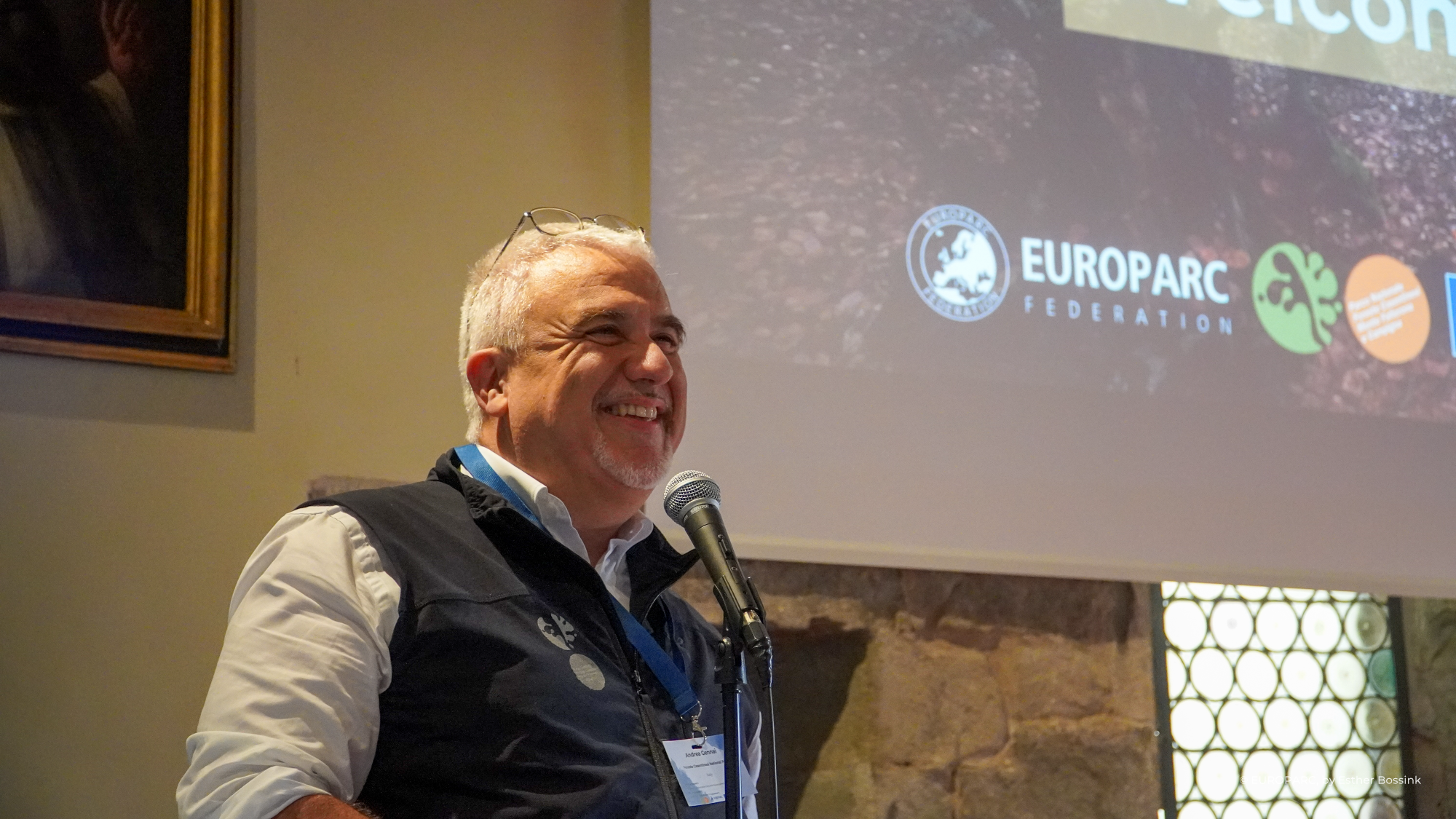
Andrea Gennai, Director of the host park National Park Foreste Casentinesi
These topics were at the centre of the EUROPARC event Protected Area Management Effectiveness: how do we achieve a multidimensional approach?, organised in Camaldoli, Italy, thanks to the generous support of Parco Nazionale delle Foreste Casentinesi, Monte Falterona e Campigna.
Bringing together Protected Area managers, representatives of different national environment agencies, researchers and practitioners, the event provided space to exchange experiences, discuss practical challenges and explore how different dimensions of management effectiveness can be better connected.
Access the full programme here.
Networking and knowledge exchange was at the core of the event. As such, participants could actively shape the programme with their interventions. The 1,5 day event saw a range of presentations from practitioners from across Europe: from new approaches to monitoring, to measuring the socio-economic impact of Protected Areas, participants truly looked at PAME from a multidimensional approach.
The event was also an excellent opportunity to update participants on the EUROPARC-led LIFE PAME-Europe project, which is creating a new Framework for assessing Management Effectiveness in Europe. The draft Framework is currently being tested by 47 Pilot Sites across Europe.
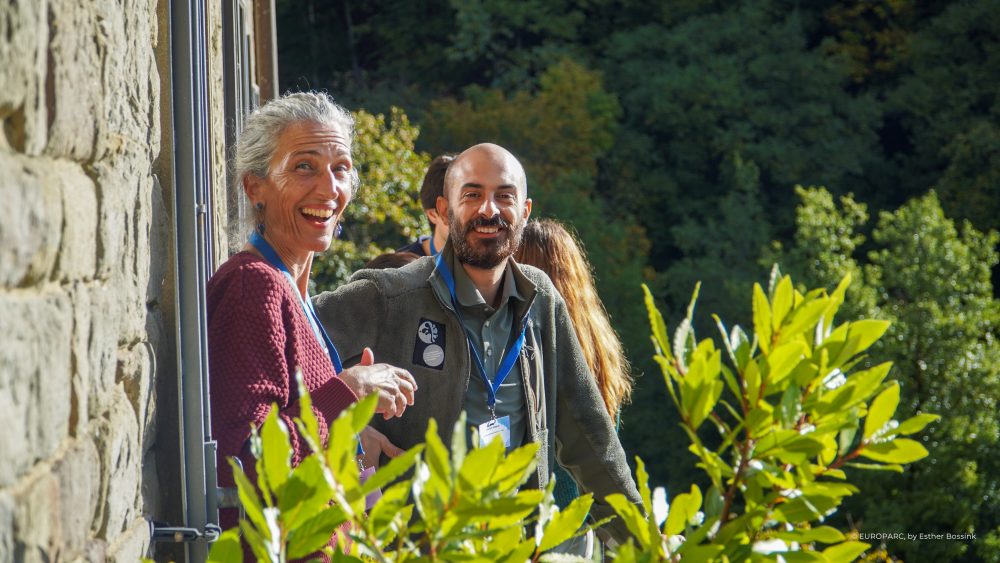
Networking under the Italian sun.
Workshops
Knowledge exchange continued in the interactive workshops. Preceded by five case studies, participants were able to take part in two workshops of their choice focussing on Governance, Stakeholder Engagement, Monitoring and Data, and Socio-economic Impact of Protected Areas. The main outputs from these discussions are summarised here:
Governance & Stakeholder Engagement – Who decides, and how do we bring people with us?
The effectiveness of any Protected Area largely depends on how it is governed and how well established relationships with key stakeholders are. However, Protected Areas often face significant challenges. These include:
- Lack of coordinated approach to Protected Area Management, due to the governance being spread across different entities.
- Lack of legislative or inconsistent legislation.
- Competing interests in governance bodies for Protected Areas.
- Multiple landowners resulting in fragmentation.
- Lack of continuity due to changes in governments and political cycles.
There is not a one-size-fits-all solution to these challenges, however establishing effective communication channels, building trust and ensuring that you are meaningfully engaging with communities in and outwith Protected Areas is essential.
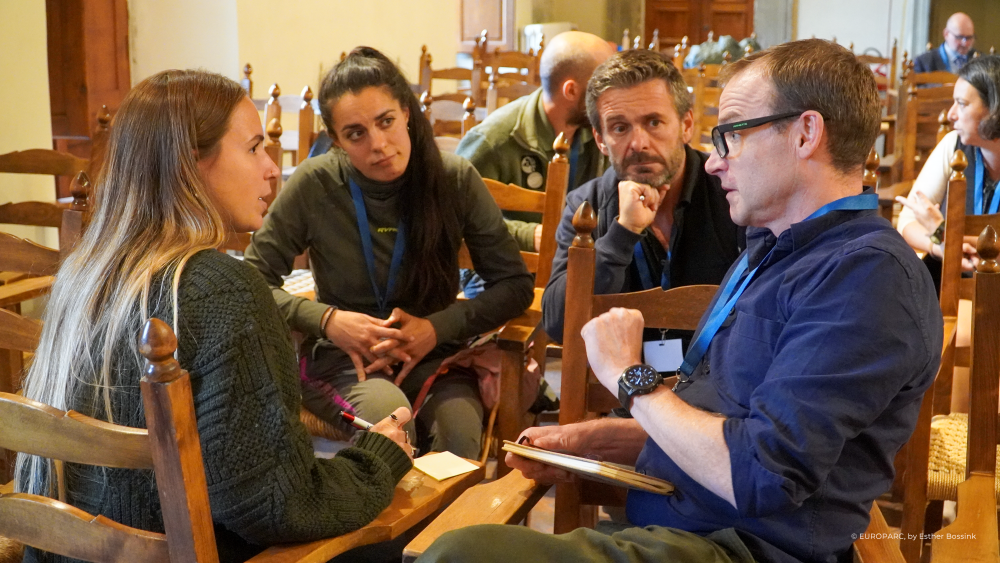
Workshop discussions
For that, it is important to have a strong story: being able to provide evidence on the effectiveness of management measures is important to substantiate and explain conservation actions. Furthermore, working together with stakeholders and communities on, for example, Retention Plans and Management Plans can support buy-in from key audiences: participants from Iceland and Scotland reported positive results from these approaches. In addition, ensuring there are tangible benefits for landowners and communities, and not just restrictions, continues to be an important feature. At the same time, it was acknowledged that it is not always feasible to build consensus with everyone. Being strategic with (human) resources when it comes to governance and stakeholder engagement is essential, especially considering the ever-shrinking budgets for nature conservation.
From monitoring data to better management decisions
Monitoring is an essential part of understanding whether Protected Areas are achieving their objectives. During this workshop, participants discussed the tools currently used to monitor their parks and the information that should be collected.
The in-workshop audience poll showed that field sensors, such as camera traps, acoustic sensors and GPS tracking, are already widely used: remote sensing, satellite data and GIS also feature prominently. At the same time, spreadsheets remain a common way of storing information, while integrated digital platforms and dashboards are still relatively rare.
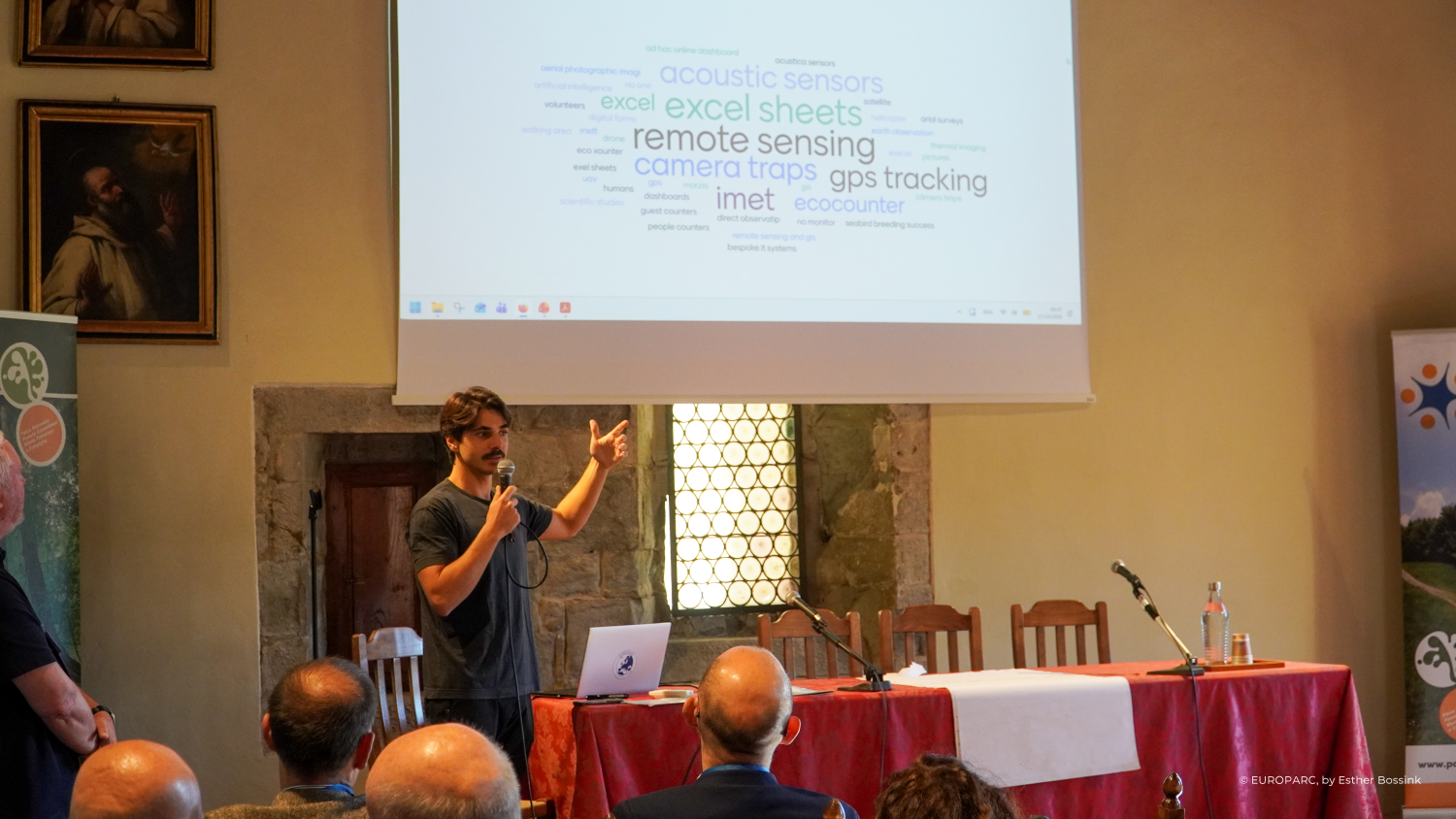
Results of the workshop on data and monitoring.
The discussions highlighted a recurring challenge: Protected Areas often collect considerable amounts of data, but this information is not always connected with or used to inform management decisions. Participants stressed that monitoring should be guided by management objectives and should assess whether management actions are having the intended results. This means looking beyond the state of biodiversity and habitats to include human pressures, visitor use, peoples’ perceptions and the wider social and economic context.
Better coordination between institutions, shared standards and improved data exchange were also identified as important steps. However, monitoring frameworks need to remain flexible enough to respond to the different contexts and needs of individual Protected Areas.
Ultimately, monitoring needs to feed into planning and decision-making. Collecting more data is of limited value if it does not help managers to understand what is working and where adaptive actions are needed.
Balancing nature conservation and local development
This workshop focused on the relationship between Protected Areas and sustainable economic development. Participants discussed how Protected Areas can contribute to local economies while maintaining their primary role in nature conservation.
Tourism and outdoor recreation can bring economic benefits to surrounding communities, creating opportunities for local businesses, accommodation providers and other services. Participants also highlighted the potential to communicate and demonstrate the wider economic value of Protected Areas, including the benefits of ecosystem services, health and well-being.
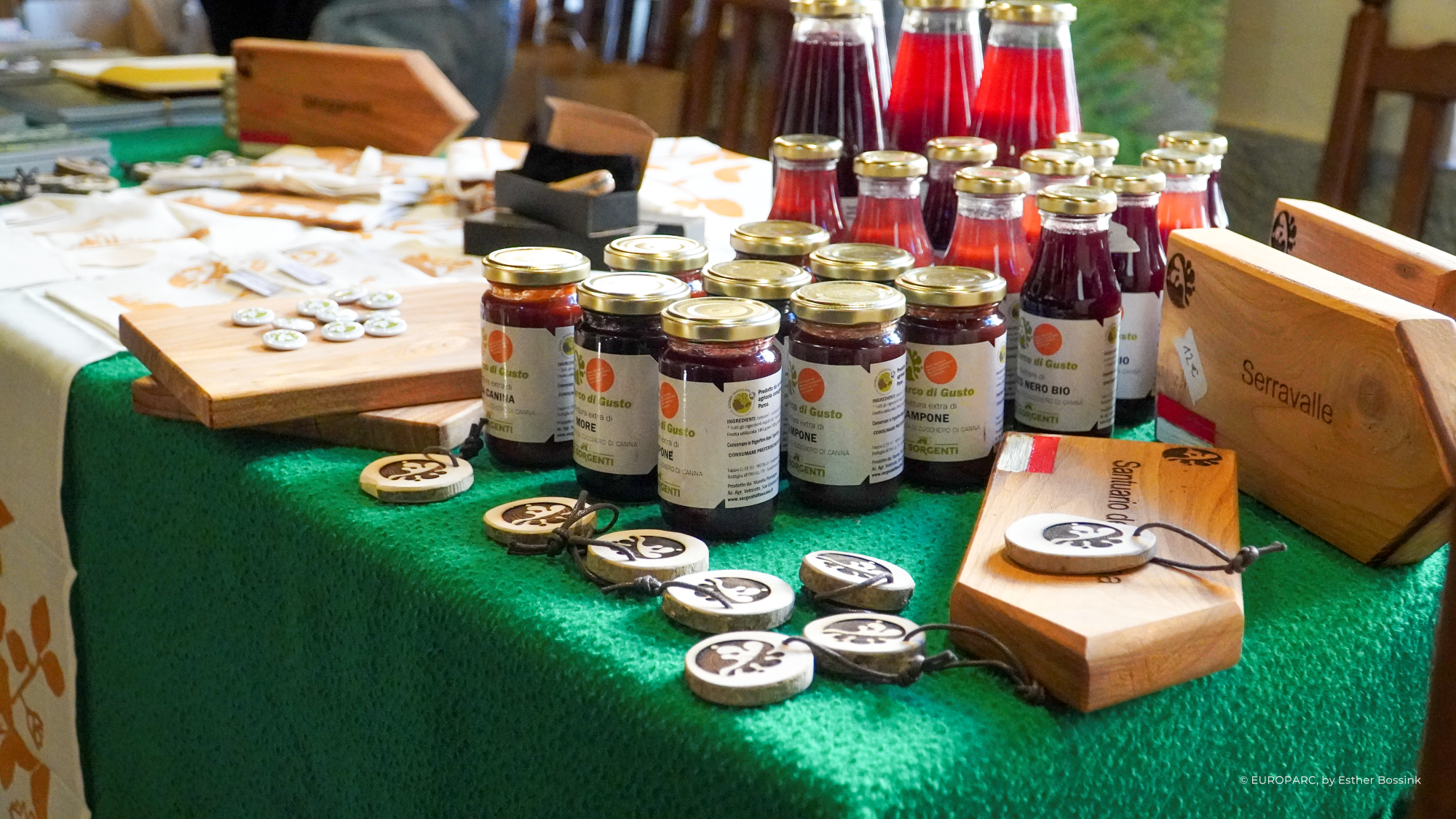
Products from the Foreste Casentinesi National Park
Ideas included for products from Protected Areas, creating stronger links between local producers and markets, and finding ways to bring the value of natural capital into local and regional accounting systems. The host of the event, National Park Foreste Casentinesi, led by example and showcased a range of ‘Park products’ to participants.
Visitor pressure was another important topic. The increasing popularity of many Protected Areas, particularly since the COVID-19 pandemic, can create challenges for sensitive sites. Management responses might include limiting visitor numbers, directing visitors towards less vulnerable areas and developing attractive recreational opportunities outside the most pressured parts of a Protected Area.
However, participants emphasised that economic benefits should not become the measure of nature’s value. Nature has intrinsic values, and not every conservation action needs to demonstrate an economic return.
Nature has intrinsic values, and not every conservation action needs to demonstrate an economic return.
Local communities as partners in conservation
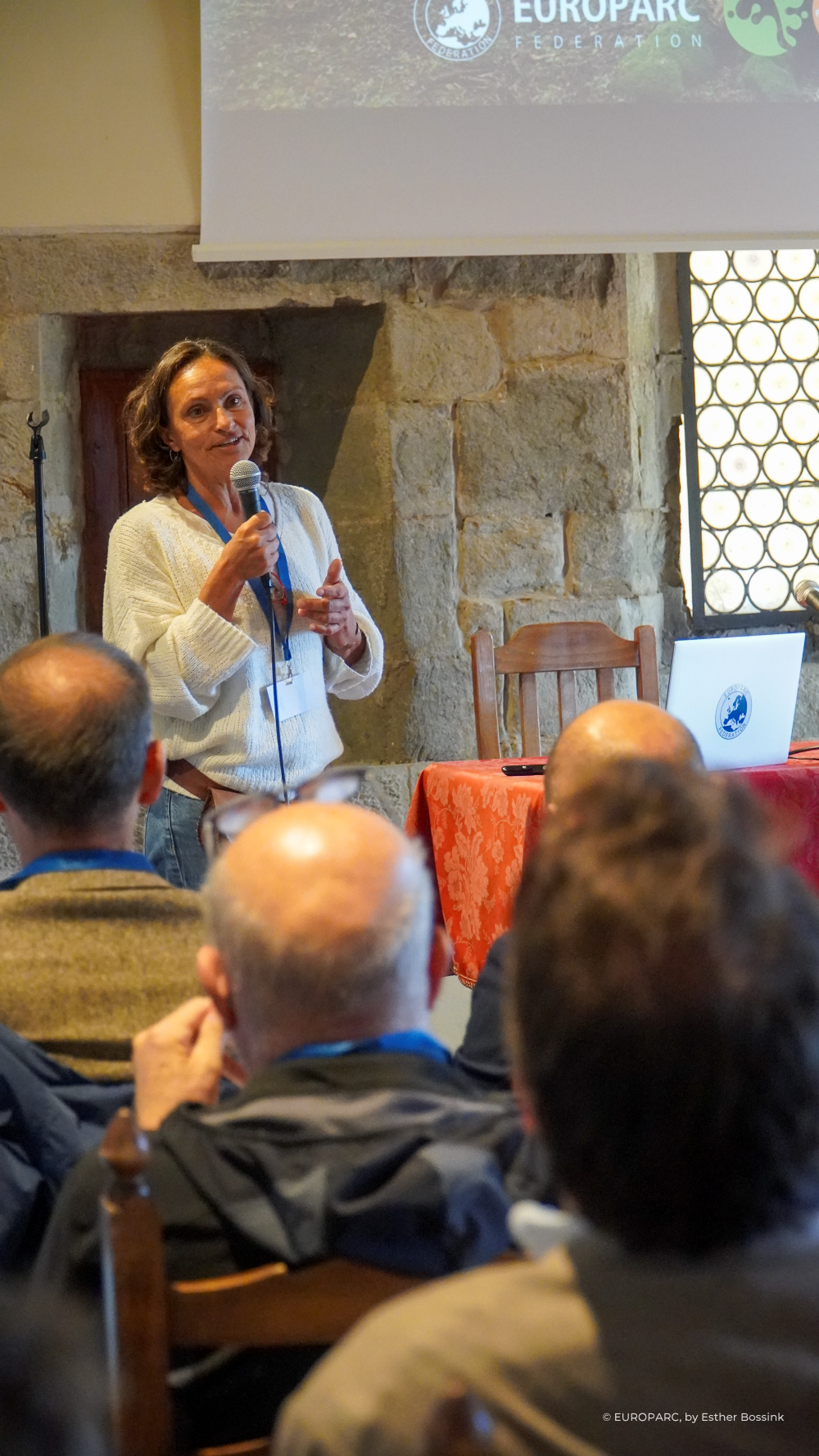
Ana Carla Cabrita da Conceição from Portugal details the experience as a LIFE PAME-Europe Pilot Site
A recurring message throughout the discussions was the importance of building good relationships with people living in and around Protected Areas.
Participants stressed that local communities, landowners and farmers need to be involved from an early stage. Understanding their concerns, listening to their experiences and communicating openly can help build trust and create stronger support for conservation. There are different ways to achieve this. These include involving local stakeholders in projects, making use of their knowledge, providing accessible information about the role of Protected Areas and creating opportunities for people to express their views. Peer exchanges between Protected Area managers can also help share positive experiences and practical approaches, as well as support the collection of ‘evidence’ to substantiate Protected Area management.
The discussions further highlighted the potential of co-management and shared stewardship, as well as opportunities for landowners to engage voluntarily in conservation, supported by appropriate compensation and funding mechanisms. The underlying principle was clear: Protected Areas need to work for nature and people. Local communities should experience the benefits of conservation and have a meaningful role in shaping how their Protected Areas are managed.
Towards a more connected approach to management effectiveness
The event demonstrated how closely the different dimensions of management effectiveness are linked. Monitoring needs to support management decisions, governance needs to enable cooperation, and conservation measures need to take account of the people and economies connected to a Protected Area. There is no single approach that will work everywhere. Protected Areas differ in their ecological conditions, governance structures, resources and relationships with local communities. Learning from one another and adapting approaches to local circumstances will therefore remain essential.
The exchanges in Camaldoli provided an opportunity to reflect on these challenges and share practical experiences from across Europe. They also reinforced the importance of looking at management effectiveness as an ongoing process, supported by good information, cooperation and a clear understanding of the different values and responsibilities involved in managing Protected Areas.
This event was made possible through the generous support of Parco Nazionale delle Foreste Casentinesi, Monte Falterona e Campigna.
