EUROPARC Germany is moving towards the future with new leadership and a sharpened profile.
The new board of EUROPARC Germany e.V. (from left to right): Hartmut Escher, Peter Suedbeck, Christian Unselt, Eugen Nowak (picture author: Jan Wildefeld)
Eichsfeld-Hainich-Werratal Nature Park: the members of EUROPARC Germany set a new course for the future work of their association at the annual general meeting. Peter Südbeck, director of the of Lower Saxony Wadden Sea National Park, leads as the new chairman of the board, from now on the umbrella organization of the national natural landscapes. The members also decided to rename the non-profit organisation “Nationale Naturlandschaften e.V.” with effect from 2020.
The overwhelming majority of EUROPARC members elected their new CEO, Peter Südbeck, who, as the head of the Lower Saxony Wadden Sea National Park, has been associated with the umbrella organization for many years. His deputies include Christian Unselt, Vice president of the NABU, Hartmut Escher, head of Nature Park TERRA.vita, and Eugen Nowak, Head of the Biosphere Reserve Spreewald, as the new Executive Board. Guido Puhlmann, the head of the Middle Elbe biosphere reserve, who has been the chairman of the association for the past nine years, resigned from his office due to the constitution. He earned recognition and gratitude from the membership for his successful work during his term of office.
The EUROPARC members made a clear decision to strengthen the “National Natural Landscapes” umbrella brand by renaming the umbrella organization “National Natural Landscapes e.V.” ( „Nationale Naturlandschaften e.V.“). This will come into force on 01.01.2020. Unlike in the past, the future association name shows the direct connection of the organization with its content-related focus, which lies on working in the National Natural Landscapes.
For sharper profiling of the national natural landscapes, the “National Natural Landscapes Profile”, which was also adopted at the General Assembly, provides for this. It formulates the value of national parks, biosphere reserves, nature parks and wilderness areas for the preservation of Germany’s natural diversity. At the same time, it summarizes the role of National Natural Landscapes for Society, Politics, Economics and Science as an indispensable point of contact, consultant and authority on all urgent issues relating to nature conservation and sustainable development.
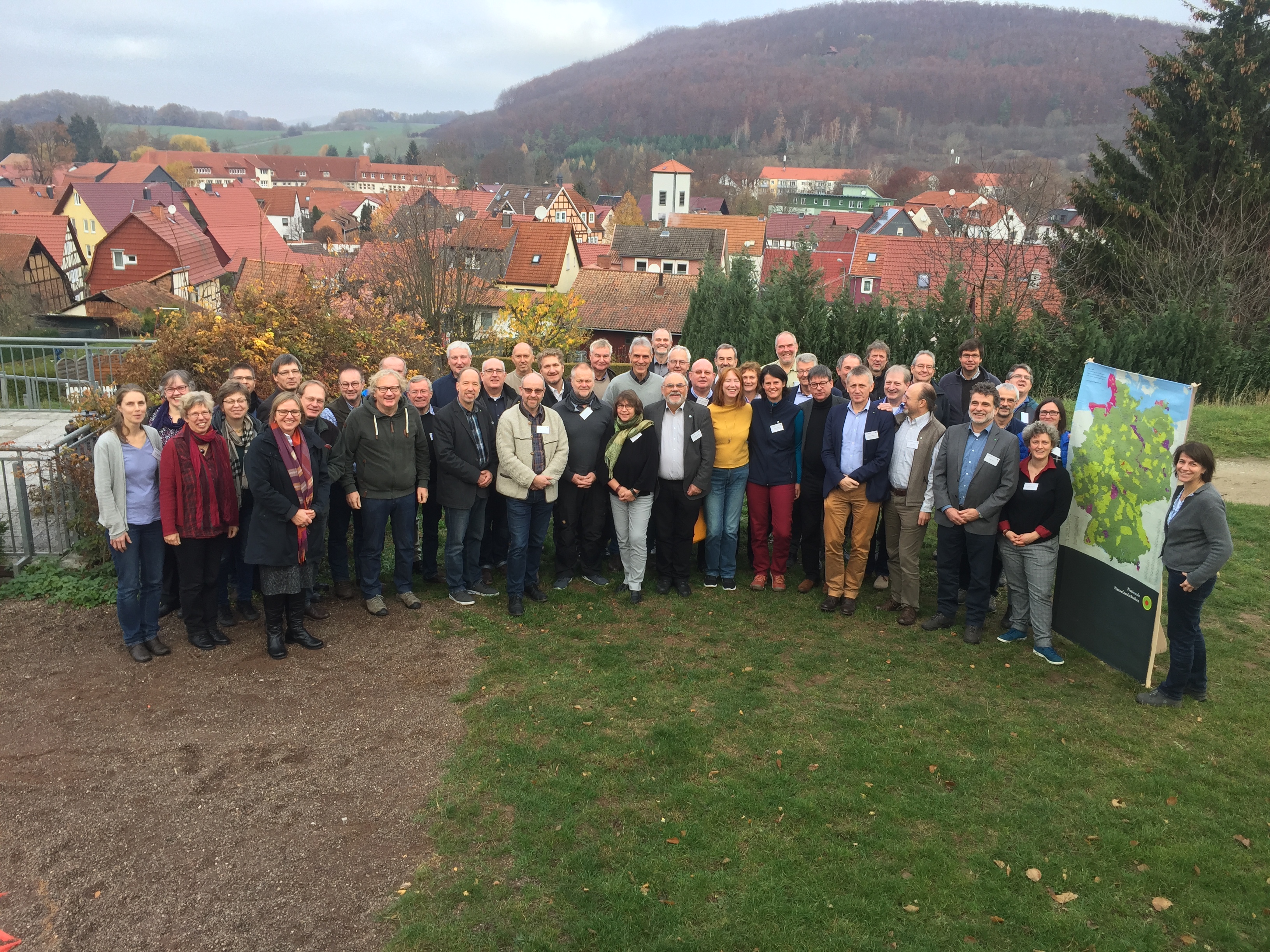
General Assembly of EUROPARC Germany in the Eichsfeld-Hainich-Werratal Nature Park (Photo: Jan Wildefeld)
The full article is available here.
Webinar Nature and Agriculture: understanding EU policy & delivering good practice
Farmers and foresters comprise almost 80% of the total EU land area. Simultaneously, the majority of European Protected Areas consist of cultural managed landscapes. EUROPARC, therefore, believes that the role of Protected Areas and Natura 2000 Sites in rural development needs to be valorised and the interdependence on the ground fully reflected in a more integrated Common Agricultural Policy (CAP). What are the challenges ahead? Which new instruments will be created and what are the main differences with the current CAP?
- 26th February 2019 at 10:30 CET
- free participation but registrations are mandatory. Register here
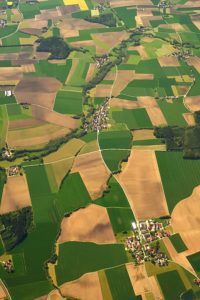
Crops in Bayern, Germany © Joao Romba (rombaimages.pt)
The #FutureofCAP
The ongoing debate in Brussels on the Future of CAP involves all European Institutions, NGOs, MEPs and several civic organisations. The EU Commission proposals for the new CAP, which take into consideration the environment, nature conservation, and sustainable use of natural resources, are now being analysed by the European Parliament and the European Council.
To understand the links between nature and agriculture that the CAP proposals entail, we invited representatives of the DG Environment and DG Agriculture to share their perspectives and tell us all about the new “green architecture” and how the “nature directives” will be represented in the future CAP.
From policy to implementation
According to the European Commission, “agriculture depends more on the weather and the climate than many other sectors“, and the responsible use of natural resources is as pertinent as ever. But policy is insufficient without the enforcement in each EU member states.
“While being cost-effective, farmers should work in a sustainable and environmentally friendly manner, and maintain our soils and biodiversity”. In this webinar, after having heard the different EU perspectives and policy changes of the coming CAP, we will hear how the Government of Latvia is implementing a successful cross-sectoral cooperation programme between the Nature and Agriculture ministries.
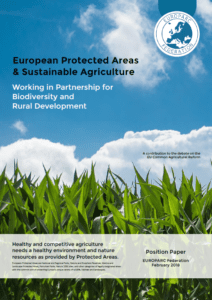
Download EUROPARC Position Paper
EUROPARC believes that the new CAP should pay specific attention to farmers acting within or close to Protected Areas and Natura 2000 Sites, engaged in environment-friendly agriculture and working in partnership with Protected Areas authorities. The position paper “European Protected Areas & Sustainable Agriculture: Working in Partnership for Biodiversity and Rural Development” launched last year introduces the role of Protected Areas, and reinforces the need for new, better-integrated approaches and more innovative funding mechanisms at regional, national and European level.
Webinar Presentations
1) The DG AGRI perspective: The rural development and the green architecture of the future CAP
by Krzystof Sulima, Policy Officer, Directorate-General for Agriculture and Rural Development, EU Commission
Links between nature conservation, forestry and farming are very strong and this is reflected in the new CAP architecture. The presentation will show the new green structure of the CAP as proposed by the European Commission and currently under examination by the European Parliament and European Council, and the challenges and the differences with the current CAP. Mr Sulima will highlight the new measures and instruments that will be available for farmers and stakeholders to support nature conservation, develop sustainable agriculture and promote rural development, with specific attention to Natura 2000 and natural protected areas.
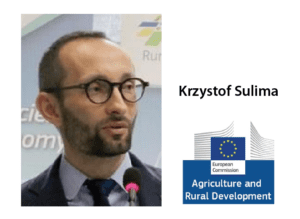 Mr. Sulima has been working in DG AGRI for many years and follows, in particular, the agri-environmental schemes and environmental measures in the Common Agriculture Policy. He is working on the CAP reform with special attention to rural development.
2) The DG ENVI perspective: The Birds and Habitats Directives and Nature Action Plan and the future CAP
by Jérémie Crespin, Policy Officer, Directorate-General for Environment, EU Commission
The terrestrial Natura 2000 network is today largely complete; however, most habitats and species associated with agricultural ecosystems in Europe are still in an unfavorable conservation status. The fitness check of the Nature Directives concluded that greater efforts are needed to conserve and enhance biodiversity, through more effective integration with the CAP in order to reach biodiversity objectives.. The “Nature Action Plan for nature, people and the economy” addresses this conclusion and because of the important role of agriculture, specific actions are dedicated to the CAP. The presentation will present the connection between the nature’s directives implementation, including in Natura 2000 area and other protected areas, and the future CAP.
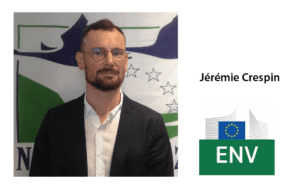 Mr. Crespin has a long experience in DG ENV and a background in Forest Science, Forest and Forest Resource Management and Agronomy and Food Industries. He is following the CAP reform with special attention to its relation with EU laws and policies on Biodiversity protection.
3) The implementation perspective: Nature conservation governance in Latvia: achievements and challenges ahead
by Juris Jātnieks, Director General, Nature Conservation Agency in Latvia
The “National Conservation and Management Program for Natura 2000 sites in Latvia 2018 – 2030” identified a list of 19 priority management measures for all terrestrial NATURA 2000 area of Latvia. The “NATPROGRAMM” is the detailed follow-up of the National PAF 2012, setting the location, the scale, and priority of habitat management measures to be implemented. This program produced 6 handbooks of protected habitat management guidelines for coastal habitats, freshwater habitats, grasslands, wetlands and forests, rocky habitats and caves. In Europe, it is an excellent example of cooperation between nature and agriculture ministries, as the Guidelines for management of grassland habitats were accepted by the Ministry of Agriculture as the official handbook for all farmers and land managers in country, to receive support payments according to the Rural Development Program of Latvia – a big success of cross-sectoral synergies.
The Guidelines describe field methods suggesting how to manage the existing habitat to improve status, or restore the habitat whenever it is possible and necessary; identify user-friendly indicators included to evaluate the state of habitats for land users, managers, municipality planners and decisionmakers; draw conclusions from experiments of management methods for dunes, grasslands, freshwater, mire and forest habitats. The implementation was based done with a broad public involvement which included workshops, seminars, discussions, voluntary work and training of municipality staff to implement management measures.
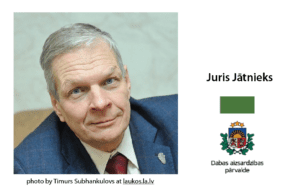 Mr. Jātnieks is the General Director of the Nature Conservation Agency, the institution that ensures implementation of unified nature conservation policy in Latvia ensuring good governance and efficient management of the protected nature areas of the country. His background is on Ecology of ecosystems and has worked in the NCA as project manager before becoming the General Director.
How to join?
Webinars are open not only to EUROPARC members – but to everyone with an interest in Protected Areas. Participation is free but registration is necessary. Register here.
You can join in from anywhere: you will just need a device with internet connection. EUROPARC webinars are held in English and participants have the chance to join the discussion with the invited speakers, at the final part of the webinar. NOTE: Please make sure you have the latest JAVA version, you can run a check to the webinar by following this link: https://gr3eq.wb.getresponse.com/room/connection-tester
Previous Webinars
Junior Rangers in Frederikshavn Municipality
Formidlingskonsulent & Naturvejleder Junior Ranger in Frederikshavn Municipality
Junior Rangers in Frederikshavn Municipality have a number of great activities they can choose from in order to help preserve the environment. A well thought out program, combined with the love for nature, and commitment to forwarding the knowledge to the youth turned out to be the perfect recipe for a big number of interested candidates.
At the Municipality of Frederikshavn in 2017, the Department for Parks and Roads made a targeted concept with Junior Rangers as volunteer helpers in municipal woods and natural areas. The concept is aimed at children and adolescents residing in Frederikshavn Municipality.
Being involved with nature
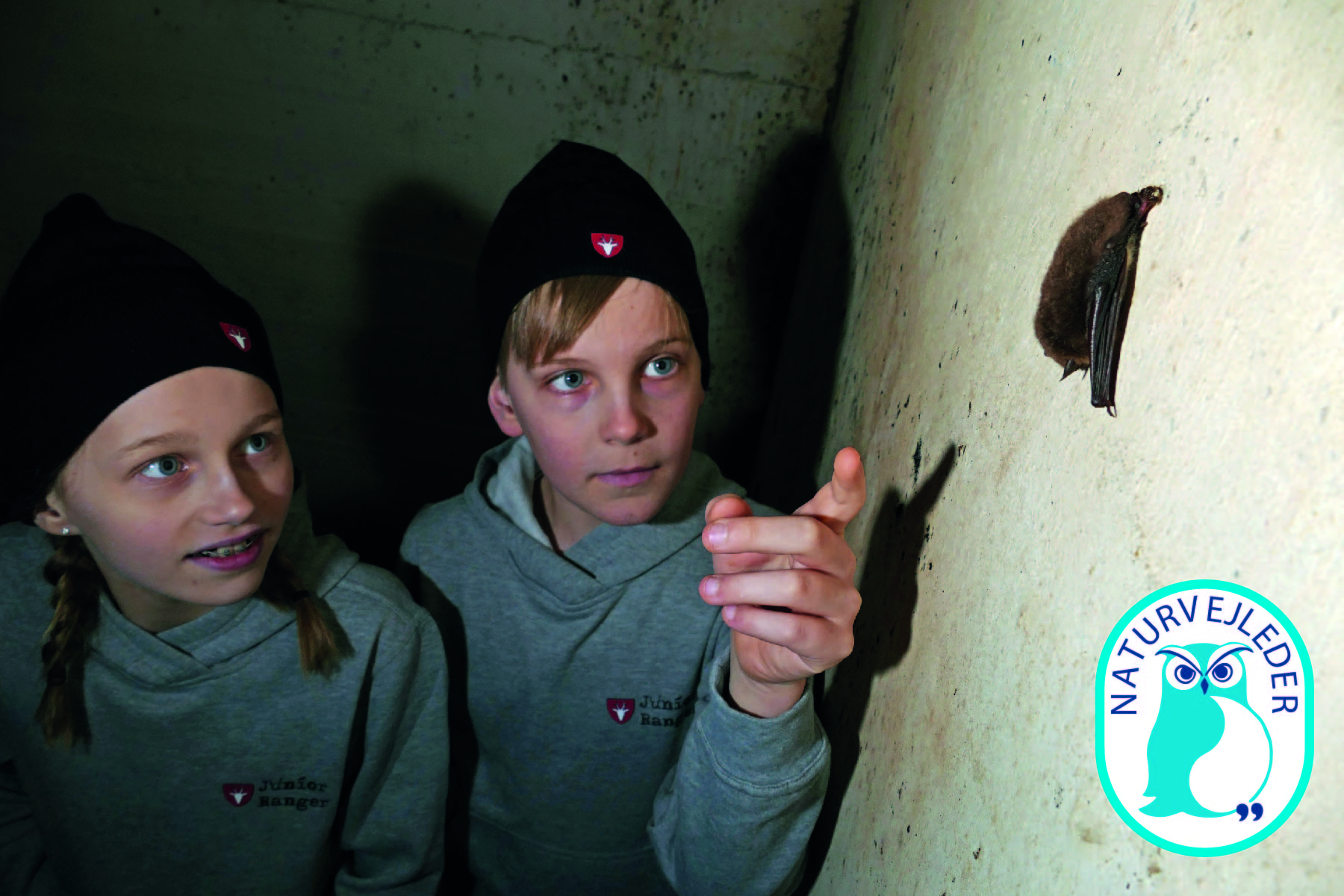
Junior Rangers help at Nature Reserves, National Parks, and natural areas. They can be voluntary guides, help with footbridges, signs, feed wildlife in the winter, count bats and much more.
Formidlingskonsulent & Naturvejleder Junior Ranger in Frederikshavn Municipality
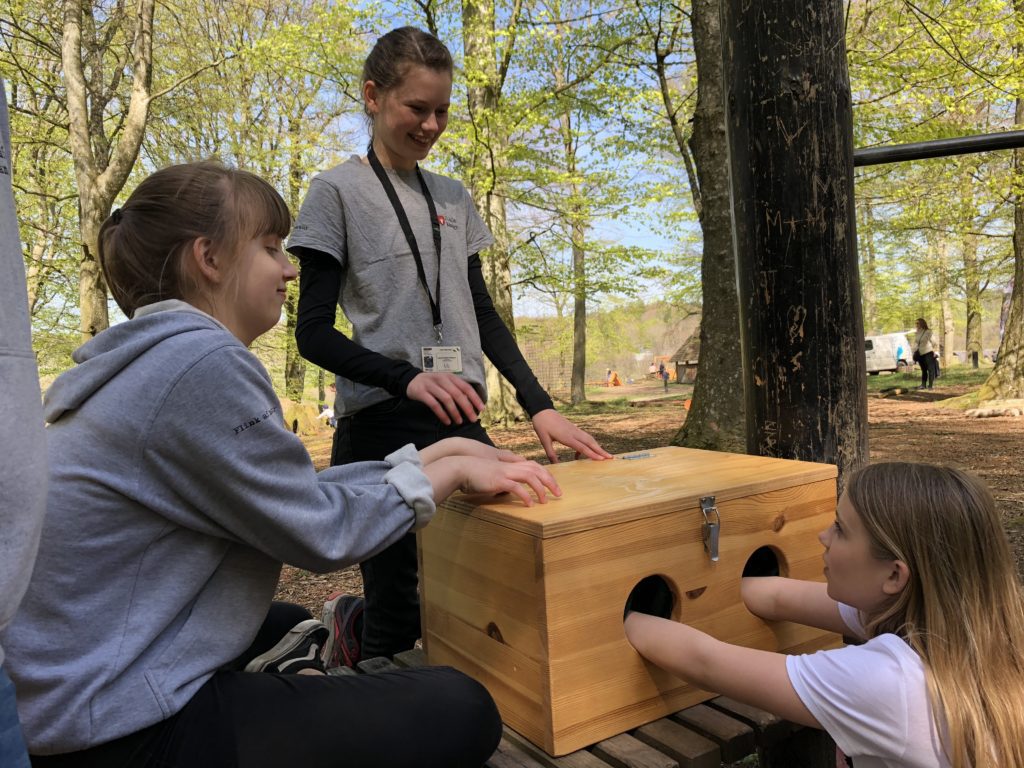
The overall objective is to teach youngsters the importance of preserving and caring for nature, and for them to become ambassadors of nature. Every year, education is provided for 20 young people, and there is always a high number of those who want to become Junior Rangers.
Formidlingskonsulent & Naturvejleder Junior Ranger in Frederikshavn Municipality
What they want to achieve
The children shall:
- Learn how to communicate nature, biodiversity and the use/protection of natural areas.
- Learn about nature all over the world.
- Support municipal events in municipal woods and areas of natural beauty.
- Help educate other youngsters in schools and elsewhere.
- Be ambassadors for nature in Frederikshavn Municipality.
- Join other Junior Rangers on an international level.
The basis for the project is to teach children:
- The basic knowledge of nature’s context.
- Special knowledge of wildlife and flora in the Danish countryside.
- Considerations on the use of nature.
- Ownership of nature.
The younger the children are, the more experiential learning is required, and other educational objectives will be pushed to the background slightly, and this interpretation is based on years of knowledge and experience.
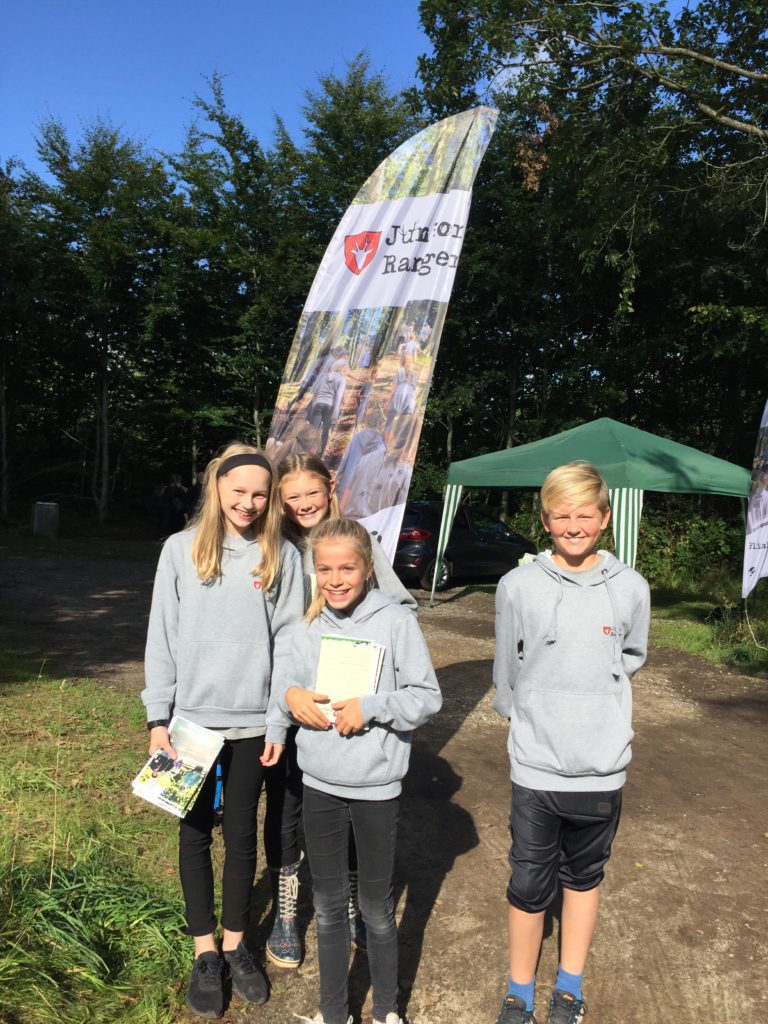
Formidlingskonsulent & Naturvejleder Junior Ranger in Frederikshavn Municipality
The integration and construction of knowledge must occur in an open and dynamic process. Different education modules and educational theory and practice must contribute to providing new knowledge and developing natural science so that the children’s understanding of nature is built up step-by-step.
Content and target group
The first contact between the children and the teachers (Rangers and park staff) occurs after an in-depth introduction. Then the children’s knowledge is built up with different kinds of games, knowledge about animals through information trips, visits to conservators, games in nature, overnight trips, wild food and many different types of learning techniques that will be slightly dependent on the composition of the group.
The first team of Junior Rangers in Frederikshavn Municipality consists of 10 girls and 10 boys from 10-13-years-old. The age group is selected based on experience with the group and their ability to “learn”. The older Junior Rangers help to teach the new Junior Rangers about nature. The target group of 15-16-year-olds will also have the opportunity to participate in the International Junior Ranger Camp that is organized and coordinated by Europarc. You can learn more about it here!
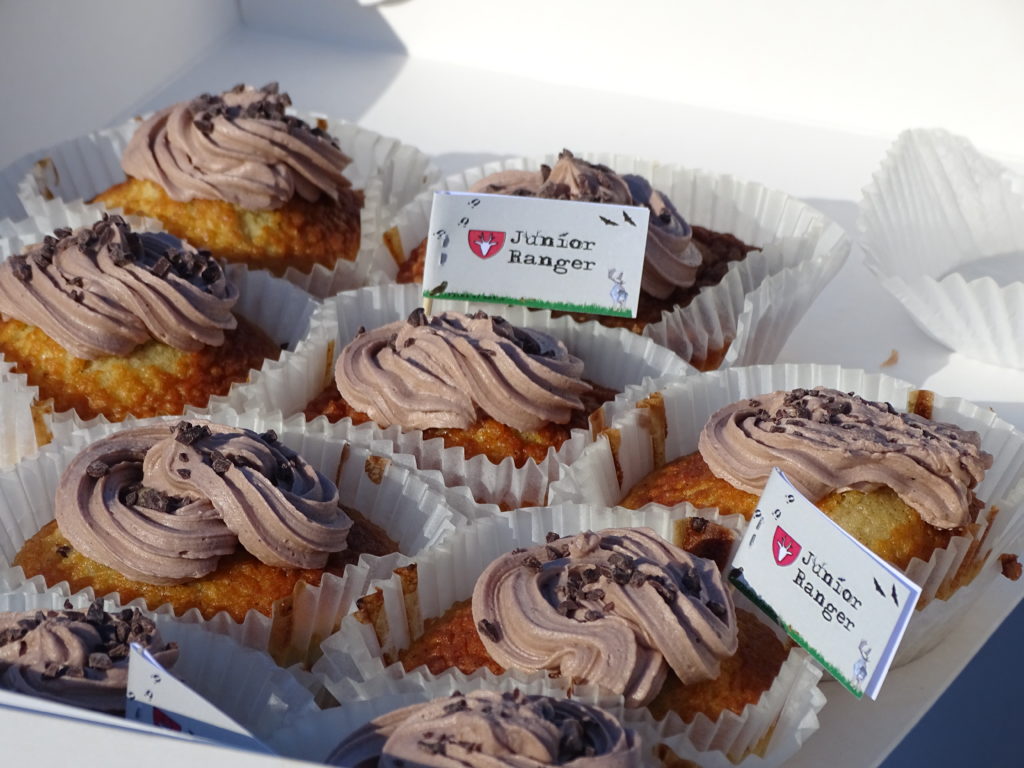
Formidlingskonsulent & Naturvejleder Junior Ranger in Frederikshavn Municipality
Natural Capital 2019 – join the seminar on March 12th in Glasgow
Natural capital: rural and urban
As part of an ongoing partnership with the Landscape Institute, EUROPARC Atlantic Isles are jointly organising a CPD seminar on Natural Capital where Ignace Schops, EUROPARC President and Sarah Bryan from Exmoor National Park are some of the speakers.
Members of EUROPARC Atlantic are able to access this event at a discounted rate with a code that can be obtained from Anita Prosser.
The early bird rate finishes on 26th February 2019. There may be some free places for National Park members.
Europarc Atlantic Isles
The Event
Natural capital – What’s the opportunity?
Get a new perspective on natural capital – and hear how you can utilize it in your practice.
Continuing the theme and thinking of the LI’s Valuing Landscape Conference 2018, this day of CPD seminars and practical workshops asks the questions that are most pertinent to practitioners today:
- Where are the investment opportunities and new areas of work?
- What are the most robust natural capital assessment methods?
- What’s the opportunity, for your business and for our sector?
Turn the theory into practice: Win new business, achieve positive change, and encourage investment in landscape on a local and national scale.
Be ahead of the curve
The government is already emphasizing a shift to the ‘net gain’ approach and outlining how it will measure the success of its 25 Year Environment Plan. Learn how to demonstrate from day 1 why your work is vital.
New work opportunities
Find out not just what is valuable, but how to value it. Environmental economics presents a huge opportunity for landscape professionals to learn new skills and win new business.
Get hands-on experience
Participate in practical, interactive workshops. Get to grips with the tools and resources available for natural capital accounting, and discover how to engage wider audiences and influence positive behavioral change using the concept of the National Park City.
Meet leading thinkers and practitioners
Enjoy a day of discussion, exchange and collaboration with leaders and peers in land and landscape management, planning, ecology and more.
Further information can be found here: https://www.landscapeinstitute.org/event/licpdday-glasgow-2019-natural-capital/