Siggen Seminar 2019!
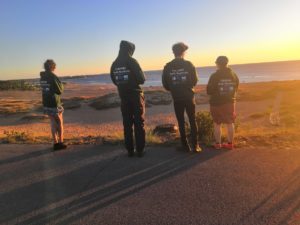
Youth+ Jumpers just hanging around - a rare moment. Photo by Laura Peters
Youth involvement in Protected Areas
Siggen Seminar 2019 18th – 21st March, Gut Siggen, Germany
Are you looking for ideas and solutions to better engage young people within your park? Do you have case studies and good practices you would like to share with other managers from across Europe? This year, continuing on from the launch of the Youth Manifesto, EUROPARC is organising the two-day seminar for members, specifically focused on working with youth.
Young people are the future of Protected Areas in Europe! But trying to get young people interested in the environment can be difficult as it involves changing perceptions and attitudes – something that requires a lot of time and effort.
The seminar is FREE for members of the EUROPARC Federation (meals and accommodation included). Participants will therefore ONLY cover their own travel to and from the event.
Registrations are now closed!
The seminar will include practical activities and opportunities for exchanging knowledge
You will have a chance to see case studies from across Europe. Here are some of the topics we will be considering:
- What are the needs and expectations of youth living within protected areas across Europe?
- What challenges protected areas are currently facing when engaging young people?
- Which opportunities and solutions PA’s can offer to youth?
- We will introduce and work on the new Youth + programme which can be a model for working with 18-25 year olds in your park.
- We will look at the Youth Manifesto, considering how to encourage more PAs to implement it into their work.
EUROPARC Youth Manifesto – Workshop II in Kalajoki, Finland June 2018 (©Rita Kovács)
We will also share different perspectives, taking a look at other youth programmes, and helping you build a programme in your area. Among others, you will see:
- An educational program for sustainability: Cairngorms National Park (UK)
- The national Junior Ranger program in Estonia
- The Youth Advisory Board in Prealpi Giulie Natural Park (IT)
- A new vision for the engagement of young people in a periurban park (E)
You are welcome to bring your own ideas for a collective “surgery” where we can examine problems and challenges you may have and suggest solutions together.
The goal of the Siggen Seminar
Protected Area professionals learning together, sharing experiences and knowledge in differing aspects of Protected Area management, and bringing innovative ideas to the table – that is exactly what EUROPARC Federation wants to achieve with Siggen Seminar.
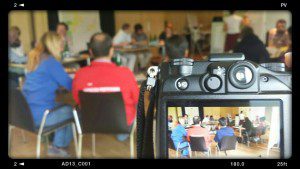
Training Seminar © EUROPARC Federation
With the enlightened generosity of the Alfred Toepfer Stiftung F.V.S., we will have the access to the private seminar centre at Gut Siggen in North Germany, hugging the Baltic Sea coast.
There are still few seats available, and they are free of charge! So don’t miss the opportunity to exchange knowledge, share experience, and establish professional contacts! Those are the most beneficial elements for working in the international context of conservation. The knowledge that you can gain in Siggen feeds back into your work in the different regions of Europe and fosters your sense of connectedness and togetherness in the EUROPARC Federation.
How to get to the Siggen Seminar Center?
The Siggen Seminar Center belongs to the Alfred Toepfer Foundation and lies on the north-eastern coast of Germany in the county of Holstein. It is a 20-minute taxi ride from the nearest train station, Oldenburg (Holst), and a five-minute bike-ride to the nearest beach.
Please contact EUROPARC with any questions you might have and download the pdf Directions to Siggen to learn how you can easily reach it by plane, train or car.
“Building the next generation of Nature Conservationists”
Hendrikus_van_Hensbergen
An outdoor talk with Hendrickus van Hensbergen
How often do you meet entrepreneurs making a change for nature?
Action for conservation logo
Hendrickus van Hensbergen was an invited speaker at the EUROPARC Conference 2018 and we could not miss the opportunity to talk to him in person. Founder and Chief Executive Officer of the charity “Action for Conservation”, Hendrikus is not only a young entrepreneur working for conservation – he is inspiring other youngsters to lead the change.
Despite his Dutch name, Hendrikus grew up sharing his time between the UK’s South-West Jurassic Coast and the Guadarrama Mountains in Spain. “As a child, I remember collecting vulture feathers and catching lizards”, revealed Hendrikus with sparkling eyes. Growing up in such iconic landscapes has certainly shaped his character and triggered his career choices – his passion for nature led him down a path into zoology and conservation. Now, he spends his time engaging with youngsters in schools and camps, enabling them to connect to nature. As he explained, “by 2030, 92,2% of the UK’s population will be living in cities, so we need to think about ways to get young people out to enjoy natural spaces, otherwise they won’t value or care for them”.
EUROPARC Federation (E): What made you start the charity “Action for Conservation”?
Hendrikus (H): In my previous job at WWF, I had the chance to visit my old secondary school. I went with some quite lazy assumptions about young people and how they would engage with environmental issues – in my case, I was not really aware of them until late into my teens. Also, the image presented by the press about young teens is quite negative: addicted to technology, disengaged, disinterested… but I found completely the opposite.
They were really inspiring and keen to learn and that sparked something in me. What if we could harness the energy and ideas of young people? Particularly in England and Wales, there are very few approaches that really target teenagers – it was a bit of a niche, a gap that was not being filled.
Understanding this made me join forces with fellow young conservationists. We started out as a project going to schools to speak to young people from different backgrounds. And that’s really how the charity began, just as a network of young people interested in engaging other young people in environmental issues.
(E) How are you engaging young people?
(H) We believe that all young people should feel moved and empowered to protect the natural world and so we developed three programmes for youngsters. The main one, which also reaches a broader audience, is developed in secondary schools, particularly in disadvantaged urban areas. The second programme is our residential camp, which is a much more immersive experience, taking place in national parks, where we bring young people to spend time together and connect with nature. Lastly, we have an ambassador programme, which is a year-long programme to mentor and support young individuals taking action in their communities.
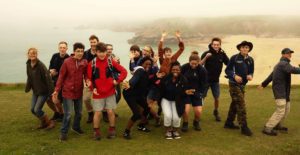
Photo with the courtesy of Action for Conservation
(E) Can you tell us more about the programme with secondary schools?
(H) Our schools’ work is focused on engaging a wide spectrum of society. The aim is to inspire the youngsters and support them in designing and delivering their own projects so they can have a real impact in their community and feel a sense of success.
We would go into three workshops with the same group of students, over a school term. The 1st workshop is all about inspiration, it’s very active as we are building knowledge and interest levels. In the next workshops, we support them in designing and implementing their projects, which they present back in the end. If they were successful, they go through a final event with several schools, where they share their achievements.
(E) This means that the students, in the end, are making a real contribution in their communities…?
(H) Yes, we try to focus on local issues and partner as much as possible with other conservation organisations working locally, so that young people can have meaningful action and impact. Addressing something place-based, which is relevant for their area and community, is essential. If you are not connected with your local place, then it is hard to be connected to anything else.
(EU) What have you learned on the way?
(H) I have learned how to fundraise, which is very challenging – there are limited pots of money and typically, funds in the UK have been quite focused on particular areas – it might be children and young people, it might be environment, and they would not necessary fund things that sit at the intersection between these two. To start the Charity, for example, we had to find an alternative solution and made it through a crowd-funding campaign.
There are also a lot of challenges around working with schools. Teachers are under a lot of pressure and have in average 8 seconds to read an email, so you really have to be quite sharp on how to get teachers on board and get their interest.
Working with young people is amazing but can be challenging. We work with theatre professionals to make our workshops more interactive and not rely on boring PowerPoints – that’s how what we do sticks with them.
(E) What would be your 3 pieces of advice for Young people?
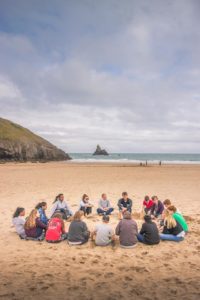
Photo with the courtesy of Action for Conservation
(H) First, find your passion and hold on to it, it does not necessarily have to be conservation. Following your passion is not easy – it might not always mean money or a certain life style, but it will give you fulfilment!
Second, take action. If you feel like something needs to change and there is no mechanism to change it through other organisations or normal routes, you need to take the risk and take action. That is in essence what happened with the charity. I started a project to fulfil a need, to fill a gap, and everything kind of evolved out of that.
Third, build a community around you – they will be your support and will make things happen. But be willing to work really hard! Built up slowly and steadily, because it will give you a stronger base and thus, will be more likely to work. Take things slowly, let them evolve naturally.
(E) So far, you have mainly been working with national parks in England and Wales. How do you see a future cooperation with EUROPARC and other European Protected Areas?
(H) We are keen to work with organisations to put young people at the centre of decision-making – it is the only way they will feel empowered for protected areas to become a part of their identity. We see ourselves as facilitators: what we have is a layered model that is effective and can be adapted to different contexts across Europe. I have been taking it to other places, and I would be very interested in doing it also with other EUROPARC members.
Watch EUROPARC Live Video with Hendrickus’ full interview!
For more information visit http://www.actionforconservation.org/
You found this topic interesting? To find more articles like this one, download the new edition of the EUROPARC Journal Protected Areas In-Sight with a special focus on youth involvement Parks – available in english, german and french!
2019 Tourism for Tomorrow Awards finalists are here!
pixabay
The World Travel and Tourism Council (WTTC) announced 15 finalists for its 2019 Tourism for Tomorrow Awards!
They are organised into several categories:
- Climate Action,
- Investing in People,
- Destination Stewardship,
- Social Impact,
- Changemakers (the Changemakers Award will put a special spotlight on fighting the illegal wildlife trade through tourism).
All 15 finalists want to support change, transformation in business practices and consumer behaviour towards a more environmentally conscious sector.

Gloria Guevara, President & CEO World Travel & Tourism Council www.wttc.org
Gloria Guevara, President & CEO of WTTC:
This year’s Tourism for Tomorrow Awards shine the spotlight on those organisations which are leading the way in sustainable Travel & Tourism. They reflect WTTC’s Strategic Priorities of Climate Action, Destination Stewardship, Future of Work, and Social Responsibility.
And now, without further ado, here are the finalists:

pixabay
Climate Action Award, for organisations undertaking significant and measurable work to reduce the scale and impact of climate change:
· Bucuti & Tara Beach Resort, Aruba
· The Brando, Tetiaroa Private Island, Tahiti
· Tourism Holdings Limited, New Zealand
Investing in People Award, for organisations demonstrating leadership in becoming an exciting, attractive, and equitable employer in the sector:
· Lemon Tree Hotels Limited, India
· Reserva do Ibitipoca, Brazil
· Shanga by Elewana Collection, Tanzania
Destination Stewardship, for organisations helping a place to thrive and bring forward its unique identity for the benefit of its residents and tourists:
· Grupo Rio da Prata, Brazil
· Masungi Georeserve, Philippines
· St. Kitts Sustainable Destination Council, St. Kitts and Nevis

pixabay
Social Impact, for organisations working to improve the people and places where they operate:
· Awamaki, Peru
· Intrepid Group, Australia
· Nikoi Island, Indonesia
Changemakers, this year focused on organisations fighting the illegal wildlife trade through sustainable tourism:
· Kelompok Peduli Lingkungan Belitung (KPLB), Indonesia
· SEE Turtles, USA
· The Cardamom Tented Camp, Cambodia
Awards Lead Judge, Prof. Graham Miller, Executive Dean and Professor of Sustainability in Business, Faculty of Arts and Social Sciences at the University of Surrey:
The shortlisted projects and businesses demonstrate community development, sustainable employment practices, female empowerment, innovative environmental technology and protection of land and marine wildlife as well as positively contributing to the broader Sustainable Development Goals.
The EUROPARC Federation – as a partner of the Tourism for Tommorow Awards – is looking forward to seeing more european projects as finalists, especially from the EUROPARC Network od Sustainable Destinations!
Winners of the 2019 Tourism for Tomorrow Awards will be announced during the awards ceremony at the 19th WTTC Global Summit in Seville, Spain from 2 – 4 April 2019.
To find out more about the finalists, go to the 2019 Tourism for Tomorrow Finalists page and vath the video:
Greece hosts the XI Charter Network Meeting! “Exploring a Sustainable (tourism) Response”
Every two years, the EUROPARC network of Sustainable Destinations applying the European Charter for Sustainable Tourism in Protected Areas methodology comes together to exchange experience and best practice. With visitor pressure increasing in many European Protected Areas, we need to look at tourism with a different mindset. The XI Charter Network Meeting takes place in Greece between the 9-11th April, with a special post-conference excursion until the 14th April!
The social and cultural impacts of tourism: exploring a sustainable response!
Sustainable Tourism can deliver positive impacts for society. It has the potential to promote social development through employment creation, economic activities and can be a force for peace and understanding. It can also strengthen communities, as facilities and infrastructure developed for tourism can benefit locals as a reaffirmation of culture, tradition and values.
However, these same socio-cultural impacts do change local people ’s everyday experiences, the traditional way of life and intellectual and artistic products. There are concerns over culture commodification, lack of authenticity of traditions, dilution of culture and even standardisation of tourism offers. All this too affects changes in the landscape and nature of the destination.
The European Charter for Sustainable Tourism in Protected Areas, through it partnership approach, seeks to deliver social, economic and environmental benefits to an area, in a way that does not denigrate the existing culture, yet allow too for growth and development. It is a challenge to balance these competing demands.
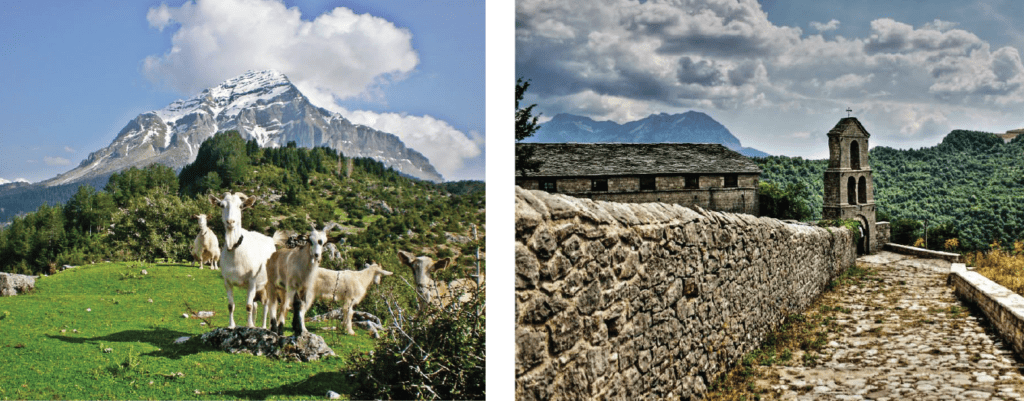
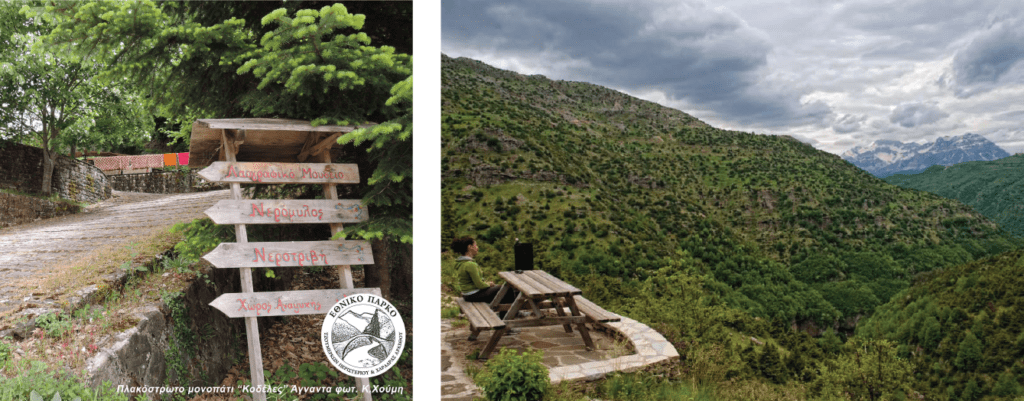
(Tzoumerka National Park) Tourism has the potential to promote social development through employment creation, income redistribution and poverty alleviation.
Agenda
Download the Agenda of_the Charter Network Meeting 2019
Keynote speakers
– Sofia Pachini, Policy Officer, Nature Protection Unit, DG Environment, European Commission – “NATURA 2000: opportunities for sustainable tourism embracing natural and cultural heritage in nature protected areas”
– Emanuele Raso, Municipality of Monterosso, 5 Terre National Park, Italy – “Managing culture and social impacts: the 5 Terre Experience”
– Prof. Dimitris Goussios, University of Thessaly, Laboratory of Rural Space
– Casa de Ecoturismo Quei Victorino – “Ecotourism as a driving force for rural areas: Experiences of a young entrepreneur”
– Carol Ritchie, Executive Director, EUROPARC Federation
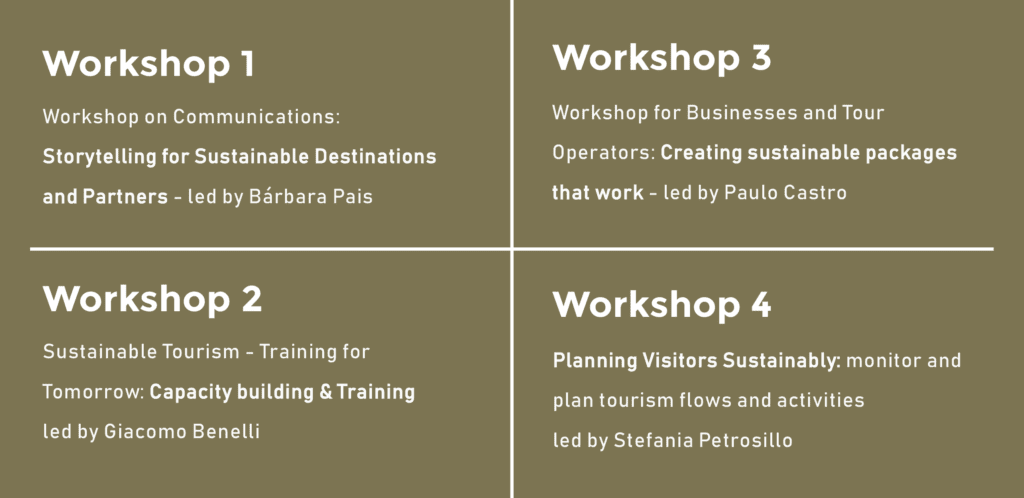
Workshops
In the application form, you will be asked to choose one workshop. The workshop sessions will run on the 9th April afternoon (between 15:00 and 18:00) and on the 10th April morning (between 9:00 and 11:30). A further description of each workshop is available in the Agenda.
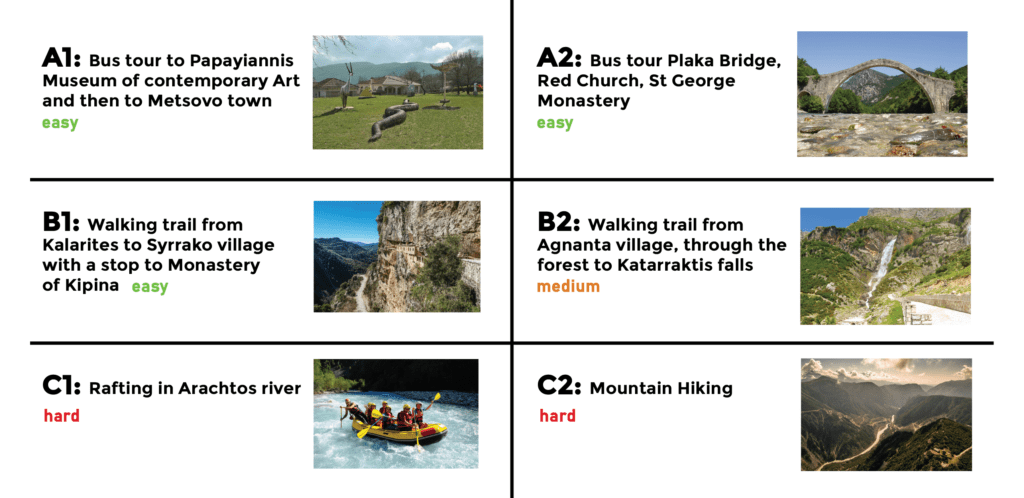
Field trips
Our host in Tzoumerka organised 6 wonderful field trips. On the 11th, we will spend the day outdoors, each participant should choose the field trip he would like to join.
Open activities (where we need you!): marketplace and open mic session
There will be plenty of opportunities to network and share experience, learn from each other and get new ideas to take back to your own areas. For the Marketplace, you are invited to bring information, promotional material, but also the best delicacies from your country or region… Yours + mine = our Food, Enjoy and share experience ! you can either bring the material with you, or post it in advance to the Park.
There will also be an “open mic “ session. Where you can bring a 5 minute presentation of your project, ideas for projects, looking for partners or just general sustainable tourism question you want advise or input from the audience… We give you the Microphone… the floor is your (for 5 minutes).

Location and Accommodation
The meeting will bring together park and partners from across Europe to the wonderful Tzoumerka, AcheloosValley, Agrafa and Meteora National Park, in Greece. One of our newer sustainable destinations awarded with the Charter.
The meeting will take place in the Pramanta Council Hall, Pramanta town, municipality of North Tzoumerka, Region of Epirus. The National Park will kindly provide transfers on the 8th April from:
- Thessaloniki Airport
- Athens Airport
- For those arriving by ferry from Italy, a transfer will be arranged from Igoumenitsa Port
Transfers will also be ensured for the return on 12th am (and on 14th am for those joining the post conference excursion).
Our host have secured excellent value in the following hotels, so please book direct with the hotel of your choice.
All hotels are within 20 min drive and shuttle buses will bring you to the conference venue each day. Make sure you book your trip and accommodation soon, we will need to know your travel details by the end of February to organise the transfers.
Registrations
We are open now for PRE-REGISTRATION. Please register NOW to secure your place.
- The participation fee for EUROPARC members is only 70€, and 90€ for non – members.
A second registration form will be sent for you to select your workshop and field trip so don’t worry about that for now. But do register now to ensure your secure this great bargain! And so you can make your advance travel plans.
>>>>Register here<<<<
Special 2-day Post Conference tour!
This edition, Tzoumerka National Park is offering a special 2-day post-conference between the 12-14th April for those who would like to have the chance to visit Meteora! This will be an additional cost but it highly recommended!
Download the Programme of the Post Conference Tour