Meet our new members from France, Italy and Luxembourg
Grand parc MJS Photo Hubert Canet Balloid
France
Grand Parc Miribel Jonage – Segapal
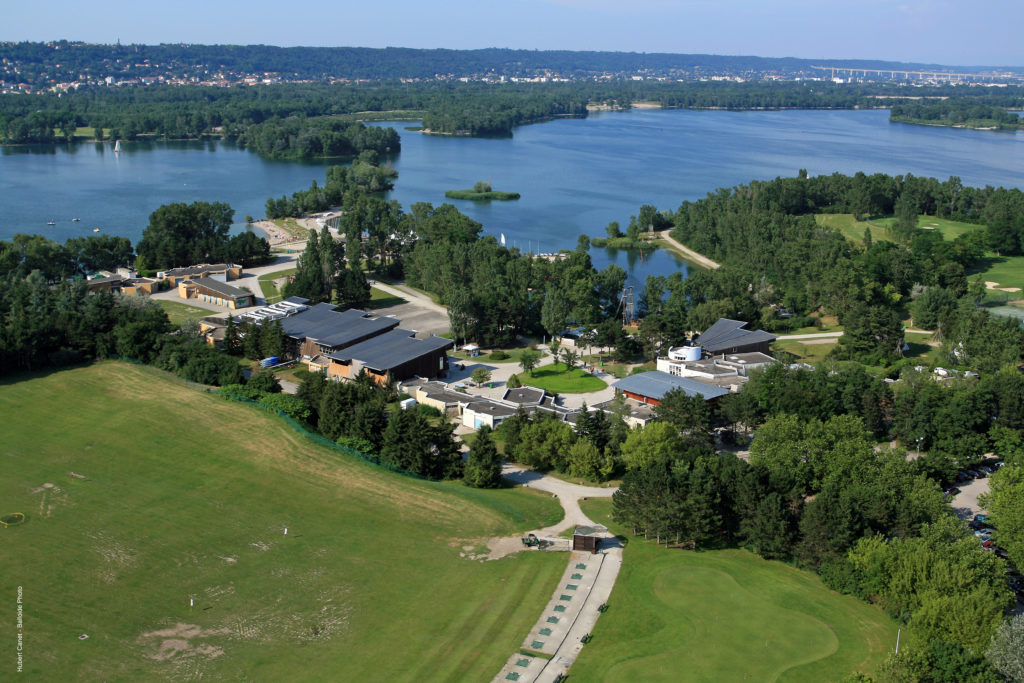
Grand parc MJS
Photo Hubert Canet Balloid
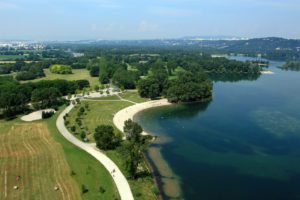
Grand Parc Miribel Jonage is a public park that extends for 2200 hectares at the gates of the city of Lyon. Therefore, it is one of the biggest periurban parks in Europe, in plain of the Rhone river. The presence of water is the key for forming the park’s identity. besides ensuring nature protection, the park provides also many possibilities to visitors and large benefits to the local community, such as drinking water, flooding protection, local produce (agriculture), nature education and many more.
Grand parc MJS
Photo Hubert Canet Balloid
Grand Parc Miribel Jonage has three main sectors:
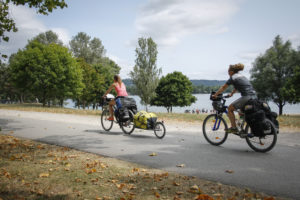
- the downstream portion of the site, developed as a nautical and sports leisure area,
Grand parc MJS
Photo Mathilde André
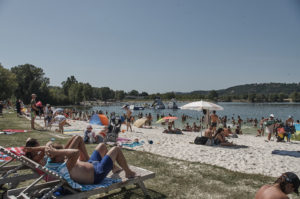
- the heart of the site, with exceptional riches linked to the presence of water,
Grand parc MJS
Photo Chloé Bernard
- the upstream portion, consisting of protected nature areas and agricultural lands.
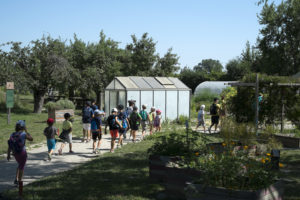
Grand parc MJS
Photo Maxime Dechelette
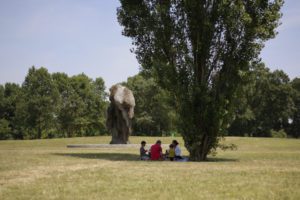
Grand parc MJS
Photo Mathilde André
Italy
Parco Groane
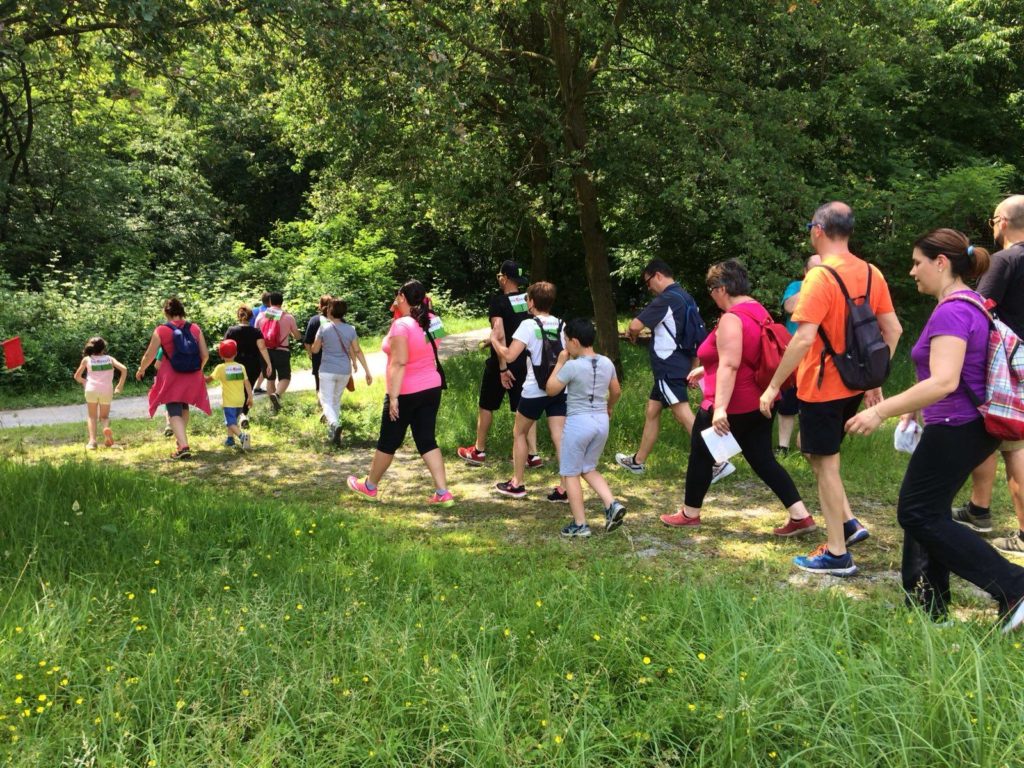
Photo Roberto Sanvito Thousands of people attend the PARCO GROANE every week to practice sports, walking, biking
Parco Groane is a regional protected area that extends for 3,800 hectares within the great metropolis north of Milan.
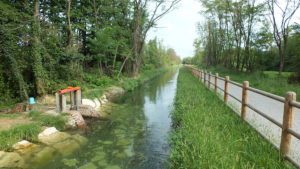
Photo Roberto Sanvito
VIA ACQUA The waterway (Via dAcqua) is a channel system that leads to the Expo 2015 site. In parallel runs a cycle route
Among houses, palaces and industries, the last forests of large oaks and towering pine trees survive, thanks to their protection. Vast moors are colored by the intense flowering at the end of summer. Old ruins of furnaces mark the landscape with their walls and bricks, and ancient patrician villas – with their gardens – remind us the landscape of the past.
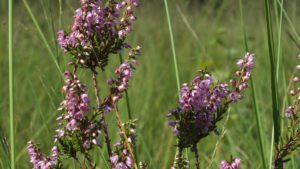
Photo Roberto Sanvito
Heather
The Regional Park was established in 1976, by the strong will of the municipalities and the Lombardy Region, and since 1984 has a Territorial Plan that regulates the use of the areas, in harmony between nature conservation, agriculture, and tourism.
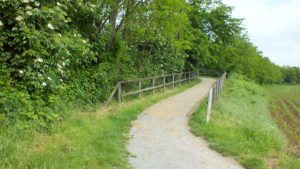
Photo Roberto Sanvito PARCO GROANE is covered by a system of cycle lanes of 50 Km
The Parco delle Groane is managed by a public law body, between the municipalities concerned, the Provinces of Milan and Monza and Brianza and the Municipality of Milan. The objectives of the Body concern in particular the purchase of land in the Park, the reforestation of bare areas, the improvement of forests, nature conservation and environmental education.
In this environment, which has escaped urbanization, the Groane Park Authority has created a network of cycle paths, which allow you to immerse yourself in the green, without leaving the city. The Parco delle Groane manages the cycle and connects with voluntary guides.
Luxembourg
Ministry for Energy and Spatial Planning
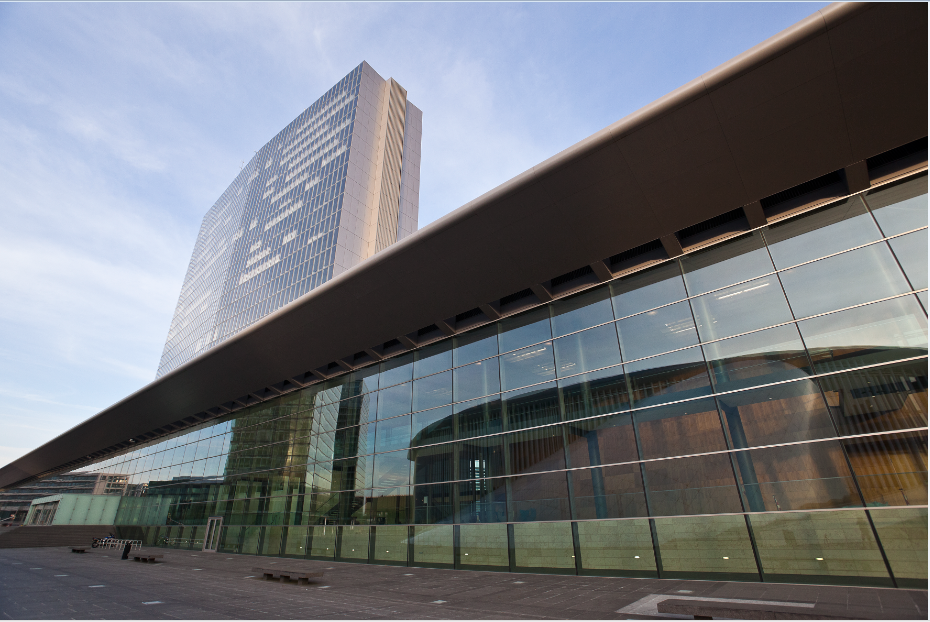
Ministry for Energy and Spatial Planning
Working together is essential for rural areas. The Luxembourgish Ministry for Energy and Spatial Planning is aware of the importance of nature parks.
The Department of Spatial Planning ensures the coordination of municipal, intermunicipal, national, cross-border and international sectoral policies that have an impact on territorial development.
The spatial planning policy aims to ensure respect for the general interest by ensuring optimal living conditions for the entire population through the sustainable development of all parts of the national territory. In this context, it ensures rational use of the land and concentric and coherent urban development.
The different fields of activity of the Department of Spatial Planning are, therefore:
- Territorial strategies,
- Regulatory plans,
- Urban and regional development,
- Natural parks,
- Cross-border spatial planning,
- European territorial cooperation,
- International spatial planning policy.
Would you like to know more about The EUROPARC Federation and our members, or even become one? Visit our page and get all the information you need!
Master in Protected Natural Spaces with scholarships for Latin America
pixabay
Fungobe and EUROPARC-Spain have prepared a great opportunity for gaining new knowledge! With the help from the BBVA Foundation’s they are offering 10 grants in the specific area of Ecology and Conservation Biology aimed at Latin American university graduates for the Master’s in Protected Natural Spaces in its 2020 edition. They want to help broaden people’s opportunities in different areas and through different lines of action.
The deadline for submitting applications: February 15th 2019, 2 p.m. (Spanish mainland time)
This master’s degree offers highly qualified university education, accessible from a wide range of academic and professional backgrounds, which aims to cover both knowledge of natural systems and management techniques and modes of intervention in the socio-economic environment. The course is based on Spanish reality and is specifically open to European and Latin American perspectives.
pixabay
The master’s degree is jointly organised by the Autonomous University of Madrid, the Complutense University of Madrid and the University of Alcalá.
USEFUL INFORMATION:
Instructions, information and documentation
For more information and queries: becas-fbbva@fbbva.es
Meet our new members from Spain, Denmark and Albania
Collserola nature park Landscape Autor Robert Peña
Spain
Collserola nature park
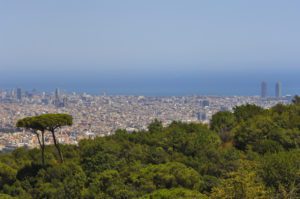
Collserola nature park
Autor Robert Peña
The magnificent Serra de Collserola massif rises up over Barcelona Metropolitan Area, almost touching the city. It is a much-loved and immensely valuable periurban natural area and a great privilege for the huge population that lives around these mountains.
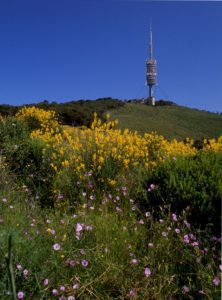
Collserola nature park
Collserola Tower
Autor Francesc Muntada
Collserola is a well-preserved, 8,000-hectare natural area in which forest predominates but which also includes a variety of other plant formations that provide a habitat for valuable biological diversity.
Collserola is also a place for discovery and learning, a place for meeting and for leisure. All this means that the final goal of the Park Consortium’s management policy is to promote environmentally friendly and sustainable use of the reserve whilst also conserving the natural heritage it contains.
The landscape we see in Collserola today is the result of gradual changes to its original make up, which was formed entirely by environmental conditions, though it has been intensively transformed over the centuries.
Serra has been used for agriculture, with the construction of terraces and the planting of vines, and for forestry, with management of the woods.
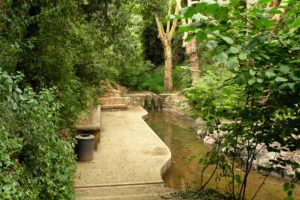
Collserola nature park
Font de Sant Pau
Autor CPNSC
Today, agriculture has almost completely disappeared from the area, and forestry management activities have also greatly decreased.
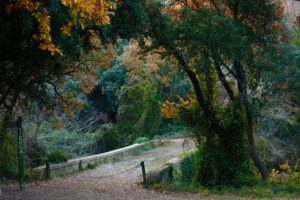
Collserola nature park
Pont de can Modolell,
PM Collserola, Catalunya
The great natural space formed by the Serra de Collserola has been very important in shaping the metropolitan landscape for three important reasons:
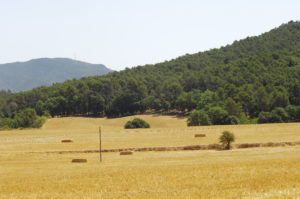
- its size, as Collserola represents more than half of the open space in the metropolitan area.
Collserola nature park
Vall de les feixes
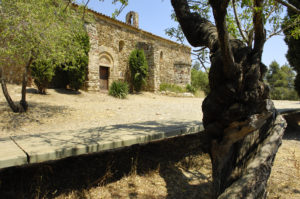
Autor Robert Peña - its central situation surrounded by townships, cities and communication networks.
Collserola nature park
Ermita La Salut del Papiol
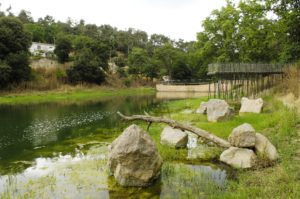
Autor Robert Peña - the high degree of “naturalness” that it conserves, despite the pressures from the great city.
Collserola nature park
Pantà de Vallvidrera
Autor Robert Peña
Collserola plays an important role not only in terms of ecology, but also the landscape, as its relief turns the Serra into a superb viewpoint over the surrounding cities and towns, and makes nature a presence in the urban scenery.
Denmark
Council of Frederikshavn
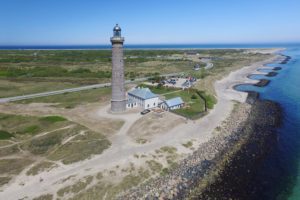
Council of Frederikshavn Photo Henning-Larsen
The municipality is located in the northern part of Denmark. It is the 7th biggest administrator of nature areas in Denmark (out of 98 municipalities). This part of the country is characterized by nature, agriculture, sports, tourism and 86 kilometres of the coastline. There you can find big areas of dunes, hillsides, forests and rivers. There are also 356 protected ancient monuments.
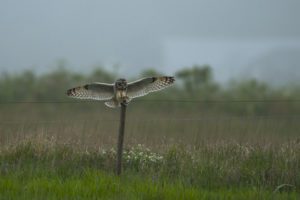
Council of Frederikshavn Photo Henrik Christensen
The area around Skagen is one of the most famous tourist destinations in Europe. Therefore, the municipality is one of the most visited tourist destinations in Denmark, which means that they are working a lot on combining protection and use of nature.
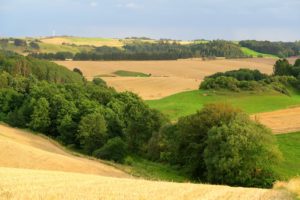
Council of Frederikshavn Photo Merete Møller
Albania
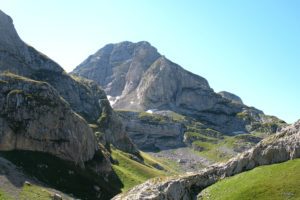
Albanian Alps Alliance Jezerca Peak
Photo: Eng. Petrit Imeraj
Network “Albanian Alps Alliance” represents a union of non-governmental organizations operating in Shkodra, active in the field of environmental protection and biodiversity, tourism development and community mobilization.
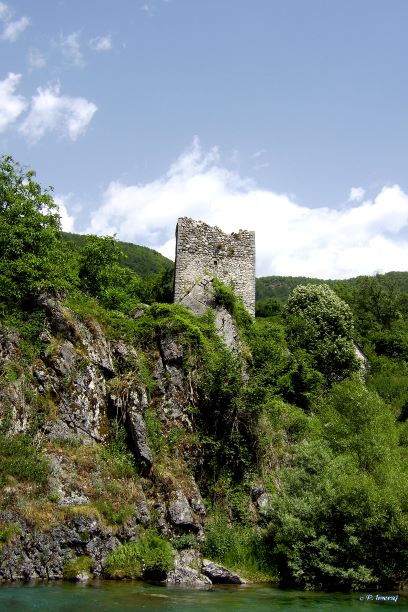
Albanian Alps Alliance Tower Curraj
Photo: Eng. Petrit Imeraj
The vision of the network is:
Alps – invaluable asset of natural and ethnocultural values that must be protected and inherited through generations.
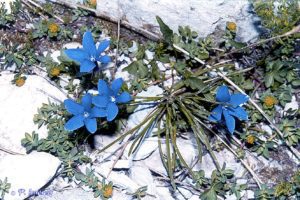
Albanian Alps Alliance Gentiana
Photo: Eng. Petrit Imeraj
The mission of the Network is to contribute to sustainable environmental and socio- development economic of the Alps through public awareness, involvement of local communities in decision-making and promoting the natural, environmental and traditional values.
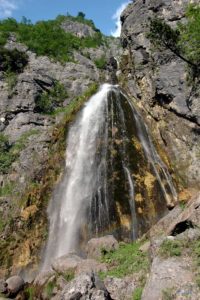
Albanian Alps Alliance Thethi Waterfall
Photo: Eng. Petrit Imeraj
Would you like to know more about The EUROPARC Federation and our members, or even become one? Visit our page and get all the information you need.
Ten Reasons Why We Need a New Nature Movement
Junior Rangers in the Prealpi Giulie Nature Park © Leonardo Cerno
By Richard Louv
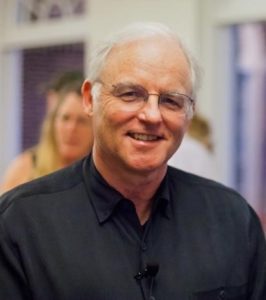
Richard Louv
Richard Louv is a bestselling author who sparked an international debate and movement to reconnect kids and nature, through his book Last Child in the Woods. He coined the term nature-deficit disorder which has influenced policy and inspired campaigns across North America.
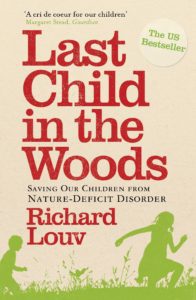
Richard Louv LAst Child in the Woods
Climate change, biodiversity collapse, and the disconnect of children from nature are the greatest environmental challenges of our time — and all are interrelated.
The Nature-deficit disorder
In recent decades, children and adults around the world have become increasingly disconnected from nature, with profound implications for human health and child development – with indicated impacts on attention disorders, Vitamin D deficiency, myopia, childhood obesity and the growing epidemics of both inactivity and loneliness.
The great work of the remainder of the 21st Century will be the development of a new and positive relationship between human beings and the rest of the natural world.
When I wrote “Last Child in the Woods” about what I called nature-deficit disorder (not a known medical diagnosis, though perhaps it should be), I cited about 60 studies. The topic of the influence of the natural world on human development was, to say the least, understudied. Today, over 800 studies are abstracted in the Children & Nature Network’s research library, which is available to anyone in the world.
Specific to the nature-deficit disorder, five major barriers stand between humans, especially children, and the rest of the natural world.
- Urbanisation without nature.
- A media and politics-driven culture of Fear
- Digital dominance of our lives.
- Cultural and educational devaluing of the natural world
- The Dystopian Trance: a post-apocalyptic view of the future.
The good news is that attitudes about the nature connection are changing – not fast enough – but we now see pediatricians in the U.S. writing prescriptions for nature; we see a 500% increase in the number of nature preschools; family nature clubs spreading all over; and we see an international movement growing around the world.
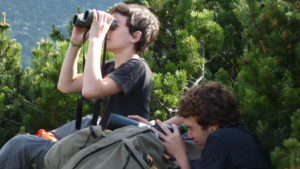
Ten Reasons Why We Need a New Nature Movement
1) As of 2008, more than half of the world’s population lives in towns and cities. This transformation will produce one of two outcomes: either the end of meaningful daily experience in nature, or the beginning of a new kind of city – and a new view of our role in and our definition of nature.
2) Adults have nature-deficit disorder, too. The children and nature movement will not succeed unless adults come to see the importance of our own connection to the natural world.
3) Environmentalism needs to hit reset. Environmental concern, in some areas, has dropped to its lowest point since before Earth Day 1970. Why? Economic recession. A well-financed campaign of disinformation. An inability to describe a great future. For whatever reason, environmentalism remains a pup tent. We need a bigger tent. In fact, we need a river.
4) Sustainability alone is not sustainable. Though we don’t have a better word to replace it, the word sustainsuggests stasis. We need more than stasis; we need to produce human energy (health, intelligence, creativity, joy) through nature.
5) Conservation is not enough. Now we need to “create” nature. Even if we conserve every square foot of remaining wilderness, and we should, it won’t be enough to guarantee the biodiverse habitats that humans and other organisms will require to thrive. In addition to conservation, we must now restore or create natural habitats on our farms and ranches, in our cities, neighborhoods, commercial buildings, yards, and on our roofs. We’ll need the true greening of the urban world.
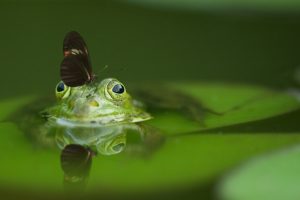
pixabay
6) The more high-tech we become, the more nature we need. We hear talk of a “post-biological” era in which human beings are optimally enhanced by technology. Yet, we’ve only begun to study how the natural world can optimize human health and intelligence. Technology will always be with us, but as it grows, we’ll need an antidote to its downside.
7) The Development of Hybrid Minds, ones capable of the ultimate multitasking: to live simultaneously in both the digital and physical worlds, using computers to maximize our powers to process intellectual data and natural environments to ignite our senses and accelerate our ability to learn and feel.
8) A New Nature Movement will create new jobs. Connecting nature experience directly to human health and cognitive abilities will need nature preschool teachers, physicians and therapists who specialise in the healing power of nature; biophilic architects, landscapers and city planners to start using native plants to increase biodiversity; park rangers to take on the additional role of health para-professional – and many more.
9) Connecting children to nature brings unlikely allies together. Conservatives, liberals, business people, environmentalists, teachers, pediatricians, and people of different religions will sit down at the same table.
10) We hunger for a positive image of the future. If we see only an apocalyptic future, that’s what we’ll get, or close to it. But imagine a society in which our lives become as immersed in nature as they are in technology, every day, where we live, work, learn and play. Imagine a future in which our intelligence and creativity, our ability to feel and be fully alive is enhanced by more frequent contact with the natural world.
You found this topic interesting? To find more articles like this one, download the new edition of the EUROPARC Journal Protected Areas In-Sight with a special focus on youth involvement Parks – available in english, german and french!