Budget boost for EU’s LIFE programme
pixabay
Launched in 1992, the LIFE programme has co-financed more than 4.600 projects in the EU and third countries, being the most valuable funding line for the work of protected areas and Natura 2000 sites. Since its creation, LIFE has been through different funding periods. Recent changes made by the European Commission enabled an increase of the budget allocated to the LIFE Programme and an increase in budget is being negotiated for the period 2021-2027.
LIFE programme: the EU’s funding instrument for environment and climate action.
On 25 October, the European Commission approved a funding package for the LIFE programme. The EUR 243-million budget is part of a total investment of EUR 430.7 million to support 142 projects selected in 2018. According to Mr Karmenu Vella, Commissioner for the Environment, Maritime Affairs and Fisheries,
the Life Programme helps many talented Europeans to find solutions to some of today’s greatest environmental concerns – air pollution, water scarcity, plastic waste, biodiversity and resource loss. And it continues to deliver value for money.
pixabay
The LIFE programme funds projects supporting nature, the environment and quality of life in the EU’s transition to a more sustainable and low-carbon future. Among the main priorities, funding will be allocated in projects to reduce conflicts between people and wildlife, to support the restoration of relevant ecosystems, and to incentivize manufacturers reusing plastics in the automotive, construction and packaging industries as part of the LIFE programme’s support for the European Commission’s European Strategy for Plastics in a Circular Economy.
Life in Numbers
The biggest investment of EUR 196.2 million will be done in the fields of environment and resource efficiency, nature and biodiversity, and environmental governance and information. An additional EUR 46.8 million will support climate change mitigation, adaptation, and governance and information projects.
This funding also includes support for Member States to draft their 2030 national climate and energy plans to reduce greenhouse gas emissions by at least 40 % compared to 1990 levels.
 The themes supported by the LIFE programme include:
- 55 environment and resource-efficiency projects;
- 40 nature and biodiversity projects;
- 15 environmental governance and information projects;
- 11 climate change mitigation projects;
- 17 climate change adaption projects; (including the recent EUROPARC project Life NaturAdapt)
- and 4 climate governance and information projects.
In the current 2014-2020 funding cycle, LIFE will invest EUR 3.4 billion, with some 1 100 projects ongoing at any time.
In the 2021-2027 cycle, the European Commission is proposing to boost funding for LIFE by almost 60 %.
Follow the LIFE Programme page to know about the current call for proposals, and read more about who can apply and how to apply.
Junior Rangers in Loch Lomond & The Trossachs National Park
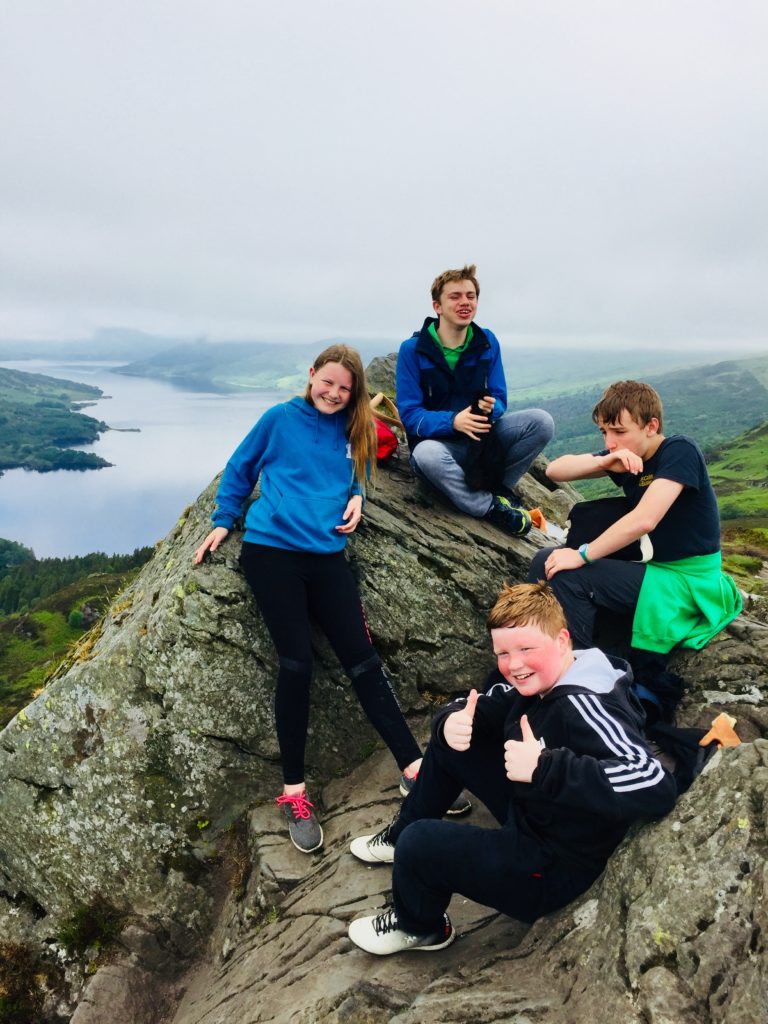
Junior Rangers discovering the landscapes, wildlife and habitats of the National Park
Loch Lomond & The Trossachs National Park brings us some great news. Not only did they encourage young people to take care of the environment, but they also provided them with new knowledge and valuable skills. Also, they got an interesting insight into all the things these Junior Rangers liked the most about their programme as well as all the suggestions they had in order to make it even better.
In 2018, the Loch Lomond & The Trossachs National Park Junior Ranger Programme supported young people from McLaren High School, Balfron High School and Vale of Leven Academy to join National Park staff and partners in a week long programme.
They challenged them to get to know the National Park better, but were also very interested in their response. It resulted in a very interesting insight into their achievements.
The National Park Authority provides a wealth of materials and programmes to schools to help connect young people to the outdoors and give them an appreciation and respect for wild places. The Junior Ranger Programme builds on this by providing a deeper level of detail and hands-on experiences that will leave a lasting impression on those participating.
The programme also demonstrated the value in working with a range of partners which helped ensure the participants were able to learn about the broad range of work undertaken across the National Park.
What did the Junior Rangers do?
The Junior Ranger programme saw pupils help contribute towards the National Parks Wild Park Biodiversity Strategy by clearing invasive Rhododendron with National Trust for Scotland, completing Marine Litter Surveys and litter picks and clearing meadow cuttings at the RSPB Lomond Reserve. Each week the Junior Rangers also helped clearing cross drains on Ben Ledi, Ben A’an and Ben Lomond in partnership with The Mountains and The People.
Junior Rangers discovering the landscapes, wildlife and habitats of the National Park
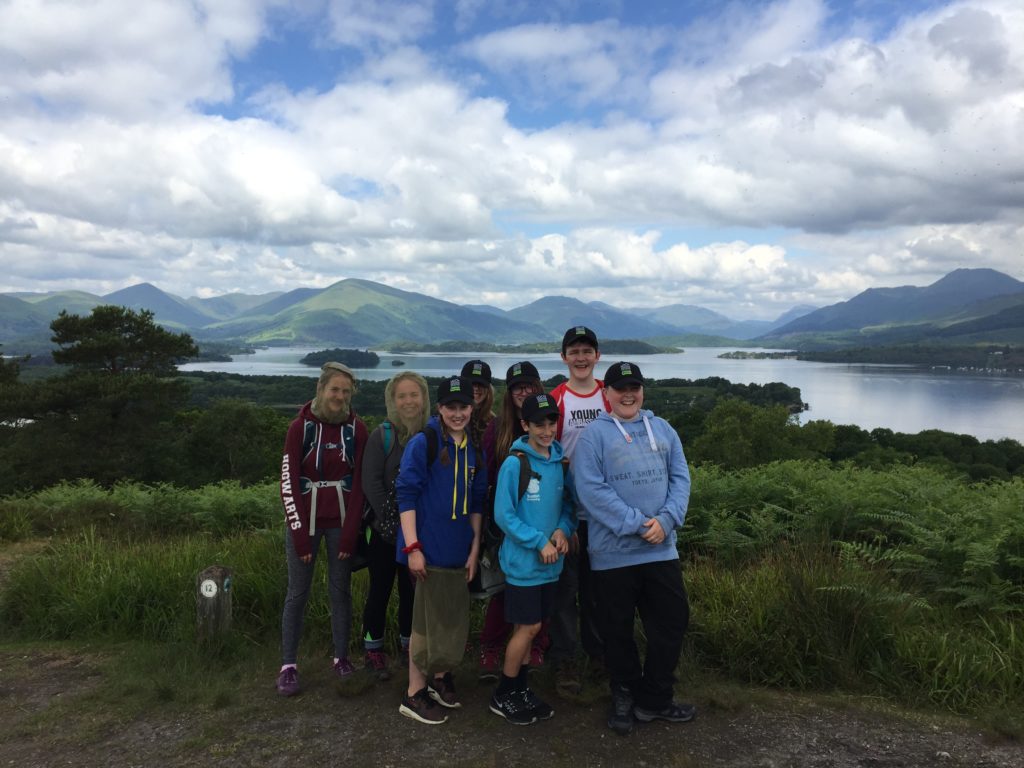
Junior Rangers discovering the landscapes, wildlife and habitats of the National Park
Other activities included a Recreation and Access day paddling on Loch Ard, Orienteering through the woodlands at Loch Ard, a cruise boat on Loch Lomond and a visit to the island of Inchcailloch. Through these experiences they learnt more about sustainable tourism, access, recreation and health, managing visitor pressures and addressing land use conflicts. The week culminates in a day of reflections/presentations and graduations at their Schools. They also completed their John Muir Discovery Award, gaining invaluable knowledge, skills and experience of connecting with nature.
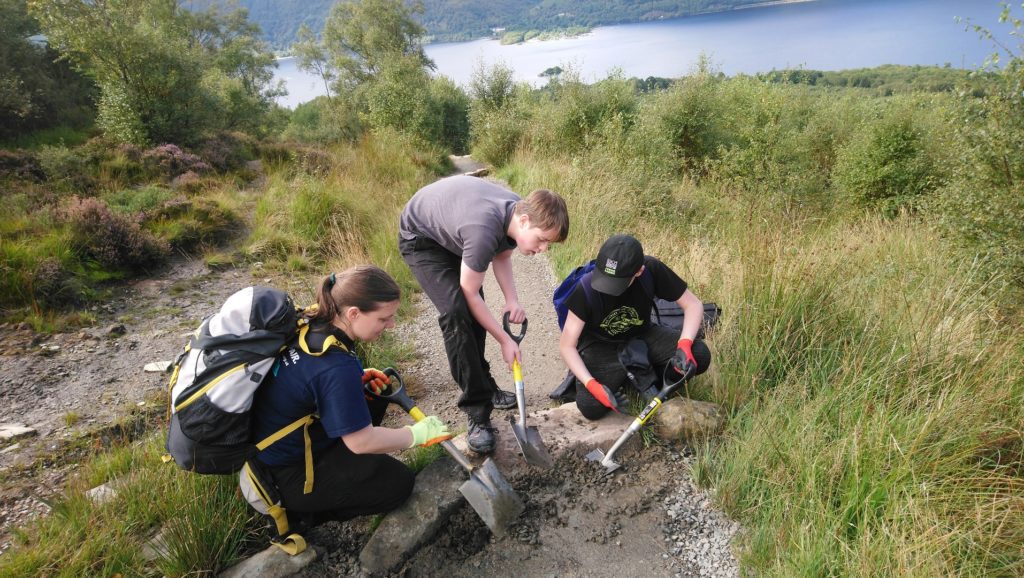
Loch Lomond & The Trossachs National Park Junior Ranger Programme Junior Rangers repairing the footpath and clearing Rhododendron at Ben Lomond
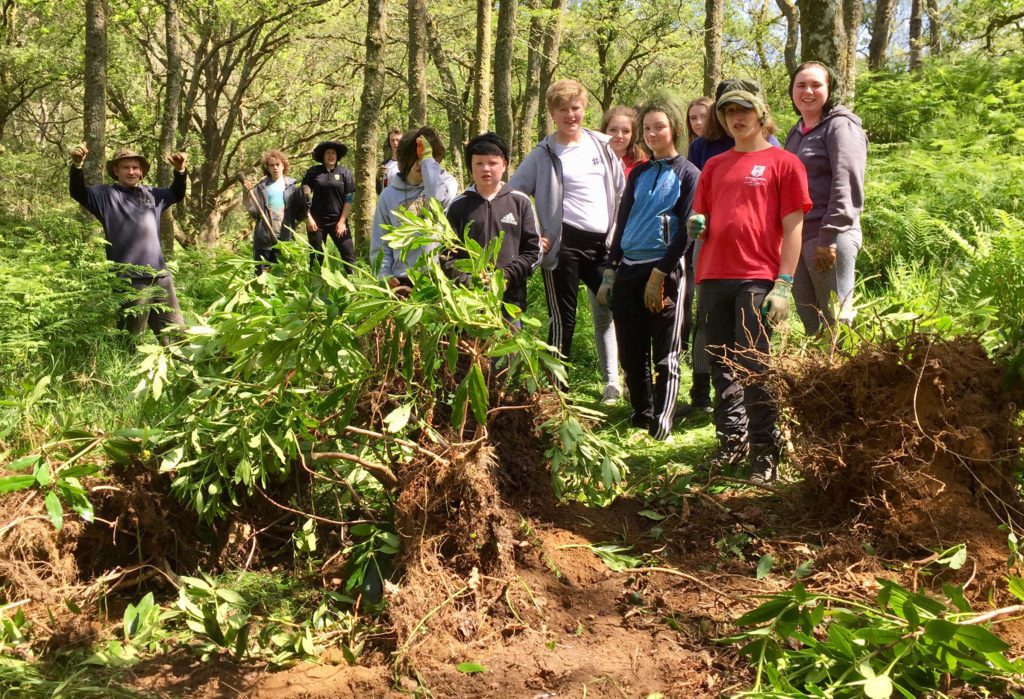
Loch Lomond & The Trossachs National Park Junior Ranger Programme
What did they like the most?
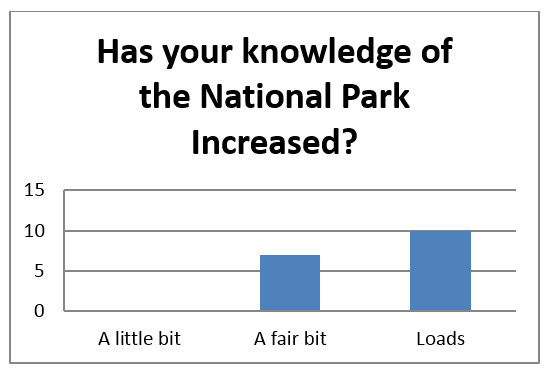
Feedback received from the Junior Rangers highlights the value they placed on the experience. Results from their evaluation responses show that overwhelmingly 100% enjoyed the programme. One Junior Ranger commented that “I enjoyed all of it and it was fun to do activities and find out how we can help our National Park. I learned loads of things I never knew before about the National Park.”
When asked what they enjoyed most about the programme, their responses included “I enjoyed learning about different jobs that the Rangers do” and “I liked being outdoors with my friends having fun but learning loads at the same time.”
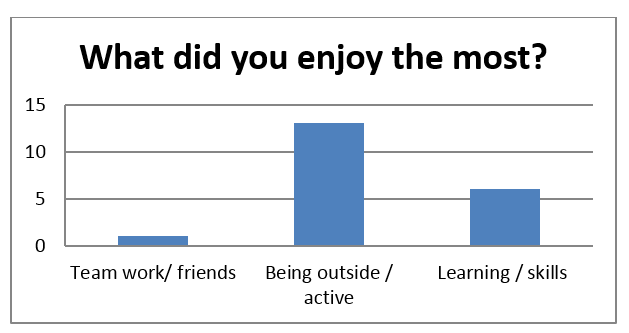
Loch Lomond & The Trossachs National Park Junior Ranger Programme table
Catriona Manders, a S2 pupil from McLaren High School, said: “Junior Rangers was an amazing experience and I feel very fortunate to have taken part. The variety of activities mixed with a brilliant group made this week a time of laughter, fun and memories I will never forget.”
Through participating in the activities, the aim was to increase the young people’s knowledge of the National Park. The table below shows their responses.
Loch Lomond & The Trossachs National Park Junior Ranger Programme table
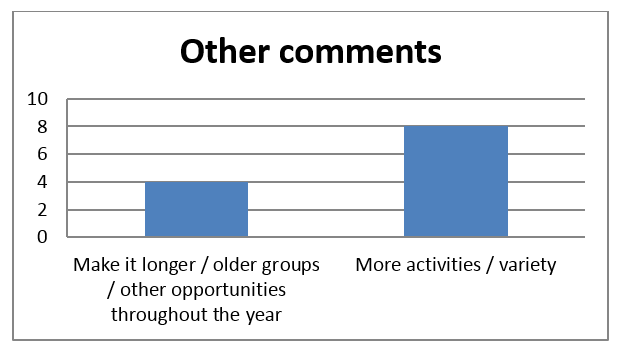
On reviewing the programme, Junior Rangers commented that they would like to make it longer and with opportunities throughout the year, with more practical conservation experiences and lots of activities. They also would like to discover more about the National Parks Biodiversity.
Loch Lomond & The Trossachs National Park Junior Ranger Programme table
Other comments received showed that the Junior Rangers appreciated the challenges of being out and active and getting fit, they enjoyed working outside and the practical tasks, as well as talking to and engaging with visitors to the area – and if we could just sort out the midges!!
Finally, when asked if they would like to continue to be involved in the Junior Ranger programme 82% stated they would.
Europarc Atlantic Isles: first webinar in 2019
Europarc Atlantic Isles
Europarc Atlantic Islesis is offering its first webinar for 2019 providing an opportunity to exchange information and expertise in an easily accessible format usually lasting about one hour.
The next webinar will be on Friday February 8th at 12.00 o’ clock.
It will provide a preview of the newly developed peatland-tailored User Guide on methods to value the benefits from restoration as part of the series on Peat and Moorland management.
The Moors For the Future Partnership (MFFP), the Yorkshire Peat Partnership (YPP) and the University of Leeds have developed a guide to help peatland restoration practitioners and anyone interested in peatlands value the socio-economic benefits of their restoration. The interactive ‘User Guide’, developed as part of the Yorkshire integrated Catchment Solutions Programme (iCASP), will help peatland practitioners better understand methods for valuing peatland’s ecosystem services, get an idea of the existing evidence on values, and make the case for investment in restoration.
Before the webinar you will get a sneak preview of the User Guide!
You will need to sign up via the EAI webpage here for the webinar!
Until the February 8th, you can listen to all the previous webinars here
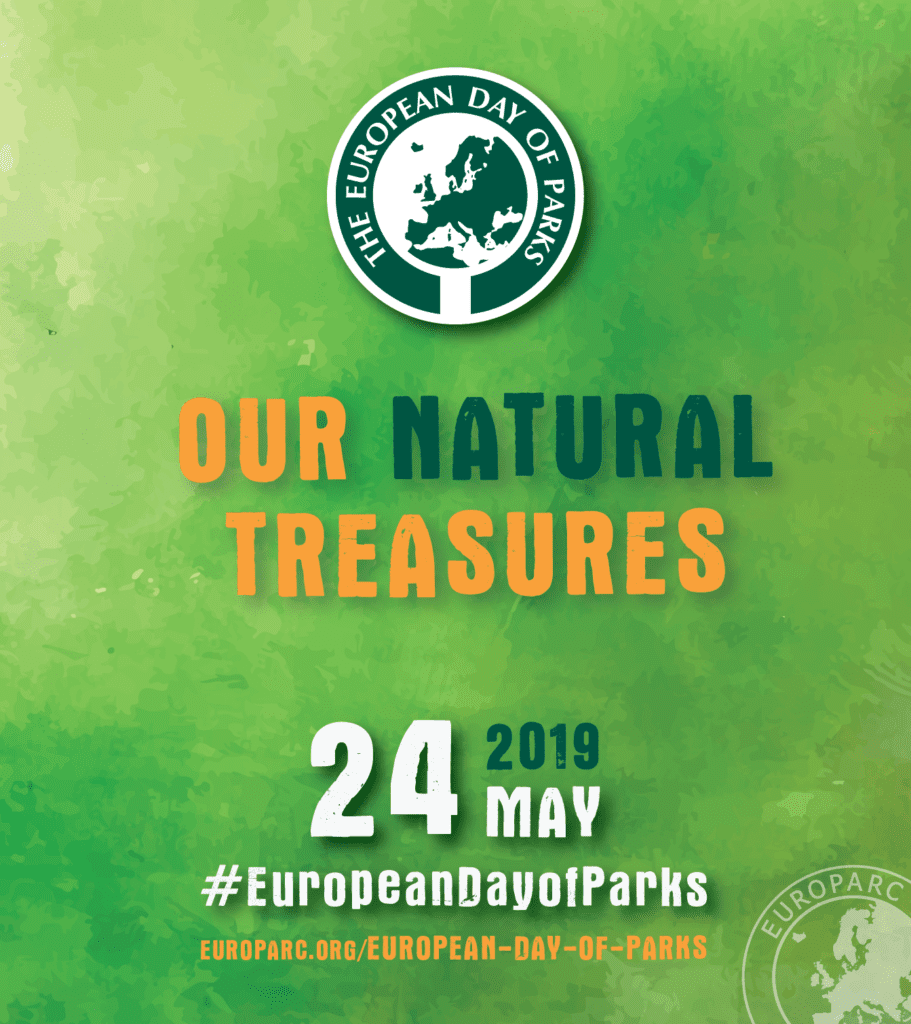
“Our Natural Treasures” the European Day of Parks 2019
The European Day of Parks is a commemorative day for Protected Areas across Europe that was launched in 1999 by the EUROPARC Federation to celebrate Protected Areas throughout Europe. It celebrates the creation of the 1st National Parks in Europe – a set of nine parks created in Sweden in 1909.
2019: Our Natural Treasures
Our Protected Areas are made of amazing landscapes, incredible species and unique habitats. What are the Natural Treasures your park is protecting? What is the story of that endangered species that live in your Park?
In 2019, the European Days of Parks is a call to reconnect with nature, to highlight the natural treasures that make your Park so special!
Organise your events!
We invite all protected areas to organise events in and around the 24th of May. The European day of Parks (EDoP) aims at bringing people closer to Nature by offering a diversity of activities and events in Protected Areas across the EUROPARC Network. The events address people of all ages: children, youngsters, young adults, families and seniors – everyone can participate in local events organised by Parks and regional authorities!
You might set up a guided tour through your Park, a special wildlife watching programme or a night tour to observe the amazing night creatures! Get your Junior Rangers and Youth on board and make them lead the activities in your Park: they can tell your visitors all about a special species, monument or habitat.
Involve your local schools in handcraft activities, such as creating nests or feeding stations, creating sculptures of your main species or maquettes of the existing habitats. Preferably, you would take them out, plant trees, teach them how to identify mammals footprints and drops, or how to identify birds by their singing. There is a whole set of activities you can organise in your Park to invite your Community!
Once you have defined your events, don’t forget to register them here.
Promotion Tools in your language!
Download the official poster and web banners to promote your event. This year, you can personalise your poster with the “Natural Treasures” of your Park! Posters available in landscape and portrait.
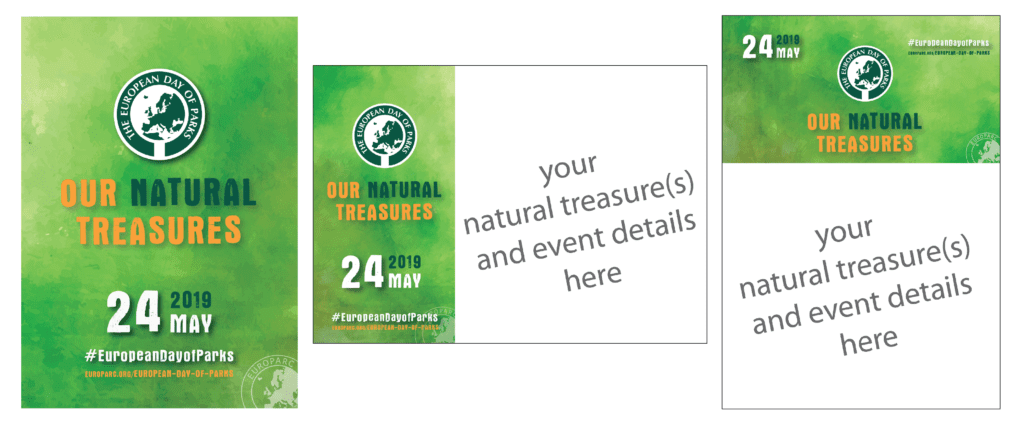
There are 3 printable posters available in your language! You can use the main one (on the left) or adapt one of the other versions.
An automatic download will start when you click over your language. NOTE: All images are in .png format, so you can easily edit them in paint, word or even powerpoint. If you need the editable file (.ai or .eps) or a higher resolution please contact us to edop @ europarc.org.
Albanian | Armenian | Azerbaijani | Bosnian | Catalan | Croatian | Czech | Dutch | English | Estonian | French | Finnish | Galego | Georgian | German | Greek | Hungarian | Icelandic | Italian | Latvian | Lithuanian | Macedonian | Polish | Portuguese | Romanian | Serbian | Slovakian | Slovenian | Spanish | Swedish | Welsh
If you are not interested in using the official posters, you can also download the logo and use it in your activities.
Haven’t found tools in your language?
No problem! Just have to send us to edop @ europarc.org the translation of “Our Natural Treasures” and we will be delighted to produce tools in your language!
About the European Day of Parks
Imagine a day when all Parks and Protected Areas come together across Europe, celebrate their successes and declare the value and benefits of Europe’s Protected Areas to communities, decision-makers and the wider public. Well, it is EUROPARC’s European Day of Parks!
Every year European Day of Parks takes place on and around 24th of May. It aims to bring people closer to nature and raise public awareness on the importance of the natural beauty preserved in Protected Areas and the importance of conservation and sustainable management of those places.
Check here to see the previous editions.