The Shifting Baseline of Stability: Reflections on 2025 – a message to members
Sorry, this content is for EUROPARC members only.
Please login to EUROPARC website to gain access.
Nature Conservation and Restoration Work Under Threat
Grasslands in Ireland by Esther Bossink, EUROPARC Federation.
The LIFE Programme and the Nature Restoration Regulation are under threat! Two essential structures for nature conservation and Protected Areas.
The LIFE Programme: enabling conservation throughout Europe
Protected Areas are pros when it comes to nature conservation and restoration work. It is what those working in our natural heritage do all day, every day. European funds are crucial for this work. For over 30 years, the LIFE Programme has funded conservation and restoration actions in Protected Areas — safeguarding not just nature, but people’s right to live on a healthy planet. Often national funds are not enough to cover these investments in our future and EU funds are fundamental to cover that gap.
The very effective LIFE Programme has also enabled Protected Areas to search for partners and co-operate with many organisations and institutions. It broke down silos by creating opportunities to reach out to other sectors, achieving impressive results in ambitious, large scale and multifaceted LIFE projects. It has indeed brought the nature sector closer to those with whom we do not often collaborate, or who may even have opposing views. That is exactly the power of LIFE: it strengthens the work of Protected Areas by fostering the exchange of experience with other sectors and facilitates the sharing of knowledge among the different LIFE projects across the EU.
The Nature Restoration Law: a beacon of hope for Europe’s nature
The Nature Restoration Regulation, aka the Nature Restoration Law (NRL), entered into force in August 2024. It was the result of months of negotiations and can be considered a beacon of hope for Europe’s nature. It is time to remind our EU and national decision-makers that nature restoration brings many benefits for society! Natural and restored habitats can mitigate climate change and protect us from natural disasters, like flooding. According to the World Economic Forum (2020), more than half of global GDP and two thirds of the EU’s added economic value depend on nature and its ecosystem services. Destruction of nature is a big driver of economic losses and financial risks. When we invest in nature restoration, we are investing EU’s “competitiveness, resilience, prosperity and security” (as stated in the Roadmap towards Nature Credits, COM (2025) 374).
Recent developments form a threat to conservation in Europe
Now all this is under attack. The proposal for the next European Union Multiannual Financial Framework (MFF) 2028‒2034, aka the EU Budget, was published by the European Commission in July 2025, and negotiations are ongoing. As we pointed out in our September article, there was an unexpected and unwelcome surprise in the proposal: the exclusion of the LIFE Programme.
If the LIFE Programme does not continue, nature conservation and restoration, implementation of the Natura 2000 network, maintenance of nature’s contributions to people, protection of threatened species and habitats, as well as the functioning of organisations and institutions managing these, are under direct threat. They will be facing serious problems as the LIFE funding is crucial for these actions. This is not just about protecting species or habitats: this is about protecting the health and lives of European citizens. At the very least, there needs to be earmarked funding for nature conservation and restoration and biodiversity action in the EU Budget and in the proposed funds. The ambition and value of this funding should not be lower than the current funding.
And there is more in store from the European side: the Nature Restoration Regulation, very recently approved, is now being considered for simplification. Such process would result in legal uncertainty, and surely in implementation delays of the much-needed restoration action in the EU. Furthermore, whilst we can all agree that “simplification” is in principle a positive action when it comes to bureaucracy, it might be more challenging to explain why a piece of legislation that has just been approved one year ago already needs to be considered for simplification. Overall, just the consideration of a brand-new regulation – that already had a difficult process to be approved – to be reviewed one year on, can raise some questions about the reasoning behind.
What can we do?
We, the Protected Area Community of Europe,
- Can try to talk to our country’s ministry that is responsible for environmental issues. More importantly, talk to your country’s finance ministry. Try to explain to them how important the LIFE Programme is for your Protected Area. Tell the story of how effective LIFE has been, and is, and as such should be one of the clear EU funding lines that should stay. Underline to them how important nature is for society and how essential it is to fund its protection and restoration.
- Spread the word! The time to act is now!
Galicica National Park: A Biodiversity Jewel Joining Our Network
(c) From Lake Prespa to Galicica, Galicica NP
We are excited to welcome Galicica National Park to the EUROPARC Network! This new member is one of Europe’s richest biodiversity hotspots. Learn about its conservation priorities, community partnerships, and cross-border cooperation efforts as it joins our Protected Area network.
Welcome to Galicica National Park
We are proud to welcome Galicica National Park to our network of Protected Areas. Situated between Lakes Ohrid and Prespa on the border of North Macedonia, Albania, and Greece, Galicica is internationally recognised for its exceptional biodiversity, rare habitats, and long-standing conservation tradition.
As the Park joins us, we are excited to present its key management priorities, recent conservation achievements, and ongoing collaborations that support sustainable development and nature protection in the region.
Top Management Priorities for Galicica National Park
The Public Institution Galicica National Park (PIGNP) has clearly defined priorities that guide its long-term management strategy. Over the coming years, the Park is focused on four core goals:
1. Strengthening Nature Protection and Conservation
Preserving the Park’s extraordinary natural values is the highest priority. This includes protecting endemic species, safeguarding habitats, and addressing ecological threats such as habitat succession.
2. Enhancing Recreational Opportunities
Galicica aims to provide safe and sustainable outdoor recreation, ensuring that visitors can enjoy hiking, cycling, wildlife viewing, and other activities without compromising ecosystem integrity.
3. Increasing Environmental Awareness
Through education programmes, guided tours, publications, and community outreach, the park works to raise public awareness of ecological issues and the importance of conservation.
4. Supporting Local Livelihoods
PIGNP aims to help local communities benefit from the park’s natural and cultural resources-through sustainable tourism, traditional practices, and employment opportunities-ensuring that conservation and community wellbeing progress hand-in-hand.
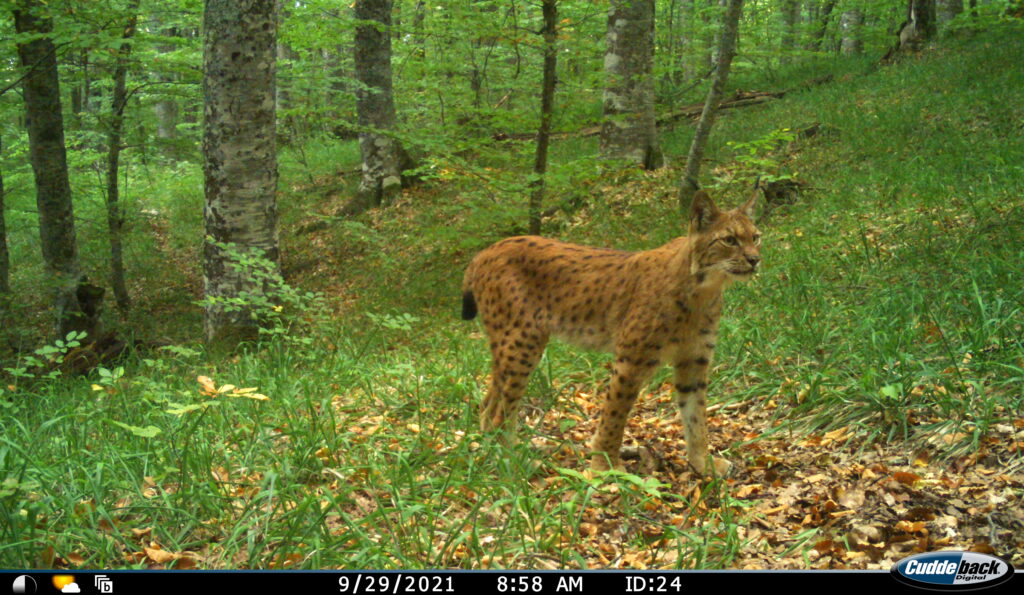
Exceptional Biodiversity: Recent Conservation Efforts and Findings
Galicica is one of the richest biodiversity hotspots in Europe, home to thousands of plant and animal species.
A Snapshot of Galicica’s Biodiversity
- 63+ plant communities and 37 habitat types
- 1,700+ vascular plant taxa, including 13 steno-endemic species
- 3,300+ animal species, with 68 steno-endemics
- 23 globally threatened species
- Hundreds of species protected under national, EU, or international law
Addressing Habitat Succession in High Mountain Pastures
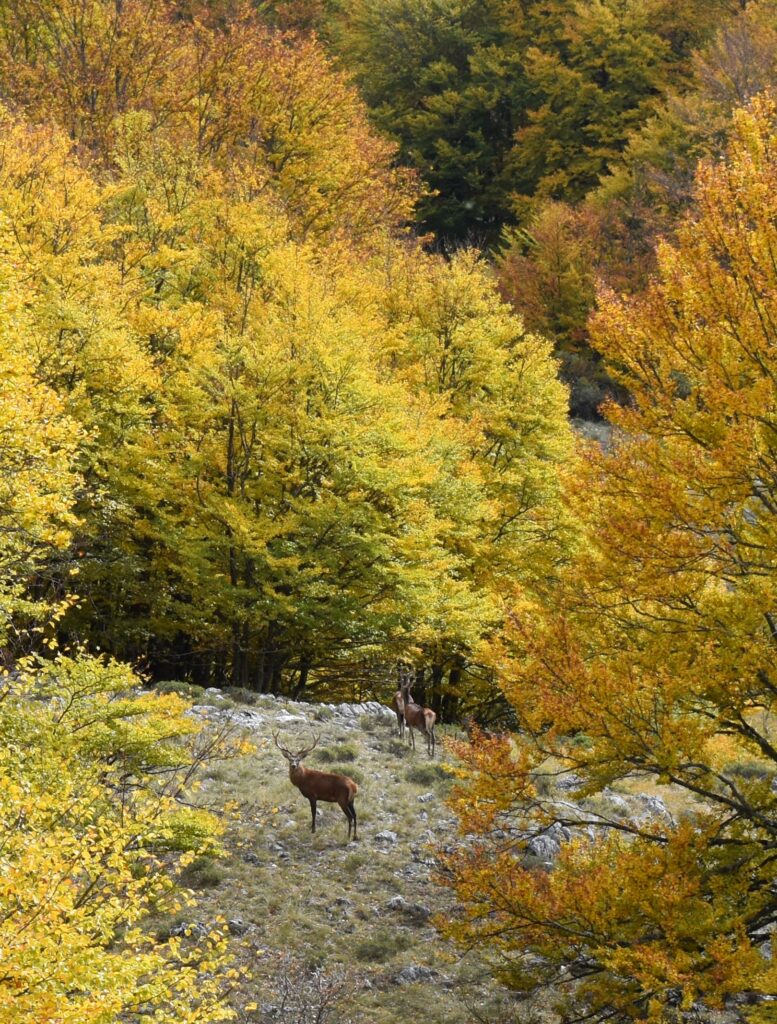
(c) Red deer-Cervus elaphus, Galicica NP
More than 7,000 hectares of Galicica are secondary habitats-mostly high mountain pastures. Due to declining traditional grazing and mowing practices, these areas are experiencing rapid succession.
Because it is difficult to motivate communities to return to traditional livestock farming, the park is implementing measures to support populations of large wild herbivores. These animals help maintain open habitats and slow down succession, protecting biodiversity that depends on these landscapes.
Targeted Conservation in Juniper Forests (Habitat 9560)
Over the past two years, PIGNP carried out major interventions in the priority habitat 9560 – Endemic forests with Juniperus spp., including:
- Preventing forest succession
- Supporting natural regeneration via afforestation
- Establishing permanent monitoring plots
These actions strengthen the long-term resilience and ecological functioning of Grecian juniper forests, one of Galicica’s most important habitats.
Long-Term Biodiversity Monitoring Programme
The park is implementing a comprehensive programme that tracks changes in key habitats and species.
Habitats monitored:
- 9560* Endemic juniper forests
- 9270 Hellenic beech forests with Abies borisii-regis
- 91E0* Alluvial forests with Alnus glutinosa and Fraxinus excelsior
Monitored plant species:
- Centaurea tomorosii
- Nepeta ernesti-mayeri
- Sideritis raeseri
Monitored animal species:
(selection of 11 monitored taxa)
- Apollo butterfly (Parnassius apollo)
- Macedonian newt (Triturus macedonicus)
- Balkan chamois (Rupicapra rupicapra balcanica)
- Balkan lynx (Lynx lynx balcanicus)
- European nightjar (Caprimulgus europaeus)
- Bombina taxonomy (yellow-bellied toad)
- Other key species tracked due to ecological or conservation importance
This structured monitoring ensures early detection of threats, timely action, and long-term scientific understanding of ecosystem trends.
Cross-Border Cooperation With Neighboring Protected Areas
Because Galicica is located at the intersection of North Macedonia, Albania, and Greece, cross-border collaboration is essential.
Regional and International Partnerships
- PIGNP regularly invites representatives from other national parks in North Macedonia to exchange knowledge.
- In the early 2000s, Galicica initiated a memorandum of cooperation with Albania’s Prespa National Park. Although it is currently inactive due to administrative changes, the foundation for cross-border collaboration remains strong.
- PIGNP maintains regular informal cooperation with NGOs across all three countries, creating a productive network for ecological research, habitat protection, and community projects.
These collaborations foster a shared approach to managing transboundary ecosystems, including Lake Ohrid and Lake Prespa basins-two globally important natural areas.
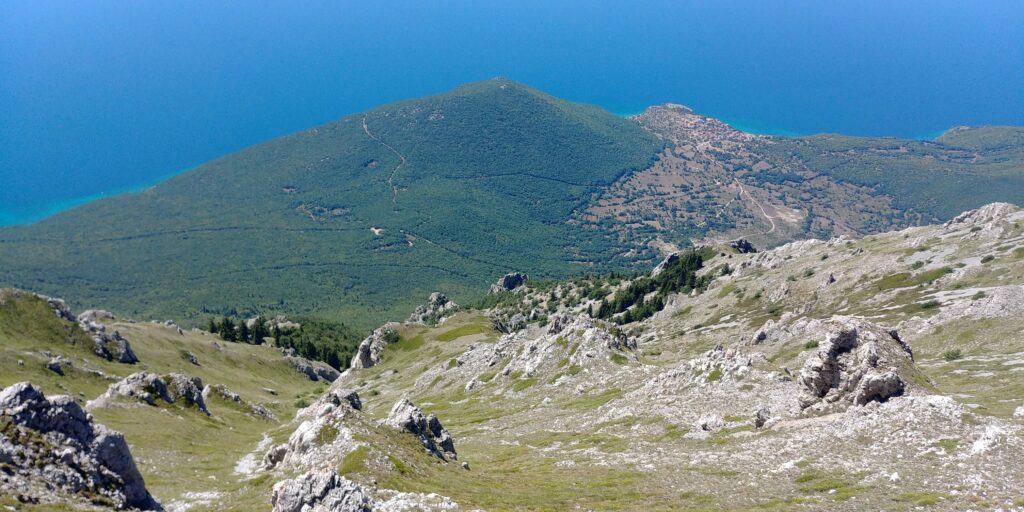
(c) From Galicica to Lake Ohrid, Galicica NP
A Strong Future for Galicica National Park
As Galicica National Park joins our network, we look forward to highlighting its conservation achievements, supporting its sustainable development goals, and promoting its role as a model for biodiversity protection in Southeast Europe.
With its outstanding natural richness, dedicated management team, and strong community and international partnerships, Galicica is an example of how Protected Areas can thrive in the 21st century.
The Story of Finnish Nature Day – How Finland Brings People Closer to Nature
Photo: Metsähallitus/ Aino Jylhänlehto
At the EUROPARC Conference 2025, Tiina Hakkarainen Manager, Corporate Relations, Parks & Wildlife Finland presented the Finnish Nature Day! Learn more about this initiative that aims to bring nature and people closer together again.
Article written by Tiina Hakkarainen.
A Day for Nature and People!
Finnish Nature Day is celebrated every year on the last Saturday of August. This special day dedicated to nature offers concrete ways to enjoy the outdoors together. Positive nature experiences – such as spending a night in a forest hotel or enjoying art in a natural setting – increase people’s appreciation of nature and their willingness to protect it. Finnish Nature Day receives wide media attention and provides an excellent opportunity to highlight the importance of nature to broad audiences. Social media also fills with greetings and beautiful outdoor photos shared in honour of the day.
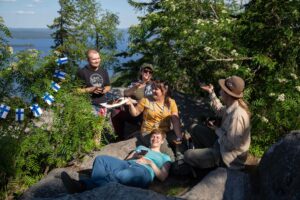
Photo: Metsähallitus/ Saara Lavi
Finland is the first country in the world to fly its national flag for nature. The aim of the day is to increase appreciation for nature and strengthen the relationship Finns have with the natural world in our increasingly urbanised society.
In Finland, many national celebration days come with traditional pastries that reflect the season and cultural heritage. A popular way to celebrate Finnish Nature Day is to bake a blueberry pie using berries picked from the wild.
Finnish Nature Day is not only a celebration – it also raises awareness of the importance of nature and strengthens people’s desire to protect it. When people recognise the value of nature and celebrate it, a positive attitude towards conservation follows naturally.
History of Finnish Nature Day
Finnish Nature Day was celebrated for the first time in August 2013. The last Saturday of August soon became the established date of the celebration, marking the end of summer and the beginning of harvest season in Finland.
The day’s steadily growing popularity and rapid rise to the ranks of Finland’s important national observances show that nature holds a central place in Finnish culture – something truly worth celebrating and flying the flag for.
From the very beginning, the day has had a relaxed and easy-going atmosphere. Even during the year Finland celebrated its 100th anniversary – when many events were particularly festive and choir concerts were held in all national parks – the mood remained open and joyful. From the outset, everyone has been encouraged to celebrate nature in their own way.
Finnish Nature Day Logo
How the Celebration Is Organised
Finnish Nature Day is coordinated by a steering group with representatives from organisations related to nature, the environment, outdoor activities and public health, from across the country. The day has its own website that provides information, tips for organising events, and materials for day-care centres, schools and the media. In the early years, public excursions organised for Finnish Nature Day were collected into a shared event calendar, and event organisers stayed in touch through a dedicated Facebook group. Over time, the day has grown into an established tradition, and coordination is now needed less than before.
On Finnish Nature Day, public events and local nature trips are organised, people hug trees, take part in nature volunteering, and sleep a night outdoors. Excursions are arranged by various nature and outdoor organisations, friends’ associations of national parks and partner enterprises. The day can also be celebrated simply by heading outdoors alone or with friends to enjoy a campfire snack and the atmosphere. For many Finns, this has been the most meaningful way to mark the occasion.
The day brings together government representatives, citizens, companies and organisations in a cheerful and unifying spirit. Opposition and political tensions are set aside. A few simple elements – such as flag flying, the official celebratory pastry (blueberry pie), and a shared social media hashtag – tie the relaxed festivities together.
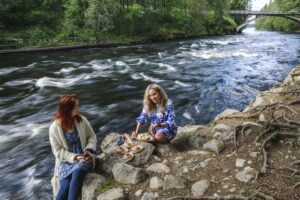
Photo: Metsähallitus/ Ulla Keituri
Inspiring Europe to Celebrate Nature
In Finland, the Priodiversity LIFE project is currently underway, aiming to halt biodiversity loss. The project brings together a wide and diverse group of committed stakeholders who, together, have the potential to find the most effective and cost-efficient means to stop biodiversity loss in Finland. One of the project’s goals is to expand the celebration of a dedicated nature day across the EU with the support of Members of the European Parliament. Finnish Nature Day has grown into a beloved tradition, and now we hope to bring this idea to the whole of Europe. The Priodiversity LIFE project is coordinated by Metsähallitus Parks & Wildlife Finland.
Prodiversity logo
Imagine a day when nature receives the recognition it deserves – when national leaders speak for nature, and people across the continent head outdoors to celebrate the forests, lakes and landscapes that make their home countries unique. If this were to take place all across Europe, nature conservation would gain significant visibility.
A suitable date could be, for example, European Day of Parks on 24 May. EUROPARC coordinates this celebration of Europe’s Parks and Protected Areas, inviting visitors everywhere to spend time in nature – or another day that best fits the climate and seasonal conditions of your own country.
We now invite you to join us: let’s make Nature Day a shared European celebration!
More information:
Tiina Hakkarainen, Manager, Corporate Relations, Parks & Wildlife Finland

Metsähallitus logo
Finnish Nature Day: https://suomenluonnonpaiva.fi/finnish-nature-day-a-flag-flying-day-for-nature/
Priodiversity LIFE: https://www.metsa.fi/en/project/priodiversity-eng/