SoilSparks – Mobilising our Youth+ Community to create a new educational campaign
A short introduction and update of the SoilSparks Project run by Bantani Education and the EUROPARC Federation.
SoilSparks – Mobilising our Youth+ Community to create a new educational campaign
Why Soil, and why Citizens?
Soil represents the very foundation of life as we know it. Its rich diversity is mirrored in the various ecosystems it nurtures, ranging from lush primary forests to resilient Mediterranean coastal flora. Soil plays a crucial role in sustaining human existence by providing essential resources for agriculture, serving as grazing land, and enabling the growth of food and other vital materials. Yet, it rarely features in public environmental debate in the way that air or water quality do.
SoilSparks treats this gap as a citizenship issue rather than only a scientific one: if soil health is to improve, people need to understand, think and act in their own communities. Young people are best placed to create momentum for change.
Furthermore, soil is an intricate world in its own right, housing a complex web of inorganic and organic elements. It plays a critical yet frequently underestimated role in the natural cycle of life, facilitating decomposition and the recycling of nutrients that are essential for the health of our planet.
What is SoilSparks?
SoilSparks is about young people co-creating the SoilSparks initiative, to mobilise 1,000+ young Europeans to become SoilSparks Champions – taking real world action for soil. This project is empowering youth from across Europe to co-create a campaign and learning programme transforming soil science into engaging bite-sized challenges – leading young people into innovative digital micro-learning and real-world actions. Led by EUROPARC and involving its junior ranger and Youth+ network, alongside Bantani Education, specialists in entrepreneurial learning, SoilSparks will run for 18 months and is part of the Horizon Europe SOILSCAPE project to build bridges between soil science and society through artistic means.
What has been done so far?
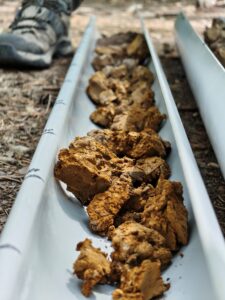
Photo credit: Alberto Madrassi
The first stage of the project has just completed, with young people active in the EUROPARC Federation’s youth networks actively consulted and included in the project. In March, 30 young people from 23 countries were invited to be upskilled on soil science through an online, self-paced summer school programme. This group included almost 30% neurodivergent youth, with ages spanning 18 – 30 years old, and with backgrounds from soil scientists to art students and everything in between.
The young people completed a series of 8 self-paced modules covering the EU Mission Soil and Co-creation processes accessed through a youth-friendly digital learning platform called Learncast. This tool allowed on-the-go learning and each module included audio bits, quizzes, writing tasks and sent the students out to do a hands-on activity. In addition, the students had an online space to introduce themselves, access resources and post their own learning journeys. They also come together once a week for an online session where guest experts were invited to share a snippet of their experience and spark discussion in the group.
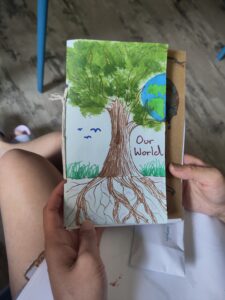
Photo credit: Anna-Sophie Kloppe
After a month of learning, 28 young people came together in Reims, France, for a 5-day co-creation camp. The aim of this camp was to continue to strengthen relationships already formed, learn about current conservation methods with a field trip to Montagne de Reims regional park, explore their creative expressions, and co-design challenges to be included in the final educational campaign. This was a resounding success with participants sharing the roles of learning and teaching, shaping the direction of the work rather than responding to a fixed brief. Young people worked hard to transport the project team into the minds of the current youth generations.
Photo AlbumHow does this translate expertise into public engagement?
The project deliberately routes scientific and institutional knowledge through young people rather than delivering it to the public directly. Soil scientists, EUROPARC staff and Bantani Education, supported by University of Hohenheim and EIT Food, provide the underlying expertise and validate content for accuracy, while the young participants translate this into messaging and challenges designed to work for their peers. This process is intended to keep the science sound while making the final content genuinely usable and valuable for a non-specialist audience.
What is in the planning for the next stages?
The second stage of the project is to design the final educational campaign. The young people are invited to continue working on the project by joining the Youth Panel, and the experts from the summer school and more are joining a Science Panel, assessing the educational components and ensuring it is easy to understand and the latest up-to-date knowledge.
The campaign will launch on World Soil Day on the 5th December 2026 and the young people will help with its promotion, as almost each of them is connected to a volunteer youth group active in a Protected Area or with interests in nature conservation, geology or art. An educational toolkit will be produced alongside the campaign and shared with teacher networks connected to EIT Food, a collaborating partner.
The final educational campaign will be designed for young people aged 16 – 30 years old, in line with EU GDPR and digital safety, and will not only increase awareness on soil and its context in Europe, but will also drive actions that inspire discussions leading to changes in behaviour. Added value comes from mapping the micro-challenges to GreenComp and EntreComp, and using these competences as evidence within SoilSparks digital credentials to recognise the actions taken by SoilSpark Champions.
What is the impact beyond the project?
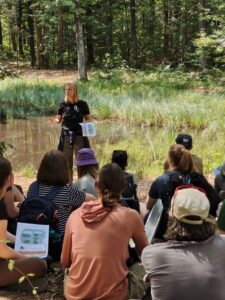
Photo credit: Alberto Madrassi
The project has clear goals in terms of inclusive co-creation as well as a list of outputs ranging from teacher toolkits, the educational campaign platform and a non-formal educator training for Protected Area staff and other youth educators. All education outputs will be fully mapped to GreenComp and EntreComp. More widely, there are also many intangible outcomes of the project.
The 30 young people participating in the design of the campaign have all undergone an intensive training on the topic of soil, as well as developed friendships across countries. Almost each of them is connected with a youth group actively volunteering in a Protected Area.
Going forward, they are going to share these experiences with their youth groups and strengthen ties between groups leading to a more empowered and connected international community. They will continue to inspire new young people to volunteer, actively engage and participate in such opportunities. However, these are also young people who are highly likely to enter green careers. Considering that the topic of soil conservation is often overlooked in the Protected Area sector, this project will be the spark of new discussions and upskilled young professionals entering this sector and pushing for increased efforts to safeguard this important system.
This project is part of the broader Horizon project SOILSCAPES and is funded by the European Union and the Swiss Confederation.
