Drones in Protected Areas: how can they help?
pixabay
Drones are taking the world by storm. Although at first, it might seem like they are made solely for entertainment purposes, these unmanned aerial vehicles are proving to be much more. Besides providing astonishing images of your Park, they can be used to help technicians in their daily work in monitoring protected areas.
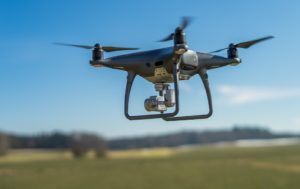
image from pixabay
Many protected areas authorities are currently experiencing economic difficulties which hamper the good undertaking of the many tasks they have in order to ensure good management of the protected area. Drones can therefore not only be of help, but also reduce costs and improve effectiveness.
This new technology has integrated the modern park management and is used for multiple purposes (monitoring, mapping, remote sensing, photography, technical interventions in inaccessible areas…), offering numerous interesting possibilities.
They allow scientists to reach places that were previously off limits as they were either too remote, too dangerous or too time consuming to explore. They can cover large areas of ground in great detail from a completely different perspective – and as fast as ever.
The list of the ways they can be used is really long – they are getting very precise and lately, they have even been used to plant trees!
A professional insight
Patrick Ribeiro, founder and CEO of OpenForests gave us an even better insight into all the possibilities drones can bring to those who decide to use it professionally.
∼ The drone itself doesn’t do anything. It depends on the sensor you have on the drone.
In the conservations areas, the most common ones are thermal sensors which enable you to fly at night or early mornings, and use the drone for animal observation.
There is also mapping. It is done by overflying the certain area, making individual photos and, in the end, with the help of the software, creating a 3D model. It can be used for different analysis such as forest growth or even illegal logging.
The most extreme option is laser scanning. It enables you to see the entire forest structure, and not just the surface of the landscape. However, this is mainly used for scientific purposes as it involves high cots.
Using the drone and gathering the data is one thing, processing and analysing data to extract the information is something else.
Keeping that in mind, it is very important to have a good and professional team of people who don’t necessarily have to work in every protected area individually, but can instead cover entire regions, or towns, depending on the specific country.
Just in case you are still skeptical about them, take a look at all the ways they can help specific protected area.
What can they do?
If you are trying to find out what drones can specifically do in protected area, take a look at Collserola Natural Park in Barcelona. Here is the example of all the different things they are using drones for:
1. Maintenance of furniture and pieces of equipment
The drone is periodically used to take pictures from the equipment and furniture scattered all over the park and to make topographic plans from different picnic and leisure areas. In this way, the Protected Area authority can detect for example when a piece of furniture needs to be fixed or repaired.
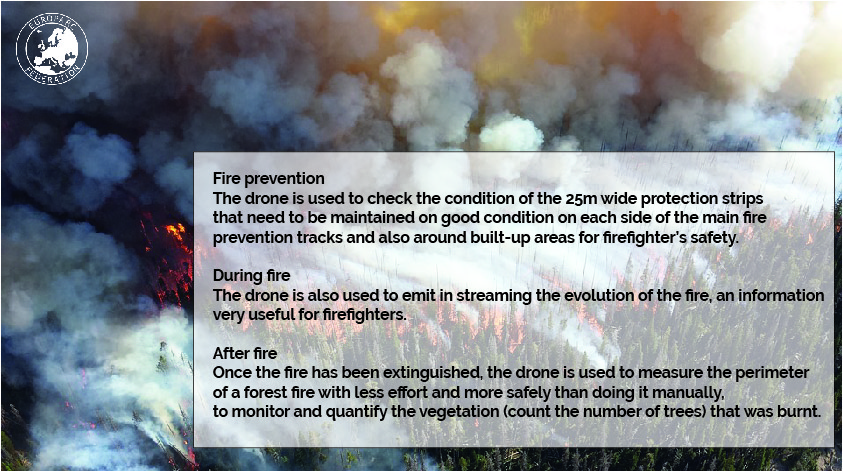
2. Forest fires
3. Power lines
The drone is being used to calculate the distance from trees to the power line in order to maintain in good condition the safety trip between power lines and nearest trees.
4. Agriculture management
The drone is used to do topographic maps in 3D and check for shady areas. This will help to improve grape crops by detecting where it is best to plan what variety.
pixabay
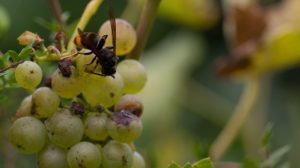
The drone is also been used to detect nests of Asian hornets Vespa velutina – an invasive alien species that is badly affecting beehives and grape crops – in order to eliminate them. To do that, a thermal camera is coupled to the drone since the leaves of the forest trees hampers the use of normal cameras.
5. Cultural heritage
The drone is used to take 3D pictures from the built elements present in the park.
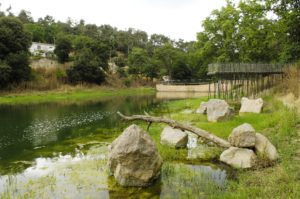
Collserola nature park
Pantà de Vallvidrera
Autor Robert Peña
6. Vegetation monitoring
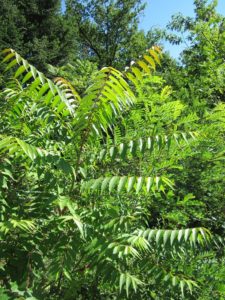
The drone can also be used to monitor the presence of other invasive species, such as Ailanthus altissima
pixabay
One of the key question for PA managers, scientists and nature conservation practitioners is whether there are more positive or negative impacts resulting from the use of drones for precise conservation tasks. There are many other potential uses of drones in Collserola Natural Park linked with public use such as monitoring massive events or, with fauna, remote sensing. However, these need careful development and planning. Such aspects as permits requirement to record people gatherings and disturbance to fauna need to be considered.
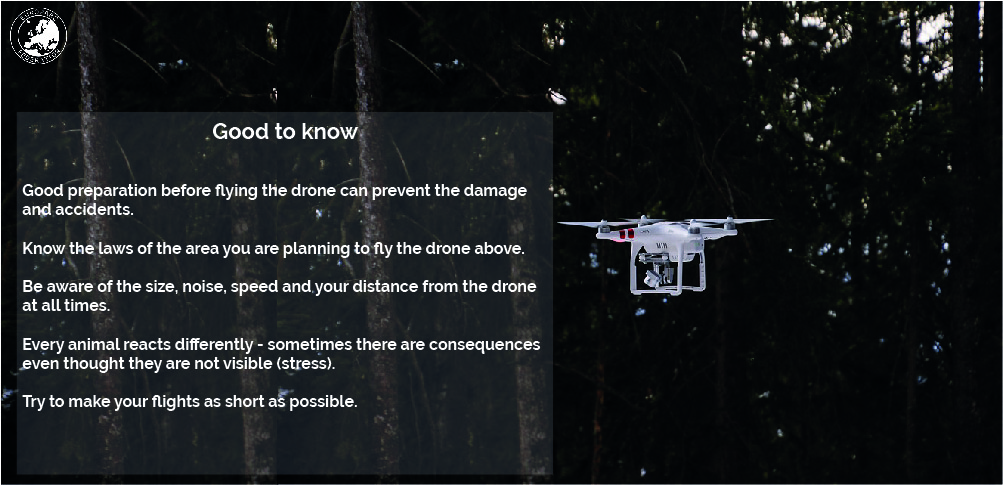
If you would like to get more information and tips on drone use visit Alparc page with conference presentations on Unmanned Aircraft Systems (Drones) in protected areas.
Check also our article about the different uses of drones for nature conservation.
Are you using drones in your Park and Conservation projects?
Do you have any experience you would like to share with us? Are there specific law constraints on the use of drones in your park? Let us know your thoughts, we are preparing a webinar on the use of drones and would like to hear from you. Please send your feedback to s.grego @ europarc.org
7 steps for effective cross-border management of river ecosystems
Österreich, Niederösterreich, Nationalpark, Thayatal, Fluss Thaya
How to protect nature across borders?
Ever since humans started to settle, they have erected borders to protected land, property and territory. However, nature does not recognise man-made borders… Protecting and living alongside nature means following nature’s design. Working across borders is fundamental for the effective conservation of shared nature and landscapes, but it is also a means to achieve regional development, whilst promoting mutual understanding and international peace.
To encourage dialogue and cooperation between Protected Areas which share common natural resources, the EUROPARC Federation developed the Transboundary Parks Programme – Following Nature’s Design. It is the only method in Europe to analyse the progress of transboundary cooperation while supporting the growth of a network of professionals working in this field.
7 steps for effective cross-border management of river ecosystems
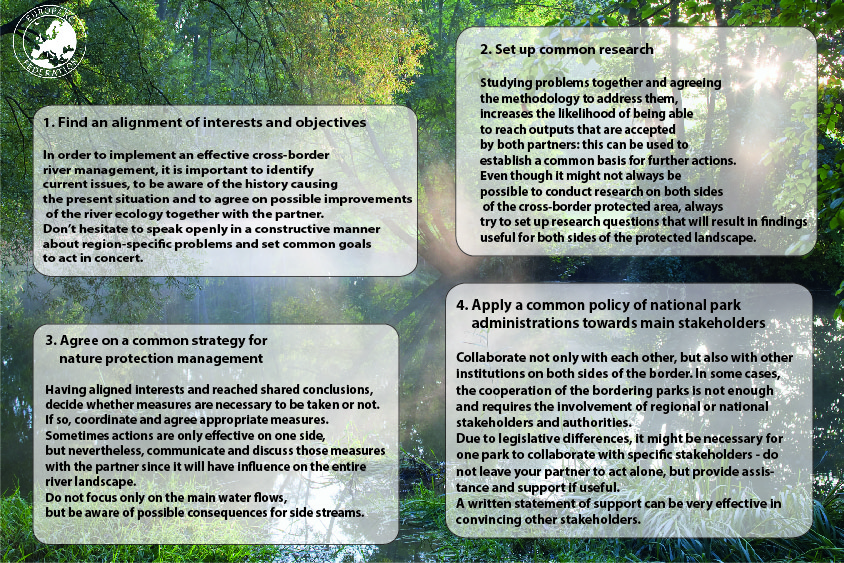
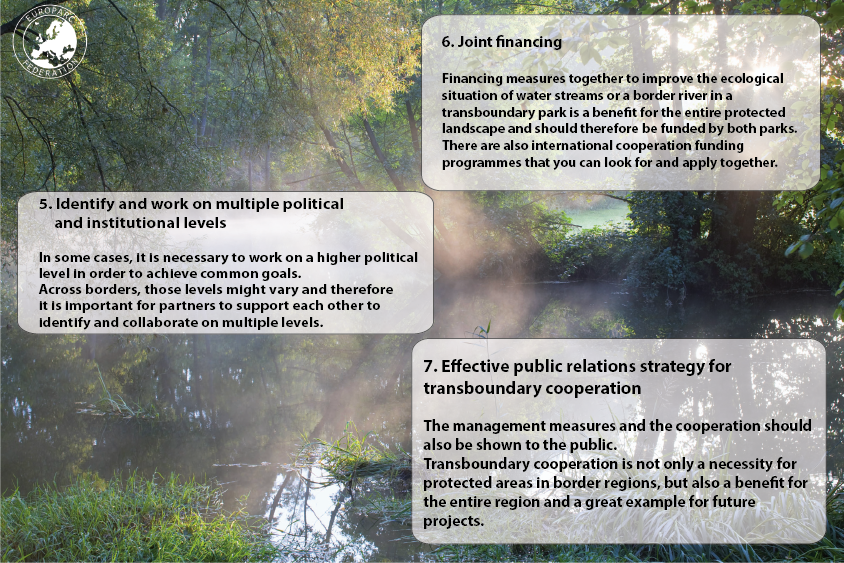
The cross-border cooperation between the National Parks Thayatal and Podyjí is vital for the protection of the canyon-like valley of the border river Thaya between Austria and the Czech Republic. The basic principle of this cooperation is to optimize the impact of conservation management by combining methods and management tools.
 Over the past 20 years, the parks’ administrations have been working together in research and monitoring projects, forest management, regulation of game stocks, and educational visitor programmes. Their continuous efforts to find the best solutions for the complex management of the Thaya river ecosystem is proving highly effective. Here is what we can learn from their experience:
The Podyjí National Park was created shortly after the fall of the Iron Curtain in 1991, inspiring nature conservationists to start a debate about protecting the area on the Austrian side of border. Nine years later, the Thayatal National Park was finally established. Since then, both national parks have been working together to achieve the best possible protection of this natural habitat and have been following the EUROPARC Transboundary Parks Programme in 2007.
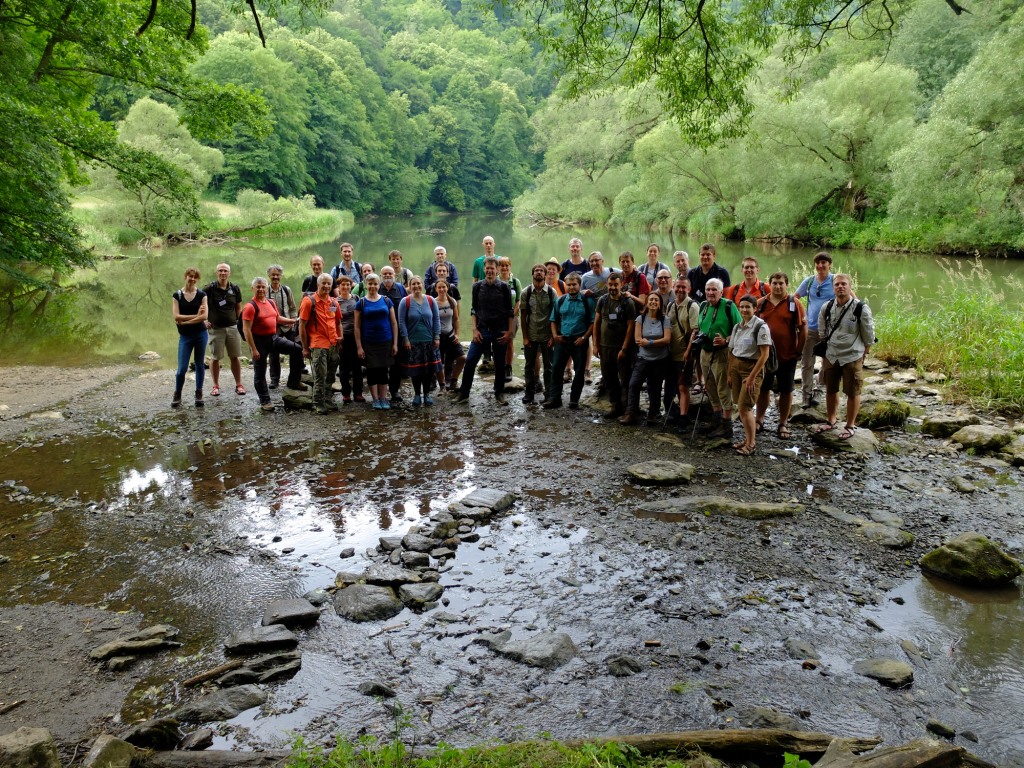
TransParcNet Meeting 2018 © Stefania Petrosillo
In 2018, Thayatal and Podyjí hosted the TransParcNet meeting focused on the topic “Bridges over troubled water – Nature protection of river landscapes”. Read the outcomes and access the presentations of the meeting here .
Podyi National Park
The TransParcNet
With the TransParcNet, the network of certified Transboundary Parks, we provide opportunities to build-up expertise in cross-border cooperation based on the exchange of experience, tools, and best practice. By following the EUROPARC standards of transboundary cooperation, parks aspire to be models of sustainable development through the effective protection of Europe’s natural and cultural heritage.
Since the Basic Standards evaluation system of the programme was launched in 2003, 23 European Protected Areas have been successfully certified as 10 Transboundary Parks.
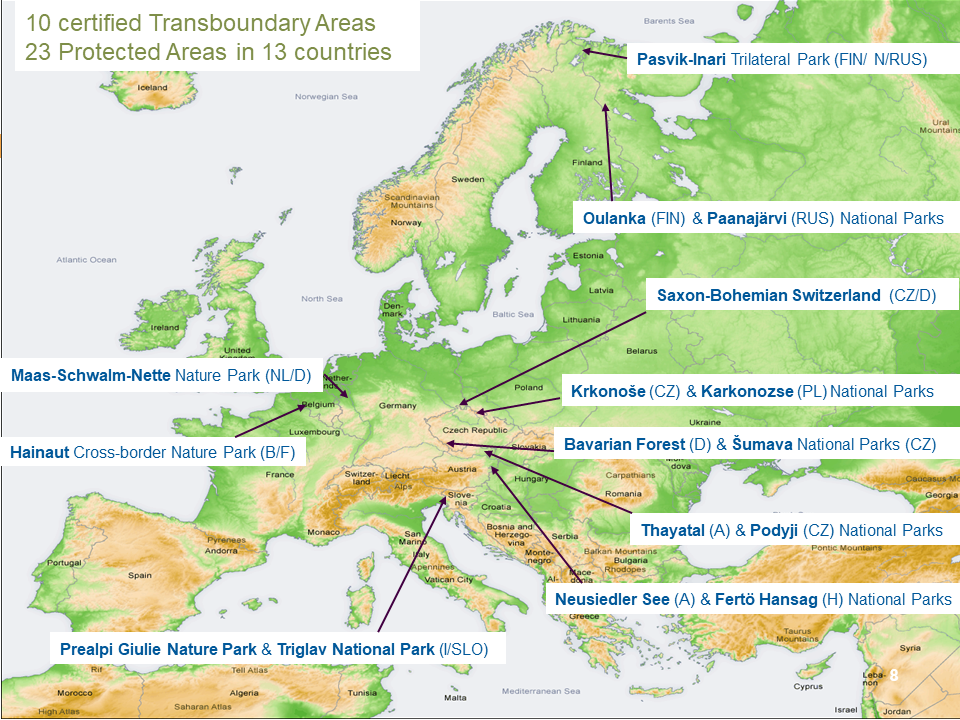
EUROPARC is looking for new Transboundary Parks across Europe, willing to improve their cooperation and to share their experience within the TransParcNet. We are most glad to welcome you!
Learn more about the programme here.
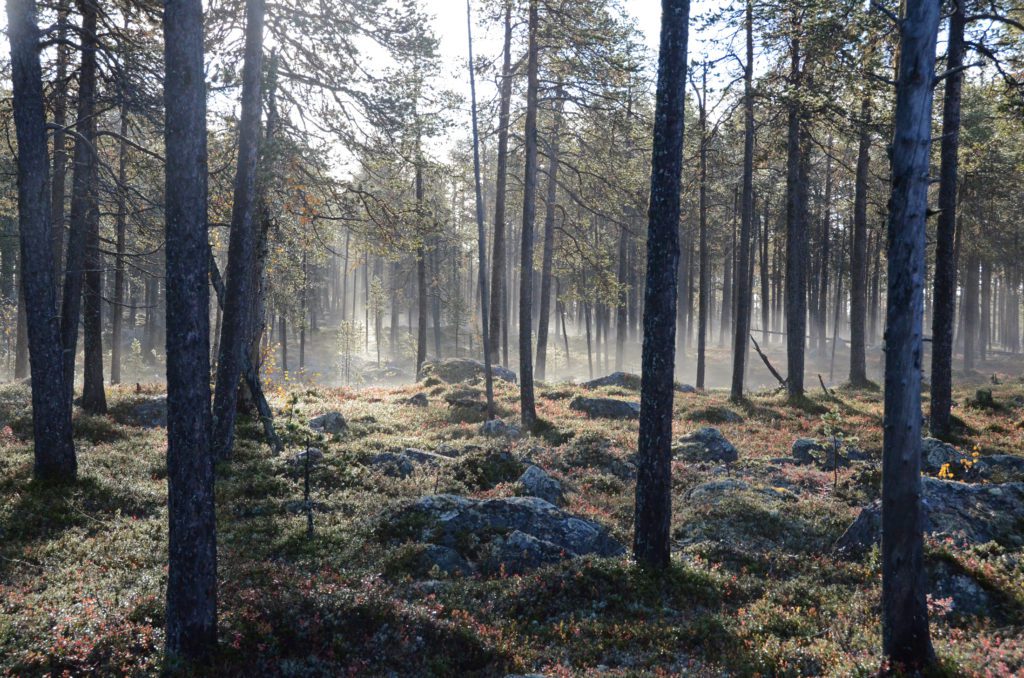
Pasvik-Inari Trilateral Park, by Ben Arne Sotkajcervi
You found this topic interesting? To find more articles like this one, download the new edition of the EUROPARC Journal Protected Areas In-Sight with a special focus on youth involvement Parks – available in english, german and french!
A breakfast meeting in the European Commission: the new CAP Proposal
They say breakfast is the most important meal of the day. Well, for our Policy Officer Ms Stefania Petrosillo, Brussels breakfast is combined with work. Here, over a croissant and coffee, she meets Ms Caroline Pottier from the DG ENVI, European Commission, to discuss some environmental aspects of the new CAP proposal.
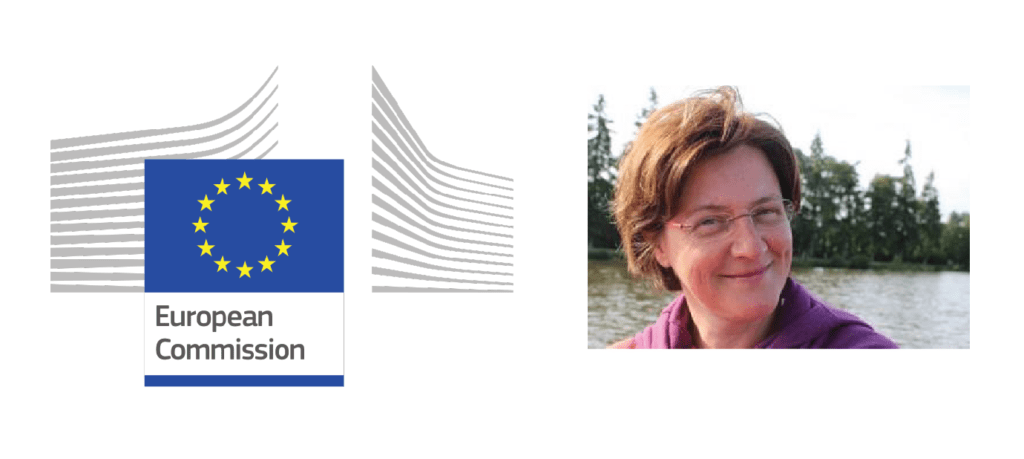
Caroline Pottier, Policy Officer at the Natural Capital, Youth and Management Unit within the Directorate-General for Environment
Q. Mrs Pottier, the Common Agriculture Policy is a huge and complex topic, therefore we would like to ask you to underline some general points that you consider important for nature protection and environment.
The new CAP will take into consideration several aspects connected with environment, nature conservation, and sustainable use of natural resources. Briefly, I think that the most important points of the proposal presented by the Commission can be summarised as follows;
- A new delivery model: new governance that relies on more subsidiarity to re-balance the roles of all actors.
- CAP objectives: environment and climate (incl. biodiversity) are strongly present.
- “Whole CAP” approach: conditionality details, plus environment-relevant Pillar I and Pillar II interventions, are all planned together in CAP plans.
- Links to non-CAP legislation on environment and climate: CAP plans to take account of analysis, objectives and targets from list of other legislation (incl. biodiversity).
- “No backsliding”: a legal obligation is placed on Member States to raise ambition on environment and climate compared to the current period.
- The new conditionality terms will combine and improve aspects of cross-compliance and “greening“.
- Better toolbox: Pillar I includes “eco-schemes”, which are a new instrument.
- Ring-fencing: Member States will be required to spend at least 30% of EAFRD budget on interventions directly targeted at environment and climate change
Q. Could you say something more about some of these points? Maybe we can start from the new delivery model that will give much more freedom to Member States than before.
Correct. We know that this is an important point in the debate in European Parliament and in the Council. The Member States will have a lot of flexibility to establish their National Agriculture Strategic Plans, but they will have to follow the common indications and objectives stated by the Commission, and the Strategic Plans will be submitted for the Commission’s approval and control.
One important achievement is that the authorities in charge of environment have to be involved in the elaboration, implementation and control of the National Strategic Plans. It means that the new CAP recognises that agriculture is not only a topic for Agriculture’s Ministries, but that the Ministries of Environment and the Regional Authorities for Environment and Nature Protection are also strongly concerned.
The challenge will be if, in reality, these authorities in the Member States and Regions will actually seek proactive integrated involvement.
Q. For instance, until now only the European Council of Agriculture, composed by the national ministries of agriculture, discussed the new CAP proposal… we consider that also the European Council for the Environment, composed by the national ministries of environment, should include this topic in their next meetings.
Indeed. The CAP proposal gives a role to these authorities, but they have to take this opportunity. About the Council meetings, as you know, the agenda is decided by the Member State who has the Presidency (currently Austria) together with the other Member States.
Q. Another important point you mentioned is the link to non-CAP legislation on environment and climate.
Exactly. In Annex III of the proposal, there is a list of 12 items of legislations concerning the Birds and Habitats Directives as well as climate change, water, soil protection, air, animal welfare and public health. National Strategic Plans will have to take account of analysis, objectives and targets from legislation on these topics.
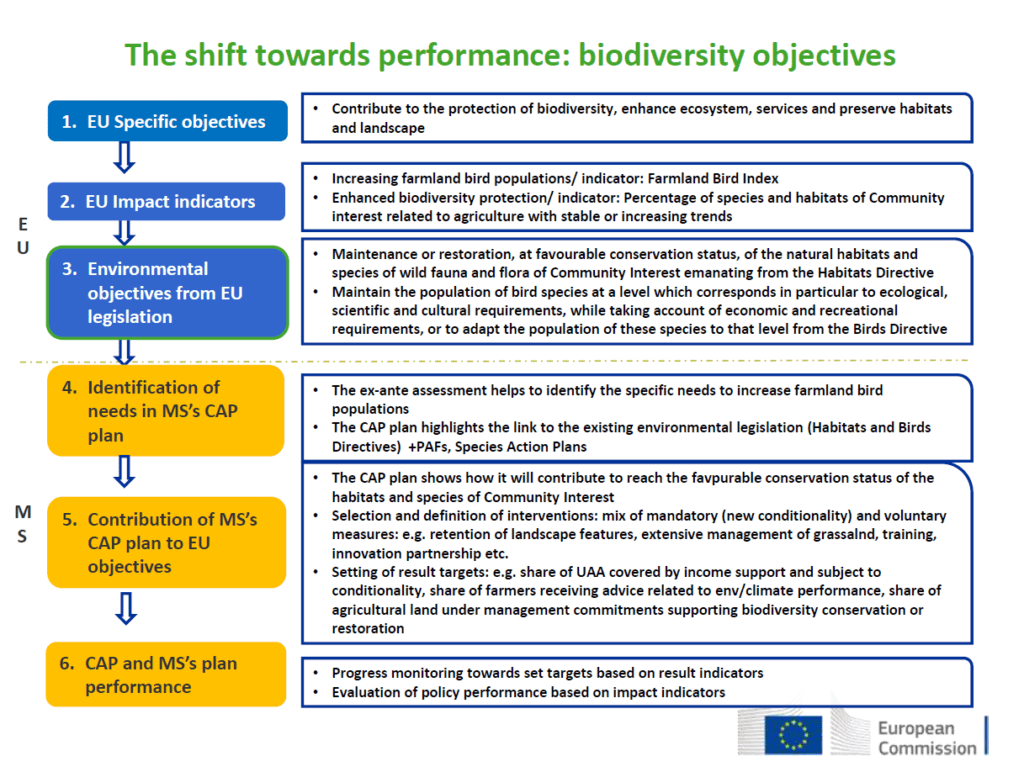
Download the full presentation “The EU Financial Framework post-2020: update on the CAP reform” made by Mr Jérémie Crespin (DG ENVI) at EUROPARC Seminar-Dialogue 2018
Q. The new CAP will maintain the two pillars, the first one, ‘direct payments’, and the second one, ‘rural development’.
The two pillars’ architecture is strongly connected with the previous points. Accordingly, in the proposal, Member States will have a large margin of flexibility to decide the percentage of funds to devote to rural development and they are asked to increase the co-financing. The concrete risk is to see the second pillar and notably the support to environmental measures, becoming weaker in the National Plans. However, rural development is important in strategic terms as it can be used to achieve the link to non-CAP legislation on environment and climate, especially on biodiversity and landscape. Therefore, it will be crucial also for organisations like you and your members, to be engaged at national level to make sure that rural development, which is vital for environment and social aspects, will receive the importance that it deserves and the funds it needs.
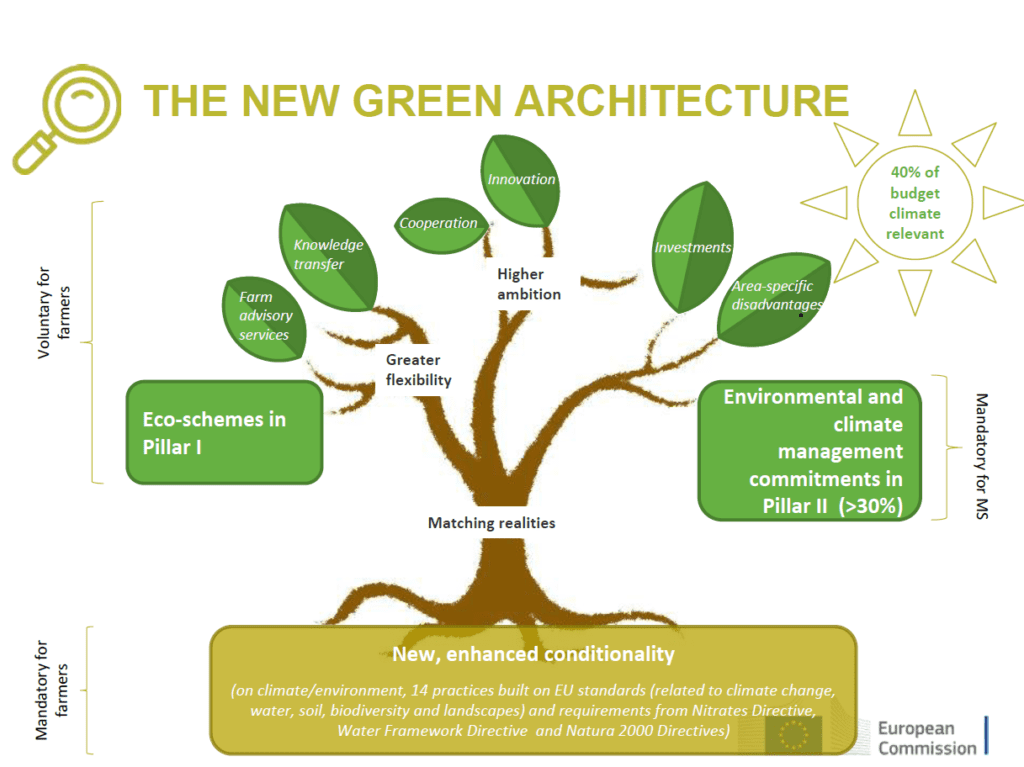
Download the full presentation “The EU Financial Framework post-2020: update on the CAP reform” made by Mr Jérémie Crespin (DG ENVI) at EUROPARC Seminar-Dialogue 2018
Q. For European Protected Areas, both pillars are important: in the framework of the first pillar, EUROPARC would like to see the possibility to award farmers located inside or nearby parks and Natura 2000 sites, working sustainably for landscape and nature resources. In the second pillar, we consider that natural protected areas, especially regional parks, play an important role to support rural development.
The ‘direct payments’ supporting farmers’ income will remain central in the new CAP architecture and budget. All farmers’ payments will be submitted to the conditionality, that in the new proposal will be connected to legislations on biodiversity, pesticides, and others. Beside conditionality, a new instrument, the ‘greening’, that was introduced in the current period has not proved to be efficient. The new proposal suggests a new instrument, the “eco-schemes”, for farmers who really make ambitious commitments to observe agricultural practices beneficial for the climate and the environment. However, there is no requirement in terms of budget to be allocated by Member States to these eco-schemes.
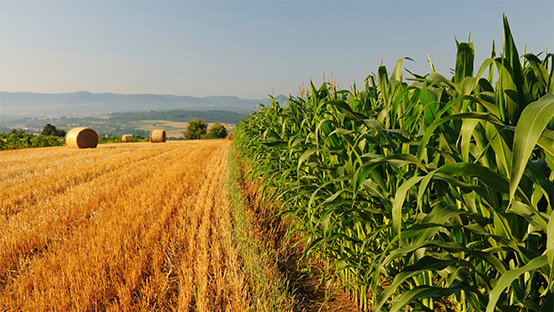
© Agriculture_European Commission
Other useful links
Guidance on farming and Natura 2000
Result Based Payment Schemes
Read also EUROPARC Position Paper on the CAP proposal
You found this topic interesting? To find more articles like this one, download the new edition of the EUROPARC Journal Protected Areas In-Sight with a special focus on youth involvement Parks – available in english, german and french!
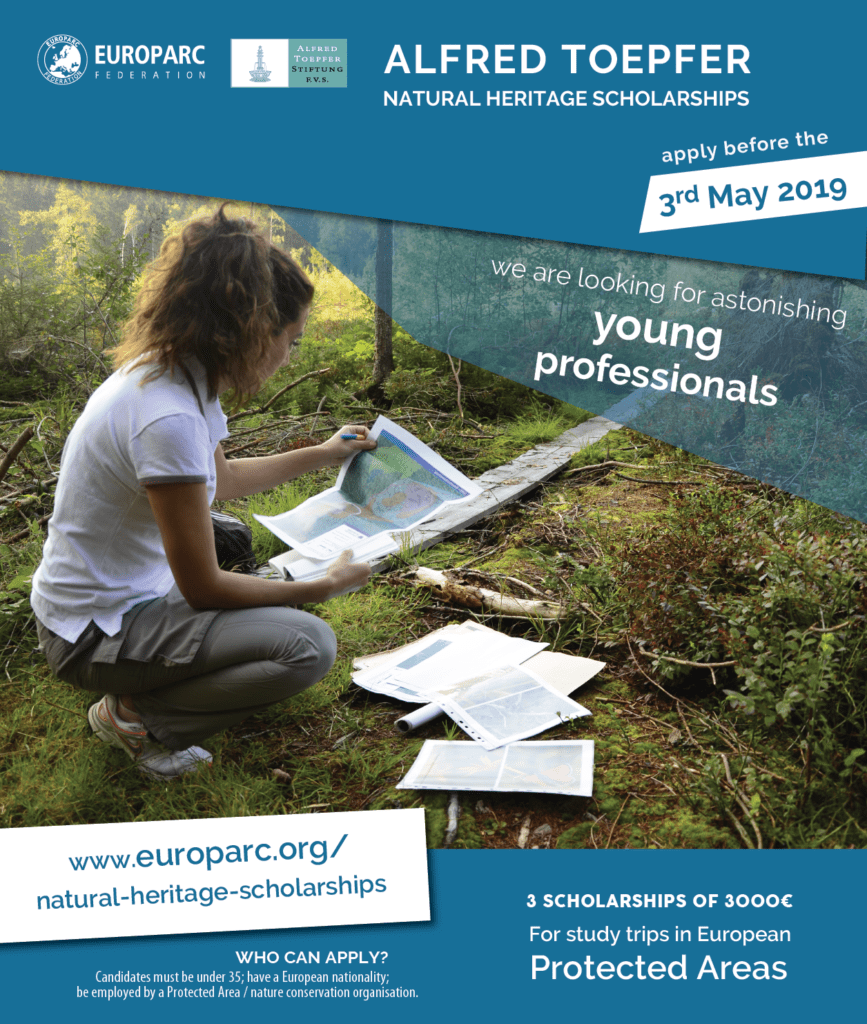
Open call for the Alfred Toepfer Scholarships 2019!
Investing in young professionals working for Protected Areas
EUROPARC strongly believes that young people have a vital role to play in caring for Europe’s natural heritage. Like everything else, the future of Protected Areas relies on the young generation taking an active and informed role. Each year the EUROPARC Federation, with support from the Alfred Toepfer Stiftung F.V.S., awards three Alfred Toepfer Natural Heritage Scholarships to promising young conservationists, who are committed to working for the benefit of Protected Areas. The aim of the scholarships is to enhance international cooperation and to advance the quality, innovation and European dimension of Protected Area management.
Each scholarship is worth €3.000 and enables successful applicants to undertake a study visit on a particular theme to one or more Protected Areas in European countries.
While there are many opportunities for students to get scholarships to improve their skills abroad, there are few for those who have already entered the working world. Hence, the aim of this scholarship is to give the opportunity to those young professionals that have chosen to develop a career in protected areas, to improve their skills and learn from other professionals by carrying out study visits to protected areas across Europe.
Open Call for 2019!
The call is open to all young professionals working in topics related to Protected Areas in Europe. Conditions to apply:
- candidates must be under 35
- have a European nationality
- be employed by a Protected Area or nature conservation organisation
Applications for study visits to prepare master or doctoral thesis will not be considered.
5 steps to win your Scholarship:
1) Choose one category
The application must address one of the following selected themes faced by Protected Area Management:
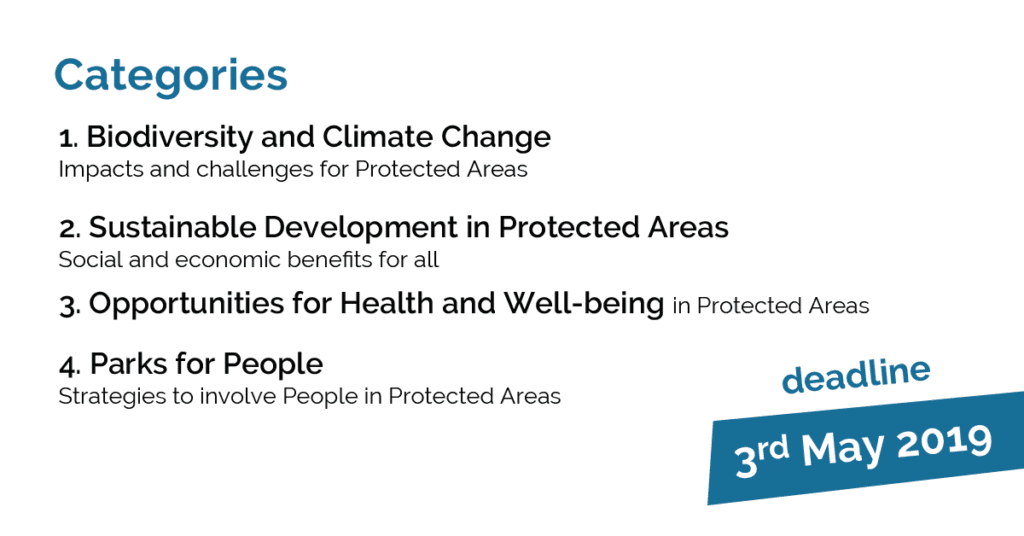
2) Apply
To apply, candidates must submit:
- Online application form– that includes your Curriculum vitae, your motivation letter, the proposed programme of your study visit, and contact details of protected areas you want to visit (download a pdf of the online application form)
- Proof of employment
Applications are due on 3rd May 2019 and must be submitted online. (Note that once you start filling the application form you cannot save it, but you will be able to edit it afterward. We advise you to look at this pdf of the online form, to make sure you have all the information you need at the moment you apply)
Download the complete Guidelines and access the online application form.
3) Be awarded at EUROPARC Conference 2019
The winners of the Alfred Toepfer Natural Heritage Scholarship will be awarded in Latvia, at EUROPARC Conference 2019, between the 24th – 27th September.
The Alfred Toepfer Stiftung E.V.S will generously cover your travel expenses and participation at the largest gathering of Protected Areas professionals! This year, especially, we will be looking at the important influence of nature on our minds, so there will be plenty of opportunities for you to learn, network and share experience on this exciting topic.
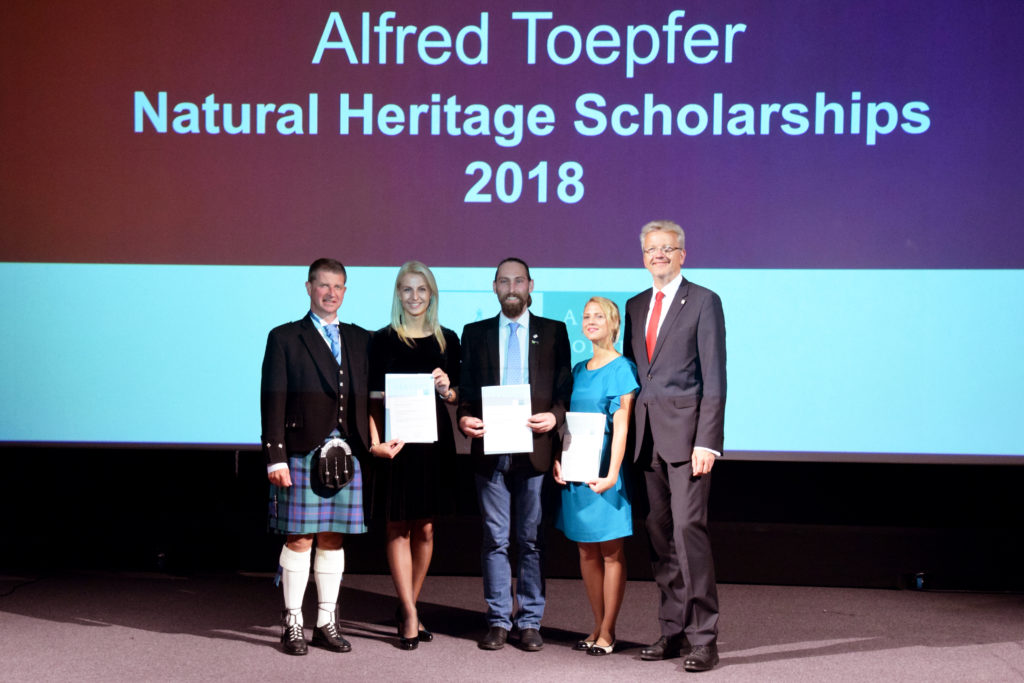
Alfred Toepfer Scholarship Winners 2018 (From left to right) Ignace Schops, Agné Jasinavičiūtė, Lászlo Patkó, Baiba Ralle and Andreas Holz at EUROPARC Conference, Scotland.
4) Travel and Learn
The scholarship covers your travel costs to one or more protected areas in Europe. Visiting different countries enables you to gather new perspectives and deepen your subject of study. Check out the example of Bryonny Slaymaker or Ágnes Balázsi, who visited 5 protected areas in several countries, or Eduardo Batista who made a deep study in one protected area.
5) Share your results
After the trip, the scholars are expected to present the Federation their findings in a report and a short film. These reports are made available to EUROPARC members, as they are full of interesting facts on observation and solutions to common Protected Area management issues.
You will find all the reports since 2007 in our library and in this page you can learn more about the past scholarship winners.
Get inspired by the film of Tymur!
Do you still have questions?
Just give a look at our Frequently Asked Questions (FAQ’s) that you can download here. If you still have questions, send us an email to office @ europarc.org. And don’t forget to apply before the 3rd of May!
Will you be the next Scholarship winner?