This is not a chicken! – A Call out for nature and human rights
“This is Not a Chicken!” is a movement created by Artist Koen Vanmechelen, ecologist and EUROPARC President Ignace Schops, and human rights expert Manfred Nowak.
The mouth mask campaign “This is not a chicken”
By protecting others, we defend ourselves!
The consequences of how we treated “the others” is slamming us in the face. Mass breeding, overproduction, … for many, money was the only thriving element. Over the years we learned about the dangers of “spillover”, viruses that spillover from animals to humans … and over time we had to lockdown animals (pigs, cows … ) and several times we were forced to organise a lockdown for chickens (chicken flu, …). But did we care? Did we see what was happening; did we listen to the voice of nature …? We were so convinced the human race was unbeatable… And now, suddenly, we need to lockdown ourselves! Are we becoming chickens ourselves…?
By protecting others, we defend ourselves is the central mantra of the project. By being careful stewards of nature, we will care for ourselves. The chicken, as the most domesticated animal, apart from the human-animal, has shown us that disregarding the mantra leads to commodification and destruction.
As the most domesticated species, humans can learn from that and choose not to be a chicken.
Trough a newly designed face mask by a world-famous artist, they invite people to become pioneers of a post-corona recovery and healing process that focusses on the well-being of the other(s), both human and non-human animals, nature & culture. “We need to restore the balance!”
When art, nature and human rights come together
An artist, an ecologist and a human rights expert join forces with a mouth mask “this is not a chicken”! Koen Vanmechelen, a world-famous artist (ART), Ignace Schops, ecologist, president EUROPARC Federation and Ashoka fellow (NATURE) and Manfred Nowak, Secretary-general Campus Human rights (HUMAN RIGHTS) call to join the movement, wear your MOUTH mask and make a statement.
Essential for a post-corona world is to restore a balance for all who make up the living organism called Earth. Only then will healthy co-existence be possible for all.

The words of Ignace Schops, founder of the mouth mask campaign “This is not a chicken”
“The current crisis calls into question the system itself. The silent collapse of nature, makes us lose our comfort zone. Healthy natural ecosystems are self-regulating systems full of life and provide us with the essential basics of existence. We urgently need to rediscover the unique position of Nature’s design as the existential and sustainable basis for our society. We cannot keep on destroying what keeps us alive. We need to understand our position as a species in the great All. Nature has the solution. Nature must become a Human Right.”
Ignace Schops, Ashoka fellow & President EUROPARC Federation
THIS IS NOT A CHICKEN_statements
The MOUTH Mask project is coordinated by the Mouth Foundation, who supports the distribution of comfort masks to more vulnerable groups at home and abroad. A first 10,000 masks are donated to our social projects. From the LABIOMISTA farm in Belgium to the farms in Zimbabwe, Ethiopia and the US, and from the communities in Chile to Malawi. For every mask we sell, we can also donate an additional mask to one of our community projects. Through and thanks to our people, we will set a strong example to protect the other(s) and position Nature as a Human Right.
Discover the story behind the MOUTH Mask on mouthmask.be
[webinar] What can Natura 2000 teach us?
- Friday, 29th of May 2020
- 11:00 CEST
- participation is free but registration is needed. Register here.
What can Natura 2000 teach us?
The EU Nature Directives and Natura 2000 represent important advances in effective, evidence-based, and collaborative conservation. Both success and failures associated with Natura 2000 provide important lessons for nature conservation policy, planning and management. Scientific research plays an important role in the implementation and assessment of progress related to Natura 2000 and the Directives.
In this webinar, we synthesize the main experiences of the Nature Directives and Natura 2000 with a particular focus on the role of scientific research.
Cases studies are used to highlight the critical roles of research, collaboration and communication in implementation of the Directives.
Read more about Natura 2000 within the EUROPARC network.
REGISTER HERE
Previous Webinars
European Day of Parks 2020: #ParksForHealth
On the European Day of Parks 2020, we called on all Parks and Protected Areas in Europe, to highlight how a healthy society needs, more than ever, healthy places for nature. #ParksForHealth.
When the EUROPARC Federation decided last year that ‘Healthy Parks, Healthy People’ would be the theme for the European Day of Parks in 2020, we would have never thought it would be this relevant. What we did know, however, is that positive contact with nature is important for human health. It can create well-being, prevent public health problems and promote an active lifestyle.
Parks & protected areas have an important mission connecting people with nature! Parks not only protect our valuable natural resources – they deliver positive health outcomes. Contact with nature is essential for human health, and in an ever-more urbanised Europe, we must create more opportunities for citizens to connect and explore the outdoors… Positive contact with nature is proved to create well-being and promote active lifestyles!
#ParksForHealth : special online edition
In 2020, 111 years later, Parks & Protected Areas across Europe reinvented themselves to celebrate nature with you – with all of those who couldn’t enjoy their Park, and with all others who were lucky to.
Check some of the events Parks have organised in 2020
Parks are there today, tomorrow and every other day. Caring for people if people care for them too.
On the 24th of May, this was our message, as the collective voice of Europe´s Protected Areas, for nature and for people. #ParksForHealth
*****Thank you to all Parks and Protected Areas that sent us amazing images from all corners of Europe. All the footage and material that were not possible to include in this video, will be used in future messages.
Nature and Health: the role of Protected Areas
Europe’s nature is a health-promoting asset. There is increasing evidence that access to the natural environment can help guard against, treat and manage key health issues. Europe’s national parks and other protected areas are well placed to support health outcomes for people who live in or near them or who visit them.
We believe that the contribution of Europe’s national parks and other protected areas to health outcomes can be strengthened through recognition in relevant policy, practice and funding at the European, national and regional level. That is way, EUROPARC is supporting Protected Areas in developing health opportunities and partnerships with the health sector.
Where to start? Take a look to the Toolkit “Health and Well-being benefits from Parks & Protected Areas” or watch some of the webinars where we’ve shared inspiring examples from all over the globe!
Did you know…?
- A brisk 30-minute walk on five days of the week can reduce the risk of heart attack and stroke by 20-30% and Depression/dementia by 30%
- Outdoor activity and contact with nature can help sleep patterns, reduce stress, improve mood and self-esteem, and provide meaningful social
contact - Experience of the natural environment by young people can be life-changing in terms of confidence and skills that can enhance job opportunities
- Contact with nature can help reduce health inequalities at all stages of life: pre-birth, childhood, adult life and old age
Download EUROPARC Toolkit_Health and Protected Areas
About the European Day of Parks
Imagine a day when all Parks and Protected Areas come together across Europe, celebrate their successes and declare the value and benefits of Europe’s Protected Areas to communities, decision-makers and the wider public. Well, it is EUROPARC’s European Day of Parks!
Every year European Day of Parks takes place on and around 24th of May. It aims to bring people closer to nature and raise public awareness on the importance of the natural beauty preserved in Protected Areas and the importance of conservation and sustainable management of those places.
Check here to see the previous editions.
You can also download the official logo, the banner and Instagram image. Tag your posts with #ParksForHealth.
The International Biodiversity Day & the value of Old-Growth Forests
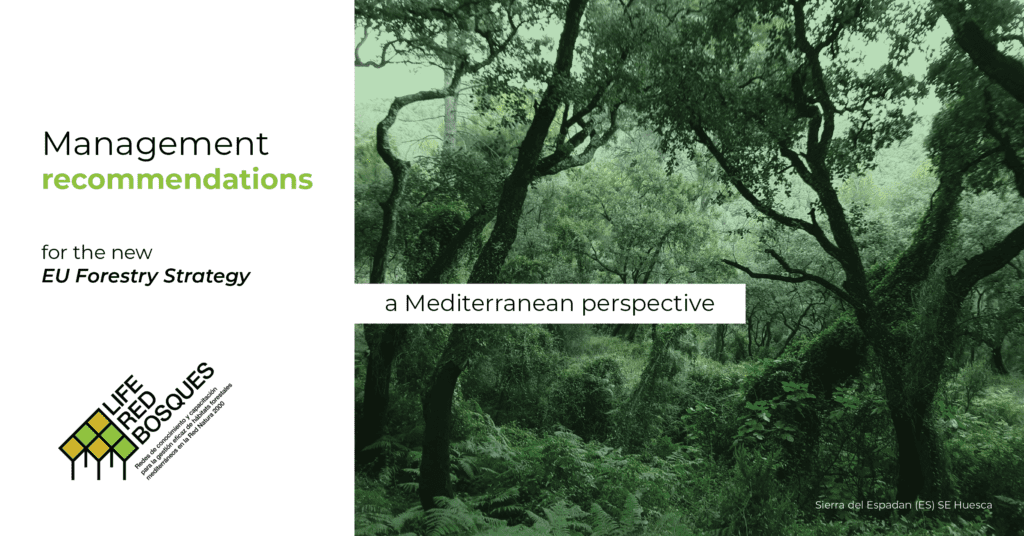
The value of old-growth Forests in the Biodiversity Day and the outcomes of the LIFE Project RedBosques.
Happy Biodiversity Day!
The United Nations has proclaimed May 22 The International Day for Biological Diversity (IDB) to increase understanding and awareness of biodiversity. This year´s motto “Our Solutions are in Nature”, could not be better aligned with the launch of the new EU Biodiversity Strategy 2030, that happened just 2 days ago.
The European Commission calls for the protection of at least 30% of the land and 30% of the sea and recognises the role of all Protected Areas to achieve these objectives. The ambitions go further, with the aim of one-third of protected areas – representing 10% of EU land and 10% of EU sea – to be strictly protected.
This is where our old-growth forests will have a fundamental role “As part of this focus on strict protection, it will be crucial to define, map, monitor and strictly protect all the EU’s remaining primary and old-growth forests” (EU Biodiversity Strategy 2030)
In Europe, only 5% of forests present low levels of human intervention. In the Mediterranean area, this figure drops to 2%. That is why, EUROPARC Spain and Fungobe, with the Life Project RedBosques, developed intense research on the main characteristics of old-growth forests, develop a mechanism to identify mature stands, and experimented a different silviculture approach that can boost forest maturity. The project was focussed on the Mediterranean are, but its outcomes and methodologies can be replicated in other regions too.
The Value of Old-Growth Forests: LIFE RedBosques
RedBosques promotes silvicultural practices in Mediterranean protected areas based on boosting forest maturity, biodiversity and resilience against climate change. The new forestry management strategies proposed by RedBosques give priority to the protection of mature stands and the promotion of the scarcest or currently non-existent features of maturity.
To learn more about the importance and the characteristics of mature stands, read the arcticle Why do we need old-growth forests? on our website.
During the project implementation, RedBosques focused on increasing knowledge about conservation, on developing guidelines for forest management in protected areas and on creating a network of reference forest stands.
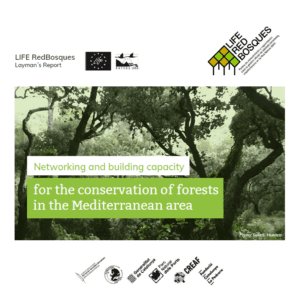


>>>>> Download the Full Report: available in English and Spanish <<<<<
From theory to practice: forestry management geared toward conservation
RedBosques provides guidelines for forest management in protected areas which propose a silvicultural approach in which production and conservation targets are compatible. EUROPARC Spain produced a Manual to explain how with recommendations and the presentation of four
case studies, each following a different management alternative: non-intervention in Parque Nacional de la Sierra de Guadarrama, deadwood management to increase diversity among saproxylic coleoptera in Parc Natural del Montseny, silviculture compatible with maturity on private estates in Parc Natural dels Ports, and enhancement of structural diversity in areas of Aleppo pine reforestation in Zaragoza.
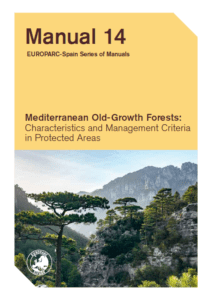
Manual available in English and in Spanish.
The Network of Stands of Reference
A standardised methodology was developed for the identification and characterisation of old-growth stands. The transfer of cutting-edge scientific knowledge to management has been a key component of the project, with the creation of an assessment panel made of scientists, forest managers and Natura 2000 Network managers.
In Spain, 160 stands with features of maturity have been identified, that correspond to 20 different forest habitats. Of these, 43 are defined as stands of reference.
The online tool RedBosques that was created, comprises a database of old-growth stands in Spain, available here: redbosques.creaf.cat/redbosques.
RedBosques Resources
- Website www.redbosques.eu
- Report: Old-growth forests: characteristics and conservation value
- Mature forests: frequently asked questions
- Fact sheet of LIFE RedBosques project
- Poster: What is an old-growth forest?
- Video 1: Old-growth forests and Biodiversity (6:00 min)
- Video 2: Models for a new silviculture (9:26 min)
- Video 3: The Stands of Reference Network (10:40 min)
Read also: