The Bavarian Forest National Park organises an international Youth+ Camp
International Youth+ Camp 2019
From 11th to 16th May 2020, an international Youth+ Camp will take place in the Bavarian Forest National Park. Junior Rangers from all over Europe are invited to join the event, organised in cooperation with the European Ranger Federation. Participants will enjoy an exciting programme, which includes the amazing opportunity to attend the 5th European Ranger Congress.
From the 11th to 16th May 2020, an international Youth+ Camp will take place in the Bavarian Forest National Park, at the South-East of Germany. This National Park will welcome Junior Rangers from all over Europe, who will even be joined by their peers from Maun in Botswana.
These five days will give young persons – having different national, cultural, and social backgrounds – the opportunity to meet in an amazing setting, to share their experiences and to learn from each other.
This international Camp aims at giving them plenty of room to discuss their ideas about the Junior Ranger and Youth+ projects in Europe, in order to keep improving them, and to reach expectations of both Junior Rangers and professionals of Protected Areas management.
The idea is also to offer young people to participate in a lot of interesting activities related to nature conservation and Protected Areas in Europe, but also to let them explore a newly emerging forest wilderness and have fun together.
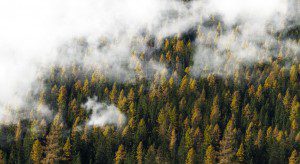
Forest © Stefan Stefancik
Thus, the Bavarian Forest National Park elaborated a compelling five-day programme, which provides for a lot of outdoor activities and workshops, with for example a workshop dedicated to: “How can Youth+ activities be integrated into the everyday life of rangers in the best possible way? Requirements – best practices – recommendations“.
Moreover, the International Junior Ranger Camp runs along the 5th European Ranger Congress, and Junior Rangers will get the amazing opportunity to join in some of their sessions.
Participants are also foreseen to meet Ms. Laura Peters, Youth Representative on the EUROPARC Council.
You can now register!
European Junior Rangers and Youth+, aged 16 and over, can now register for this event! If you are interested and want to take part in this great event, you only need to fill in a form and to send it back to the Bavarian Forest national Park!
Registration Form International Youth+ Camp 2020
Good to know: participants do not have to pay for accommodation or meals, the Bavarian Forest National Park takes care of it.
European Commission launches global coalition for biodiversity
On the occasion of the World Wildlife Day (3 March 2020), the European Commission launched a new global coalition for biodiversity conservation in Monaco. The Commission is calling on all world national parks, aquariums, botanic gardens, zoos, science and natural history museums to join forces and boost public awareness about the nature crisis, ahead of the crucial CoP15 of the Convention on Biological Diversity in Kunming (China) in October 2020. During CoP15, the 196 Parties to the UN Convention on Biological Diversity are expected to adopt a new global framework to protect and restore nature, as much-needed as the Paris Agreement focusing on the climate crisis.
It is crucial that all of us learn just how real the nature crisis has become. We urgently need to take global action to protect and restore biodiversity.
said the European Commissioner for Environment, Oceans and Fisheries Virginius Sinkevičius, adding: “Otherwise much of the nature we love, and depend on for our food, health, and economy, is in danger of disappearing forever. Like me and my family, millions of people visit natural history museums, botanic gardens, national parks and similar institutions every day. With their collections, education and conservation programmes, they are the best ambassadors to raise public awareness about the crisis looming over all of us, if we do not act now. If our only chance of seeing a species is in these institutions, then we will all have failed.”
What can Protected Areas do?
World protected areas, aquariums, botanic gardens, zoos, science and natural history museums are being asked to now intensify their communication actions about biodiversity. This means displaying a common message at their entrance, but also engaging in educational and other activities related to the protection and restoration of biodiversity in all its forms. Welcomed by the United Nations Environment Programme (UNEP), this new bigger coalition will be organized by the European Commission.
Common message to be displayed
The Commission also encourages national, regional and local authorities, non-governmental organisations, businesses, scientists and individual citizens to play their part in raising awareness ahead of the UN Biodiversity Summit. Following the Summit, the focus of the coalition will be on coordinated actions with tangible impact aimed at bending the curve of biodiversity loss.
This new coalition will complement the highly successful coalition of “World aquariums #ReadyToChange to #BeatPlasticPollution” launched in 2017, which gathered more than 200 aquariums in 41 countries to raise global awareness about marine litter.
Thus, the Oceanographic Museum of Monaco hosted the ceremony, to mark both this launch and the handover of direction of the Aquariums coalition from the European Commission to UNEP under the Clean Seas campaign.
The event took place with the active participation of HSH Prince Albert II of Monaco, Virginijus Sinkevičius, European Commissioner for Environment, Oceans and Fisheries, and Inger Andersen, United Nations Environment Programme Executive Director. During the ceremony, HSH Prince Albert II of Monaco announced that the Oceanographic Museum of Monaco will be the first to officially pledge its support for the new coalition “United for #Biodiversity”.
International Junior Ranger Camp 2020: Registrations are open!
Life in the Taiga: Junior Rangers meet the Northern Forest
- 5-11 July 2020
- Norway, Finnskogen Nature & Culture Park
The 2020 JR camp will take place in Norway from the 5th to the 11 of July. It will be hosted by the Finnskogen Nature & Culture Park and is being organised with the support of the Norwegian Parks Association.
This year we will be looking at Forest. The Finnskogen region and regional park is where the northern “green scarf of the world” begins: the Taiga. We will discover how people live in this region and how they interact with the Taiga. We will learn more about parks in Norway and the role and function of the Finnskogen park; we will have a full immersion in local cultural traditions, do practical work for nature, go fishing and canoeing… and for sure we will have good fun all together.
Update 24.03.2020
We are very sad to announce that because of the current Corona crisis, the Junior Ranger Camp will not take place in July this year. This was a very hard decision, not just for us at EUROPARC, but especially for the host, the Finnskogen Nature & Culture Park in Norway, who looked forward to welcoming all young nature enthusiasts. However, we agreed that cancelling is the safest and only option at this time. Together with the Finsskogen Nature & Culture Park we will look for possibilities to organise the Junior Ranger Camp in the future, once this crisis has passed. As always, we will update you through our webpage and social media channels.
For more information, please write to communications@europarc.org.
#EUPollinators: halting the loss of pollinators
“Pollinator species are essential. Their dramatic decrease has been the result of land use and climate change, among other. It is of great importance that all policies concerning agriculture and forestry are coordinated.” Roby Biwer, Member of the European Committee of the Regions.
Why are Pollinators in decline?
In past decades in Europe, pollinators have dramatically declined. A lot of pollinators species disappeared or are threatened with extinction. For an overview of the species status in Europe, check the European Red List. However, not all species are in decline, some of them are expanding. But, in term of trends, bees species records decline in the world is very alarming.
What are the factors of decline?
It is important to have in mind that there is no one single factor of decline. The loss of pollinators is the result of a combination and interaction of factors. We can determine some drivers of decline in Europe such as the agriculture intensification, the use of agrochemical, climate change, pests and pathogens and also urban sprawl. This interaction of those factors results in a loss of food, loss of place to live, diseases and poisoning for pollinators.
But wait, what is pollination?
Pollination refers to the process of the transfer of pollen between the male and female parts of flowers. Pollinators in Europe are birds, bees, bats, butterflies, moths, beetles, or other animals, or even the wind. (Not only bees!) This transfer of pollen is a major step in the plant cycle, it allows the fertilization and is essential for the formation of seeds and fruits. Plants contribute to the nutrition of pollinators by supplying them with excess pollen or nectar. It is a mutual relationship.

97,5% flowering plant are animal pollinated.
The diversity of pollinators is also really important because species act differently and have a special impact assuring different eco-services. For further details, you can find reports of the NGO Bee-life.
However, crop pollination is a process important to ensure abundant biodiversity. It is a complex issue also related with food security, agriculture… Indeed, more wild insects means more fruits !
For all these reasons related to pollination, this subject mobilizes many actors: both the European Union and its Member States, as well as citizens and civil society. It is indeed an excellent angle to reconcile practices in a more eco-friendly sense, such as agriculture which need pollinators, for example.
What about Protected Areas?
For protected areas, pollinators are crucial, as it is explained in EHF’s policy paper. More pollinators mean more biodiversity and better ecosystems. Protected areas and Natura 2000 sites are the perfect way to implement European policies in favour of pollinators.
In regards to urban planning, Periurban Parks play a major role in preserving biodiversity and also halt the loss of pollinators, by preventing urban sprawl for instance. Private individuals can also act in favour of pollinators in the city through diversity-friendly gardening..
Park managers are working to preserve biodiversity and can have a huge impact on the occurrence and diversity of pollinators by favouring diversity of plants and flowers and reduce the use of pesticides. But more awareness is needed, and park managers can also play an important role in advising farmers on pro-environmental measures and thus create a stronger community link.
Among a lot of projects that involve pollinators in protected areas, Assessing Butterflies in Europe (ABLE) project implemented by our partners, Butterfly Conservation aim “to create a representative butterfly monitoring network across as many countries as possible in order to improve the targeting and efficiency of conservation measures within the European Union.”
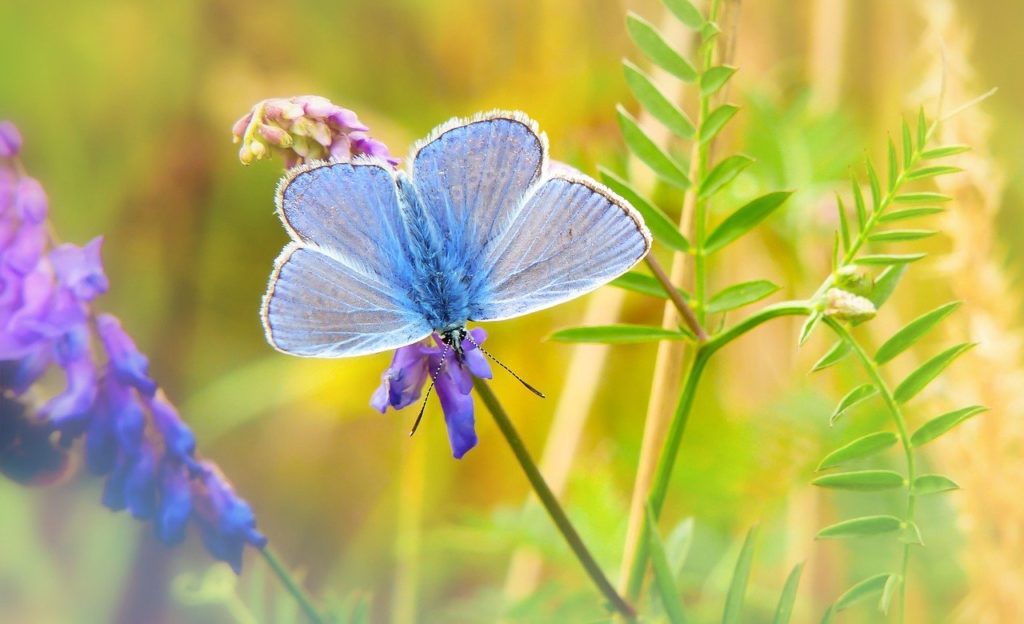
Pollinators and the European Union policies
#EUPollinators
On the 21st of February, EUROPARC Team in Brussels participated in an EU Conference “Halting the loss of pollinators: the role of the EU agricultural and regional development policies” organised by the European Commission in cooperation with the Committee of the Regions. IUCN and IIEP were supporting the organisation.
The event had two main stated objectives :
→ Take stock of the contribution of the EU agricultural and regional development policies to the conservation of pollinators in the programming period 2014-2020;
→ Discuss how to build on lessons learnt to ensure more effective measures and projects in the 2021-2027 period. Link to the agenda
A web stream of the event is available here: (Main room JDE 52) and (Side room JDE 53)
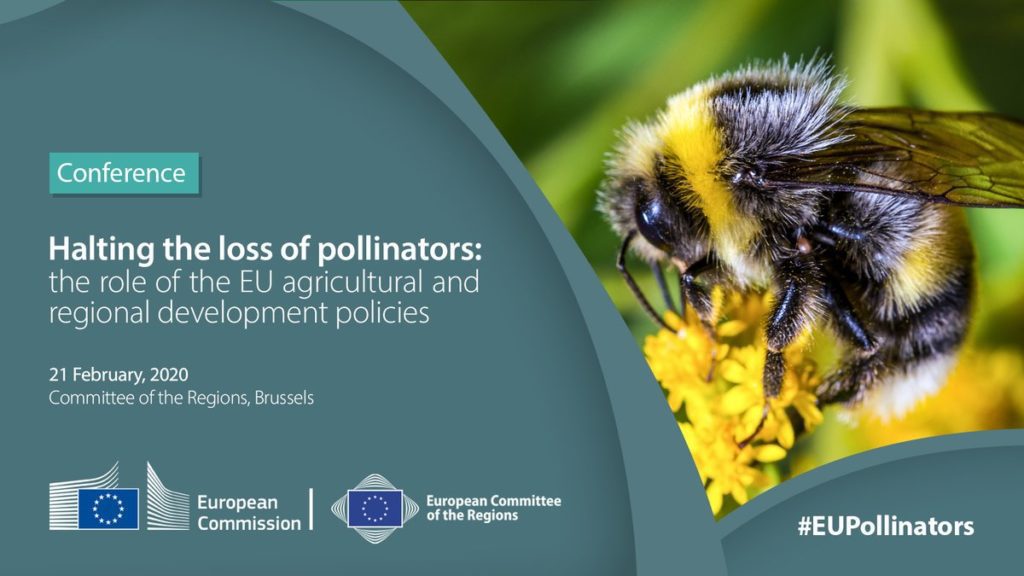
The issue of pollinators has aroused a great deal of interest in the European Union over the last few years, as demonstrated by the EU Pollinators Initiative. In the current context of the Green Deal and the review of the Common Agricultural Policy (CAP), the Biodiversity Strategy post 2020 and the Farm to Fork Strategy, the pollinators issue gathers a lot of interests. First, it is part of the Green Deal vision. But also, the well-being of pollinators is the reflection of a policy coherence across sectors and policies. It is a good angle to reconciliate agricultural and biodiversity issues, by illustrating the mutual benefits of environmental protection.
The conference brought together a variety of actors from different scales to assess the effects of the CAP and to see what need to be improved. These actors were farmers, ministers from the Member States and people in charge of the new CAP in the European Union. Each speaker presented his or her actions in the field, the lessons learned, the positive points and those to be improved.
The CAP has a big influence on the habitat of pollinators. Indeed, landscape are really important. The CAP can be a tool to preserve high-nature value features including those on “ordinary farmland”. CAP can also regulate cropped land, less (more precise) pesticide and fertilizer, more tolerance of weeds, wildflower, more fallow, more crop rotation… This policy can also argues in favor of less intensive farming. It can also help to improve economic viability of extensive grazing systems needed to maintain habitat.
The main remarks of the conference:
About knowledge:
- Difficult to monitor the effect of CAP on pollinators. But it is not a reason to do not act.
- Lack of knowledge: better share-practices, peer to peer, training for integrative best management, offering online tool/training (the role of digitalisation)
- To better communicate environmental objectives: what we intent by these measures and obligations ?Need for a better data knowledge
About participation:
- Integrate all stakeholders: the project has to involve actively the farmers in the design and implementation
- Increase a human partnership between actors (authorities, farmers, beekepers, naturalist) through better communication/dialogue
About content:
- Need for more flexibility: to be well adapted to local conditions. (Idea of eco-scheme) Some farmers felt like they were losing power over their land, with the imposition of policies of the previous CAP measures.
- Need to change the mindset : we should rewarded farmers for their efforts in favor of biodiversity instead of compensating the loss of economic benefits.
- Need to highlight the interconnection with Natura2000 and Protected Areas
- To integrate rural development to be sure to leave no one behind and to have a holistic vision of the territory to avoid the rural depopulation
- Environmental mainstreaming and nature – based solutions on all investments
About implementation:
- Measure has to be simple, low cost and proven efficacy
- Maybe to think more on a voluntary approach
- Better coherence in policies (Farm to Fork Strategy and Biodiversity Strategy) and better work across DG REGIO works with DG ENV.
For more information on Assessment Report on Pollinators, Pollination and Food Production, we invite you to have a look at this IPBES report.