TransParcNet Meeting 2020: Parks & Cultural heritage across borders
Every year, the TransParcNet meeting brings together protected area professionals working with their neighbouring parks, to protect their shared heritage. This year, special focus will be given to cultural heritage!
Due to COVID-19 restrictions the TransParcNet cannot take place face to face. It will happen in a digital format on the 9th of December. You can find all information here.
For informational purposes the original information can be found down below. We hope to meet again face to face next year.
Parks & Cultural heritage across borders
Nature knows no boundaries, but political barriers have sometimes been based on natural borders, dividing the continuity of space. However, these spaces have a common cultural heritage. People adapting to the environment in which they live have an undeniable common heritage of “cultural biodiversity” on both sides of the borders. In addition, this link with nature also goes in another direction: people have modified nature to make it less hostile to humans.
“Shaped by nature, sculpted by man” (For more information on nature and culture, we invite you to have a look at our past webinar on cultural heritage and interpretation)
But what does it mean to preserve the « cultural biodiversity » of the Alps?
The Ossola Protected Areas in Italy and the Landschaftspark Binntal in Switzerland are located in the Lepontine Alps, a natural environment dominated by rocks and glaciers. The cross-border park is united by the historical experience of Walser culture, developed since the 13th century on both sides of the Alps.
The shared dialects, the local knowledge of building houses and barns with larch wood, and the common free-trade relations in the mountains have made it possible to achieve a common historical experience. Every year to promote this cooperation, these parks organise events that bring together the inhabitants of both countries to present and share their natural and cultural values. It contributes to enhancing the common regional identity of local people.
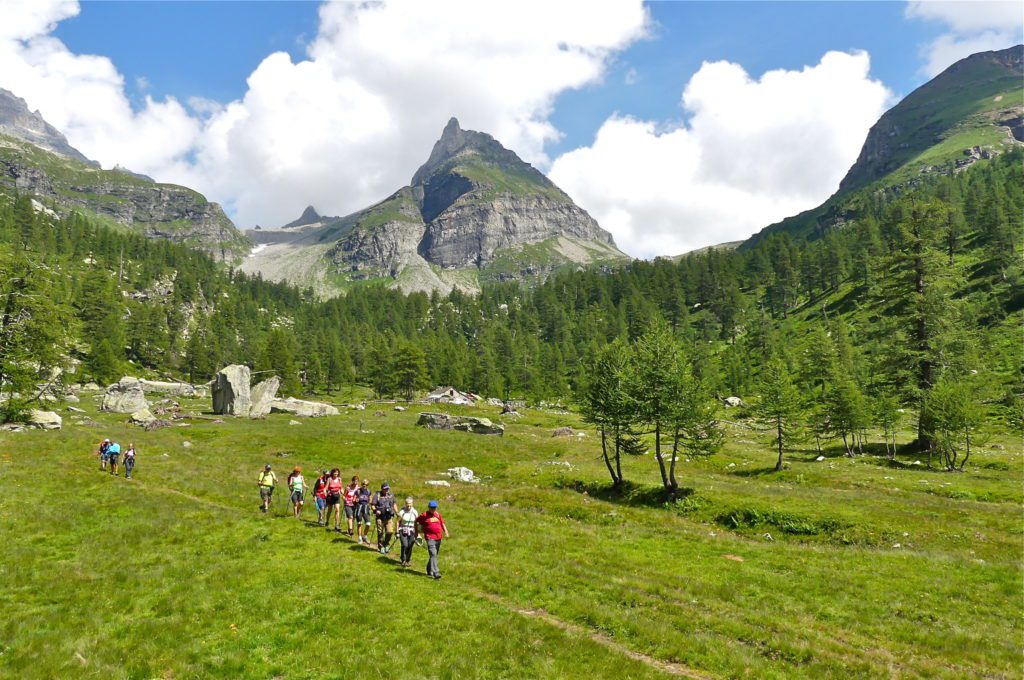
“The cross-border park unites peoples ” (quote from the interview published in our last annual journal)
This transboundary cooperation allows a better management, especially in the face of climate change issues.
Why is the Transboundary Parks programme important?
Both parks have the same natural environment, identical tourist visits focused on summer and winter mountaineering, and share also the same challenges. In order to have a coherence in conservation policies and to ensure an effective management of the park, exchanging information and good practices is essential to ensure good ecosystem conservation status.
Exchanging scientific information and joint monitoring activities provide us a better understanding of the territory and more appropriate measures.
“Ensures a peaceful future in harmony with nature for the next generations” (quote from the interview published in our last annual journal)
This cross-border cooperation is essential for protected areas: it creates a common vision and allows for better coherence in action, and therefore a better conservation policy of our natural and cultural heritage.
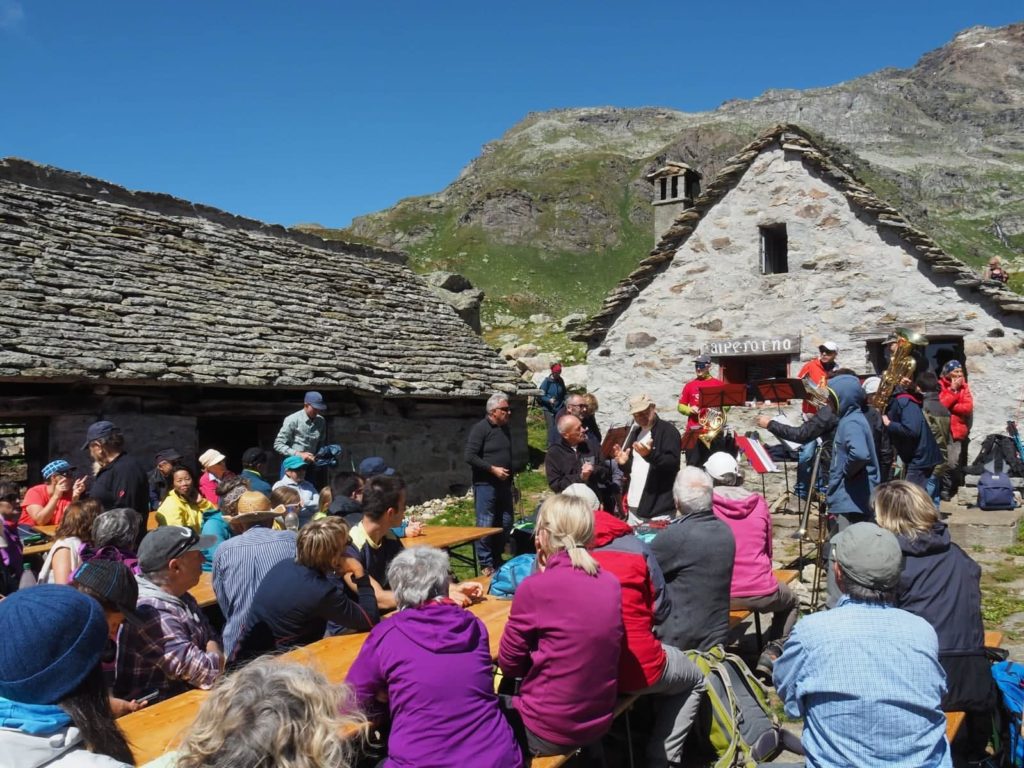
About the Transboundary Parks Programme
With the Transboundary Parks Programme, we are strengthening human ties beyond borders, promoting cooperation on a practical level, and fostering a shared sense of ownership of the area’s natural and cultural values.
The Transboundary Parks Programme is the recognition of our successful policies for joint regional and sustainable development, which protects nature, promotes cooperation and international peace. Get to know more about our Transboundary Areas!
REGISTRATION IS NOW OPENED !
Places are limited! Transparcnet members have priority, but if you are interested in the event, please contact the organizer, Stefania Petrosillo (stefania.petrosillo @ europarc. org).
Participation fee: 70€ (not including accomodation)
Here is the programme of Transparcnet Event!
Travel Information Transparcnet Meeting

[6th March] Webinar: Communicating with purpose
EUROPARC webinars are a cost-effective way of learning with your peers, get inspiration and ideas to improve the management of your protected area. We invite you to join us in our next EUROPARC webinar about communication!
Communication is at the heart of all Protected Area & Natura 2000 managers work.
Whether writing a report or a press release, chairing a public meeting, giving a presentation, writing an email or a tweet. It is everywhere, yet, often Protected Area staff have concerns that inadequate communication is hampering their effectiveness to manage effectively their Natura 2000 or other protected sites.
EUROPARC is taking the lead in providing innovative communications training for Protected Area professionals. Within the LIFE e-Natura2000.edu project, 25 participants from around Europe, will have the chance to learn new competencies, tools and techniques to increase their communication´s effectiveness.
Webinar communicating with purpose: Understanding what you want to say
- Friday, 6th March 2020
- 11:00 CET
- participation is free, register here
In the first webinar “Communicating with Purpose”, we invited Dirk Hilbers, founder and director of the Crossbill Guides Foundation, a European NGO aiming to increase public involvement with nature conservation. Dirk has a background in ecology, philosophy and science communication, and started what is now the world’s largest series of nature travel guides, the Crossbill Guides. The Crossbill Guides inspire a wide range of nature lovers and are made in collaboration with site managers to share their message.
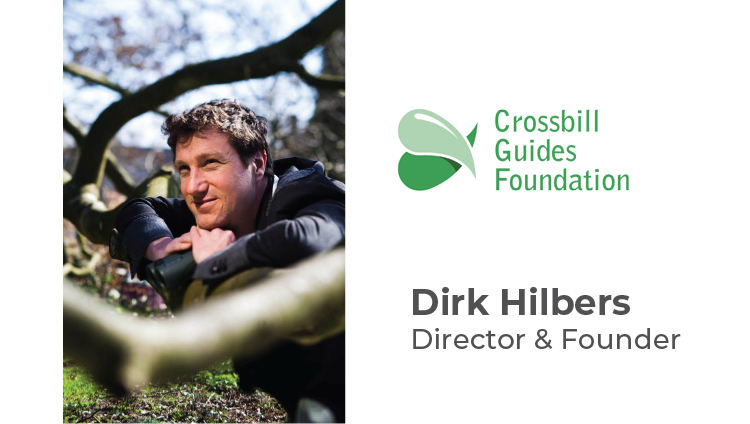
In this webinar, Dirk shares his 15 years’ experience in communicating the values of our European natural heritage.
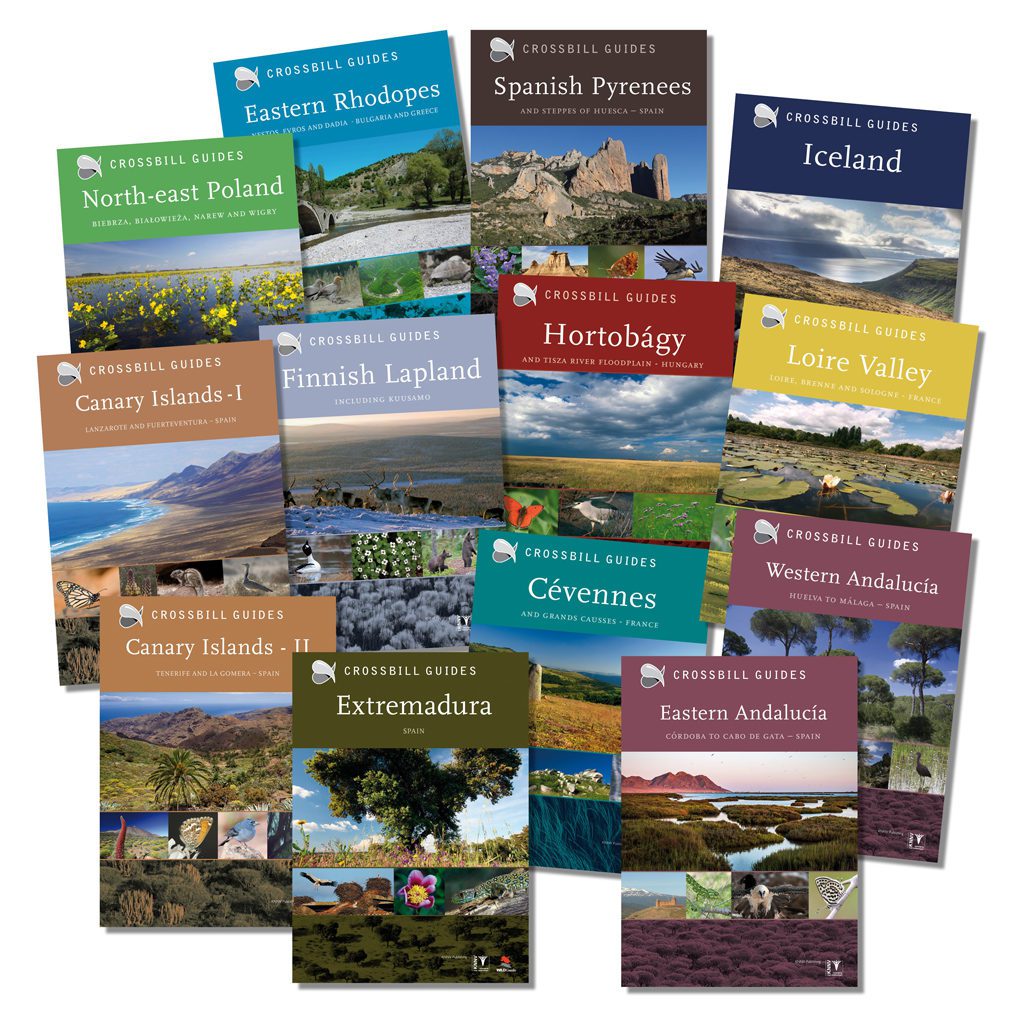
The webinar will be introduced and moderated by Neil McIntosh, project manager of the LIFE e-Natura2000.edu. Register today!
Communications training & a porpoise safari in the Kullaberg Nature Reserve
Porpoises in Kullaberg Nature Reserve (SE)
article written by Kullaberg Nature Reserve
In June we will host a practical workshop on communication for efficient management of Natura 2000 at Kullaberg Nature Reserve, Skåne. We are very excited to be able to show our nature reserve to a cohort of 20 participants from all over EU selected under the LIFE e-Natura2000.edu Project and share a few days of learning together.
A porpoise safari?
In the sea around Kullaberg, you can often spot the porpoise – a small toothed whale. Workshop participants will have a chance to go on a tour to be able to spot our porpoises close up and marvel at the fantastic Kullaberg scenery with alluring coves and mysterious caves from aboard RIB. The tour will be organized by our friends and partners – outdoor tour company Kullabergsguiderna.
Kullabergsguiderna is certified according to the Swedish national eco-tourism standard Nature’s best. They believe that showing and informing the public about these amazing mammals will lead to more protection. They try to affect the environment as little as possible and follow international whale safari guidelines. Boat is a modern four-stroke outboard motor combined with a lightweight RIB-boat for lox carbon dioxide emissions.
Kullabergsguiderna applies internationally accepted guidelines for whale watching. Therefore,
the recent porpoise safaris have actually strengthened protection of our porpoises.
From being almost unknown in northwest Skåne, our knowledge of our most threatened marine mammal has increased dramatically. With increased knowledge comes greater consideration and respect for, among other things, the reserve’s speed limits. Visit of our guests, therefore, helps the future of our porpoises look a little brighter. That can be fun to think about when they’ll walk the steep path back from RIB boat’s small natural harbour up to Sweden’s highest lighthouse!
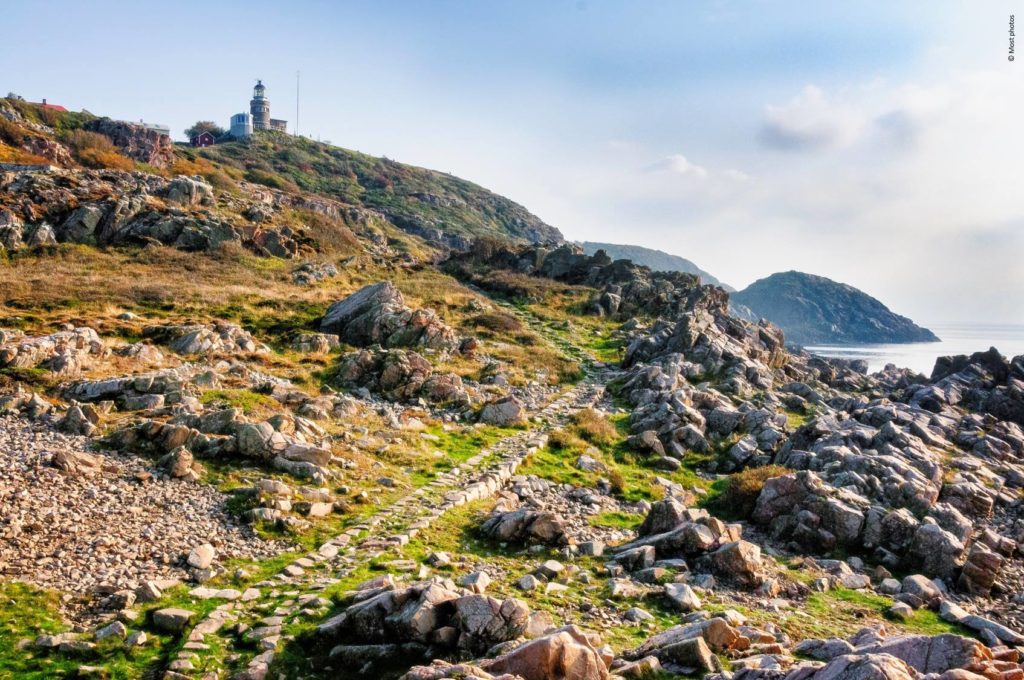
Kullaberg Nature Reserve, Sweden
What are the Competencies for effective management of Natura 2000 sites?
Capacity Building project - First Training Programme 2015 © Propark Foundation for Protected Areas
Natura 2000 site managers come from a very wide range of domains and have quite different backgrounds. Some of them are protected area managers, others are forest landowners, with many other occupations in-between. What they all have in common are the responsibilities to contribute through their Natura 2000 activities to maintaining or improving of the conservation status for the species and habitats for which these sites were designated.
Article written by Erika Stanciu
Director of ProPark Foundation for Protected Areas in Romania
What are the Competencies for effective and efficient management of Natura 2000 sites?
There are many possible answers if one raises the question: what are the top five or ten things you have to know very well as a Natura 2000 site manager, what should you be able to do and what should be your attitude to solve the challenges for species and habitat conservation in your area? Or to shorten the question: what are the competencies you need to do your work in an efficient and effective manner as a Natura 2000 manager? Many different answers are possible.
These answers can be grouped under a list of competencies that are relevant for most people involved in Natura 2000 management. Such a pre-defined list of competences is the starting point for a better understanding and knowledge about the needs of site managers and can help to plan and develop well-targeted capacity-building events and materials and to provide guidance and support for most of those who manage Natura 2000 sites.
A team of enthusiastic professionals gathered under the umbrella of the ‘LIFE e-Natura2000.edu: supporting e-learning and capacity building for Natura 2000 managers’ project to define a list of competencies that are needed for the management of Natura 2000 sites. This list, built on the IUCN’s Global Register of Competencies for PA Practitioners (2016), can be used by site managers to learn about their needs to improve competences for their jobs, for their every day work.
An online Training Needs Assessement
A first step in using the list of Natura 2000 competences was already taken within the Life e-Natura2000.edu project. A practical tool was developed for the use of individuals engaged in the management of Natura 2000 sites, an online Training Needs Assessment for Natura 2000 site management (Online Natura 2000 TNA).
If you are one of the professionals targeted by this online tool or a Natura 2000 landowner who has the responsibility to manage species and habitats on your land according the requirement of the Habitats and Birds Directives, you might find this tool very useful.
The analysis can show you which are the topics where you should invest more efforts in learning and in acquiring the practical skills you need.
With your top needs identified, you can then turn to your employer and ask for support in developing your professional capacities or to design a plan for learning by yourself. By offering the list of topics in which you need further improvement of your professional competences for further analysis, you will help training organisation and institutions to provide materials and tools for developing capacities of Natura 2000 managers.
After the testing phase of the Online Natura 2000 TNA all those interested in assessing their competences will have access to this individual tool.