Podyjí and Thayatal National Parks Undergo Transboundary Re-evaluation
National Park Thayatal, picture by Claudia Ebner
How does transboundary cooperation work in practice? For Podyjí National Park in Czechia and Thayatal National Park in Austria, this question was at the heart of a three-day EUROPARC Transboundary Parks re-evaluation visit in July 2026.
A closer look at transboundary cooperation
Picture by S. Petrosillo
The EUROPARC Transboundary Parks Programme recognises Protected Areas that work together across national borders to conserve shared landscapes and ecosystems. Re-evaluation is an important part of this process, which happens after five years.
During a re-evaluation, an independent verifier reviews the progress made since the previous assessment. The process looks at the Programme’s Basic Standards and considers both the structures supporting cooperation and the practical work carried out by the partner Protected Areas.
Podyjí National Park and Thayatal National Park have worked together across the Czech-Austrian border for more than 25 years. Their cooperation covers nature conservation, research, environmental education, visitor management and many other areas. The re-evaluation provided an opportunity to look at how this cooperation has developed and how it is being implemented on the ground.
For Podyjí and Thayatal, the 2026 verification visit took place from 6 to 8 July 2026. It brought together representatives of both National Parks, the verifier and local stakeholders.
Meeting & field visits
The verification combined discussions with direct observation in the Protected Area.
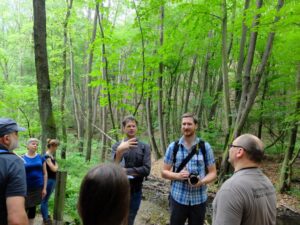
The first day focused on presentations and discussions with park staff about transboundary cooperation. This was followed by a field visit in Thayatal National Park, including the Umlaufblick viewpoint and cross-border visitor infrastructure. A stakeholder meeting then brought together representatives from both sides of the border, including local authorities, scientists and representatives of civil society.
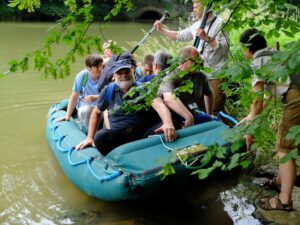
The second day moved to Podyjí National Park. The programme included field visits focusing on landscape management, visitor pressure and practical conservation measures. These included prescribed burning, semi-natural grazing and coppice forest management. The visit concluded with a discussion between the verifier and representatives of both parks.
This combination of meetings, stakeholder discussions and field observations is an important part of the re-evaluation process. It allows the verifier to consider not only what is described in documents, but also how cooperation works in practice.
Cooperation across one shared landscape
Podyjí and Thayatal are separated by an international border, but they form part of the same ecological landscape. Their cooperation is supported by a Joint Management Plan for 2021–2030 and an agreement setting out common goals, management principles and the framework for cooperation.
During the visit, the parks presented examples of cooperation in several areas.

Wild cat. Picture by C. Ebner
Joint biodiversity research and monitoring are an important part of their work. The BioReMo project, for example, aims to improve monitoring, data exchange and cooperation between the two parks. Other projects address habitat restoration, connectivity and invasive alien species.
Cooperation also extends to ranger services. The parks organise joint ranger activities each year, creating opportunities for staff from both countries to work together in the field and communicate with visitors across the border.
Environmental education and public engagement are another important element. School groups, adult groups and visitors can take part in activities involving both sides of the Protected Area, supported by multilingual information and shared educational materials.
Listening to partners and stakeholders
Transboundary cooperation goes beyond the two park administrations.
Stakeholder participation is built into the management structures of both National Parks. During the re-evaluation, representatives of municipalities, scientific institutions, civil society and the National Parks met to discuss the partnership and its future.
The discussion also looked beyond current activities. Participants were invited to consider what transboundary cooperation could look like in ten years. Ideas included stronger joint research, harmonised data systems, closer cooperation between staff and continued efforts to reduce language barriers.
Such discussions are valuable because transboundary cooperation is not only about today’s management priorities. It is also about building a shared vision for the future.
What happens after the verification visit?
The site visits are one element of the larger verification process.
Picture by S. Petrosillo
Following the visit, the verifier prepares a report assessing progress against the EUROPARC Basic Standards. The report is then part of the wider EUROPARC assessment process, with the relevant bodies considering the outcome before a final decision on the award.
For this reason, the detailed conclusions of the 2026 re-evaluation will be communicated only once the formal process has been completed.
What can already be highlighted is the value of the re-evaluation itself: it provides an opportunity for both Protected Areas to reflect on their cooperation, discuss achievements and challenges, and consider how their partnership can continue to develop.
For Podyjí and Thayatal, more than two decades of cooperation provide a strong foundation for looking ahead.
The international border may divide the two National Parks administratively, but their cooperation demonstrates the importance of managing shared ecosystems together.
The next step will be the formal consideration of the re-evaluation within the EUROPARC process.