Spotlight Story: Overcoming Challenges with Transboundary Solutions
(c) Csilla Dorogman TransParcNet 2026
While geographically different, cross-border Protected Areas face remarkably similar operational pressures. In the Krkonoše/Karkonosze Mountains, historical drainage changed the natural water balance, which led to falling groundwater levels and degraded peatlands.
Further north, in the Pasvik-Inari Transboundary Area, park managers address a combination of rapid Arctic climate impacts and regional shifts in cooperation. Norwegian and Finnish park authorities restructured their long-standing collaboration into a bilateral framework to maintain continuous environmental monitoring across the border.
Meanwhile, in the Alpine region of Binntal Nature Park and Ossola Protected Area (Veglia-Devero), park authorities balance different administrative frameworks across national borders. In Switzerland, nature parks operate primarily through regional consensus and promotion without direct regulatory powers over land management. Conversely, Italian regional parks enforce strict legal mandates across all environmental sectors. These administrative differences require creative solutions to align protection efforts.
These complex situations highlight a clear reality: when ecosystems cross borders, isolated park management actions fail to deliver long-term results.
Technical Solutions for Transboundary Nature Conservation
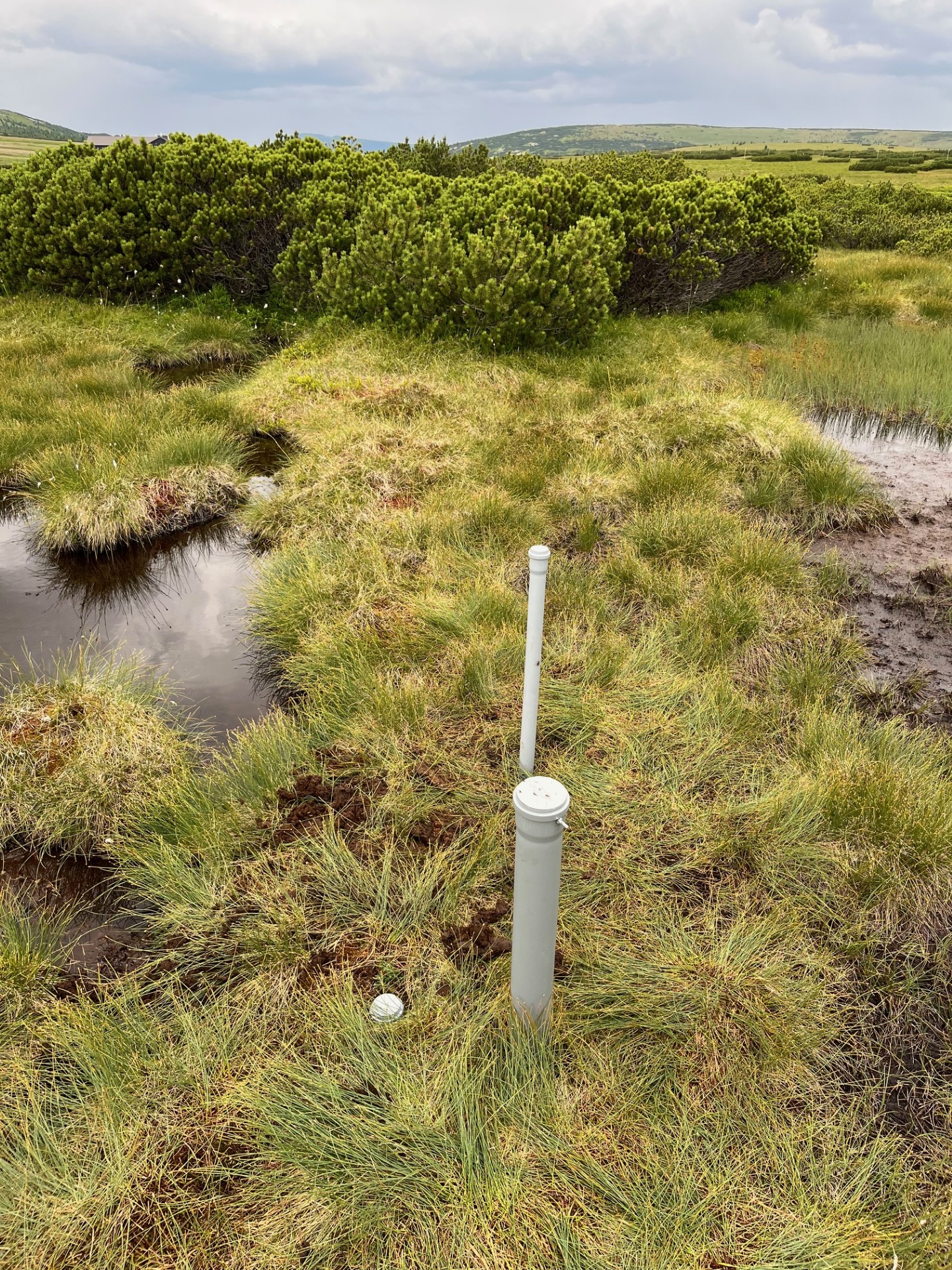
(c) Peatbogs, Krkonose/Karkonosze Transboundary Area
To protect these connected landscapes, partner organisations across all three regions implement direct technical, scientific, and operational solutions:
- Harmonised Ecological Monitoring: Czech and Polish partners develop a shared peatland inventory and standardised “peatland cards” to identify priority restoration sites[Project: CZ.11.01.02/00/23_011/0000161 Importance, change and practical protection of peatbogs]. Similarly, Finnish and Norwegian authorities run joint monitoring programmes, including non-invasive hair-trap studies for brown bears and coordinated water quality tracking in shared river catchments.
- Active Habitat Restoration: Monitoring data directly informs on-the-ground action. In Krkonoše/Karkonosze, managers build small wooden dams to block drainage channels and re-wet degraded peatlands.
- Systematic Climate Adaptation: Through the Interreg Aurora-funded CLAP project (2024–2026), Arctic managers test climate-adapted trails, electric maintenance equipment, and resilient campsite designs to keep visitors safe while protecting fragile habitats.
- Cross-Border Knowledge Transfer and “Quiet Zones”: Italian managers in Veglia Devero adopted Swiss-inspired “Quiet Zones” to protect wintering and nesting wildlife from human disturbance. Both parks now work to integrate these Italian wildlife protection areas directly into official Swiss topological mapping. Additionally, through the joint MINERALP project, both parks conduct cross-border training for park guides and celebrate their shared mineral heritage.
Key Lessons for Future Conservation Programmes
The combined experiences of these Protected Areas demonstrate three essential principles for transboundary nature conservation:
-
Ecosystems do not follow administrative borders. Managing them effectively requires harmonised data and shared decision-making frameworks, even when legal systems differ.
-
Successful long-term management depends on local involvement. Incorporating Sámi representation and cultural guidelines in the north, alongside local alpine farmers and stakeholders in the Alps, ensures traditional knowledge and local needs guide conservation priorities.
-
Building strong, day-to-day working relationships between park administrations turns project-based cooperation into lasting environmental protection.
By sharing knowledge and coordinating action across national borders, European park partners demonstrate that nature conservation achieves the greatest impact when it remains connected, shared, and boundary-free. Explore more about how we support park networking across Europe on our EUROPARC Transboundary Parks Programme page.