Is LIFE over as we know it?
What is in store for biodiversity funding in the next EU Budget?
Is LIFE over as we know it?
The proposal for the next Multiannual Financial Framework (MFF) – also known as the EU Budget – was published by the European Commission in July 2025. The proposal outlines how the EU will spend its money over the years 2028‒2034.
The unexpected and unwelcome surprise in the proposal is the exclusion of the LIFE Programme. It is the EU’s flagship fund for financing biodiversity conservation and climate action as the main tool for implementing the Birds and Habitats Directives (aka Natura 2000), the EU Green Deal, the Nature Restoration Regulation and a supplementary tool for many other important themes. We would even go so far to say that almost all Protected Area professionals have heard of and likely benefited from a LIFE project.
While there is still money set aside for “climate and environment” in the budget proposal, it is without any clear guarantee that some of the money will be spent on nature and no set percentage which would bring stability across the years. As EUROPARC, we emphasise the need for clear language and SMART goals that mention nature conservation, restoration and protection.

Another important factor for Protected Areas is that the focus on business and agriculture means that any money going towards biodiversity conservation will most likely be funneled through those sectors, rather than directly in the hands of organisations such as our members, who have the expertise and an excellent track record.
Lastly, reducing the amount of EU funds dedicated to nature conservation does not mean a government’s commitment to supporting the EU budget is reduced, but rather that their pressure to fund nature conservation will increase as they are likely to have to make up for any deficits, especially in well-established structures such as National Parks.
For example, a large nature restoration project would be funded 50 – 60% by LIFE funds, 30% by the national government and the rest by other sources. Without a dedicated fund for nature, the EU funded portion would be harder to access and organisations would turn towards national governments to fill the gap. The promised solution of private investments bankrolling large scale nature conservation is still not yet widely applicable with few cases of success and should complement public funding rather than lead to diminishing public resources for nature.
If there is no dedicated programme for biodiversity and climate – if LIFE is truly over – we face the possibility that EU resources for nature conservation, restoration and protected areas are severely reduced in the coming years.
But this is just a proposal! If we do not want LIFE to be over, the time to act is now.
What can we do?
We can:
- Share our opinion on the MFF proposal by providing examples of how effective and important the LIFE Programme has been in our work. This can be done as either an individual citizen or as an organisation. Just go to the link below and share it with your colleagues.
- Talk to your country’s ministry that is responsible for environmental issues. Talk to your country’s finance ministry. Tell them how important the LIFE Programme is for your protected area. Tell them how important nature is for society and how important it is to fund its protection and restoration.
If you want to know more about the EU Budget, this is the place to go:
EU budget 2028-2034For more opinion pieces, consider reading articles by the EEB, EURACTIVE, and ClientEarth.
Share the news with your colleagues and let’s restore LIFE to life!
Coexistence between humans and large predators? It’s a child’s play!
Credit: Alin Ivașcu
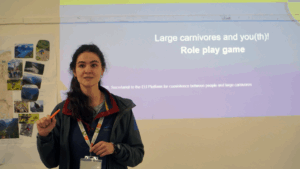
The Casentinesi Forest National Park in Italy hosted the EU Platform for Coexistence between People and Large Carnivores, testing out a new role play game for teenagers during the International Junior Ranger Camp.
Casentinesi Forests National Park: “Coexistence between humans and large predators? It’s a child’s play!”
Credit: Jessica Micklem-Kolenić
The European Platform for Coexistence between People and Large Carnivores has chosen the 2025 International Junior Ranger Camp in the Casentinesi Forests National Park as a laboratory for a new educational method to raise awareness on challenges and solutions for coexistence with wolves and other large carnivores.
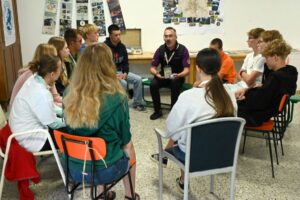
The International Junior Ranger Camp is hosted each year in a European protected area by members of the EUROPARC Federation and is open to young people from the EUROPARC Junior Ranger programme. On Sunday the 27th July, the Casentinesi Forests National Park opened its doors to Junior Rangers (aged 14 – 16), Mentors and Rangers from 19 protected areas across 12 countries. They will be staying for 1 week in the heart of the forest, learning about hands-on nature conservation and learning about the history, culture and biodiversity of the region.
Credit: Emanuele Perez
A representative of the EU Platform secretariat, Sophie Evers from adelphi, joined for the first day and shared the efforts of the platform for the 5 large carnivores in Europe: the grey wolf (Canis lupus), the lynx (Lynx lynx and Lynx pardinus), the brown bear (Ursus arctos), the golden jackal (Canis aureus), and the wolverine (Gulo gulo). The conservation and management of these iconic animals is complex as their needs can bring them into conflict with human activities. Recognizing the importance of these issues, the European Commission and a group of organizations representing the major interest groups (protected areas, environmental organisations, landowners, herders, hunters and more) decided to collaborate, creating the EU Platform for stakeholder engagement in 2014 and supporting similar local and regional stakeholder platforms since 2018.
Credit: Jessica Micklem-Kolenić
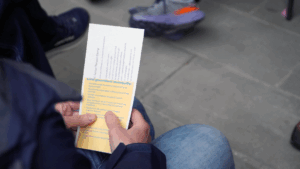
The Junior Rangers spent the afternoon role playing as stakeholders of a village where wolves made a comeback after 100 years. They had to step into the shoes of different characters including livestock farmers who had lost sheep to the wolves, local citizens worried about their children, nature guides interested in promoting new wolf tourism, the local municipality who received funding for mitigation measures, as well as scientists, hunters, and others. This game aims to raise awareness on the different perspectives as well as showcasing how groups with different interests can come together to dialogue and agree on a path forward all together.
Wildlife Photographer Giorgio Amadori
Credit: Elo Raspel
The facilitators of each group led them through possible mitigation measures and towards consensus on a maximum of three solutions. Almost all groups were able to agree on at least one solution and presented their experience at the end. This new tool is available on the website of the EU Platform in 12 EU languages and is being translated into another 10 EU languages for all to use.
The Casentinesi Forests National Park was a great laboratory and amplifier for this tool and the Junior Ranger Mentors were enthusiastic about taking the game home to play with more young people. The Director of the park, Andrea Gennai, presented the coexistence measures in place in the Casentinesi Forests and mentors from the Protected Area of Maritime Alps (Italy), Endla Nature Reserve (Estonia) and the Julian Prealps Natural Park (Italy) shared their local experiences with wolves as well.
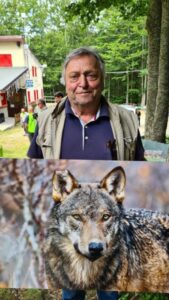
The rest of the week was filled with exciting activities and will be very memorable for the international guests and the local hosting team. They got to meet local wildlife photographer Giorgio Amadori and learnt about monitoring the wolf populations in the Park by the park staff together with the carabinieri.
Welcoming visitors: How to positively include visitors into a Protected Area
Three case studies highlighting successful ways to welcome visitors in Protected Areas.
Welcoming visitors: How to positively include visitors into a Protected Area
Protected areas and tourism departments can enhance the visitor experience by making nature more accessible, inclusive, and easy to navigate—without harming the environment. This means creating clear signage, accessible trails and entry points, user-friendly maps and apps, and offering services that cater to a range of needs and abilities. By designing experiences that are welcoming and informative, visitors feel safe, inspired, and more connected to nature. When access is thoughtfully managed, it supports both a positive user experience and the long-term health of natural areas.

(c) Latgales Tūrisma asociācija
Case Study 1: Hiking boom and the necessity to be present
With the recent pandemic, many people were introduced to their local landscapes and experienced first hand benefits to spending more time out in nature. This increase in activity was an opportunity for the Latgale Tourism Association who saw this as an opportunity to diversify the options available to visitors in the area. Read how they implemented projects to establish long distance hiking trails within and across landscapes, focusing on facilitating a good user experience.
Full Case StudyCase Study 2: Creating visitor profiles to guide the customer-centered service development of Metsähallitus Parks and Wildlife Finland

(c) Metsähallitus Parks and Wildlife Finland
Just like we celebrate the diversity of nature, we should recognise and celebrate the diversity of visitors and their expectations or needs. Metsähallitus Parks and Wildlife Finland have done exactly that using a service design approach based on visitor insight. This in-depth research led to the highly successful development of a diversity of visitor profiles which have been used to mark hiking trails and much more, allowing the park to nudge the visitors into behaviours which best match their needs, leading to better experiences.
Full Case Study
Lobau Together Week. (c) Susanne Leputsch
Case Study 3: Visitor Management Lobau 2023+ customised solution for periurban challenges in the Viennese share of Donau-Auen National Park
Our third example is a collaborative approach of identifying challenges and solving them together with the local stakeholders including police and political decision-makers. Read about the “Lobau Together Weeks” which resulted in a better relationship between the many people visiting this periurban park. Perhaps your park has implemented something similar?
Full Case StudyThese case studies show a more positive view of visitor management in Protected Areas, but we also understand that some areas have trouble with “overtourism”. To explore techniques employed to manage the negative effects of high visitation rates, read our previous article.
Do you also have interesting experiences, projects or challenges that you have overcome in successful and creative ways? Consider submitting a case study and be featured in our EUROPARC news. Please visit our Knowledge Hub or reach out to us if you have any questions!
Adapting to Increased Visitation: Practical Approaches to Visitor Management in Protected Areas
Four case studies highlighting successful approaches to visitor management in Protected Areas.
Adapting to Increased Visitation: Practical Approaches to Visitor Management in Protected Areas
The post-pandemic era has witnesses a remarkable surge in visitors to Protected Areas, creating both opportunities and challenges for park management. This article explores four case studies of visitor management approaches. Each case demonstrates successful practical strategies for balancing public access with environmental protection.

©Petra Niskanen
Case Study 1: Limits of acceptable changes (LAC) as a method for sustainable nature tourism in Sipoonkorpi National Park
Situated close to Finland’s capital city, Sipoonkorpi National Park has noticed a significant increase in nature based tourism since Covid-19. Though it is great for people to be out in nature, this increase of visitors has had negative social and ecological impacts such as visitor compaints and negative effects on wildlife. To manage this change, Sipoonkorpi National Park has implemented a new strategy that aims to dynamically track these negative impacts and to take necessary measures.
Full Case Study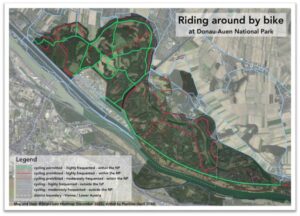
©Strava.com Heatmap
Case Study 2: Detecting cycling activities with the use of Strava Heatmaps; Use of online available data in questions of visitor management
Lobau, a protected area of riparian forest along the Donnau in Vienna, is within a district that is expected to have a population increase of 50% in the next few years. This poses a threat to wildlife and recreational visitors in the Donau-Auen National Park. Fitness tracking applications like Strava can provide evidence of misuses of trails. The park staff have begun to collaborate with key stakeholders and partners to enable quick action such as key communication strategies in order to ensure the proper use of the park’s trails.
Full Case Study
©Parc Natural de Cap de Creus
Case Study 3: Regulation of frequentation and access at Cap de Creus Natural Park
Parc Natural de Cap de Creus has encountered challenges with visitors disrespecting pre-existing park rules and regulations. Addressing this issue became a priority to safeguard natural sites, particularly those that are environmentally sensitive. Strict measures were taken up to enforce the regulations with physical barriers and clear communication by both the park staff and local businesses. Monitorring the result has demonstrated improvements in visitor behaviour.
Full Case StudyCase Study 4: Carrying capacity: visitors study in Parco Nord Milano, a periurban park

©Parco Nord Milano
In order to make better assessment for the development of an effective park management plan, data is required, and that is what the Parco Nord Milano aims to pursue. The park set an ambitious goal to understand its visitor demographic using both new technology and on site staff members.
Full Case StudyThese case studies show that effective visitor management in Protected Areas requires an integrated approach, combining scientific monitoring, technology, community engagement and dynamic strategies. As nature tourism continues to grow, the lessons learnt from these parks provide valuable inspiration for park managers looking to address similar challenges.
Do you have interesting initiatives that you would like to share with us? Or would you like to submit a case study? Please visit our Knowledge Hub!