Adapting to Increased Visitation: Practical Approaches to Visitor Management in Protected Areas
Four case studies highlighting successful approaches to visitor management in Protected Areas.
Adapting to Increased Visitation: Practical Approaches to Visitor Management in Protected Areas
The post-pandemic era has witnesses a remarkable surge in visitors to Protected Areas, creating both opportunities and challenges for park management. This article explores four case studies of visitor management approaches. Each case demonstrates successful practical strategies for balancing public access with environmental protection.

©Petra Niskanen
Case Study 1: Limits of acceptable changes (LAC) as a method for sustainable nature tourism in Sipoonkorpi National Park
Situated close to Finland’s capital city, Sipoonkorpi National Park has noticed a significant increase in nature based tourism since Covid-19. Though it is great for people to be out in nature, this increase of visitors has had negative social and ecological impacts such as visitor compaints and negative effects on wildlife. To manage this change, Sipoonkorpi National Park has implemented a new strategy that aims to dynamically track these negative impacts and to take necessary measures.
Full Case Study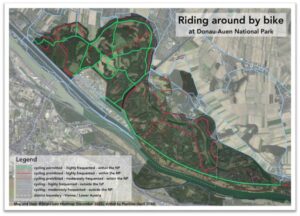
©Strava.com Heatmap
Case Study 2: Detecting cycling activities with the use of Strava Heatmaps; Use of online available data in questions of visitor management
Lobau, a protected area of riparian forest along the Donnau in Vienna, is within a district that is expected to have a population increase of 50% in the next few years. This poses a threat to wildlife and recreational visitors in the Donau-Auen National Park. Fitness tracking applications like Strava can provide evidence of misuses of trails. The park staff have begun to collaborate with key stakeholders and partners to enable quick action such as key communication strategies in order to ensure the proper use of the park’s trails.
Full Case Study
©Parc Natural de Cap de Creus
Case Study 3: Regulation of frequentation and access at Cap de Creus Natural Park
Parc Natural de Cap de Creus has encountered challenges with visitors disrespecting pre-existing park rules and regulations. Addressing this issue became a priority to safeguard natural sites, particularly those that are environmentally sensitive. Strict measures were taken up to enforce the regulations with physical barriers and clear communication by both the park staff and local businesses. Monitorring the result has demonstrated improvements in visitor behaviour.
Full Case StudyCase Study 4: Carrying capacity: visitors study in Parco Nord Milano, a periurban park

©Parco Nord Milano
In order to make better assessment for the development of an effective park management plan, data is required, and that is what the Parco Nord Milano aims to pursue. The park set an ambitious goal to understand its visitor demographic using both new technology and on site staff members.
Full Case StudyThese case studies show that effective visitor management in Protected Areas requires an integrated approach, combining scientific monitoring, technology, community engagement and dynamic strategies. As nature tourism continues to grow, the lessons learnt from these parks provide valuable inspiration for park managers looking to address similar challenges.
Do you have interesting initiatives that you would like to share with us? Or would you like to submit a case study? Please visit our Knowledge Hub!
Out now: EUROPARC’s Protected Areas In-Sight Volume 16!
The Protected Areas In-Sight is EUROPARC’s annual journal, which follows the theme of the EUROPARC Conference. Discover the latest edition now! Available in English, French and German.
Effective Management, Better Parks
The Protected Areas In-Sight aims to inspire its readers with success stories from across the EUROPARC Network. This issue of the Protected Areas In-Sight explores how we can strengthen the management effectiveness of Protected Areas through collaboration, learning and innovation.
New approaches are emerging to bridge gaps and drive meaningful change through more effective and inclusive management.

Michael Hošek
writes EUROPARC’s President, Michael Hošek, in the Magazine’s editorial.
The 2024 edition of our Protected Areas In-Sight explores four key pillars to the E-Forum theme “Protected Area Management Effectiveness”:
- Planning
- Governance
- Capacity Building
- Communication
It includes 12 articles from Protected Area Professionals across Europe, showcasing the stories and projects with a shared commitment to building resilient and well-managed conservation areas that benefit both nature and people.
Powered by the EUROPARC Community
As always, the Protected Areas In-Sight would not exist without the dedication of our network! In this edition, you will find articles from:
- The European Environmental Angency writes about dangerous tipping points;
- Metsähallitus Parks & Wildlife Finland share experiences of their management effectiveness evaluation;
- Fungobe sharing their experience on good governance in Protected Areas;
- Youth voices from Biosphere Reserves share their journey from dialogues to formalising a national network;
- The E.C.O Institute for Ecology shares how to communicate effectively to close the science-practice divide;
- The “Frame of Life” movement shares how effective citizen science can drive nature conservation;
Furthermore, interesting insights from our projects such as the LIFE ENABLE, MPA4Change, LIFE PAME Europe , Interreg Europe GREENHEALTH and Horizon Europe NaturaConnect projects explore what is needed for nature conservation that is future-ready.
Discover it yourself! You can flip through all three versions here:
If you’d prefer to download the Protected Areas In-Sight, we invite you to check out our digital library, where you can also find all previous editions.
EUROPARC members will receive a physical copy of the Protected Areas In-Sight in the upcoming weeks.

The publication of the Protected Areas In-Sight is co-funded by the European Commission. Views and opinions expressed are however those of the author(s) only and do not necessarily reflect those of the European Union or CINEA. Neither the European Union nor CINEA can be held responsible for them.
How Can Protected Areas Become Hubs for Education for Sustainable Development
For the last year, the Alfred Toepfer Natural Heritage Scholarship supported the work of young conservationists in Protected Areas across Europe. Lucia Cușnir was one of the winners of the Scholarship in 2023 and travelled to Slovakia, Denmark, Hunary and within Romania to learn more about how Protected Areas can implement Education for Sustainable Development.
How Can Protected Areas Become Hubs for Education for Sustainable Development

Protected areas are no longer seen just as conservation zones to protect our natural and cultural heritage — they are increasingly being recognized as dynamic learning classrooms for people of all ages. These landscapes provide powerful opportunities for education, offering immersive, hands-on experiences that connect individuals with nature, culture, and sustainability in meaningful ways.
Education for Sustainable Development (ESD) in protected areas serves as a bridge between conservation efforts and community engagement, ensuring that people not only understand but actively participate in protecting our natural and cultural heritage.
Learning from the Field
This study tries to explore best practices, challenges, and opportunities in implementing ESD initiatives & activities across European protected areas, drawing insights from study visits to Tatra National Park (Slovakia), Lille Vildmose Centre (Denmark), Hortobágy National Park (Hungary), and the Danube Delta Biosphere Reserve (Romania).
Through qualitative research methods, including field observations, stakeholder interviews, and participatory engagement, the study highlights the diverse ways in which protected areas integrate ESD initiatives and activities into their management. Interpretive visitor centers, educational and interpretive trails, guided tours, Junior Ranger programmes, and hands-on conservation activities serve as key tools in fostering environmental awareness and responsibility. Additionally, local engagement through festivals, volunteering initiatives, and citizen science programs reinforces the role of communities in ESD.
Protected areas that prioritize community voices, cultural relevance, and local ownership are more likely to foster long-term conservation engagement.
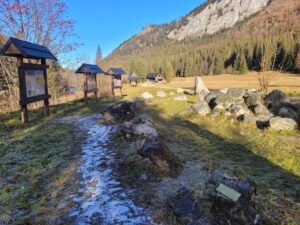
Tatra National Park, Slovakia, photo by Lucia Cușnir
Challenges and Opportunities in ESD
Despite strong local leadership and inspiring examples, many protected areas struggle with the same challenges: underfunding, staff shortages, and rigid policies that don’t reflect field realities. Rangers and educators often work beyond their mandates, driven by passion but lacking support.
However, there are also opportunities. Cross-sectoral partnerships with other protected areas, NGOs, educational institutions, and local authorities can enhance the reach and impact of ESD efforts. By sharing resources, and learning from each other’s experiences, these collaborations can create more resilient and innovative education programs.
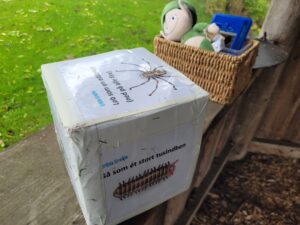
Lille Vildmose Centre, Denmark, photo by Lucia Cușnir
The Way Forward
For ESD to truly thrive in protected areas, it must be supported by policies that reflect real field experiences, and designed with flexibility in mind. Protected areas must also recognize that every ranger on patrol, every school visit, and every community gathering is a moment of education — and an opportunity for stewardship.
As this study shows, education doesn’t just happen through formal strategies. It lives in stories, gestures, trails, shared meals, and simple conversations on the field. ESD isn’t just about delivering information — it’s about sparking curiosity, sharing stories, and leading by example. When people meet the passionate educators and rangers behind conservation, they don’t just learn — they care.
Dive deeper into this topic through the report below!
Read the full report here!Nature for all: A study into how Europe’s Protected Areas are engaging with refugee and asylum seeker communities
For the last year, the Alfred Toepfer Natural Heritage Scholarship supported the work of young conservationists in Protected Areas across Europe. Hayden Bridgeman was one of the winners of the Scholarship in 2023 and travelled to Greece to learn more about how Protected Areas can better engage with marginalised communities such as refugee and asylum seekers.
Nature for all: A study into how Europe’s Protected Areas are engaging with refugee and asylum seeker communities

My name is Hayden Bridgeman and I am a Ranger for the New Forest National Park Authority and a winner of an Alfred Toepfer Scholarship Award. Through this scholarship I have studied how we are engaging with one of our most vulnerable communities in society – refugees and asylum seekers. We, as a society, are so aware of how crucial access to nature is for good mental health and wellbeing, yet those that need it most are often unable to access it. I want to continue to make sure we are doing all we can to change that across our protected landscapes.
I would like to preface my studies by saying I do not have lived experience, but I am an advocate and a friend to this community and want to ensure we are doing all that we can to build cohesive, inclusive communities with nature and mental wellbeing at the heart.
It is vital to remember how important the language we use is in relation to society’s most vulnerable communities. Not only this but it is important to remember that there is a legal difference. Using the wrong terminology can be extremely damaging to communities of displaced people and can have a detrimental effect on their mental health and wellbeing and their journey in acclimatising to a new life.
Asylum Seeker
An asylum seeker is an individual who is seeking international protection. In countries with individualised procedures, an asylum seeker is someone whose claim has not yet been finally decided on by the country in which he or she has submitted it. Not every asylum seeker will ultimately be recognised as a refugee, but every refugee is initially an asylum seeker.
Refugee
A refugee is a person who has fled their country of origin and is unable to or unwilling to return because of a well-founded fear of being persecuted because of their race, religion, nationality, membership of a particular social group or political opinion.
Migrant
An economic migrant is someone who leaves his or her country of origin purely for financial and/or economic reasons. Economic migrants choose to move in order to find a better life and they do not flee because of persecution. Therefore, they do not fall within the criteria for refugee status and are not entitled to receive international protection.
It is imperative that governments/communities/media understand the distinction. Countries have specific responsibilities tied to legislation to help anyone seeking sanctuary and fleeing war and persecution – refugees. It is not the same for migrants.
Through this project I visited three charities in Greece working in both urban environments and National Parks to support refugees and asylum seekers in the outdoors and was able to share in their learning and progress. I was also able to talk directly to individuals that are part of the displaced community and have been able to gather an extensive list of the barriers faced for refugee and asylum seekers accessing nature – it’s important to identify the barriers so that we can find solutions.
It’s an extensive list:
- Expensive or non-existent public transport
- Racial profiling
- Safety concerns
- A lack of family support and often women having to be the sole care giver for children
- Lack of time due to having to navigate lengthy legal processes, acquiring medical assistance and housing
- Low mental health and feeling unwelcome
These are all barriers for everyday life for this community but when accessing nature. As protected area practitioners we can help to remove some of the barriers.

Some brilliant work is taking place with nature connection sessions aiding mental wellbeing and learning how to grow your own food being successful, engaging and beneficial sessions. Something else that was really successful is enabling individuals to carry out citizen science and be a part of community conservation. However transport is and continues to be the biggest barrier to accessing these opportunities.
There are some key take aways on how to make engagement in the outdoors successful:
- Actively listen, ask questions and don’t assume. When creating itineraries for trips and visits ensure you’ve asked what works for the group and what doesn’t. Experiencing nature is not a ‘one size fits all’ mentality, not everyone benefits from a 10km hike, simply being able to sit and talk to others in a green space is enough.
- Start by working in a space that groups know and trust. Take your protected area to this community – whether it’s into a refugee centre, or a local church they meet in to have English lessons.
- Work in partnership with charities that are a trusted contact for this community. This is important for building trust and understanding. Talk to a contact
- Be flexible in your approach and be prepared to rearrange visits if the group need to due to low mental health and anxieties, it can take longer to plan sessions
- Have an outdoor ‘kit library’ from wellies to raincoats that can be a shared and used by multiple groups
- Using google translate to navigate the language barrier as well as having printed photos of the wildlife that’s being talked about in the outdoor environment
- Tea and coffee and picnics are a valuable ice breaker and chance to relax and create a good atmosphere where people feel more comfortable
- Put sustainable and affordable transport at the top of every agenda. If we are to open green spaces to all they must be easy and affordable to navigate through
Whether you are an educator or a policy maker this report aims to help Protected Area professionals continue to create change by not only demonstrating practical tools that can be used but also providing tangible advice and hearing directly from this community themselves on how we can do more and be better in continuing to open green spaces to all.
There is also a network being built for those wanting to swap notes on best practise – please email me to learn more.
Read the full report here!