Collserola Nature Park hosts EUROPARC Council Meeting
From February 13th to 15th, Collserola Nature Park hosted one of the EUROPARC Federation´s Council. This organ carries out its function together with the president, Ignace Schops, and the internal auditor, Roger de Freitas.
The Council is in charge of granting the correct functioning of the Federation and implementation of the approved programme and strategy. It is composed by twelve members, from which nine of them are elected every three years by EUROPARC members and three of them are assigned by existing Council members (co-opted members) according to their expertise. Among them, the manager of the Collserola Nature Park Consortium, Marià Martí, representing Periurban Parks and also chair of the Periurban Commission of EUROPARC.
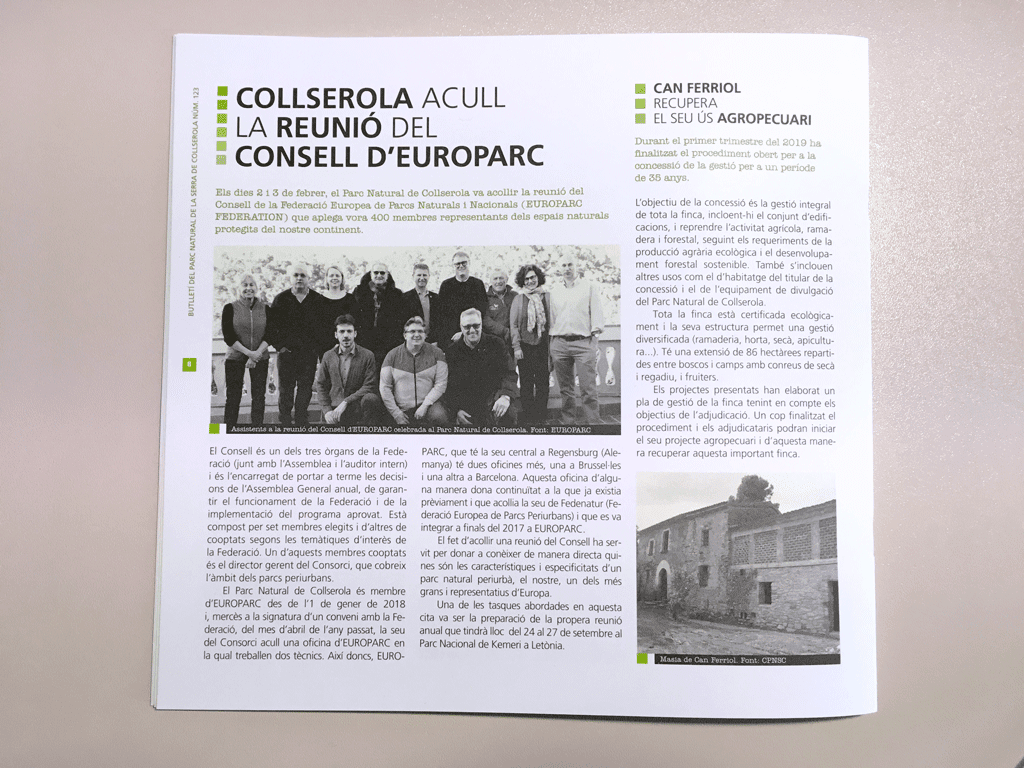
Collserola Nature Park spring bulletin, with a dedicated article to EUROPARC Council meeting – Photo by EUROPARC Federation.
Since 2018, Collserola nature Park has been a member of EUROPARC Federation and, throughout an agreement reached with EUROPARC Federation in April of that same year, it hosts one of the three offices of EUROPARC Federation in Europe with two technicians working in it. The Barcelona office of EUROPARC Federation, hence, gives continuity to the former office of the European Association of Periurban Parks – Fedenatur, which was integrated into EUROPARC at the end of 2017.
Apart from serving as a venue, hosting one of EUROPARC Federation´s Council meetings in this park has also given the opportunity to the Councillors to get a deeper knowledge on the features of this park, one of the greatest examples of Periurban parks in Europe.
One of the tasks covered during the meeting was the preparation of the following EUROPARC Conference, the gathering of protected area managers that EUROPARC Federation organises every year in different regions of Europe once a year, which will take place in Kemeri National Park, Latvia, from September 24th to 27th 2019.
EUROPARC Conference 2019 banner
Next Webinar: Large Carnivores in Transboundary Parks
Large Carnivores in Transboundary Parks
- 16th April 2019
- 11:30 CEST
- Register here
During centuries, European large carnivores (including the brown bear, wolf, lynx and wolverine) suffered dramatic declines in numbers and distribution. Human activity, habitat loss and the decrease of prey, pushed these species to the very remote areas of Europe. However, the situation is shifting. Due to the improvement of habitat conditions and prey availability, backed by protective legislation in many European countries, the populations of large carnivores are stable or indeed growing.
The predatory nature of these species has pushed them to trespass the political boundaries established by humans in the search for better conditions to thrive.
In fact, nature knows no borders, and the expansion of the populations in new areas might trigger conflicts and the establishment of control measures that might compromise their existence. With the presence of large carnivores increasingly more common, “we need to learn how to coexist!”
To start with, the collection of reliable scientific data, the provision of relevant population estimates, and a common understanding of large carnivore’s conservation status at national and population level is the basis to make sound management decisions.
Why transboundary cooperation is needed
Large carnivore’s home range is extensive, and as such, they require large areas to live. These areas often cross intra and international borders and occupy territories with different management policies. The management of these species must be planned on very wide spatial scales to be effective, and it is imperative that a good coordination exists between the different administrations involved.
Within the network of EUROPARC Transboundary Parks, there are several examples of cooperative work for the monitoring some of these species. In this webinar, we will hear from 2 Transboundary Areas how they are jointly working for monitoring the Eurasian lynx and the brown bear populations and will get insight from FACE – the European Federation for Hunting and Conservation – about their monitoring system in Scandinavia.
This webinar is a joint organisation with the EU Platform on Coexistence of Large Carnivores and People. Together we seek to find ways to mitigate conflicts between people and large carnivores and promote successful measures of coexisting. More information on the EU Platform can be found on the website
Participation is free, but registration is needed! All participants are most welcome to share their views and direct their questions to the presenters. After the presentations, there will be a live Q&A.
Case Study 1) Transboundary research on the ecology of Eurasian lynx and its ungulate prey
by Ludek Bufka, Šumava National Park (CZ)
In the Bohemian Forest Ecosystem (BFE) as in most of Europe, lynx became extinct in the 19th century and nowadays’ “Bohemian-Bavarian-Austrian” lynx population originated from a relatively small number of animals that were reintroduced in the 1970s (Germany) and 1980s (Czech Republic), in the area which is now covered by the Bavarian Forest and Šumava National Parks.
At present, this lynx population is stagnant and this is mainly caused by high, mostly anthropogenic mortality outside of protected areas (traffic, poaching). Outside of protected areas lynx are often persecuted due to competition with hunters for ungulate prey (namely roe deer and red deer), and bad attitudes towards the lynx are often caused by wrong „myths“ about their habits. Therefore, between 2005 and 2012 the park authorities set up a monitoring plan for lynxes, roe deer and red deer by means of GPS telemetry to create evidence-based knowledge about lynx time-space behaviour, predation and prey consumption rates.
Case Study 2) Non-invasive genetic monitoring of the Pasvik-Inari-Pechenga brown bear population using systematic hair-trapping
by Snorre Hagen, Norwegian Institute of Bioeconomy Research – NIBIO (NO)
The trans-border brown bear population of Pasvik-Inari-Pechenga (Norway-Finland-Russia) has been monitored using genetic analyses of faeces collection since 2005. In addition, in 2007, 2011, and 2015 hair traps were placed out in the area to collect hairs for genetic analysis.
The objective was to determine more precisely the minimum numbers of bears in the area, as hair-traps can be placed out systematically and are successful in sampling also more elusive and shy individuals, such as female bears. A trilateral hair trap methodology that will be repeated in 2019, using the exact same methodology as in 2007, 2011, and 2015, to make a direct comparison of the results from all the 4 study years, covering a time period of 12 years.
How to join?
Webinars are open not only to EUROPARC members – but to everyone with an interest in Protected Areas. Participation is free but registration is necessary. Register here.
You can join in from anywhere: you will just need a device with internet connection. EUROPARC webinars are held in English and participants have the chance to join the discussion with the invited speakers, at the final part of the webinar. NOTE: Please make sure you have the latest JAVA version, you can run a check to the webinar by following this link: https://gr3eq.wb.getresponse.com/room/connection-tester
Previous Webinars
Sustainable Tourism Training for Tomorrow: 2nd partner meeting in Madrid
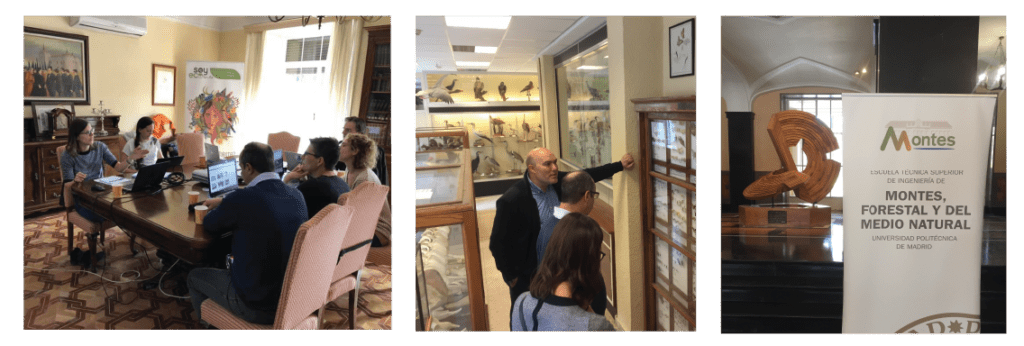
The partners of the project ERASMUS + “Sustainable Tourism: Training for Tomorrow (STTfT)” met in Madrid from the 1st to the 3rd April. The meeting was hosted by the Spanish Ecotourism Association, at the premises of the Escuela Técnica Superior de Ingenieros de Montes de la Universidad Politécnica, to assess the project progress, and finalise the preliminary activities of the project, such as the training needs analysis and the survey on training needs’ gaps.
The project partnership also planned the content production (timing, content, people involved, practical organisation, participants) for the online training platform on Sustainable Tourism in Protected Areas aimed at both learners in professional contexts and trainers that will be made available by the end of 2019 for a first round of tests.
Training Sustainable Tourism Professionals
The project is fully based on the methodology of the European Charter for Sustainable Tourism in Protected Areas (ECST) and on the analysis/discussion/elaboration for 9 key topics of the ECST. This will be the first time that integrated sustainable tourism training content (including case studies and best practice) on all key principles and actions of the ECST will be developed and made available in a single platform aimed at all key tourism stakeholder groups working in European Protected Areas. The online platform will take inspiration from the MOOC format, and also from the newer trend for VOOCs (Vocational Open Online Course).
It is widely recognised that one of the biggest challenges for tourism is the sustainable conservation and management of the natural resources that support it.
The existing “skills gap” on sustainable tourism more widely, and on sustainable tourism in Protected Areas more specifically, has been frequently identified over the past few years in both policy reports and the academic literature. For example, the 2016 “Blueprint for sectoral cooperation on skills” identified shortages across the EU in several traditional core tourism skills (e.g. languages, interpersonal skills, etc), and the EC commissioned the study “Mapping and performance check of the supply side of tourism education and training” (2016), that identified “skills for sustainability” as one of the five specific skills challenges of the sector (together with traditional core skills, ICT skills, accessibility and recruitment).
Furthermore, the report “Sustainable tourism and Natura 2000” (2001) also identified the need for training for PA staff and local tourism enterprises. This project will directly supports the Vilm Declaration on “Professionalising Protected Area Management in Europe” (2013) which stressed the need for jointly developed training activities and products to improve the capacity of PA managers in relevant associated sectors such as tourism.
The second main category of results generated during the project will be a programme of multiplier events, which will be delivered across Europe to widely promote the use of the platform, including:
- a “train the trainer” workshop,
- face-to-face training to reach out large numbers of end beneficiaries (Protected Areas staff, tourism businesses, and local authorities);
- a final dissemination event targeted at European policymakers to showcase the training platform and disseminate the associated publications.
The first step: A Training Needs Analysis Survey
The agreed method for calculation of training needs’ gaps includes the relevance/importance of issue for their job (and/or for efficient/effective engagement with the ECST development and implementation process), versus perception of the current level of ability/knowledge on that issue. By subtracting the average value of perceived “importance” from the average value of “present level of knowledge/ability” (i.e. present level – importance), the project can identify main knowledge/training gaps and list priority areas of focus.
Over the next months, a training needs survey will be distributed across the various networks of the project partnership, including EUROPARC’s. EUROPARC members will have the opportunity to be fully involved in the development of the project, and participate in the training sessions.
The three target groups considered are:
- Staff of PA authorities across Europe;
- Local businesses operating in and around protected areas (e.g. hotels, restaurants, tour operators) who are collaborating with PAs (or aim to) in driving sustainable tourism;
- Staff of local authorities, development groups, business associations, conservation groups etc. who aim to partner with PAs in the development of sustainable destinations (“other stakeholders”).
To keep up to date with the project developments visit the project website: www.sttft.eu
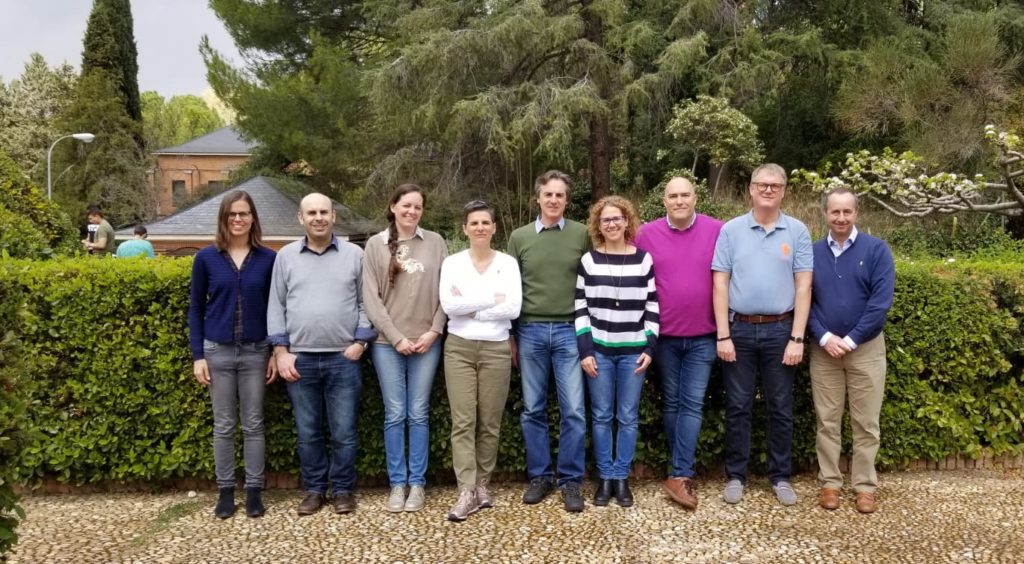
ERASMUS STTfT – Partners in the Meeting held in Madrid. April 2019
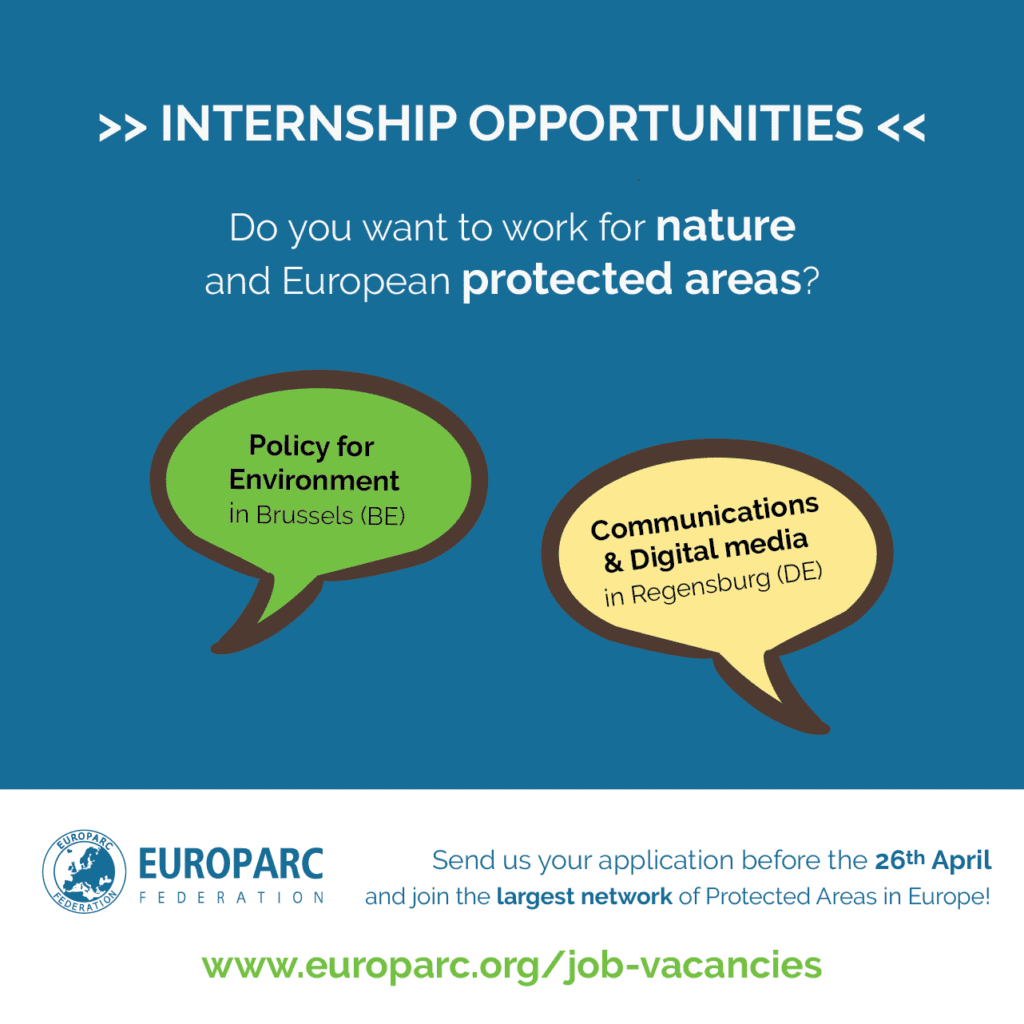
2 internship opportunities in the largest network of European Protected Areas!

The EUROPARC Federation is currently looking for a full-time intern in its Communications department in Regensburg (DE) and a full-time intern in Brussels, to work on topics related to EU Environmental policy. The call is exclusively open to students. See the details of each position below!
Internship in Communications and Digital Media
*exclusively open for students*
- Location: Regensburg, Germany
- Duration: 6 months (we are open for an agreement on the beginning of internship)
- 40 working hours a week;
- 13 days of vacation;
- Students with ERASMUS funding are welcome
The intern will have the opportunity to contribute directly to the work of a wide European environmental organisation, working along with an international team. By contributing to enhancing the organisation’s outreach and communications activities, the intern will have the chance to further develop communication skills, to discover from closer the functioning of European Protected Areas and EU environmental policies and to learn about EUROPARC Federation and its programs.
You will be…
- Assisting the Communication and Marketing Manager in producing and delivering tailored content for protected area managers (both graphic and written);
- Supporting the organisation of thematic webinars and managing online campaigns;
- Contributing to the regular update of social media networks (Twitter, Facebook, LinkedIn);
- Supporting in the implementation of EUROPARC communications strategy and contribute to the implementation of other communication tasks on EUROPARC’s main Programmes: Charter for Sustainable Tourism, Junior Ranger and Transboundary Parks Programme;
- Assisting with the production of publications;
- Support in drafting and formatting newsletters, articles and press releases on various topics;
- Help with the preparation and execution of international events, including the EUROPARC Conference and various seminars and workshops on different topics;
- Liaising with EUROPARC members from 37 countries across Europe;
You have…
- Communications & PR, Information Technology, Multimedia, Design or Journalism studies (Language and Economics studies might be considered);
- Fluency in English and any other European language is welcome. The official language in the HQ is English.
- Social Media experience – preferably in a business environment (Facebook, Twitter, LinkedIn…);
- Preferably knowledge of online interactive tools: WordPress, GetResponse
- Preferably acquaintance with video and graphic design programmes (including Adobe Illustrator, Photoshop, Premiere and InDesign);
- Excellent knowledge and experience with MS Office.
- Ability to deal with multi-disciplinary tasks, capacity to respond rapidly to a variety of diverse tasks and to prioritize;
- Good communication skills (oral and written) – ability to communicate formally and professionally;
- Good organisation skills, able to work independently and as part of a team;
- Self-starter, positive attitude, flexible, sense of humor for the multicultural working environment.
Applications:
Please send a 1-page motivation letter and your CV to Ms Esther Bossink (esther.bossink @ europarc.org) indicating “Internship communications position” in the subject line.
Take a look at the video highlighting the best moments and experience gathered by our past intern:
Internship in European Policy for Environment
*exclusively open for students*

EU flags in front of European Commission © www.esomar.org
- Location: Brussels, Belgium
- Duration: 6 months (we are open for an agreement on the beginning of internship)
- 35 working hours a week;
- 13 days of vacation;
The EUROPARC Federation is currently looking for a full-time intern in its European Policy department in Brussels (B). The intern will contribute to the policy and advocacy work of the organisation, helping to represent members interests at European level and getting involved in the development of EU relevant policies, facilitating the exchange of experiences and giving support to drive the flow of information from and to our members.
You will be…
- Assisting the Policy Officer with the implementation of the EUROPARC Policy strategy;
- Following policy-making processes and related debates of relevance for Protected Area Management (related to Nature Directives, Biodiversity Strategy, Common Agricultural Policy reform, Sustainable Tourism);
- Attending meetings and networking events with partner organizations and EU Institution representatives;
- Contribute to the organization of international events in Brussels, workshops and webinars;
- Writing reports and news articles covering policy decisions / debates / current events at EU level;
- Policy updates on EUROPARC Website and social media;
- Support in organizing thematic webinars managing online campaigns; recording and publishing interviews.
You have…
- International relations, policy or communication studies (Language, Economics studies might be considered);
- Fluency in English both written and oral. The official language in the office is English.
- Social Media experience – preferably in a business environment (Facebook, Twitter, LinkedIn…)
- Interest for nature conservation and environmental related policies
- Preferably knowledge of main European environmental policies and EU Institutions’ functions;
- Preferably knowledge of the role and functions of protected areas.
- Ability to deal with multi-disciplinary tasks, capacity to respond rapidly to a variety of diverse tasks and to prioritize;
- Good communication skills (oral and written) – ability to communicate formally and professionally;
- Good organisation skills, able to work independently and as part of a team;
- Self-starter, positive attitude, flexible, sense of humor for the multicultural working environment
Applications:
Please send a 1-page motivation letter and your CV to Ms Stefania Petrosillo (stefania.petrosillo @ europarc.org) indicating “Policy Internship position” in the subject line.
Note: the intern should be ready to cover his/her own accommodation and insurance costs; EU Health insurance should be united with private health / accident insurance from home country or contracted in Belgium.
What our previous interns say…
 Steffi: “ … The experience to intern with the EUROPARC Federation Policy office was a great learning experience professionally and personally speaking, that I can recommend to any student interested in European policy related to the field of conservation, advocacy work and intercultural cooperation. … For me it was particularly interesting to work across the broad policy areas EUROPARC operates in … Regular report writing and supporting social media activities trained my ability to filter, qualify and interpret information for particular audiences, in this case Protected Areas practitioners and authorities…”
 Gaia: “…This internship experience has allowed me to deepen my knowledge of the policy-decision making process behind institutions and make me able to participate to the work they do directly, understanding better their roles and functions… I improved my communication skills working on public relations with other partners and representing several time the Federation. Was a continue growth from the professional to the personal level… This experience helped me to understand that is the field where I want to work in the future.”