TransParcNet Meeting 2020 ONLINE
With our huge regrets, the TransParcNet Meeting 2020 will move online due to last minute COVID restrictions. Stay tuned for updates about an alternative online meeting!
TransParcNet Meeting 2020 CANCELLED!
This year, the TransParcNet Meeting was supposed to take place in the transboundary park Binntal Veglia Devero.
Message from the hosts to expected participants:
Dear all,
we regret to inform you that the Trans Park Net Meeting in Binntal Veglia Devero was cancelled due to last minute COVID restriction which apply mainly to Switzerland (since September, 14th).
After putting a great deal of effort in organising the meeting in this difficult framework, we eventually came to the decision of cancelling it since many of the foreseen 22 participants would not be able to attend because of travelling restriction.
We apologise for any inconveniences which may be caused by this situation, and we remain at your disposal for any further needs and information.
Our availability to postpone the event for the next years still remains valid.
With our best regards,
Daniele Piazza and Andreas Weissen
ONLINE TransParcNet Meeting 2020
EUROPARC has decided that the TransParcNet Meeting will now take place in a digital format on the 9th of December from 9 – 16:30 CET!
Global Biodiversity Outlook 5. High time to turn the tide!
EUROPARC’s President Ignace Schops responds to the publication of the Global Biodiversity Outlook 5, published yesterday by the UN Convention on Biological Diversity
The UN Convention on Biological Diversity published yesterday the Global Biodiversity Outlook 5. The report offers an overview of the state of nature, gives an update on the Aichi targets, agreed in 2010 in Nagoya (COP 10) and provides best practices for getting on track.
None of the biodiversity targets agreed by the United Nations ten years ago have been met. The silent collapse of our natural ecosytems is ongoing!
In general, the causes of ecosystem degradation and massive species extinction are the large-scale destruction of habitats, especially for agricultural purposes – such as tropical deforestation to produce palm oil, soya and beef – overexploitation – such as overfishing, poaching and the illegal trade in animal species – pollution and climate change.
To turn the tide, the report calls for a shift away from “business as usual” across a range of human activities. The report outlines eight transitions that recognize the value of biodiversity, the need to restore the ecosystems on which all human activity depends, and the urgency of reducing the negative impacts of such activity. The report shows that governments will need to scale up national ambitions and ensure that all necessary resources are mobilized and the enabling environment strengthened.
According to UN Secretary-General António Guterres,
the corona crisis demonstrates the need to rethink the relationship between man and nature and work towards sustainable recovery.
And a lot of money is already available, according to the report: USD 78 to 91 billion a year (EUR 65 to 76 billion). But this is by far not enough. To get the picture: 500 billion is spent annually on fossil and agricultural subsidies.
I was present in 2010 in Nagoya, Japan. At that moment I was really excited and truly believed the Aichi targets could be met in the next decade. Unfortunately, I was wrong. What I already knew at that time was that we all can make a difference. So I promised myself to widen my wings.
EUROPARC Federation takes a leading role in Europe when it comes to the management and -restoration of protected areas. We can prove to the world – evidence-based – that nature conservation works! And that’s good news! Species react positively on conservation and restoration and our protected areas are the safe havens for and the cradles of wildlife from which the dispersal of species to the wider world can start again.
We need to bring nature into the hearts of people.
Show nature’s importance for our human survival as well! We need to emphasize that countries need to bring biodiversity into the mainstream of decision-making and factored into policies across all economic sectors.
Let’s not destroy what keeps us alive! Let’s jointly show a transformative change is possible and that following nature’s design – is the best guidance we can use!
Ignace Schops
President
German Survey on Nature Awareness 2019
Source: Naturbewusstsein 2019
The German Federal Ministry for the Environment, Nature Conservation and Nuclear Safety runs a survey on nature awareness among the German population every year. In this article, we bring you last year’s results, which have been published recently in a joint statement with Nationale Naturlandschaften e.V. – EUROPARC’s German Section.
Germans in support of Protected Areas, against genetic engineering
The Nature Awareness Study 2019 shows an increase in nature awareness among the German population and highlights the important role of Protected Areas. Some of the most notable findings unveil that the German population is supportive of Protected Areas and against genetic engineering in agriculture.
Nationale Naturlandschaften e. V. was invited to contribute to the federal press conference, along with Federal Environment Minister Svenja Schulze (listen to her statement here) and the President of the Federal Agency for Nature Conservation (BfN) Prof. Dr. Beate Jessel. The latter expressed her support to an investment package for Protected Areas and a boost in the recruitment of their staff.
The Nature Awareness Study 2019 shows an increase in nature awareness among the German population and highlights the important role of Protected Areas.
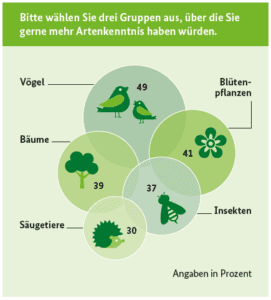
Source: Naturbewusstsein 2019
Peter Südbeck, Chairman of the Board of Nationale Naturlandschaften e. V. and Director of the Lower Saxony Wadden Sea National Park, discussed the significance of the EUROPARC’s German Section for nature awareness in Germany and the important role that national parks play in terms of nature dynamics and wilderness.
As a practitioner himself, Mr. Südbeck also addressed the effects of the Coronavirus pandemic on everyday reality in Protected Areas. He emphasised the importance of high-quality Protected Area management and raising the profile of Germany’s rangers as mediators between men and nature. Listen to Peter Südbeck’s statement here!
If you understand German, download the joint press release and the Nature Awareness Study 2019, a Summary Paper and Peter Südbeck’s statement.
Take action to move the Earth Overshoot Day
Earth Overshoot Day marks the date when humanity’s demand for ecological resources and services in a given year exceeds what the planet can regenerate in that year. In 2020, the day has been calculated to land on August 22.
What is the Overshoot Day?
Although the coronavirus pandemic has reduced humanity’s ecological footprint this year, we are still far from using the planet’s resources sustainably in the long term. Global Footprint Network combined the most reliable data, including impacts from the pandemic, and formed assumptions to assess humanity’s current resource situation.
The calculation takes into account factors like changes in carbon emissions, forest harvest, food demand and other figures that could impact global biocapacity.
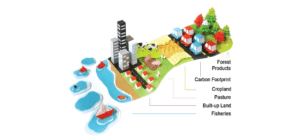
Among the good news is that the carbon footprint has been reduced by 14.5% from 2019, and the forest product footprint decreased by 8.4% as compared to last year. On the other hand, the food footprint is assumed to remain unchanged, as the pandemic has disrupted global food systems, and possibly increased both food waste and malnutrition among the lowest income populations. Check out more highlights and the full methodology report explaining how the date of Earth Overshoot Day was calculated.
#MoveTheDate with Sustainable Tourism
There are many steps that individuals, communities and businesses can take to lower their ecological footprint and contribute to delaying the global overshoot. These include for example reducing meet consumption, using carbon-free means of transport or cutting down food waste. And how can Protected Areas get involved in that?
Let’s explore, not exploit!
Traveling with eco-sensibility is one of the ways that can play an important role in reducing the society’s footprint. Protected Areas offering ecotourism itineraries, such as the Network of EUROPARC’s Sustainable Destinations, provide such possibilities and serve as a good example.
Measure the ecological footprint of your ecotourism itineraries
Find out what is your destination’s ecological footprint with DestiMED’s Calculator, developed by the Global Footprint Network in collaboration with IUCN Med (International Union for Conservation of Nature) and the MEET Network (Mediterranean Experience of Ecotourism).
Ecotourism is a great tool to promote the unique value of nature and Protected Areas, while creating revenue for local communities.
The free online tool enables to measure and monitor the ecological footprint, based on four main aspects of an ecotourism package: accommodation, food and drinks, mobility and transfer activities, and lastly, services.
Go the the calculator and read how you can achieve a lower ecological footprint!