The power of youth in co-creating education: an example from the Swabian Alb, Germany
Celebrating International Day of Education with an example of co-creating education together with young people
International Day of Education
As a network passionate about Protected Areas, we also recognise that what happens outside their boundaries plays a decisive role in shaping interest, understanding, and protection within them. This is where education and youth work play an important role, creating bridges, helping others connect their behaviour with the natural world and building support for nature conservation.
For the International Day of Education 2026, UNESCO chose to highlight “The power of youth in co-creating education”, showcasing how young people are active partners and making education more sustainable, relevant and inclusive. Our EUROPARC Youth Representative Michelle Herrmann, shares with us a story of a youth-led initiative from the Swabian Alb Biosphere Reserve.
The power of youth in co-creating education: an example from the Swabian Alb, Germany
Wastefulness and the overuse of natural resources are among the major challenges of the 21st century, particularly in industrialised countries, where average households already consume more resources than the Earth can regenerate. In the Swabian Alb Biosphere Reserve, Germany, three motivated young students set out to address this issue by engaging the next generation in a creative and hands-on way.
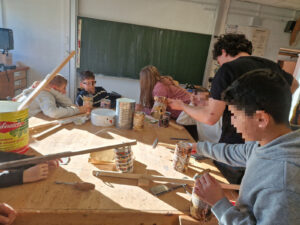
Rather than focusing solely on discussion and appeals for behavioural change, the young instructors chose an alternative approach: giving discarded materials a second life and highlighting their hidden value. In cooperation with RegiNa e.V., they organised a two-day workshop in which waste materials were transformed into playable music instruments.
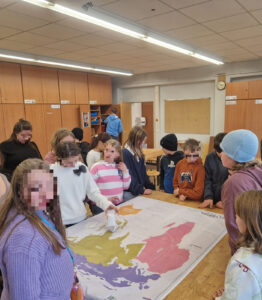 The project involved 20 pupils aged nine to ten from the Gemeinschaftsschule in Münsingen. On the first day, the children learned about resource use and waste generation and reflected on the value of everyday items that are often quickly discarded. During the Christmas holidays, they collected materials from their homes that could potentially produce sound. On the second workshop day, the instructors guided the children in building a variety of instruments from these materials, while also encouraging them to realise their own creative ideas. Together, they constructed and tuned banjos, percussion instruments and even a bottle piano.
In the next phase of the project, the children will learn a piece of music using their self-made instruments and present it to their classmates at the school’s summer celebration in July. The workshop not only raised awareness of resource efficiency but also inspired the children, who were surprised by the sounds and rhythms that can be created from “waste” with a little imagination and openness.
Are you interested in more innovative youth-led projects? Check out EUROPARC’s Knowledge Hub Youth section to see case studies of other Protected Areas working together with young people.
The project was financially supported by the bw-Stiftung.