Youth and Education: Investing in the Next Generation of Transboundary Cooperation
(c) Maas-Schwalm-Nette.
Across Europe’s transboundary Protected Areas, education is more than outreach — it is a strategic investment in long-term cooperation. By engaging young people, strengthening multilingual learning, and connecting culture with conservation, parks are building shared responsibility beyond borders.
This first 2026 Transboundary Programme Spotlight Story presents three examples that illustrate how youth and education drive transboundary impact — from Arctic dark skies (2024), to hands-on conservation camps (2025), to structural cross-border visitor education projects launching in 2026.
2024: Dark Skies and Cultural Education in Pasvik-Inari
In 2024, Øvre Pasvik National Park in Norway — part of the Pasvik-Inari Transboundary Area — became Norway’s first site certified as an International Dark Sky Place by DarkSky International.
Located in Norway’s far northeast, the park offers exceptional opportunities to observe the Aurora Borealis during the polar night. Yet the designation is not only about spectacular night skies — it reflects a strong educational commitment.
The park collaborates with local schools to integrate STEM-based dark sky education and works with research institutions to raise awareness through citizen science programmes, nature schools, and public lectures. Visitor centres at NIBIO Svanhovd and Gjøken make these themes accessible to residents and international visitors alike.
Across the border in Finland, the Sámi Museum and Northern Lapland Nature Centre Siida — located within the wider Pasvik-Inari cooperation area — was recognised as both Museum of the Year 2024 and European Museum of the Year 2024. Through innovative and interactive storytelling, the museum connects Sámi cultural heritage with Arctic biodiversity, demonstrating how cultural and environmental education can reinforce each other.
Together, these recognitions highlight how transboundary cooperation strengthens education at multiple levels — from school engagement to international awards.

2025: Youth Camp Wildenrath — Practical Conservation in Maas-Schwalm-Nette
In summer 2025, the cross-border park Maas-Schwalm-Nette organised an international volunteer camp bringing together 16 young people from across Europe.
For two weeks, participants were hosted at Naturschutzstation Haus Wildenrath on the German side of the border, while working in nature areas in both Germany and the Netherlands.
Their work focused on sensitive habitats of high importance for snakes and amphibians. These areas tend to become overgrown with shrubs and trees, reducing sunlight and ground vegetation. Because the work is too delicate for heavy machinery — or not always financially feasible — manual intervention was essential.
The young volunteers cleared excessive vegetation in several small sites, directly improving habitat conditions and contributing to biodiversity conservation.
Key partners included:
- Staatsbosbeheer
- Naturschutzstation Haus Wildenrath
- SIW Volunteers
- Nationaal Park De Meinweg
- Cross-border park Maas-Schwalm-Nette
The experience also revealed important lessons for cross-border governance. Beyond funding questions, discussions focused on responsibility and liability. Partners learned that investing time in building relationships and establishing shared ownership is crucial before defining financial and operational details.
Although the participants came from across Europe, the camp strengthened cooperation locally. Responsible authorities on both sides of the border worked more closely together. As organisers reflected, understanding who does what — and simply having each other’s contact details — is fundamental to effective transboundary collaboration.
Youth engagement here was not symbolic; it delivered ecological results and reinforced institutional trust.
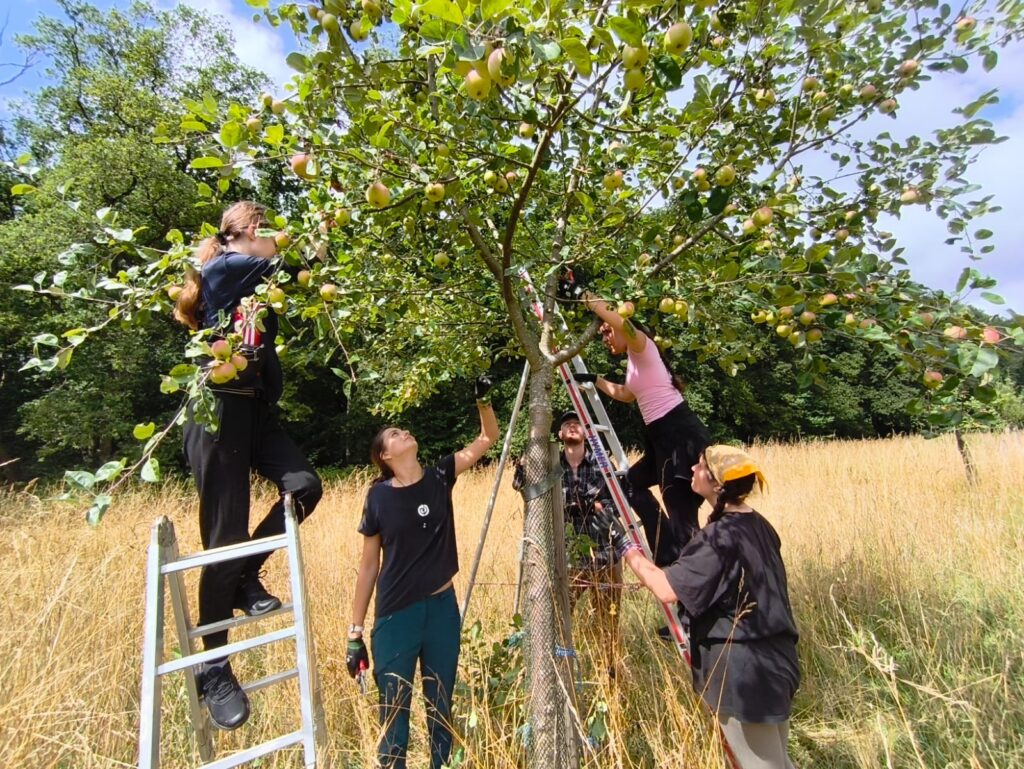
(c) Maas-Schwalm-Nette
2026–2028: Better Together in the Bavarian Forest and Šumava
Beginning in January 2026, Bavarian Forest National Park and Šumava National Park are launching a three-year project that places multilingual education at the centre of their cooperation.
Responding to growing demand from neighbouring countries and international visitors, the project includes three interconnected components:
1. Joint Multilingual Exhibitions
Permanent exhibitions at the Hans-Eisenmann-Haus (Germany) and Stožec visitor centre (Czech Republic) will be redesigned with consistent content. Visitors will experience a virtual walk through shared biotopes, presenting the two parks as one connected ecosystem.
2. Bilateral Guide Training
A joint training and qualification concept for guides will introduce new teaching modules and digital materials. Multilingual guided tours will enhance accessibility for visitors from neighbouring countries and abroad.
3. A Connected Cross-Border Cycling Route
The cycling route between Stožec and Neuschönau will be enhanced with multilingual digital information services, as well as charging and repair stations, physically linking the two visitor centres and reinforcing the shared narrative.
The project supports both tourism and regional cooperation while ensuring accessibility for people with special requirements. It represents an important structural step toward long-term cross-border alignment in interpretation, training, and visitor services.
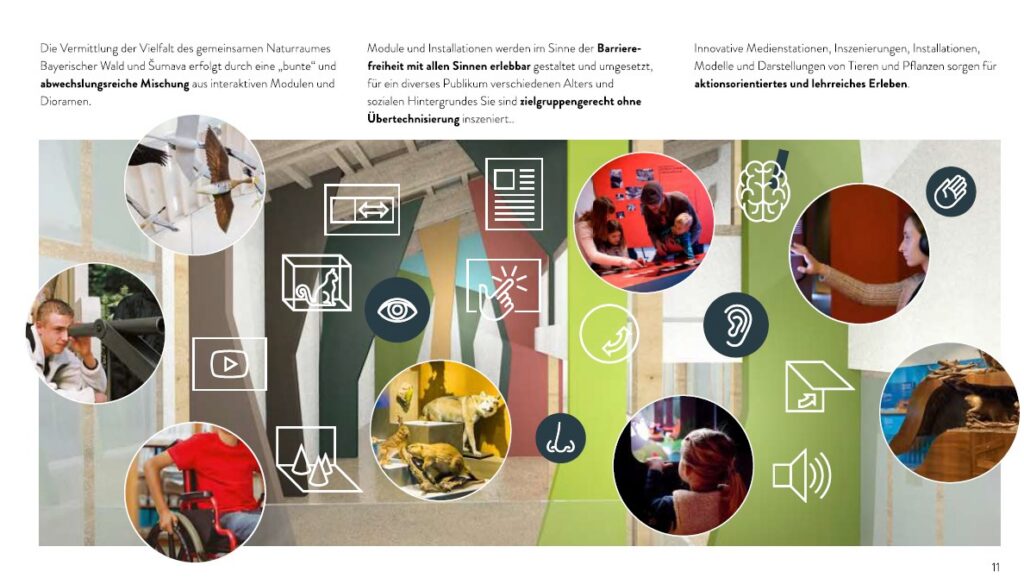
Initial exhibition sketches from project book. (c) Bavarian Forest NP and Sumava NP.
Shared Message for the Future
Across these three examples — from Arctic night skies (2024), to hands-on youth conservation (2025), to structured multilingual education initiatives beginning in 2026 — one message is clear:
Transboundary cooperation becomes sustainable when it invests in learning.
Education strengthens environmental awareness, builds institutional trust, supports inclusive tourism, and empowers young people to take responsibility for shared natural heritage.
Nature does not recognise borders. Through youth engagement and education, Europe’s transboundary Protected Areas ensure that the next generation understands this — and acts accordingly.