Improving water quality with plant-living barriers: a case study from Lithuania
Installed Islands in Juodkrante - Photo: Live Lagoons Project
Improving water quality with plant-living barriers: The Curonian Spit National Park (Kuršių nerija Nacionalinis Parkas in Lithuanian) was established to protect one of the most unique landscapes in the coast of the Baltic Sea… This is how they have used plant-living barriers to improve water quality and decrease tourism seasonality.
Improving water quality: Sustainability and aesthetic values
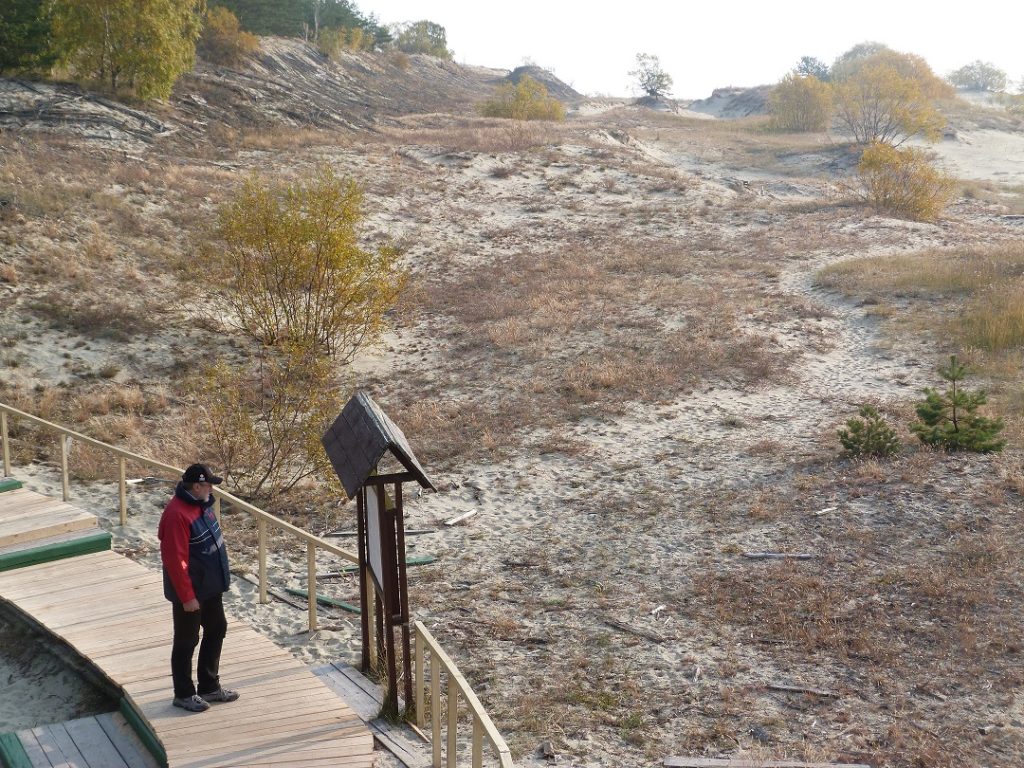
Curonian Spit National Park, Lithuania
The National Park encompasses a very special feature: a narrow strip of sand surrounded by the Baltic Sea in the west and by the Curonian Lagoon in the east. The peninsula holds drifting sand dunes, pine forests, white sand beaches and receives a high number of tourists per year… but all in a very condensed period.
Due to the overexploitation of infrastructure (wastewater treatment system, roads, ferries, etc.), combined with the natural, fragile dune environment, the water quality of the lagoon and biodiversity of the Park were strongly affected. To open a new beach on the lagoon side, which is shallower and water conditions are calmer compared to the beaches on the Baltic seaside, was a potential solution to decrease seasonality.
However, according to the EU Bathing Water Directive, the microbiological quality of the nearshore water in terms of E. coli was an impediment to open a new beach in the lagoon for bathing. A dangerous problem not only in terms of aesthetic but also because of the increased resistant to human-pathogenic organisms.
Plant-living-barriers: Green and innovative technology
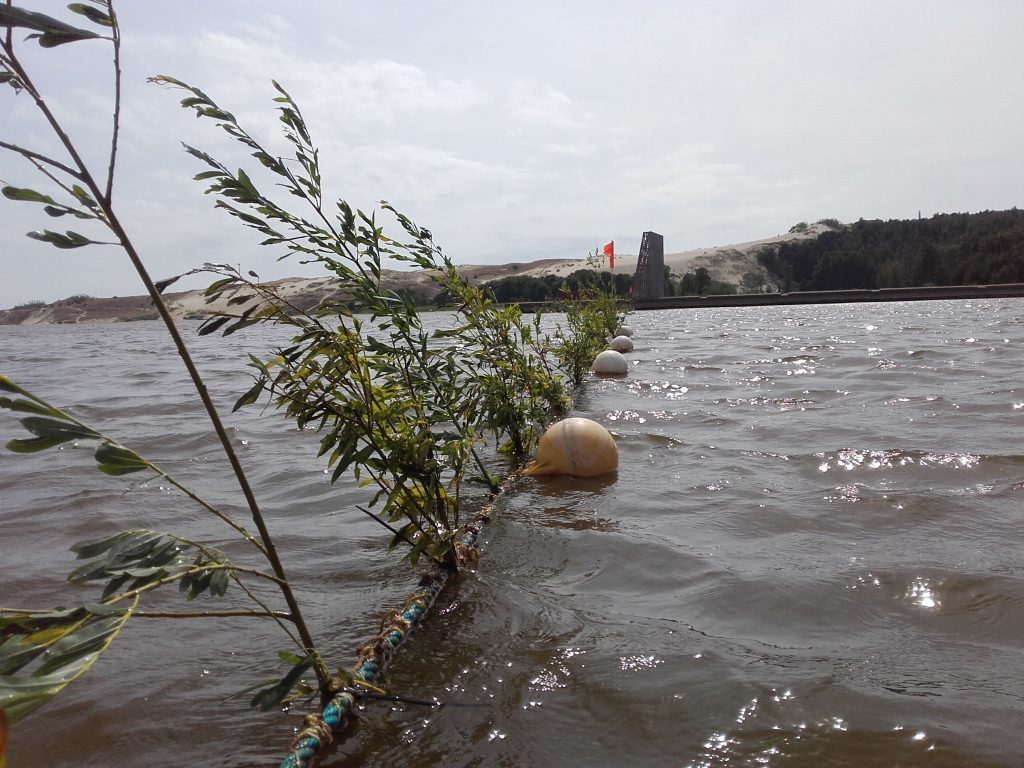
Living Barrier in Nida bathing site – Photo: LiveLagoons Project
The Curonian National Park participated with Klaipėda University and partners from Germany and Poland in the Interreg South Baltic program project “Use of active barriers for nutrient removal and local water quality improvement in the Baltic lagoons – LiveLagoons”.
They focused on so-called in-basin measures of research-based bathing water quality improvement, which is much smaller in scale than work in the whole water body, but could bring immediate result for local stakeholders. The measures covered:
- Reviewing the best available green technologies for seizing and removing nutrients from the shallow lagoons.
- Establish a network for community and stakeholder, green technology testing, retention, and nutrient removal in practice.
- Implementation (installation) of “living barriers” at selected test sites.
- Transferring knowledge and sharing good practice with and beyond other Southern Baltic lagoon communities.
They used ‘living barriers’ to semi-isolate some of the lagoon beaches on the Curonian Spit. These barriers are formed by floating matts, or rafts that actively filter the nearshore water-absorbing nutrients and facilitating degradation of E. coli.
These ‘living barriers’ are floating islands planted with native emergent macrophytes. There are several commercial applications called ‘living’ or ‘active’ barriers (e.g. life rafts, BIOHAVEN® LIVING SHORELINE) aimed at both restoration and rehabilitation of coastal habitats and local enhancement of water quality by nutrient absorption and removal.
Also, the project BaltCoast in consortium with the EU BONUs Programme managed studies (such as socio-economic data, survey collections and microbiological studies) to support the management actions and develope a Research-based Model.
Managing seasonal tourism: better quality = longer season
With the implementation of the plant-living barriers, the Park was able to:
- improve, on a small scale, the water quality on pilot installations.
- increase awareness of local stakeholders interested in water quality, tourism and innovation (SMEs) of the tested technological application.
- Increase interest from the tourists in the lagoon beaches and work towards decreasing seasonality
They aim to enhance the capacity of local communities to improve and protect their environment and to make use of sustainable tourism growth opportunities based on innovative green technologies and by identification of most promising scenarios for biodiversity conservation.
“The highlighted good practice not only adapts, implements and demonstrates the approach itself, but also enhances the capacity of local and regional decision-makers and managers to deal with forthcoming challenges for the environment related to global climate change.”
said Aristé Jurkiene, from the EUCC Baltic States Office. The EUCC is one of the key partners of the IMPACT project “Innovative Models for Protected Areas: exChange and Transfer”, funded by INTERREG Europe, who are implementing new solutions for the (sustainable) development of the region.
Klaus Toepfer Fellowship Programme: Open call for Central and Eastern Europe, the Caucasus and Central Asia
Vilm Island - Picture from Pixabay
The Klaus Toepfer Fellowship Programme is implemented by the German Federal Agency for Nature Conservation (BfN): the central scientific authority of the German federal government for both national and international nature conservation. It is an integrated approach to the development of the personal capacity of early-career conservation professionals. It combines technical learning, management training, and network development support.
Opportunity for Nature Conservation leaders in Central and Eastern Europe, the Caucasus and Central Asia
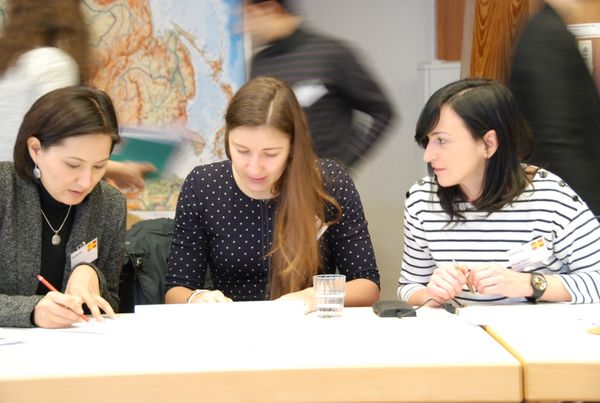
Federal Agency For Nature Conservation Website – Klaus Toepfer Fellowship Programme. Photo: T. Garsteck
The objective of the programme is to strengthen organisations within the nature conservation sector in Central and Eastern Europe, the Caucasus and Central Asia, by developing the personal capacity of emerging conservation professionals. Overcome the global biodiversity loss and take the role as future leaders in Nature Conservation are the main objectives of this programme.
The programme 2020-2021 will start in spring 2020 and is extra-occupational, combines learning on international best conservation practice and policy with management training, network development and a transfer project.
Over a period of 18 months, four training modules are conducted at the International Academy for Nature Conservation on the Isle of Vilm in English language. Each module includes eight days of on-site training and a two-day excursion to leading nature conservation institutions and sites based in Germany. The modules combine management and leadership training with joint learning on key conservation topics such as:
- Module 1 “Informing Conservation”
- Module 2 “Conservation Management in a Spatial Context”
- Module 3 “Conservation Economics and Financing”
- Module 4 “Conservation Governance and Policy”
The application period for the 2020-2021 cycle of the Klaus Toepfer Fellowship Programme is now open. Application deadline is 10 October, 2019.
You can apply now!
Requirements
Federal Agency For Nature Conservation Website – Klaus Toepfer Fellowship Programme
The Klaus Toepfer Fellowship Programme targets early-career conservation professionals currently working in the natural resource sector (government, NGOs, Academia or similar), fluent in English and with at least three years of professional experience, and preferably are not older than 35 years.
Potential participants have the support of their home organizations to attend the course and are committed to play a central role in nature conservation in their home countries: Albania, Armenia, Azerbaijan, Belarus, Bosnia and Herzegovina, Bulgaria, Croatia, Czech Republic, Estonia, Georgia, Hungary, Iran, Jordan, Kazakhstan, Kosovo, Kyrgyzstan, Latvia, Lithuania, Northern Macedonia, Moldova, Mongolia, Montenegro, Poland, Romania, Russia, Serbia, Slovakia, Slovenia, Tajikistan, Turkey, Turkmenistan, Ukraine and Uzbekistan.
The International Union for Conservation of Nature (IUCN), the Secretariat of the Convention on Biological Diversity (SCBD), the Secretariat of the Convention on the Conservation of Migratory Species of Wild Animals (CMS), and the UNEP World Conservation Monitoring Center (UNEP-WCMC) support the Klaus Toepfer Fellowship programme.

Celebrating 70 years since the creation of UK National Parks’ Principles
The Northumberland National Park is running a temporary exhibition until October 2019, to celebrate the creation of the UK National Parks’ Principles, 70 years ago.
“Yours since 1949”: the UK National Parks’ Principles
In 1949, the UK’s Government passed an Act of Parliament to establish National Parks to preserve an enhance their natural beauty and provide recreational opportunities for the public. The “National Parks and Access to the Countryside Act” became a landmark, coming out of a public desire, that resulted in the establishment of the first 4 National Parks in 1951 (scroll down to find out which are the UK’s 15 National Parks).
Northumberland National Park launches a special exhibition at The Sill
The exhibition will take visitors into an amazing journey throughout time, to learn about the Campaign for National Parks and how it has influenced the creation of the UK’s first parks in 1951. An interactive experience sprinkled with holograms, digital story maps, and a virtual reality flight through the sky of the Northumberland National Park. For the younger guests, there are some experiential activities including fancy dress, soft shapes and light play.
“Yours since 1949” does not only remind us of the founding principles of UK’s National Parks’, it looks at the present and the importance in our current lives and reflects on the future of National Parks.
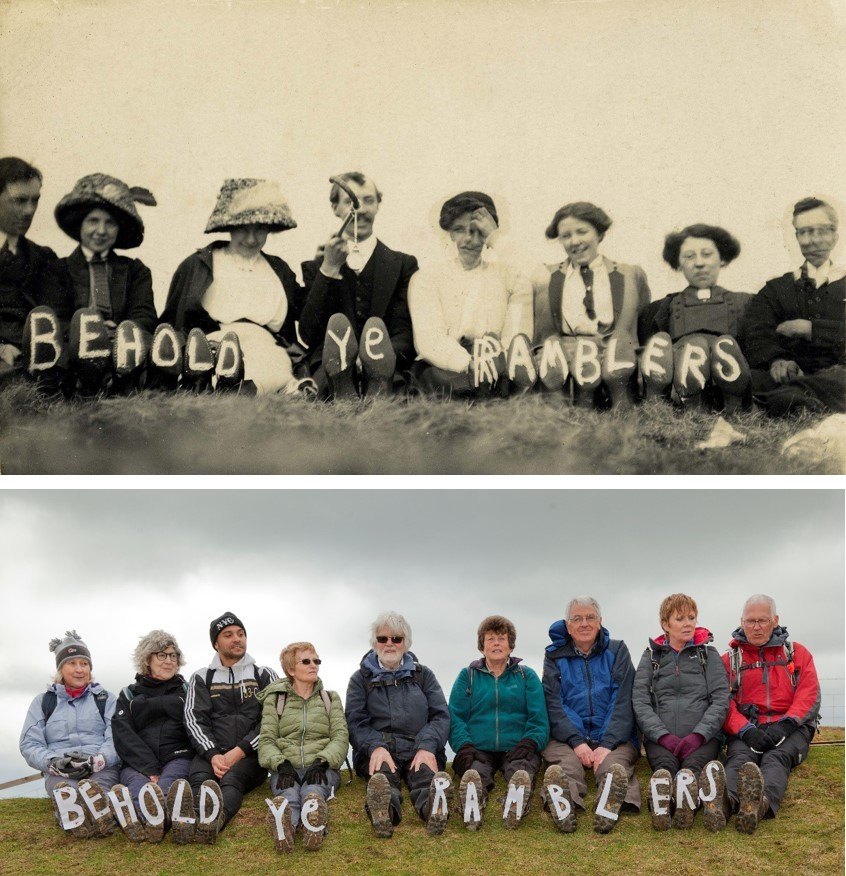
Ramblers – The Sill. National Landscape Discovery Centre
Until October 2019, you can visit the exhibition at The Sill, the first National Landscape Discovery Centre in the UK that lies in the heart of the Northumberland National Park. The Sill is also home to fixed exhibitions and has multiple spaced to host events, apart from a local food café, a Youth Hostel, a rural business hub, and a shop specialising in local crafts and produce.
Uk’s National Parks
- 1951: Peak District | Lake District | Snowdonia | Dartmoor
- 1952: Pembrokeshire Coast | North York Moors
- 1954: Yorkshire Dales | Exmoor
- 1956: Northumberland
- 1957: Brecon Beacons
- 1989: The Broads (equivalent status to a national park)
- 2002: Loch Lomond & The Trossachs
- 2003: Cairngorms
- 2005: New Forest
- 2010: South Downs
Our national Parks give so much to the nation and we should never take them for granted
-Said Tony Gates, chief executive at Northumberland National Park Authority.
Restoring peatlands: the most efficient terrestrial carbon-sink in the world
Picture from Pixabay
The Moors for the Future Partnership is working to restore degraded peatlands since 2003 in the Peak District National Park and South Pennines. Natural England gave a boost of nearly £2 million to the partnership with the attribution of the Water Environment Grant (WEG), for the implementation of the project “Building Blocks – Next steps in Gully Blocking”.
Peatlands. An amazing landscape providing numerous ecosystem services
Peatlands are the largest natural terrestrial carbon store, and damaged peatlands are a major source of greenhouse gas emissions. Thanks to the unique characteristics of these ecosystems, formed from plant matter partially decomposed and accumulated through thousands of years, when healthy they serve as:
- Habitats: Due to the low level of nutrients available, they are the habitat for rare and well-adapted species, including many endangered birds.
- Wildfire safeguards: By keeping itself wet holding a great amount of water.
- Climate-change natural fighters: They are the most effective terrestrial carbon-sink, they absorb and store carbon from the atmosphere
- Water filters: fundamentally because of the sphagnum moss, the water is filtered and cleaned.
- Preventers from flooding: They absorb and decrease the speed of the water, avoiding soil erosion at the same time.
- Beautiful and calming places: For the people to enjoy, relax and practice many activities.
However, when damaged, their services decrease: they release the stored carbon and other heavy metals and increase the risk of wild fires. Thus their restoration is of utmost importance… and peatlands are an essential weapon in the battle against climate change, alongside other campaigns such as the replanting of trees. The key is to stabilise the bare peat by maintaining the vegetal blanket that covers it.
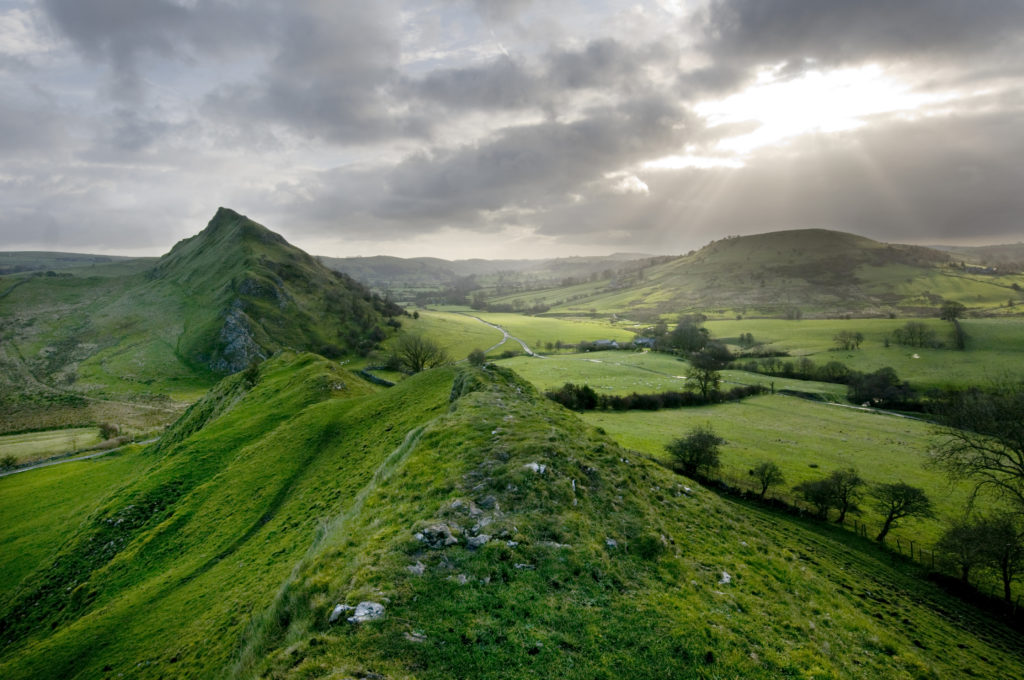
Peak District National Park
Protecting the most degraded landscape in Europe
In the South Pennine Moors, 200 years of historic air pollution from the industrial revolution and wild fires have led to this area being degraded on a massive scale. The vegetation on the moors has been stripped away, exposing bare peat, which is easily eroded, releasing carbon back into the atmosphere, increasing the risk of wildfire, and making floods more likely downstream.
Bare peat is also washed downstream into reservoirs, which, as it contains heavy metals deposited by centuries of pollution, is costly for water companies to clean.
The Moors for the Future Partnership
Since 2003, projects undertaken by Moors for the Future Partnership have used innovative conservation techniques to restore the degraded peatland:
they have already transformed 32 sq kilometers of black degraded peat, installed over 30,500 mini-dams, to slow water run-off, and form natural flood management, and planted sphagnum moss and other natural moorland plants to stabilise the bare peat.
Recently, the Partnership has secured a project funded through the Water Environment Grant (WEG) by Natural England, of nearly £2 million. The project “Building Blocks – Next steps in Gully Blocking” is focused on improving the biodiversity and reduce the water coloration of the South Pennine Moors by keeping the hydrological integrity of the blanket-bog.
The Building Blocks project will enable the Partnership to map a further 100,000 gullies that need their attention, allowing them to create a list of areas to prioritise in the coming years, and further enhance a collaborative partnership working well, both within designated and non-designated landscapes, ensuring resources are secured for the most sensitive landscapes.
The measures:
-Installation of 7.800 gully blocks to slow water run-off and form natural flood management.
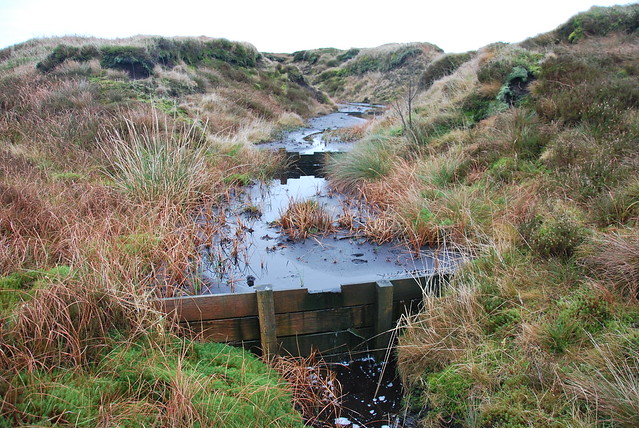
Dam slowing the sediment – Peak District National Park
–Plantation of 400 ha of sphagnum moss to allow the colonization of vegetation
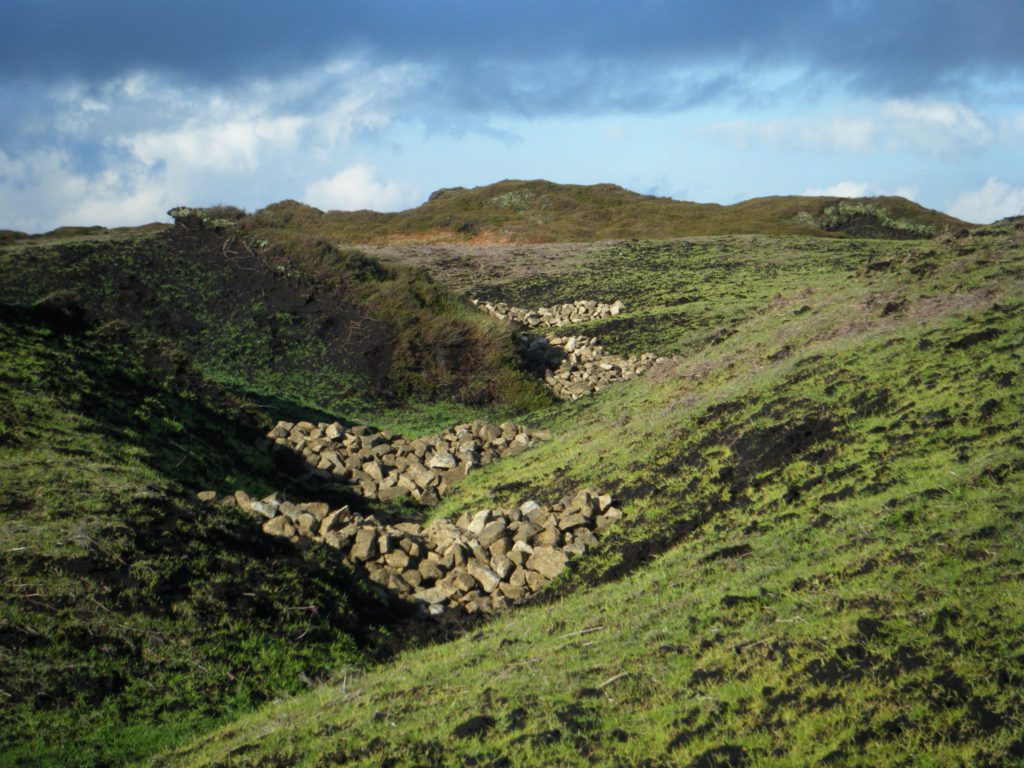
Stone Gully Blocks – Peak District National Park
–Creation a list of areas to prioritise by mapping 100.000 gullies for future work.
Climate change has created many new challenges, not least flooding. The Building Blocks project from Moors for the Future Partnership is exactly the sort of forward-looking, Natural Flood Management initiative needed to create a nation ready for, and resilient to, flooding. It also helps to store carbon on the moors, providing long-term protection against climate change itself, and improves water quality,
said Louise Cresswell, Area Director for the Environment Agency. The 24-month project will allow the Partnership to improve biodiversity, and reduce water colouration. It is in line with the Environment Agency’s Draft National Flood and Coastal Erosion Risk Management Strategy for England and its part-funded by the European Agricultural Fund for Rural Development.
The work of the partnership is delivered by the Moors for the Future staff team through the Peak District National Park Authority, and supported through its partners including the Environment Agency, National Trust, RSPB, Severn Trent, United Utilities, Yorkshire Water, Pennine Prospects and representatives of the moorland owner and farming community.
Check the official Website of Moors For the future to learn more about this project!