In memoriam: Dr. Hans Bibelriether
Dr. Hans Bibelriether. Pictured left with EUROPARC founding figure Alfred Toepfer.
With deep sadness, we acknowledge the passing of Dr. Hans Bibelriether on 18.02.2025, at the age of 91.
Condolence Message from EUROPARC Federation on the Passing of Dr. Hans Bibelriether
With deep sadness, we acknowledge the passing of Dr. Hans Bibelriether, a visionary in nature conservation and a foundational figure in the history of the EUROPARC Federation. His name is inextricably linked to the creation of EUROPARC, and his legacy continues to shape our work today.
Dr. Bibelriether was a pioneer in Protected Area management in Europe. As the first director of the Bavarian Forest National Park, he championed the principle of “Let nature be nature,” a philosophy that has shaped the approach to National Parks and wilderness areas across Europe. More than that, he was one of the leaders of his generation who recognized not only the value, but the absolute necessity of establishing nature conservation in Europe on the basis of international cooperation. In the 1990s he realised that a window of opportunity was opening with the reunification of Germany that had to be used to establish and then build up as many Protected Areas as possible in Germany, but also in the new Eastern Bloc countries.
His leadership extended beyond borders—he played a pivotal role in the development of EUROPARC Federation, serving as Vice President and later as President, tirelessly advocating for transboundary cooperation and the role of Protected Areas in nature conservation. His unwavering dedication and belief in the power of nature will continue to inspire generations of conservationists.
Furthermore, during the 1990’s and 2000’s, together with council members Aitken Clark, Dr Patrizia Rossi, Michael Starrett, Erica Stanciu and Thomas Hansson, Dr Hans Bibelriether guided the Federation through expansion of membership and staffing. It was during this period, that an office in Brussels was opened and the headquarters were moved to Regensburg. In addition, they presided over a period of intense project work, such as the hugely ambitious and successful Partnership & Exchange Programme 1994-1999 and the Phare – European Expertise Exchange Project, from 1997-2001. These projects embodied the ideal of international exchange across the network, fondly remembered by many members.
The EUROPARC community mourns the loss of a colleague, mentor, and friend, but his legacy will live on in the landscapes he helped to protect and the institutions he helped to build. We will carry forward the torch of his ideas, ensuring that his vision of strong, cooperative nature conservation continues to guide our efforts.
On behalf of the EUROPARC Directorate, Council and the membership, we extend our heartfelt condolences to his family, friends, and all who had the privilege of working with him.
Michael Hošek,
President, EUROPARC Federation
If you’d like to learn more about the history of the Federation and Dr. Hans Bibelriether’s role, we warmly invite you to discover our 40 years brochure and the 50th anniversary storybook.
Edible Greens and Immersive Natural Classrooms
Sabrina Di Francesco
What if the secret to a more sustainable future was hidden in wild edible plants and mobile classrooms? We present to you two inspiring initiatives that bring people back to nature or nature to them, fostering strong communities and promoting environmental education.
Edible Greens and Immersive Natural Classrooms
Across Europe, innovative projects are redefining the way we learn about the environment, blending tradition, education, and hands-on experience to connect people with the natural world. Latvia and Italy have launched two exciting initiatives promoting nature education and sustainable food practises.
©Sabrina Di Francesco
Cases Study: Open-Air Canteen
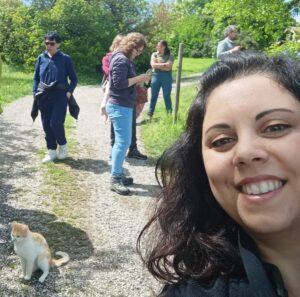
In the Lazio region of Italy, the Open-Air Canteen is bringing people together to rediscover the rich tradition of foraging for edible wild plants. This initiative is about nutrition and reconnecting with the land, understanding local biodiversity, and preserving generations of knowledge about what nature has to offer. Participants don’t just learn about wild plants; they experience them firsthand, harvesting, cooking, and enjoying meals at a local organic farm, that tell the story of their region’s ecological and cultural heritage.
In a world where processed foods dominate our plates, the Open-Air Canteen reminds us of the nutritious value of slow, sustainable, and locally sourced eating. By tapping into the wisdom of tradition foraging, this project is helping people build a deeper connection with the environment, while promoting biodiversity conservation and food security.
Full Case Study
©A.Soms
Case Study 2: Mobile Nature Classroom
In Latvia, a new project was launched, the country’s first Mobile Nature Classroom at Kemeri National Park. This innovative brings nature directly to students, families, and communities who might not otherwise have access to Latvia’s breathtaking landscapes. Equipped with interactive materials, engaging activities, and expert educators, the mobile classroom transforms spaces into a living learning experience.
But it’s not just about facts and figures, it’s about hands-on exploration, discovery and accessibility. Whether it’s identifying local wildlife, understanding ecosystem dynamics, or learning about conservation efforts, the Mobile Classroom makes education immersive, fun and accessible to all.
The projects are proof that education doesn’t have to be confined to four walls. With these approaches, we create deeper connections with the environment and inspire action to protect it. Whether through storytelling or foraging, these initiatives show the best way to learn about nature to experience it firsthand!
Full Case StudyDo you have interesting initiatives that you would like to share with us? Or would you like to submit a case study? Please visit our Knowledge Hub!
New EUROPARC Individual Member: A Dedicated Conservation Expert
(c) Doychin Todorov
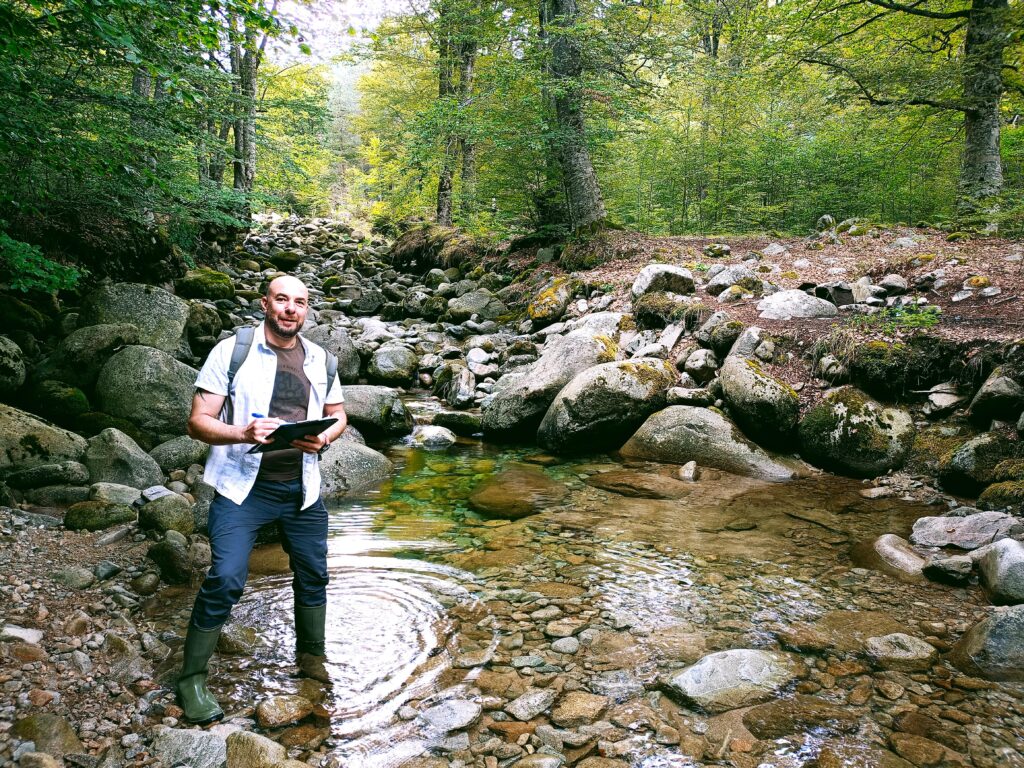
EUROPARC is proud to welcome a new individual member to our network! With extensive experience in nature conservation, Protected Area Management, and Natura 2000 sites, our new member – Ventzislav Vassilev – brings invaluable expertise to our shared mission of preserving Europe’s natural heritage.
A career dedicated to conservation
Currently working as a freelancer, Ventzislav Vassilev has a strong background in environmental protection, specializing in mitigation planning for infrastructure projects affecting Protected Areas and natural habitats. From 2010 to 2018, Ventzislav served as the Country Office Director of the Regional Environmental Center (REC) in Bulgaria. Since then, he has contributed to various conservation initiatives in collaboration with organisations such as the European Investment Bank (EIB), the United Nations Development Programme (UNDP), and the Bulgarian Ministry of Environment.
Key contributions to nature protection
Over the years, Ventzislav has played a crucial role in multiple conservation projects, including:
🌿 Green Infrastructure and Ecological Connectivity Study (2019–2021): Conducted research on ecological networks across Albania, Bosnia and Herzegovina, Montenegro, Serbia, and North Macedonia under the EPPA Project.
🦅 Management Plans for Natura 2000 Sites: Led the development of conservation strategies for Special Protection Areas (SPAs) Meshtica and Kocherinovo in Bulgaria.
🌊 LIFE Project “Salt of Life”: Contributed to the conservation of coastal lagoons along the Black Sea coast.
🦆 National Plan for RAMSAR Sites in Bulgaria: Assisted in the development of a strategic framework for the protection of internationally important wetlands.
(c) Doychin Todorov
Can you tell us a bit about yourself and your professional journey in the field of nature conservation?
My journey in nature conservation began in 1995 when I was a university student. I started as a volunteer and later became a staff member at the Bulgarian Society for the Protection of Birds. During this time, I gained hands-on experience in observing and studying wildlife, developing proposals for new Protected Areas, and working with local communities to promote conservation efforts.
After graduating, I continued my work in nature conservation through a Swiss-funded biodiversity conservation programme, which later evolved into the Bulgarian Biodiversity Foundation. From 2010 to 2017, I led the Bulgarian office of the Regional Environmental Centre for Central and Eastern Europe (REC). During this period, our work focused on participatory governance of protected areas and Natura 2000 sites, as well as environmental education and public awareness.
What inspired you to join the EUROPARC Federation, and what are you looking forward to most as a member?
Since the closure of REC’s office in Sofia in 2018, I have worked as a freelance consultant, contributing to various projects and studies related to protected area networks in Southeastern Europe. However, I realised that I miss the dynamic networking and exchange of ideas that only a large international organisation can offer.
Becoming a EUROPARC member provides an opportunity to learn about contemporary approaches to managing protected areas and to explore best practices in nature conservation. It will also enhance the visibility of my projects and facilitate collaboration with other professionals in the field.
What are your key priorities or projects right now, and how do they contribute to the protection or sustainable development of our natural and cultural heritage?
As an International advisor of the Albanian EU4Nature Project, I am responsible to provide an overall technical backstopping support to the project unit, based on leading international experience in the management and protection of Protected Areas and Natura 2000 sites.
My primary focus is on strengthening the capacities of relevant institutions to effectively manage Protected Areas while considering their biodiversity and landscape values. Additionally, the Project supports the integration of Natura 2000 requirements into Albania’s policies, aligning with the country’s EU accession process.
Looking Ahead
With such a wealth of knowledge and dedication, Ventzislav Vassilev will undoubtedly enrich EUROPARC. We are excited to welcome him in our network.
Welcome to Nationaal Park Brabantse Wouden Vlaanderen: A New Member of EUROPARC
The meandering Dijle in nature reserve Doode Bemde, near Louvain © Vildaphoto – Yves Adams
We are excited to welcome Nationaal Park Brabantse Wouden Vlaanderen as the latest member of the EUROPARC Federation! Located in the heart of Flanders, Belgium, this national park is a haven for biodiversity and plays a key role in climate resilience. Known for its rich woodlands, wetlands, and meandering rivers, the park offers a vital space for a variety of species while helping to mitigate climate impacts.
Brabantse Wouden is home to rare species like the badger, fire salamander, purple emperor, and stag beetle. It also serves as a natural buffer against flooding and drought. The park focuses on improving water retention and enhancing biodiversity through habitat restoration and sustainable farming practices.
Interview Time with Bert De Somviele, Communications Officer of Nationaal Park Brabantse Wouden Vlaanderen
The Brabantse Wouden is home to rare and iconic species like the badger, fire salamander, purple emperor, and stag beetle. What specific conservation strategies are in place to protect these species, and what are the main threats you’re working to mitigate?
The main threat to our rare species is habitat fragmentation. To address this, we focus on reconnecting forest and nature areas within the park. Our efforts include enhancing habitat quality and improving ecological corridors so that these species can move between larger, connected habitats. This ensures that populations of these species are not only preserved but also become more resilient to environmental changes.

Fire Salamander © Vildaphoto – Rollin Verlinde
The natural meanders of rivers like the Dijle, Laan, and IJse are essential to your climate resilience efforts. Can you tell us more about how these rivers are managed to support biodiversity and mitigate the impacts of climate change, particularly in the context of flooding or drought?
We’re incredibly proud to have some of the last remaining rivers in Flanders with natural meandering patterns. We work hard to maintain the natural dynamics of these rivers, such as allowing dead wood to accumulate and decay naturally. This not only boosts biodiversity by creating rich habitats but also helps slow down river flows and increases water infiltration.
We refer to this process as the park’s “water battery.” It’s a system designed to store large volumes of water underground, which enhances water resilience across the park and protects surrounding areas, including cities like Brussels and Leuven, from the impacts of flooding and drought.

The meandering Dijle in nature reserve Doode Bemde, near Louvain © Vildaphoto – Yves Adams
It’s wonderful to see that sustainable farming and food production are integral to your park. How do local farmers collaborate with conservationists to strike a balance between agricultural productivity and ecosystem health? Are there specific programmes promoting regenerative practices?
The agricultural community in Flanders has faced challenges recently, especially with protests regarding farming practices in Europe. This has created some tension between farmers and conservationists. However, we are committed to rebuilding trust through active collaboration.
Farmers play a crucial role in the management of our national park, and we aim to involve them in the park’s governance. We’re working on various programmes that combine farming and conservation, such as carbon farming, agroforestry, and agrotourism. In addition, we will install a network of weather stations to provide farmers with real-time data, helping them fine-tune their practices according to local weather conditions and supporting their transition to more sustainable practices.
Nationaal Park Brabantse Wouden: A Model for Sustainability and Conservation
Nationaal Park Brabantse Wouden Vlaanderen is an inspiring example of how we can integrate conservation efforts with sustainable farming practices while strengthening the resilience of ecosystems against climate change. Their innovative approaches to biodiversity protection, water management, and collaboration with local farmers make them a model for national parks around the world.
We look forward to seeing their continued success in fostering a healthier, more sustainable future for both nature and local communities.