Podyjí and Thayatal National Parks Undergo Transboundary Re-evaluation
National Park Thayatal, picture by Claudia Ebner
How does transboundary cooperation work in practice? For Podyjí National Park in Czechia and Thayatal National Park in Austria, this question was at the heart of a three-day EUROPARC Transboundary Parks re-evaluation visit in July 2026.
A closer look at transboundary cooperation
Picture by S. Petrosillo
The EUROPARC Transboundary Parks Programme recognises Protected Areas that work together across national borders to conserve shared landscapes and ecosystems. Re-evaluation is an important part of this process, which happens after five years.
During a re-evaluation, an independent verifier reviews the progress made since the previous assessment. The process looks at the Programme’s Basic Standards and considers both the structures supporting cooperation and the practical work carried out by the partner Protected Areas.
Podyjí National Park and Thayatal National Park have worked together across the Czech-Austrian border for more than 25 years. Their cooperation covers nature conservation, research, environmental education, visitor management and many other areas. The re-evaluation provided an opportunity to look at how this cooperation has developed and how it is being implemented on the ground.
For Podyjí and Thayatal, the 2026 verification visit took place from 6 to 8 July 2026. It brought together representatives of both National Parks, the verifier and local stakeholders.
Meeting & field visits
The verification combined discussions with direct observation in the Protected Area.
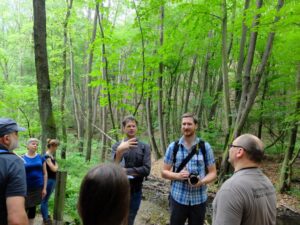
The first day focused on presentations and discussions with park staff about transboundary cooperation. This was followed by a field visit in Thayatal National Park, including the Umlaufblick viewpoint and cross-border visitor infrastructure. A stakeholder meeting then brought together representatives from both sides of the border, including local authorities, scientists and representatives of civil society.
The second day moved to Podyjí National Park. The programme included field visits focusing on landscape management, visitor pressure and practical conservation measures. These included prescribed burning, semi-natural grazing and coppice forest management. The visit concluded with a discussion between the verifier and representatives of both parks.
This combination of meetings, stakeholder discussions and field observations is an important part of the re-evaluation process. It allows the verifier to consider not only what is described in documents, but also how cooperation works in practice.
Cooperation across one shared landscape
Podyjí and Thayatal are separated by an international border, but they form part of the same ecological landscape. Their cooperation is supported by a Joint Management Plan for 2021–2030 and an agreement setting out common goals, management principles and the framework for cooperation.
During the visit, the parks presented examples of cooperation in several areas.
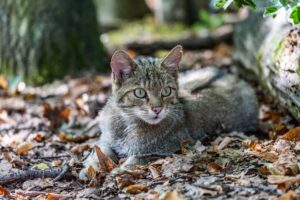
Wild cat. Picture by C. Ebner
Joint biodiversity research and monitoring are an important part of their work. The BioReMo project, for example, aims to improve monitoring, data exchange and cooperation between the two parks. Other projects address habitat restoration, connectivity and invasive alien species.
Cooperation also extends to ranger services. The parks organise joint ranger activities each year, creating opportunities for staff from both countries to work together in the field and communicate with visitors across the border.
Environmental education and public engagement are another important element. School groups, adult groups and visitors can take part in activities involving both sides of the Protected Area, supported by multilingual information and shared educational materials.
Listening to partners and stakeholders
Transboundary cooperation goes beyond the two park administrations.
Stakeholder participation is built into the management structures of both National Parks. During the re-evaluation, representatives of municipalities, scientific institutions, civil society and the National Parks met to discuss the partnership and its future.
The discussion also looked beyond current activities. Participants were invited to consider what transboundary cooperation could look like in ten years. Ideas included stronger joint research, harmonised data systems, closer cooperation between staff and continued efforts to reduce language barriers.
Such discussions are valuable because transboundary cooperation is not only about today’s management priorities. It is also about building a shared vision for the future.
What happens after the verification visit?
The site visits are one element of the larger verification process.
Picture by S. Petrosillo
Following the visit, the verifier prepares a report assessing progress against the EUROPARC Basic Standards. The report is then part of the wider EUROPARC assessment process, with the relevant bodies considering the outcome before a final decision on the award.
For this reason, the detailed conclusions of the 2026 re-evaluation will be communicated only once the formal process has been completed.
What can already be highlighted is the value of the re-evaluation itself: it provides an opportunity for both Protected Areas to reflect on their cooperation, discuss achievements and challenges, and consider how their partnership can continue to develop.
For Podyjí and Thayatal, more than two decades of cooperation provide a strong foundation for looking ahead.
The international border may divide the two National Parks administratively, but their cooperation demonstrates the importance of managing shared ecosystems together.
The next step will be the formal consideration of the re-evaluation within the EUROPARC process.
Nature as infrastructure for health: what citizen science and green spaces reveal about human well-being.
Monitoring in the Netherlands, Gabrielle Nunes
Health and nature are intrinsicly linked. This guest article details how contact with nature influences our well-being. Written by Gabrielle Nunes
Gabrielle Nunes has a PhD in Applied Ecology from the University of São Paulo, Brazil, with a sandwich period at Wageningen University and Research, the Netherlands. She is a data and science coordinator at ApplyBrasil, managing projects such as MapBiomas, and Conservation Specialist at WWF.
Nature as infrastructure for health
In an increasingly urbanised world, where daily life is often detached from ecological processes, a growing body of research is reframing nature not as a luxury, but as essential infrastructure for human health. Across different regions of the world, studies have shown that contact with natural environments can support emotional well-being, reduce stress, strengthen social connection, and even contribute to physiological health.
At the same time, Protected Areas are being asked to respond to increasingly complex challenges. Beyond biodiversity conservation, they are also becoming spaces linked to public health, education, tourism, and community engagement.
Two recent studies from my PhD research contribute to this discussion. One synthesises international evidence on the health benefits of contact with nature, while the other explores these relationships through a citizen science case study in the Netherlands. Together, they suggest a simple but important idea: when people experience nature meaningfully, both people and Protected Areas benefit.
The broader evidence: green spaces and health across regions
One of the studies[1] explored a broad international question: how does contact with nature influence human well-being across different environmental and cultural contexts?
To investigate this, the research conducted a scoping review based on an international database of 211 scientific articles focused on green spaces and mental health. After applying selection criteria related to biodiversity observation and interactions with natural environments, 67 studies from multiple countries were analysed in depth, including research conducted in Japan, the United States, the United Kingdom, Finland, Australia, China, Sweden, and other regions.
Despite the diversity of landscapes and methodologies, the findings revealed a remarkably consistent pattern. Overall, 94% of the analysed studies reported positive effects associated with contact with nature. These included reduced stress and anxiety, improvements in mood and cognitive restoration, and physiological responses linked to relaxation and overall health. Importantly, none of the reviewed studies identified negative effects resulting from interactions with natural environments.
94% of the analysed studies reported positive effects associated with contact with nature.
The review also highlighted an important distinction between passive and active interactions with nature.
Passive experiences included activities such as walking through parks or green areas without a specific focus on biodiversity. Active interactions involved intentional engagement with the environment through activities such as birdwatching, ecological interpretation, or attentive observation of landscapes and species.
Both forms of interaction were associated with positive outcomes. However, studies involving more intentional engagement with biodiversity frequently reported stronger effects related to emotional restoration, environmental awareness, and positive affect.
Monitoring in the Netherlands, Gabrielle Nunes
Some studies also identified physiological benefits, including improvements in indicators associated with cardiovascular health, such as reductions in blood pressure, cortisol levels, and heart rate. At the same time, the literature suggests that these effects are shaped by multiple interacting factors. In many cases, benefits may emerge not only from contact with nature itself, but also from physical activity, sensory immersion, attention restoration, and social interaction taking place within natural environments.
This distinction is particularly relevant for Protected Areas. It suggests that these landscapes offer more than scenic beauty or recreational opportunities. They create conditions for experiences that combine movement, attention, biodiversity, and emotional restoration in ways that are increasingly relevant for public well-being.
Protected Areas create conditions that are increasingly relevant for public well-being.
Yet access to these benefits remains uneven. In Brazil, for example, only 6.9% of urban areas are covered by vegetation, highlighting how opportunities for contact with nature are often unequally distributed.
From observation to connection: engaging people through citizen science
While the literature review revealed global patterns, a second study sought to understand how these benefits emerge in practice through direct participation with biodiversity monitoring.
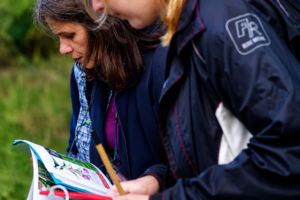
In the Netherlands, a small-scale citizen science study explored how participation in plant monitoring activities could influence the emotional well-being and connection to nature of older adults[2]. The initiative focused on biodiversity observation as an accessible form of engagement with nature, encouraging participants to carefully observe and monitor plant species in their local environments.
To better understand these experiences, the research combined questionnaires and semi-structured interviews conducted before and after participation. The study examined changes in emotional well-being, vitality, and nature connectedness using standardised scales such as the Positive and Negative Affect Schedule (PANAS), the Inclusion of Nature in Self (INS), and the Nature Relatedness Scale (NRS).
Although the group was small, mostly composed of women over 60, the results revealed meaningful changes. Participants reported higher levels of positive emotions such as joy, enthusiasm, and satisfaction after engaging in the monitoring activities. At the same time, emotions associated with stress and psychological discomfort, including anxiety, irritation, and sadness, decreased significantly according to the PANAS scale. The study also identified a measurable strengthening in participants’ emotional and cognitive connection with nature.
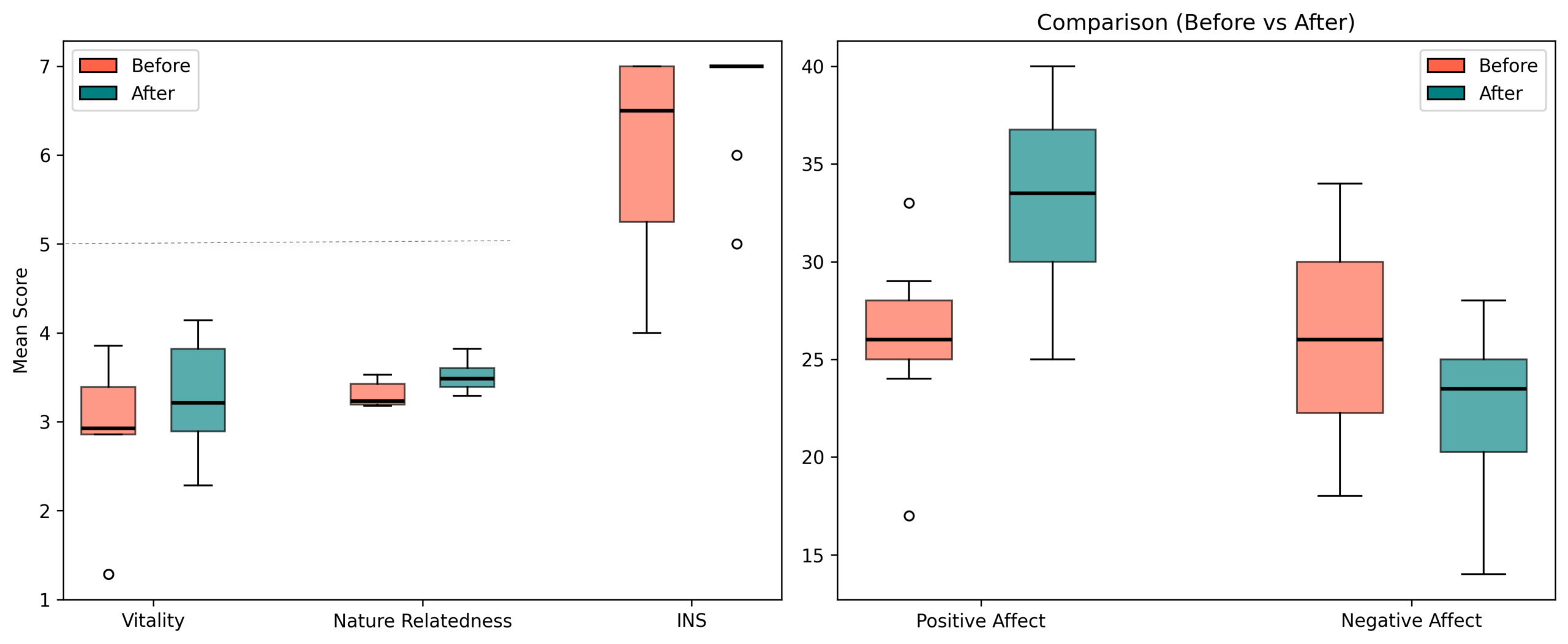
Boxplots from monitoring activities in the Netherlands. Click to enlarge.
What emerged from the interviews was equally revealing. Many participants described the experience as an opportunity not only to learn more about biodiversity, but also to reconnect with the environment in a more intentional and meaningful way. Some expressed a growing sense of contribution to conservation, while others highlighted the pleasure of paying attention to details in nature that often go unnoticed in everyday life.
These findings suggest that citizen science can offer something beyond data collection. By encouraging attentive interaction with biodiversity, participatory monitoring may help strengthen emotional bonds with nature and foster conservation awareness among participants.
Citizen science can strengthen emotional bonds with nature and foster conservation awareness among participants.
While this empirical case was conducted in Europe, it is part of a broader research agenda that also engages with Brazilian realities, where citizen science and nature-based activities are increasingly being explored as tools not only for data collection, but also for social inclusion, environmental awareness, public participation, and public health.
This dual geographical perspective highlights an important insight. Although cultural, institutional, and environmental contexts differ, the human response to meaningful interaction with nature shows remarkable consistency.
Implications for Protected Areas: a shared opportunity
For Protected Area networks such as EUROPARC, the cross-country perspective of this research offers a valuable takeaway: the role of Protected Areas extends beyond conservation boundaries and national contexts.
Whether in the Netherlands or Brazil, these spaces can function as:
- Platforms for citizen engagement and science
- Catalysts for health and well-being
- Arenas for strengthening human–nature relationships
However, realising this potential depends on moving beyond passive access. While simply being in nature already generates benefits, the research shows that active engagement, such as citizen science, deepens both well-being outcomes and environmental awareness.
From global evidence to local action
A recurring lesson across both studies is that the value of nature becomes most powerful when it is experienced, not just measured. Across continents, from European monitoring programmes to Brazilian discussions on ecotourism and urban green space, the message converges: investing in nature is also investing in people.
But the next step is more ambitious. It requires designing Protected Areas not only as places to visit, but as places to participate, learn, and connect. Because when people actively engage with nature, whether in a Dutch meadow or a Brazilian forest, they are not just observing biodiversity, they are reconnecting to it.
References:
[1] NUNES, Gabrielle Abreu; SOLDADO, Emerson Barão Rodrigues; LINDENKAMP, Teresa Cristina Magro. Can observing nature improve human well-being? Opportunities for Ecotourism. Brazilian Journal of Ecotourism, [S. l.], v. 18, n. 1, p. 83–98, 2025.
[2] Nunes, G.; Soldado, E.B.R.; Buijs, A.; Magro, T.C. Impacts of citizen science on well-being among older adults: Insights from a small-scale study. 4th World Conference on Forests and Parks for Public Health, Luxembourg, 2025.
Drive Until The End Of The Road – A Visit To The Weerribben
In July 2026, representatives of the LIFE PAME-Europe project visited one of the project’s Pilot Sites, the Weerribben-Wieden. Learn more about how this place is managed, and what makes it so unique. Scroll down for the video interview with Ruben!
Blog written by Esther Bossink, EUROPARC Federation Communications and Operations Manager.
Meeting Where the Road Ends & The Journey Begins
“Drive until the end of the road, that’s where you’ll find our office.”
Those were Ruben Achter de Molen’s instructions before our visit to the Staatsbosbeheer office in the Weerribben, the Netherlands.
As a native Dutchie, I was surprised by how accurate that description turned out to be. In a country where everything is planned and every road seems to lead somewhere, not many roads truly end. Yet our narrow, winding road did exactly that, stopping at the Staatsbosbeheer office.
This is where Ruben was waiting for us. He works for Staatsbosbeheer, the Dutch National Forestry Agency, as area manager for the Weerribben. With the neighbouring Wieden, managed by the NGO Natuurmonumenten, the area forms National Park Weerribben-Wieden and is one of the LIFE PAME-Europe Pilot Sites. The project supports nature managers in assessing the effectiveness of Protected Area management through the development of the PAME-Europe Framework and its accompanying digital tool.
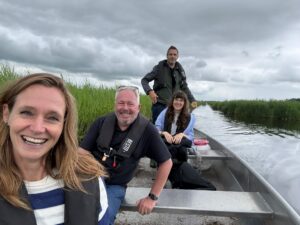
Myrthe Fonck, Neil McIntosh, Esther Bossink and Ruben Achter de Molen
Together with project manager Neil McIntosh and Myrthe Fonck from National Park Zuid-Kennemerland, another PAME-Europe pilot site, Ruben invited us to discover what makes the Weerribben-Wieden such a valuable landscape, and why both organisations wanted to join this European project.
The Staatsbosbeheer office sits alongside a busy “water highway”, where recreational boats pass every few minutes in the summer months on their way to the waterways of Friesland in the north of the Netherlands. However, for the greater part of the year, the area is marked by tranquility. Across the canal, the marshes of the Weerribben stretch into the distance. Together with the Wieden, they cover more than 10,000 hectares. That is a considerable area in one of Europe’s most densely populated countries. Internationally, the area is equally significant: it is the largest contiguous lowland peat bog in north-western Europe and provides habitat for a wide range of species, including the endemic Large Copper butterfly. Recognising its ecological importance, the area is protected as a Natura 2000 site.
Standing on the edge of the marsh, it is difficult to imagine that this landscape owes so much of its existence to people.
Weerribben-Wieden: Where People Shape Nature – and Nature Shapes People
Ruben welcomes us into the Staatsbosbeheer office overlooking the water with understandable pride. As we settle in, he introduces the history and management of this special place, explaining that in many ways, the Weerribben is itself a product of the interaction between people and nature.
Reeds in Weerribben
Before the construction of the Afsluitdijk, this area bordered the Zuiderzee. The dynamic influence of the sea regularly removed reeds and prevented forests from establishing. Once the dike closed off the sea, those natural processes came to an end, and people gradually took over that role. Reed cutting became an important activity, supplying material for traditional thatched roofs, a practice that continues today, and fills the locals with pride. As we moved through the landscape, many signs were placed along the road stating ‘We are growing roofs here!’.
Peat extraction, however, shaped the landscape most profoundly. As peat was dug for fuel, an intricate network of waterways and marshes emerged, creating the conditions for the rich wetland habitats that define the area today.
With a smile, Ruben tells us, “Over here we say that we heated Amsterdam.”. The peat harvested in the area was transported by boat to the capital of the Netherlands, and even to ports around the Baltic Sea, becoming an important driver of the local economy.
The landscape changed again when peat lost its economic value. As land prices declined, many private landowners sold their properties to the government, and management of much of the area gradually came into the hands of Staatsbosbeheer.
A Shared Responsibility
If history explains how the Weerribben came into being, it also explains why managing it requires so many people to work together.
The Weerribben forms part of National Park Weerribben-Wieden. Staatsbosbeheer, state-owned, manages the Weerribben, while Natuurmonumenten, an NGO, is responsible for the Wieden. But those organisations are only part of the picture. Farmers, reed cutters, local residents, municipalities and many others all have a stake in this landscape.
In Dutch, we call this approach polderen: bringing everyone around the table to find a shared solution. The term originates from the polders: the reclaimed land that depended on collective effort to keep dry. That tradition of cooperation remains deeply embedded in the Dutch way of working.
Polderen: bringing everyone around the table to find a shared solution.
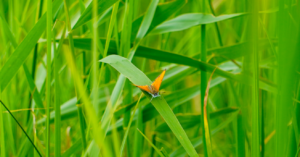
Copper Butterfly in the Weerribben
As Ruben explains how decisions are made, it becomes clear that managing the Weerribben is about much more than restoring habitats or protecting species. It is equally about maintaining the partnerships that make that management possible. It is this combination of ecology, governance and long-term stewardship that makes the site such an interesting pilot for LIFE PAME-Europe.
One example is reed cutting. Around ten percent of the reed used for thatched roofs in the Netherlands still comes from the Weerribben. Staatsbosbeheer works with over 100 tenants who continue to harvest reed by hand, and across the whole of the National Park around 200 tenants are engaged. By following management agreements, these tenants help maintain open marsh habitats while sustaining a centuries-old tradition. Their livelihoods and the area’s biodiversity are closely connected.
The results are visible. Populations of the Large Copper butterfly are increasing, species such as the Black Tern and the otter have returned, and sphagnum moss is thriving once again, strengthening the peatland’s role as an important carbon sink.
Let’s Take to the Water
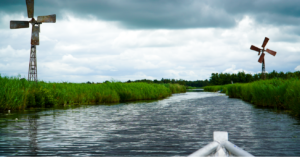
Weerribben-Wieden landscape
After our introduction inside the office, Ruben is eager to show us the Weerribben as it’s meant to be experienced: from the water.
We duck beneath low bridges before entering a maze of waterways lined by towering reeds. Every now and then an old windmill appears on the horizon, completing the unmistakably Dutch landscape.
We do not have to wait long before Ruben’s experienced eye spots the Large Copper butterfly. With its bright orange wings standing out against the sea of green reeds, it is easy to understand why this tiny insect has become the area’s flagship. Remarkably, the special subspecies L. d. batavus is found nowhere else in the world.
As we continue through the marsh, Ruben points out the different management measures that Staatsbosbeheer and the reed cutters are taking to support not only the Large Copper butterfly, but many other characteristic species of the marshland. Looking across the seemingly untouched landscape, it is striking how much care lies beneath its calm appearance.
By the end of our visit, one message has become clear: the Weerribben is not simply a landscape where nature is protected, it is a landscape where nature, history and people continue to shape one another. Its biodiversity depends not only on ecological processes, but also on cooperation, shared responsibility and long-term stewardship.
Assessing management effectiveness means looking beyond habitats and species alone.
That is also what makes the Weerribben-Wieden such a valuable LIFE PAME-Europe Pilot Site. Assessing management effectiveness means looking beyond habitats and species alone. It also means understanding the partnerships, traditions and governance that allow those habitats to thrive. The Weerribben shows that effective Protected Area management is as much about people working together as it is about the nature they care for. Understanding whether that collaboration remains effective is precisely what PAME-Europe aims to support.
Before heading back, we step ashore for one final stop to ask Ruben about the management of the area, why the Weerribben-Wieden joined LIFE PAME-Europe as a pilot site, and what makes this landscape so distinctive. Dive into the video to hear it directly from him!
As we leave the Weerribben, we found more than an office at ‘the end of the road’: instead, we were introduced to a space where biodiversity depends not only on ecological processes, but also on centuries of human stewardship and continued collaboration between land managers, reed cutters, local communities and many other stakeholders.
Interested in Protected Area Management Effectiveness? Join the LIFE PAME-Europe Management Effectiveness Community mailing list. You will stay updated on the project’s progress and be able to provide feedback throughout its development. Sign up here.
Out Now: EUROPARC Annual Report 2025!
The EUROPARC Annual Report 2025 details the work delivered by the Federation to achieve our vision of ‘Sustainable Nature, Valued by People’.
2025: A year marked by change and connection
From a change in leadership, to the EUROPARC Conference in Lithuania, 2025 was an eventful year for our network! The Annual Report 2025 highlights everything that happened, from our work on projects to new developments in our Youth, Transboundary, and Sustainable Tourism Programmes, as well as the events that continue to catalyse innovation across our network.
Sustainable Nature, Valued by People
The Annual Report follows the structure of the EUROPARC Strategy. It highlights the collective efforts of everyone active in the EUROPARC Network, all working towards our vision of Sustainable Nature, Valued by People.
Curious about the progress of our projects? Want to know what our member-led groups have been working on? Interested in how the Directorate represented our members’ interests in policy spaces? Or maybe you’d like a refresher on the many webinars, events, and activities within our Youth, Sustainable Tourism, and Transboundary programmes? Then don’t hesitate: dive in now!
As always, the Annual Report concludes with an overview of the work of our Sections: a great opportunity to learn more about their valuable contributions.
Annual Report 2025 (EN) Annual Report 2025 (FR) Annual Report 2025 (DE)
International Cooperation: more important than ever
EUROPARC is founded on the believe that nature conservation works better through international cooperation. This is the red thread that connects all work detailed in the Annual Report. From the 2025 Conference, to the work developped in projects, and our policy efforts: we are stronger when we are connected. As our president Michael Hošek writes in his opening remark:
Together, working through EUROPARC, we evidence and uphold honesty, cooperation, openness, and the search for common ground or solutions instead of provoking conflict.
This ethos is evidenced by our 400+ members across Europe, and serves as a powerful motivator to continue the work of the Federation and support Protected Areas in delivering the best results for nature and people.
The EUROPARC Directorate would like to thank everyone who contributed to and helped shape the 2025 Annual Report. We wish everyone happy reading!
The publication has been compressed for uploading. If you would like the high quality version, don’t hesitate to contact us.