Re-evaluation Visit 2026: A New Chapter for the Krkonoše/Karkonosze Transboundary Area
In March 2026, the transboundary cooperation between Krkonoše Mountains National Park (Czechia) and Karkonosze Mountains National Park (Poland) entered a new phase. An international verification visit took place under the EUROPARC Transboundary Programme.
The visit ran from 9th to 12th March. It brought together park representatives, experts, and the appointed verifier. The aim was clear: assess progress and review the partnership.
A Visit Across Borders and Landscapes

(c) Rolands Auzins
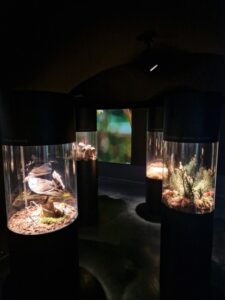
The programme gave a clear view of how the two parks work together. Meetings, presentations, and field visits showed this cooperation in practice.
The visit started in Poland at the Sobieszów Palace. This site serves as the headquarters of Karkonosze National Park. Here, participants discussed strategy and daily cooperation.
Later, the group moved into the field. They explored projects that reflect joint conservation efforts. The delegation also crossed into Czechia. There, they visited the Krkonoše National Park visitor centre in Vrchlabí. This step highlighted the cross-border nature of the partnership.
Cooperation in Practice
The visit showed strong cooperation at many levels. Staff from both parks meet often and work closely together. Many activities take place across the border.
The parks also involve a wide range of stakeholders. These include local communities, scientists, and institutions. Their input helps shape a shared vision for the region.
(c) Rolands Auzins
Over time, the transboundary area has built a strong identity. Trust, shared goals, and regular cooperation support this progress.
Looking Ahead
After the visit, the verifier prepared conclusions based on the findings. These conclusions now move into the next stage of the process.
The Steering Committee (STEC) will review them first. After that, the EUROPARC Council will assess them. This process ensures a balanced and transparent decision.
The Big Question
Attention now turns to the upcoming EUROPARC Transboundary Parks Conference in Austria this June. Will the Krkonoše/Karkonosze Transboundary Area receive its certification again?
The answer will come soon. It will mark an important moment for this long-standing cooperation.
One thing already stands clear: Cross-border cooperation remains essential for protecting Europe’s natural areas.
Celebrate European Day of Parks 2026: Connected by Nature!
Photo: Sandra Grego | EUROPARC Federation
This 24th May, join the celebration of the European Day of Parks, a day dedicated to celebrating and strengthening our Protected Areas. This year’s theme, “Connected by Nature”, shines a spotlight on the vital role of ecological connectivity in safeguarding Europe’s biodiversity and ensuring resilient ecosystems for future generations.
Bridging Nature’s Networks
Ecological connectivity and resilient ecosystems are at the heart of the NaturaConnect project, supporting countries in designing and developing a blueprint for the Trans-European Nature Network (TEN-N).
Explore the Public Repository of Ecological Connectivity Projects
NaturaConnect offers a public repository of connectivity projects, offering a comprehensive overview of initiatives at regional, national, and pan-European levels. This dynamic resource supports knowledge sharing and empowers practitioners, policymakers, and conservationists to:
- Discover 80 projects across 30+ European countries, from forest corridors to grassland stepping stones.
- Access practical guidelines for planning and implementing connectivity measures, tailored to Europe’s unique challenges.
- Learn from stakeholder priorities, including climate refugia and the restoration of natural rivers.
Read about Key Insights from the NaturaConnect Report:
Guidelines for connectivity conservation and planning in Europe
This project output highlights:
- The critical role of connectivity in achieving the EU Biodiversity Strategy for 2030 and the Global Biodiversity Framework.
- A five-step framework for designing and implementing connectivity projects, from scoping to monitoring.
- The importance of multi-level governance and technical training to overcome challenges like data gaps and land ownership issues.
How can we make the TEN-N a reality?
Realising the TEN-N needs dedicated support from EU Member States, Protected Area managers, land owners and a range of other stakeholders across Europe. Furthermore, to ensure its succesful implementation a wide range of skills and capacities are needed. The NaturaConnect Learning Platform is here to support!
It features the self-paced NaturaConnect Training Course, which is organised into three sections composed of 11 sequential and stand-alone training modules. The materials empower users to fully utilise the NaturaConnect outputs and effectively create stakeholder engagement across various scales. Amongst other topics, participants can learn about the policy context of the TEN-N, comprehend specific tools and methods used in spatial conservation planning, and be enabled to apply them in various contexts.
Explore NaturaConnect Learning PlatformWhy It Matters?
Ecological connectivity is not just about protecting species-it’s about sustaining healthy ecosystems, mitigating climate change, and enhancing human well-being. By connecting nature, we ensure that Europe’s Protected Areas remain vibrant, functional, and resilient.
Get Involved!
- Explore the #NaturaConnect resources
- Join the celebration – register your EDoP event!
- Do not miss out on the upcoming webinar in which you will have a chance to learn more about the NaturaConnect project!
Let’s celebrate the power of connection and commit to a future where nature thrives, unbroken and united. Together, we are #ConnectedByNature!
Delivering the European Charter for Sustainable Tourism in Practice
Interested to hear from real-world cases on sustainable tourism in Protected Areas? Discover new case studies on our Knowledge Hub!
Delivering the European Charter for Sustainable Tourism in Practice: Local initiatives supporting sustainable tourism across Protected Areas
Protected Areas across the EUROPARC network are continuing to implement the European Charter for Sustainable Tourism through practical local initiatives and strong stakeholder cooperation. Recent case studies highlight how ECST partners are using collaborative governance, education and strategic tools to support sustainable destination management while strengthening links between nature conservation, communities and visitor experiences.
Case Study 1: ECST delivered via LEADER best practice and a 20‑partner community network

Some of the partners in Lahemaa National Park
In Estonia’s Lahemaa National Park, the implementation of the European Charter for Sustainable Tourism has been supported through an active cross-sector cooperation model, combined with LEADER funding and a structured sustainable tourism strategy. To support this process, Charter actions have been delivered through LEADER — the EU rural development programme — enabling coordinated initiatives between the protected area authority, municipalities, conservation organisations and tourism businesses.
The experience shows that structured collaboration can provide continuity for the ECST implementation, with the case study noting that LEADER cooperation offers a “replicable best-practice model for ECST delivery.”
Full Case StudyCase Study 2: Agrilab, an educational kitchen for food culture, nutrition and agrobiodiversity
Picture credit: Parchi del Ducato
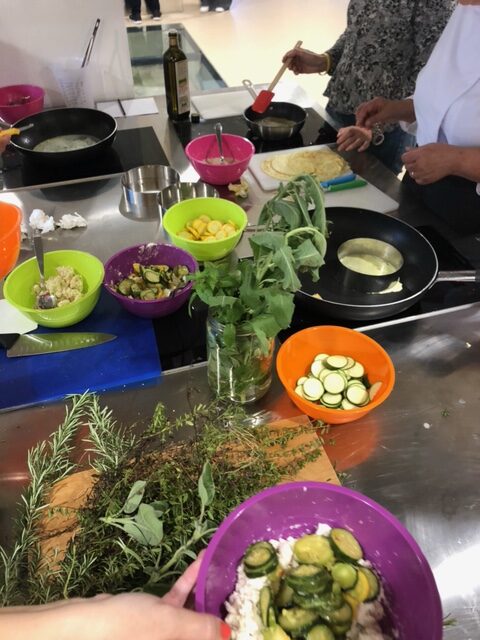
At the Parchi del Ducato – Western Emilia Parks, and more specifically in the River Taro Park in northern Italy, the Agrilab educational kitchen
promotes sustainable tourism by linking environmental awareness with local gastronomy. Through cooking workshops and hands-on activities centred on seasonal products, participants explore the connections between food traditions, biodiversity and responsible consumption.
The initiative encourages visitors “to discover local foods and their stories… and understand our impact on the planet,” helping strengthen relationships between protected areas and surrounding communities. Agrilab shows how experiential learning can enhance visitor engagement while supporting more sustainable lifestyles.
Full Case StudyCase Study 3: Development of a toolkit to support Sustainable Tourism in Wallonia
Picture Credit: Thomas Meunier
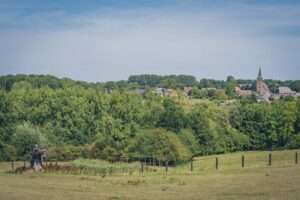
In Wallonia, Belgium, the Federation of Walloon Natural Parks has led the development of a practical toolkit to strengthen sustainable tourism planning and stakeholder engagement across regional nature parks. Designed to help park authorities and tourism partners communicate sustainability principles more effectively, the initiative provides guidance materials, examples and communication resources to promote responsible visitor behaviour and integrate biodiversity objectives into tourism strategies.
Aligned with the European Charter for Sustainable Tourism, the initiative supports capacity-building and more coordinated action across protected areas in the region.
Full Case StudyDo you have interesting initiatives that you would like to share with us? Or would you like to submit a case study? Please visit our Knowledge Hub! We look forward to hearing more stories from on the ground actions.
Welcoming National Park Sharri: Our First Member from Kosovo
(c) Sharri NP
We are delighted to welcome National Park Sharri as a new member of EUROPARC. This is a particularly special milestone, as Sharri becomes our first member from Kosovo, strengthening our network across Southeast Europe.
With its exceptional biodiversity, strong community ties, and commitment to sustainable development, National Park Sharri is a valuable addition to the EUROPARC network.
Conservation in National Park Sharri: Protecting Unique Mountain Biodiversity
National Park Sharri is a sanctuary for high-altitude biodiversity and iconic species. The Park’s conservation strategy focuses on:
- Protecting and preserving natural habitats and biodiversity
- Supporting traditional lifestyles in surrounding communities
- Providing access for education, research, and recreation
- Ensuring long-term habitat conservation for future generations
Key Conservation Achievements
The Park team has reached several important milestones:
- Discovery of a new plant species: Achillea mushtishti, a stenoendemic species unique to the Sharri region. This brings the total number of endemic species in the park to 22!
- EU-funded Pre-accession Assistance (IPA) Project approval: Supporting climate change mitigation and cross-border tourism development with partners in North Macedonia.
- Membership in the EUROPARC Federation: Strengthening Sharri’s role in European conservation efforts.
These achievements highlight the Park’s growing scientific and environmental importance.
Supporting Traditional Livestock Farming in the Sharr Mountains
(c) NP Sharri
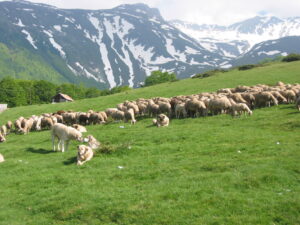
The Sharr Mountains are known for their long tradition of transhumance and pastoralism. National Park Sharri actively supports these practices, recognizing their role in maintaining ecological balance.
How the Park Supports Local Farmers
- Ongoing cooperation with livestock farmers and their associations
- Reduced pasture taxes to support traditional grazing
- Maintenance of mountain infrastructure
- Donations to improve living conditions and production
A key cultural product is Sharr cheese, a registered product with geographical origin that reflects the region’s heritage and sustainable practices.
Sustainable Tourism in National Park Sharri
As Sharri grows in popularity for hiking and winter sports, managing visitor impact is essential.
Protecting Wildlife Through “Quiet Zones”
Strict protection areas are located in remote, high-altitude zones where visitor numbers are naturally lower. Additional measures include:
- Informational boards outlining the Park’s rules and biodiversity values
- Continuous monitoring by park rangers and control teams
- Environmental education programmes for visitors and local communities
These actions ensure that tourism development does not compromise wildlife protection.
Cross-Border Cooperation for Nature Protection
Collaboration across borders is a key strength of National Park Sharri. The Park works closely with neighboring Protected Areas in North Macedonia, including Sharr Mountain and Mavrovo.

(c) NP Sharri
Joint Initiatives and Future Plans
- Applications for EU-funded cross-border projects
- Exchange of management knowledge and best practices
- Planned joint wildlife monitoring activities
- Development of sustainable tourism across the region
The recently approved IPA project is a major step forward in strengthening this cooperation.
A Warm Welcome to National Park Sharri
We are proud to welcome National Park Sharri to our network and celebrate them as our first member from Kosovo.
Their dedication to biodiversity conservation, support for traditional communities, and commitment to international cooperation make them an inspiring partner. We look forward to working together to promote sustainable tourism and protect natural heritage for future generations.