Reconnecting with our roots: The power of nature for children’s health and wellbeing
Credits: Irene Cervera-Buisán, PhD. Platja Cap Roig, Tarragona, Spain
Contact with nature is good for us. A new guide presents how we can use the power of nature for children’s health and well-being. This guest article was written in Spanish from Irene Cervera-Buisán, PhD from the organisation Les Trenades. Below we propose a translation but you can read the original Spanish version here

Irene Cervera-Buisán, PhD
If we think back to our own childhood, it is highly likely that our happiest memories are linked to natural environments: playing in a wood, running through a park or jumping over waves on the beach. However, in an increasingly urbanised and digitalised world, new generations are growing up further and further removed from the natural environment.
The current scientific evidence is compelling: we are part of nature and our physical, mental and emotional health is intimately linked to our contact with it. To address this disconnect and provide practical tools – Irene Cervera-Buisán, PhD – a psychologist and environmental educator, and Montse Masó-Aguado, an environmental scientist and nurse, produced the Health and Nature Guide (2024). The guide sets out a roadmap for integrating this duality into the lives of children and young people.
The origin: The Catalonia Health and Nature Platform
The creation of this guide is not an isolated event, but the result of a collaborative and strategic effort. The document has been produced within the framework of the Thematic Group on Health and Nature for Children, Adolescents and Young People (TSN IAJ), led in 2024 by the Catalan Society for Environmental Education (SCEA) and in collaboration with the Network for Nature Conservation (XCN), with the support of the Department of Territory, Housing and Ecological Transition of the Government of Catalonia.
The main objective of this framework is to highlight how a connection with nature acts as a factor in “salutogenesis”; that is, a positive resource that promotes health and well-being through prevention and resilience, rather than focusing solely on treating illness. The guide compiles recommendations as well as experiences, research and initiatives to connect children and young people with the environment, establishing a solid theoretical framework and offering practical levels of intervention.
The tangible benefits of “getting back to nature”.
In 1984, the biologist Edward O. Wilson popularised the term “biophilia”, the innate tendency of humans to focus their attention on other organisms and natural processes. When children lack this contact, they are exposed to what author Richard Louv termed “nature deficit disorder”, associated with attention difficulties, obesity and higher rates of physical and emotional illness.
Fortunately, reversing this has immediate and profound effects. Contact with nature brings holistic benefits to young children, notably its impact on cognitive and emotional development, the mitigation of neurodevelopmental disorders, and the improvement of physical and immune health.
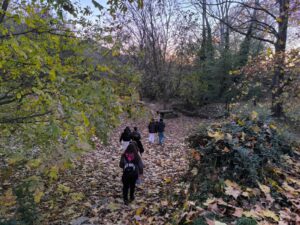
Credits: Irene Cervera-Buisán, PhD
What is the necessary “dose”? To reap these benefits, a key question arises: how much nature do we need?
The Global Alliance for Renaturalising Child and Youth Health recommends that children spend at least 12 hours a week in a natural environment. However, evidence suggests that significant effects on well-being can already be observed with just 2 hours a week.
At an urban level, the guide adopts the 3-30-300 nature recommendation proposed by Cecil Konijnendijk: everyone should be able to see at least three trees from their window, live in a neighbourhood with 30% vegetation cover, and have a high-quality green or blue space within 300 metres of their home.
But, most importantly, it is the type of activity we engage in within nature, and even our self-perceived biodiversity. Not everyone experiences and lives nature in the same way, and therefore the effects vary.
Levels of engagement with nature
In this guide, Cervera-Buisán and Masó present a model for engaging with nature across four levels of intervention, which can inspire, amongst others, national parks, health centres, and educational, social and/or environmental organisations:
- Level 1 – Nature in everyday life: Integrating green infrastructure into cities and school playgrounds.
- Level 2 – Exploration: Sports and environmental education activities that encourage spontaneous contact.
- Level 3 – Deep connection: Immersive experiences, environmental volunteering and mindfulness practices.
- Level 4 – Therapeutic interventions: Specific health programmes designed by professionals to treat specific disorders.
A healthy future requires a healthy planet
Economic and social inequality remains one of the greatest barriers to accessing nature. Ensuring that all children, regardless of the socio-economic status of their neighbourhood, have access to these spaces is a matter of equity and public health.
Fostering children’s connection with nature not only ensures healthier and more resilient adults, but also cultivates citizens committed to caring for the environment. Because, ultimately, there can be no human health without planetary health.
You can download the Health and Nature Guide both in Catalan and its non-official (automated Deepl) translation of the guide in English.
Download the guide in Catalan Download the guide in English (unofficial translation)Spotlight Story: Staff Exchange Brings Borders Down in EUROPARC Transboundary Areas
When Protected Area staff cross borders, they do more than attend meetings. They build trust, share skills, and create lasting friendships. Across EUROPARC Transboundary Areas (TBAs), staff exchange is one of the strongest drivers of successful cooperation.
From mountain patrols to youth camps, these personal connections turn shared landscapes into shared missions.
Weekly Meetings, One Shared Mountain
In the Krkonoše and Karkonosze National Parks, staff members cross the border almost every week. Rangers carry out joint field inspections, and teams work together on conservation, research, and visitor management. The verifier highlighted these regular face-to-face meetings as a key reason why cooperation remains strong and effective.
On average, staff cross the border once a week for face-to-face meetings.
This simple routine has helped the two parks deliver dozens of successful joint projects and maintain more than two decades of close cooperation.
Personal Commitment Creates Best Practice
In the Julian Alps Transboundary Ecoregion, the partnership between Triglav National Park and Parco Naturale Prealpi Giulie was described as “absolutely best practice” in Europe. Staff working in nature conservation, sustainable tourism, youth engagement, and environmental education are deeply involved in cross-border projects.
Without the strong personal engagement of the directors and members of staff, this success could not have been realised.
Their dedication led to a major achievement in 2024: international recognition of the UNESCO Transboundary Biosphere Reserve Julian Alps.
One-Day Exchanges, Long-Term Impact
Even short visits can make a big difference. In Podyjí National Park and Thayatal National Park, staff take part in exchange visits, joint ranger patrols, and language courses. In one example, three Czech staff members spent a day with their Austrian colleagues, learning directly from each other’s daily work.
These exchanges improve communication, strengthen mutual understanding, and inspire new ideas for conservation and visitor management.
Why Staff Exchange Matters
The EUROPARC Transboundary Programme shows that successful cooperation starts with people. When staff members meet in the field, solve problems together, and share experiences, they create the trust needed to protect nature across borders.
Staff exchange turns neighbours into partners and partnerships into long-term success.
Discover the EUROPARC Transboundary Programme
The EUROPARC Transboundary Parks Programme supports Protected Areas that work together across national borders. By promoting staff exchange, joint learning, and shared management, the programme helps nature thrive without boundaries.
Re-evaluation Visit 2026: A New Chapter for the Krkonoše/Karkonosze Transboundary Area
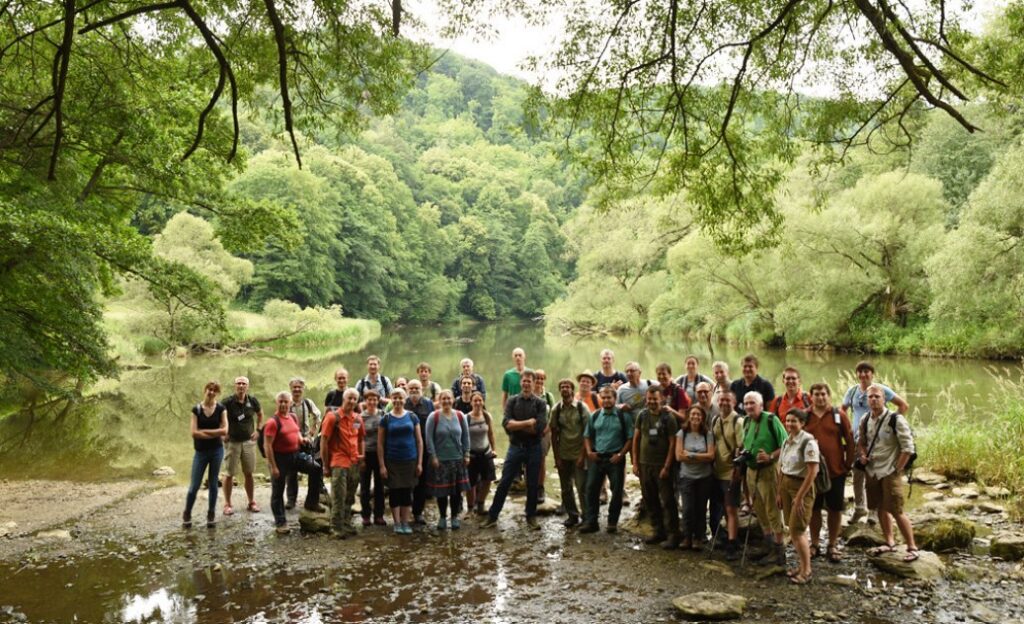
In March 2026, the transboundary cooperation between Krkonoše Mountains National Park (Czechia) and Karkonosze Mountains National Park (Poland) entered a new phase. An international verification visit took place under the EUROPARC Transboundary Programme.
The visit ran from 9th to 12th March. It brought together park representatives, experts, and the appointed verifier. The aim was clear: assess progress and review the partnership.
A Visit Across Borders and Landscapes

(c) Rolands Auzins
The programme gave a clear view of how the two parks work together. Meetings, presentations, and field visits showed this cooperation in practice.
The visit started in Poland at the Sobieszów Palace. This site serves as the headquarters of Karkonosze National Park. Here, participants discussed strategy and daily cooperation.
Later, the group moved into the field. They explored projects that reflect joint conservation efforts. The delegation also crossed into Czechia. There, they visited the Krkonoše National Park visitor centre in Vrchlabí. This step highlighted the cross-border nature of the partnership.
Cooperation in Practice
The visit showed strong cooperation at many levels. Staff from both parks meet often and work closely together. Many activities take place across the border.
The parks also involve a wide range of stakeholders. These include local communities, scientists, and institutions. Their input helps shape a shared vision for the region.
(c) Rolands Auzins
Over time, the transboundary area has built a strong identity. Trust, shared goals, and regular cooperation support this progress.
Looking Ahead
After the visit, the verifier prepared conclusions based on the findings. These conclusions now move into the next stage of the process.
The Steering Committee (STEC) will review them first. After that, the EUROPARC Council will assess them. This process ensures a balanced and transparent decision.
The Big Question
Attention now turns to the upcoming EUROPARC Transboundary Parks Conference in Austria this June. Will the Krkonoše/Karkonosze Transboundary Area receive its certification again?
The answer will come soon. It will mark an important moment for this long-standing cooperation.
One thing already stands clear: Cross-border cooperation remains essential for protecting Europe’s natural areas.
Celebrate European Day of Parks 2026: Connected by Nature!
Photo: Sandra Grego | EUROPARC Federation
This 24th May, join the celebration of the European Day of Parks, a day dedicated to celebrating and strengthening our Protected Areas. This year’s theme, “Connected by Nature”, shines a spotlight on the vital role of ecological connectivity in safeguarding Europe’s biodiversity and ensuring resilient ecosystems for future generations.
Bridging Nature’s Networks
Ecological connectivity and resilient ecosystems are at the heart of the NaturaConnect project, supporting countries in designing and developing a blueprint for the Trans-European Nature Network (TEN-N).
Explore the Public Repository of Ecological Connectivity Projects
NaturaConnect offers a public repository of connectivity projects, offering a comprehensive overview of initiatives at regional, national, and pan-European levels. This dynamic resource supports knowledge sharing and empowers practitioners, policymakers, and conservationists to:
- Discover 80 projects across 30+ European countries, from forest corridors to grassland stepping stones.
- Access practical guidelines for planning and implementing connectivity measures, tailored to Europe’s unique challenges.
- Learn from stakeholder priorities, including climate refugia and the restoration of natural rivers.
Read about Key Insights from the NaturaConnect Report:
Guidelines for connectivity conservation and planning in Europe
This project output highlights:
- The critical role of connectivity in achieving the EU Biodiversity Strategy for 2030 and the Global Biodiversity Framework.
- A five-step framework for designing and implementing connectivity projects, from scoping to monitoring.
- The importance of multi-level governance and technical training to overcome challenges like data gaps and land ownership issues.
How can we make the TEN-N a reality?
Realising the TEN-N needs dedicated support from EU Member States, Protected Area managers, land owners and a range of other stakeholders across Europe. Furthermore, to ensure its succesful implementation a wide range of skills and capacities are needed. The NaturaConnect Learning Platform is here to support!
It features the self-paced NaturaConnect Training Course, which is organised into three sections composed of 11 sequential and stand-alone training modules. The materials empower users to fully utilise the NaturaConnect outputs and effectively create stakeholder engagement across various scales. Amongst other topics, participants can learn about the policy context of the TEN-N, comprehend specific tools and methods used in spatial conservation planning, and be enabled to apply them in various contexts.
Explore NaturaConnect Learning PlatformWhy It Matters?
Ecological connectivity is not just about protecting species-it’s about sustaining healthy ecosystems, mitigating climate change, and enhancing human well-being. By connecting nature, we ensure that Europe’s Protected Areas remain vibrant, functional, and resilient.
Get Involved!
- Explore the #NaturaConnect resources
- Join the celebration – register your EDoP event!
- Do not miss out on the upcoming webinar in which you will have a chance to learn more about the NaturaConnect project!
Let’s celebrate the power of connection and commit to a future where nature thrives, unbroken and united. Together, we are #ConnectedByNature!