Invasive Species in Protected Areas – Workshop
Demonstration of the recent invasive plant management actions in the Hajdúság Landscape Protection area
„Managing invasive plant and animal species in the protected areas of Central and Eastern Europe”
Invasive species are a common problem faced by many protected areas face. Learning how other Parks, in neighbouring countries, manage and control them can definitely help you implementing better strategies in your area.
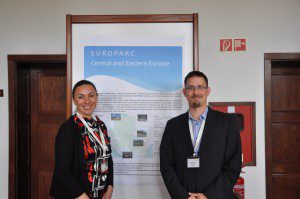
Director of the Hortobágy NP Directorate, Dr. Zita Kovács and the head organiser of the event, Dr. Dávid Bogyó
On the 2-6 May, 40 experts from 15 institutions within the EUROPARC Central and Eastern Europe Section gathered in Hungary for an intensive workshop on the management of invasive species. The workshop was host and organised by Hortobágy National Park, with the collaboration of the Hungarian Ministry of Agriculture.
This was the first workshop organised within EUROPARC’s most recent Section, following an interesting decision taken by its members: to organise annually a cost-effective workshops for “their own” experts. The idea is to gather in a Park member, to collect, share and discuss relevant experience on nature conservation practices.
Participants came from Hungary, Slovakia, Czech Republic and Croatia, representing Protected Areas, Ministries, research institutes and universities, to share their main challenges and solutions implemented in their protected areas. In total, 25 presentations were made. Technical information and best practices were discussed, and practical experience was shared during the two field trip days, where they visited sites in the Hortobágy NP and other protected areas (State level protection and Natura 2000 sites). In Hungary, their main focus is on the eradication of invasive tree species and restoration of grasslands, however, methods against herbaceous plants were also shown, while invasive fish species were also demonstrated in some of the wetlands.
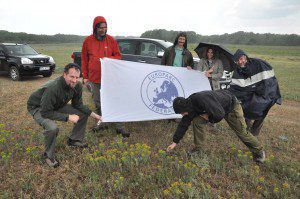
Eradication of the last invasive milkweed individual with international joint effort at the Jónás rész Natura 2000 site
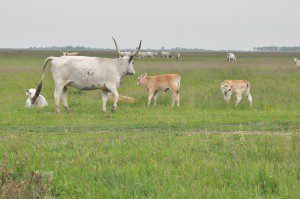
Invasive managers – Hungarian grey cattle in the Hortobagy NP
Sharing experiences with peers through workshops as considered a valuable experience by the participants, who are willing to organise similar workhops, involving Section members and other key persons. The technical results shared will help protected area’s staff to better manage invasive species, by replicating models implemented by ther areas, and to develop further methods to prevent their expansion. Future topics suggested by the participants were species reintroduction (good and bad examples), sustainable tourism, protected areas in and around cities (urbanisation), cross-border cooperation and effective communication with the public.
Download below the complete programme and the presentations.
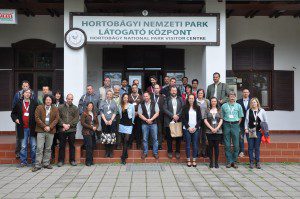
Group photo by the visitor center of the HNPD
About the Hortobágy National Park
The Hortobágy is an 800 km2 national park in eastern Hungary, rich with folklore and cultural history. The park, a part of the Alföld (Great Plain), was designated as a national park in 1973 (the first in Hungary), and elected among the World Heritage sites in 1999. The Hortobágy is Hungary’s largest protected area, and the largest (semi-)natural grassland in Europe. Until recently it was believed that this alkaline steppe was formed by the clear cutting of huge forests in the Middle Ages, followed by measures to control the course of the Tisza River, allegedly resulting in the soil’s current structure and pH. However, Hortobágy is much older, with alkalinization estimated to have started ten thousand years ago, when the Tisza first found its way through the Great Hungarian Plain, cutting off many streams from their sources in the Northern Mountains. The formation was finished by grazing animals during the Ice Age, followed by domesticated animals
Downloads
- pdfProgramme - Invasive Species workshop, EUROPARC CEE 2016
- pdf001_blacklocust_WWF
- pdf002_invasive_biology_UNIV_DEBRECEN
- pdf003_basic_description_Hortobágy National Park Directorate
- pdf01_Account of IAS Workshop
- pdf02_Invasive plant species_Poûana00
- pdf03_IAS_EUROPARC_konferencia160501
- pdf04_Invaziv halfajok2016
- pdf05_invaziv_HNP_20160503_HM
- pdf06_Invazní druhy v NP µumava- MaÈarsko 2016
- pdf07_Non-native and invasive Mollusca & Crustacea in Hungary
- pdf08_Hortobagy_WS_presentation_A_Schmotzer_Ipoly_invasive_pdf
- pdf10_IAS_control_Euorparc_CEES_VCs_pdf
- pdf11_Blacklocust2016
- pdf12_Croatia_Medvednica_Invasive plant species_final_pdf
- pdf13_Takacs_2016_Invasive plants2_jav_pdf
- pdf14_HORTOBÁGY_workshop_2016_fin_pdf
- pdf15_Invading plants in the Hortobágyi NP
- pdf16_IAS_CZ
25 years working for Nature – EUROPARC Germany
Excursion at the Black Forest National Park, within the celebration of the 25th Anniversary of EUROPARC Gerrmany © Stephanie Schubert
On the 2nd of June, EUROPARC Germany celebrated its 25th anniversary with a high-level event organised at the Nationalpark Schwarzwald (Black Forest National Park).
The event gathered over 80 participants, who had the chance to be inspired by keynote speakers and participate in field trips. The Annual members Assembly also took place and was held at a mountain hut in Baiersbronn.
Ignace Schops, President of EUROPARC Federation and Guido Puhlmann, President of EUROPARC Germany reflected on European Nature Protection and the work that EUROPARC Germany had done in the last 25 years.
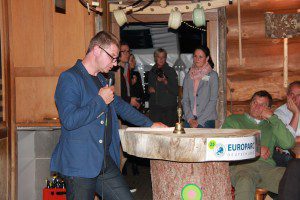
Ignace Schops, President EUROPARC Federation © K. Sabry
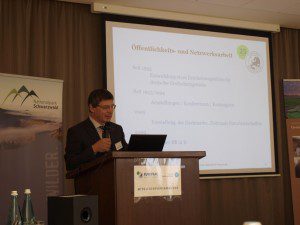
Guido Puhlmann, President EUROPARC Deutschland, at General Assemby 2016 © Stephanie Schubert
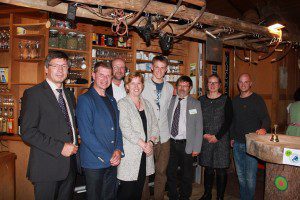
Guido Puhlmann, President of EUROPARC Germany; Ignace Schops, President of EUROPARC Federation; Marc Auer (BMUB); Dr. Christiane Paulus (BMUB); Marvin Manzenberger, Karl Friedrich Sinner, baord member and expert on Wilderness; Dr. Elke Baranek CEO EUROPARC Deutschland; Jan Wildefeld, Head of Youth and Media (photo by K.Sabri)
The invited speakers were Mr. Franz Untersteller, Minister for Environment of the Land Baden-Württemberg, who proudly shared the protected spaces within the region: 1 National Park, 2 Biosphere Reserves and 7 Nature Parks, which some are also part of the „National Natural Landscapes“. The second invited keynote speaker was Dr. Christiane Paulus, representing the Federal Ministry of Environment, Nature Conservation Building and Nuclear Safety, who gave a retrospective view over the work of EUROPARC Germany and announced Marvin Manzenberger as the „Youth ambassador of the UN Decade for Biodiversity“. Marvin is a former Junior Ranger and still active for the Youth+ Programme from the Bavarian Forest National Park.
During the celebration, the Königsbrücker Heide was announced to be the first Wilderness Area of the National Nature Landscapes. The „EUROPARC Germany Family“ has now a new category and will support the idea of Wilderness in Germany.
EUROPARC Germany is one of the oldest Sections of the Federation (along with Atlantic Isles) and their primary goal is to increase awareness and interest in Germany’s National Nature Landscapes (Nationale Naturlandschaften). The members of EUROPARC Deutschland comprise more than 40 Protected Areas and other organisations involved in nature and environmental issues, as well as foundations and friends’ associations.
Call for new Verifiers – European Charter for Sustainable Tourism
Hoge Kempen Regional Landscape, Belgium
The European Charter for Sustainable Tourism in Protected Areas (ECSTPA) is a practical management tool that enables Protected Areas to develop tourism sustainably, bringing environmental, social and economic benefits to the region.
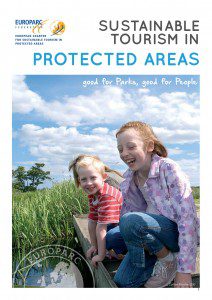
Good for Parks, Good for People – ECSTPA benefits, conditions and guidelines
The ECSTPA has been implemented over the past decades in several European countries and a wide range of expertise and experience has been built up. Up to now, 144 protected areas have been certified as Charter areas and this number is likely to increase over the years. Central to the ECSTPA is its evaluation process, and with the use of the ECSTPA becoming so widespread it is very important that the evaluation process maintains its high standards and credibility.
To learn more about the European Charter for Sustainable Tourism in Protected Areas read the brochure “Good for Parks, Good for People”.
Charter Verifiers
At the heart of the evaluation process are the verifiers – a European network of experts and experienced professionals. The last verifiers training was held in 2011, and in order to ensure that standards are maintained and improved it is proposed to train new verifiers, especially for those countries where the interest in the Charter is growing and to anticipate new developments in Charter parks across Europe.
As a member’s organisation we want not only to support the work of your park or organisation, but to offer opportunities not just to develop your skills and experience, but also to share that experience with others.
The opportunity to train as a verifier of the ECTSPA, will give you a chance to join a network of international professionals in the field of sustainable tourism and protected areas. The benefits of being a verifier include the opportunity to visit various European Protected Areas, by learning and assessing their various work produced, gain knowledge and understanding of the operational context of a protected area and how this has engaged with its stakeholders, the possibility to meet with various professionals and local experts, and assess the work done at the local level.
Become a Charter Verifier: What is needed
- In order to become a verifier you will need to show a proven expertise in the field of protected areas, sustainable tourism and participatory planning/community engagement.
- Verifiers will have to adhere to the code of conduct of the Federation and act as their ambassador and representative during their given assignments.
- Verifiers will have to ensure high quality and timely delivery of the verification reports in English.
- It is therefore required an excellent command of English (europass C2 writing) so to submit a clear, smoothly-flowing description or argument in a style appropriate to the context and with an effective logical structure which helps the Evaluation Committee to notice and remember significant points.
- It is also required a proven previous knowledge of the operative context of protected areas, experience in the field of sustainable tourism.
- Please note that availability on training dates is mandatory!
If you are interested and if you think you can fulfil the criteria, then apply to become a Verifier.
What to do
To apply to become a verifier please send your CV (in English) along with the completed form below by Friday, 1st July (23:59) so that we can start the selection procedure. We will confirm if you have been selected in early August. Training it will take place in Siggen in Northern Germany from 14th to 17th November 2016. It is mandatory to attend. We will send out a draft programme. Travel costs up to €350 will be reimbursed. Room and board are included.
The training will involve sessions looking at both programmes in relation to the EUROPARC strategy and sessions looking at how to verify a charter area. Communications skills and an in-depth look at the application forms and procedures is also included.
People who take part in the seminar will be expected to use their training exclusively for the Federation and to be available as verifiers for the Federation once or twice a year as a charter verifier.
Download the form below and send it back to info @ european-charter.org, along with a motivation letter explaining why you want to become a charter verifier.
Meeting with the DG Environment
Natura 2000 Logo
EUROPARC working for a better recognition of the role of Parks in Europe
Parks, with their long history, integrated governance systems, wide expertise, passion and dedication are fundamental to ensure the effective management of Natura 2000 sites. EUROPARC Federation has been working in Brussels to enhance the recognition of Parks among the EU Institutions, and highlight their fundamental role for safeguarding Europe’s habitats and biodiversity. Indeed, conservation objectives will be hardly achieved without proper management and the involvement of stakeholders.
Yesterday, Federico Minozzi, EUROPARC Managing Director along with Giampiero Sammuri, President of Federparchi-EUROPARC Italy, and Enzo Lavarra, President of the Dune Costiere Regional park and former MEP, had a productive meeting in Brussels with the DG Environment – Cabinet of the EC Commissioner Vella. EUROPARC and Federparchi-EUROPARC Italy will work to collect some evidence and case studies and introduce the European Commission concrete results from our member network, on the management of Natura 2000.
For more information about our policy work check our section “European Policy”.