Opportunity for young people from all over Germany, Austria, Switzerland and Luxembourg – MAB JUGENDFORUM 2019
MAB JUGENDFORUM 2019
You are young, live, work or engage in a biosphere reserve and want to make a difference?
You want to know more about sustainable life and business?
You would like to meet like-minded people from all over Germany, Austria, Switzerland and Luxembourg?
In case you answered these questions with yes this is a perfect opportunity for you! EUROPARC Germany is organizing an event for young people from 18 to 25 years of age who would like to take part in „MAB Jugendforum 2019“ in UNESCO-Biosphärenreservat Rhön!
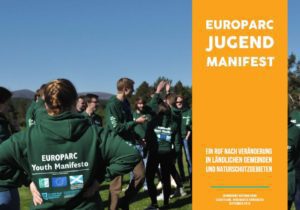
This project is connected to EUROPARC Youth Manifesto – one of the first initiatives of this kind in Germany. You can download the Youth Manifesto in German to learn more about it!
When?
From the 6th to the 9th of September 2019.
Participation is free for you.
Apply until 02.06.2019.
Click here for the preliminary program.
Who can participate?
Young workers and apprentices from biosphere reserves in Germany, Austria, Switzerland, and Luxembourg
What can you expect at the Youth Forum?
– You spend an extended weekend (06.-09.09.19) in the environment education center Rhöniversum in the biosphere reserve Rhön (Bavaria) with a varied and exclusive program.
– You get to know about 70 other young and open-minded people who are in similar life situations, and with whom you share experiences and interests, but also can have fun,
– You acquire new knowledge and skills or deepen what you already know, e.g. nature conservation, corporate responsibility, regional marketing, project management, personal initiative, teamwork, and presentation techniques,
– You get support in the development and implementation of a small project in the “own” biosphere reserve and
– You get the chance to present your ideas and demands for the future of biosphere reserves.
What is your responsibility?
– If your application is successful, you make a binding commitment to participate throughout the Youth Forum from 06.09.19 in the afternoon to 09.09.19 in the morning (excluding travel times).
– You will meet with “your” biosphere reserve administration and possibly other participants from the region on approx. 2-3 dates to discuss and plan your own small project, which can be implemented after the Youth Forum.
– You go into eventful days with approx. 70 other participants from all over Germany and neighboring countries with an openness for new things and you are ready to get actively involved in the program
– if your project receives prize money, you use it for the realization of the project and complete the project together with “your” biosphere reserve administration.
Pixabay
When and how can you apply?
From now on, just fill out the application form.
What happens after the application?
By the 15.06.2019, you will be informed about your participation in the MAB Youth Forum.
Which costs will be covered?
The costs for overnight stays, meals, arrival, and departure, as well as the program costs, will be covered. You only have to pay for additional drinks.
How do you arrive and depart?
The recommendation is to travel by train to Gersfeld (Hesse) or Bad Neustadt an der Saale (Bavaria) railway stations, from where shuttle buses will be used to the conference center. The departure will be the other way round.
Take a look at the map of Biosphere Reserves in Germany.
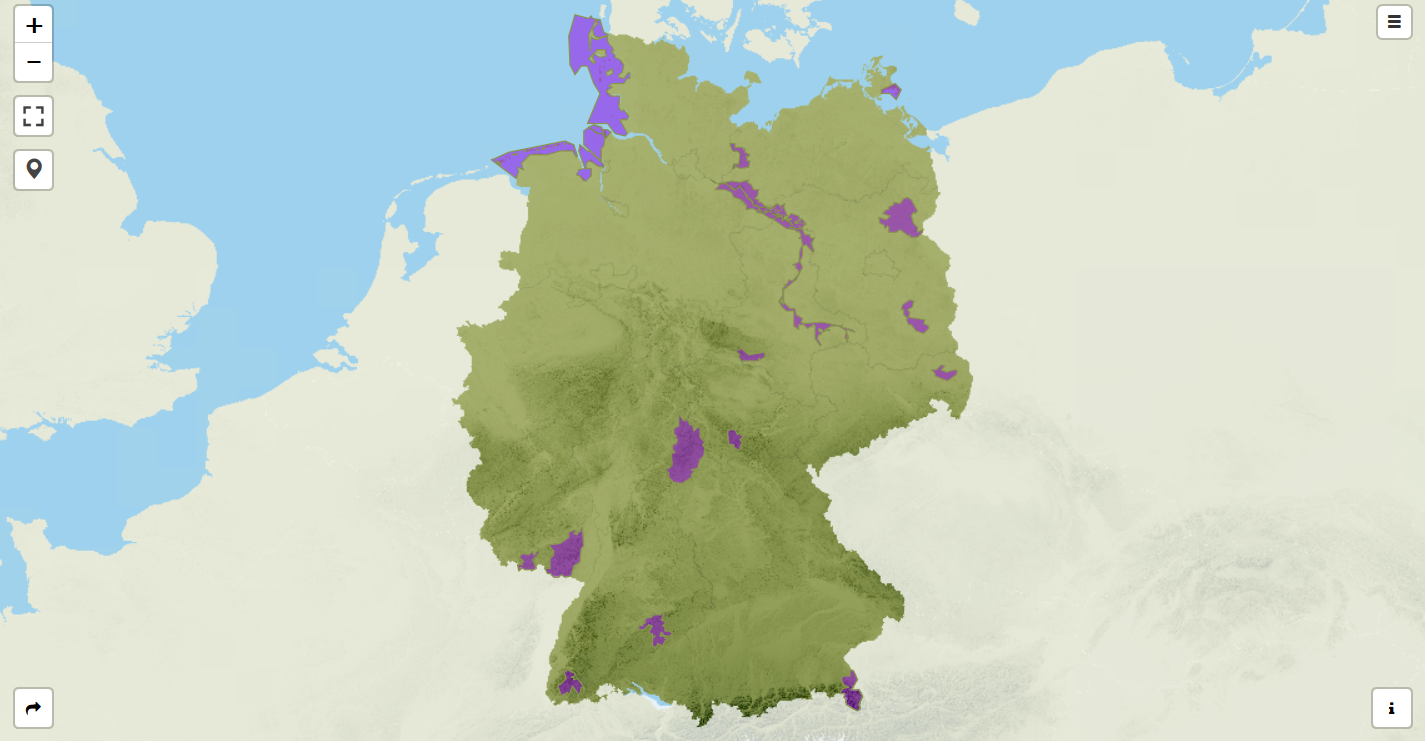
Map of Biosphere Reserves in Germany.
All the additional information can be found here!
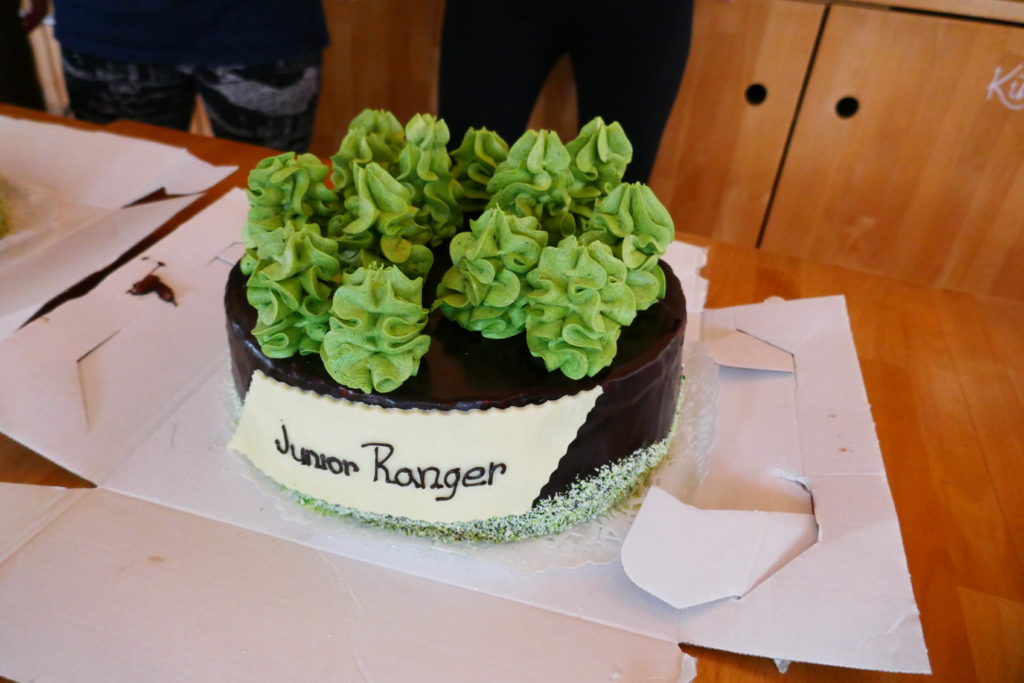
Become a part of Junior Ranger stories and experiences: “Wintercamp in Bavarian Forest”
JR Frederikshavn Kommune
Wintercamp in Bavarian Forest
Junior Rangers from Denmark, Cairngorms National Park, and National Park Bavarian forest met up in Bavaria in the beginning of March. The National park had invited Junior Rangers from Denmark and Scotland to participate in a winter camp, where they had an opportunity to learn more about Nature in wintertime and work on collaborating together across the borders.
Ranger Mario Schmid and the Junior Rangers in the National park of the Bavarian forest had created a fantastic program full of versatile activities. Participants left the camp full of impressions and new experiences.
They are very grateful for this opportunity and are hoping to be able to host the next edition of the camp.
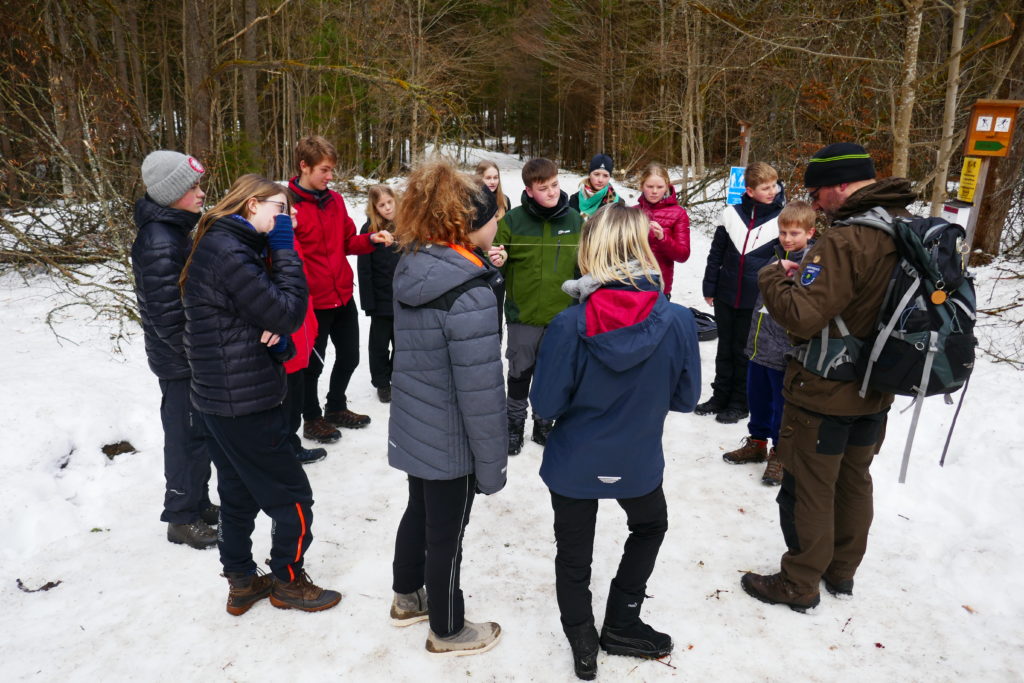
Wintercamp in Bavarian Forest
Wintercamp in Bavarian Forest
Join the Junior Ranger Programme
The EUROPARC Junior Ranger Programme was launched in 2002 as a pilot project embracing four partner parks. The network has grown ever since. Being part of an extended European Junior Ranger network enables young people to connect with their peers across Europe.
The EUROPARC Federation Junior Ranger Programme is aimed at young people aged 12-18 who are living within or close to the protected area. In 2016, the programme involves around 80 Protected Areas across 19 different EU countries, working with ~5000 youths every year.
Discover our Junior Ranger network in Europe with our infographic.

Requirements and recommendations to join the EUROPARC JR network:
- A 5 – days programme per year is the minimum required expected: it can be one week, or different days activities throughout the year.
-
Activities should provide real nature conservation work experiences, and possibly also include cultural and social topics. Most of them should be done outdoors, in nature.
-
Parks running Junior Ranger activities must be a EUROPARC member. We will provide all the information needed and help to get you started.
The map below is showing all Junior Ranger projects across Europe (in 2015-2019), with basic information, useful links, videos or pictures. We recommend to put the map on full screen ( left bottom button ) or to open it in a new tab.
What does it mean to be a Junior Ranger
Being a respected participant in Junior Ranger and other youth activities in a Protected Area enables young people of the community to feel they have a role to play and can see their actions having an impact on improvements to their areas, as well as building strong interpersonal skills that will contribute to better relations in education, business, and society.
Such Junior Ranger programmes are:
- Good for the development of the Ranger Service (or park staff);
- Facilitate social cohesion by improving relations between the park and the local community;
- And can make positive, confident and healthy young people
Being part of the network also enables to connect Junior Rangers in Protected Areas across Europe. Perhaps you want to find a Junior Ranger Programme to twin with from another part of Europe. We can help members with support and advice and connect across the network. Some of our sections encourage programme, for instance, the very successful programme in Germany.
To learn more about the work of Junior Rangers, you can watch the documentary “A European Tour of Junior Rangers: Working for Nature“. This film portrays some of the activities that some of the Junior and Youth Ranger teams carry out to protect endangered habitats and species in Europe.
To learn more about this program, please download the brochure, as well as the very useful guide of good practice published by EAI.
And visit the official EUROPARC Junior Ranger Facebook!
The (needed) competencies for effective Natura 2000 Management
Covering over 18% of the EU’s land area and more than 7% of its marine territory, the Natura 2000 network is the largest coordinated network of protected areas in the world: the network includes the most valuable and threatened species and habitats of Europe. Although considerable progress has been made in the implementation of the measures legally required by the Nature Directives, ensuring effective management of individual Natura 2000 sites remains a challenge in most EU countries. In particular, deficiencies in practical implementation and inconsistencies of approach are widely recognised as adversely impacting on the practice and quality of Natura 2000 site management.
What are the core competence needs of Natura 2000 and Protected Area managers? How can we build practical capacities and know-how through innovative methods? Within the LIFE e-Natura2000.edu project, EUROPARC and its partners will deliver 3 blended-learning opportunities for Natura 2000 & Protected Area Managers in 2020. The first building block of the project has just been launched: an analysis of the competencies needed for the effective management of Natura 2000. The learning opportunities will open at the end of 2019… Stay tuned!
The challenge of effective Natura 2000 management
The outcome of the Fitness Check of the Birds and Habitats Directives made clear that they are ‘fit for purpose’ and demonstrate EU added value. The Directives have generated many important benefits for nature conservation and sustainable development overall. They provide a balanced and workable framework for addressing the varying interests of stakeholders while respecting nature conservation objectives. Overall the costs of implementation are reasonable and outweighed by the benefits, although they do impact some stakeholders more than others.
However, the evaluation also reveals problems with the pace and extent of progress that stem from implementation. While some problems have decreased over time as a result of experience, others require future action. From the perspective of improving Natura 2000 management in practice, implementation improvements are required in such areas as:
- management planning,
- provision of more and better information,
- increased guidance, more integration and joined-up delivery with other policies,
- increased awareness and involvement of stakeholders.
The evaluation study highlights that Natura 2000 sites do not exist in isolation: not only are they part of an ecological network which spans the EU, each site has different human and economic contexts which must be included in nature conservation decision-making. Therefore, not only do Natura 2000 managers need to know how to assess the condition of their site(s) and put in place the measures necessary to achieve conservation objectives, they also need to know their stakeholders and how to work with them to achieve those objectives.
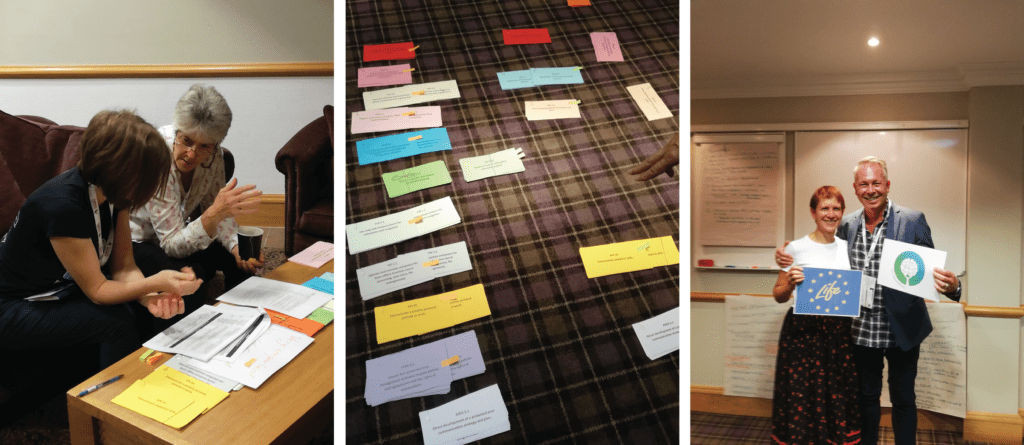
Capacity Building workshop at EUROPARC Conference 2018, Scotland
There is a clear need to build capacity amongst Natura 2000 site managers in relation to, for example, the development of technical knowledge along with ways to ensure effective stakeholder engagement: the implementation of necessary site conservation measures, including the development and implementation of management plans, is after all fundamentally a participatory process which requires skilful working with nature and people at the same time.
How can we respond to that?
With the LIFE Preparatory project: ”Supporting e-learning and capacity building for Natura 2000 managers”, a three-year project that explores the potential of new approaches and methods to improve specific competencies and build practical capacity required by Natura 2000 site managers across the EU. The project aim is to strengthen the implementation of Natura 2000and contribute to the successful realisation of the EC’s Action Plan for People, Nature and the Economy.
This LIFE Preparatory project aims to contribute to closing the gaps between the ‘what’ and ‘how’ of Natura 2000 management. The project focuses on building practical capacities and know-how across a set of core competence areas identified as being fundamental to the work of Natura 2000 site managers from diverse backgrounds and operational contexts. The results from Action A1 form the ‘backbone’ of the project to be further developed across the other project actions.
1) Identification and assessment of competencies for management of Natura 2000
As part of Action A1, “Identification and assessment of competencies for management of Natura 2000”, a first technical meeting was held in Brussels. The project team and invited experts analysed the IUCN Global Register of Competencies for Protected Area Practitioners. The main objective was to identify a set of priority competencies specifically required by Natura 2000 site managers and for which the project will develop a set of innovative learning tools.
Download the Report: Identification and assessment of competencies for management of Natura 2000
This report summarizes the results of project Action A.1 and the contents represent the result of collective inputs from all project partners and external experts invited to the first technical workshop of the project. It provides:
1) an analysis of functions required to be performed by site managers for the efficient implementation of Natura 2000, based on the results of the Fitness Check of the Nature Directives (2016) and on the Nature Directives’ legal requirements;
2) a methodological framework for the development of a coherent, competence-based approach to capacity building for Natura 2000 site management;
3) a defined list of key competencies identified as being particularly relevant for Natura 2000 site managers across Europe – these lie in the fields of:
- Communication and collaboration, including the development of strong, inclusive participatory processes recognising the vital role of local communities and respect for cultures;
- Awareness and Education, including working with local communities and cultures;
- Natura 2000 policy, planning and projects focused on biodiversity conservation practices.

Summary of technical activities and functional areas of expertise required by Natura 2000 site managers
2) Understanding Natura 2000 implementation in different EU Member States
The Nature Directives require all Member States to provide the capacity necessary to secure a positive impact for Natura 2000 and establish a framework for effective implementation based on competent management practices. However, management of Natura 2000 sites is organised and approached differently by each Member State: in many countries, Natura 2000 sites are managed by governmental institutions acting at different levels of territorial responsibility; in other countries, management responsibilities for Natura 2000 are devolved or delegated to various entities. This diversity means that capacity needs to fulfill the specific management responsibilities for Natura 2000 are highly variable across the EU.
Below you can have an idea of how Natura 2000 is being managed in the countries of the project partners:
Natura 2000 Management in Austria
Natura 2000 Management in Croatia
Natura 2000 Management in Italy
Natura 2000 Management in the Netherlands
Natura 2000 Management in Romania
Natura 2000 Management in Spain
Natura 2000 Management in Sweden
3) Build a competence-based approach
In the IUCN ‘Global Register of Competencies for Protected Area Practitioners’, there are 15 competence categories, each of which covers specific skill and knowledge requirements to indicate what a Protected Area practitioner should know and be able to do.
Competence derives from the combination of knowledge, skills and attitude (K-S-A). A competent individual can clearly demonstrate that he/she has knowledge on the theoretical and technical aspects of a specific task, is able to perform that task reliably and consistently and complete it conscientiously. Competence-based approaches to capacity building are based around proven acquisition of the skills, knowledge and attitude needed for effective implementation of tasks and functions.
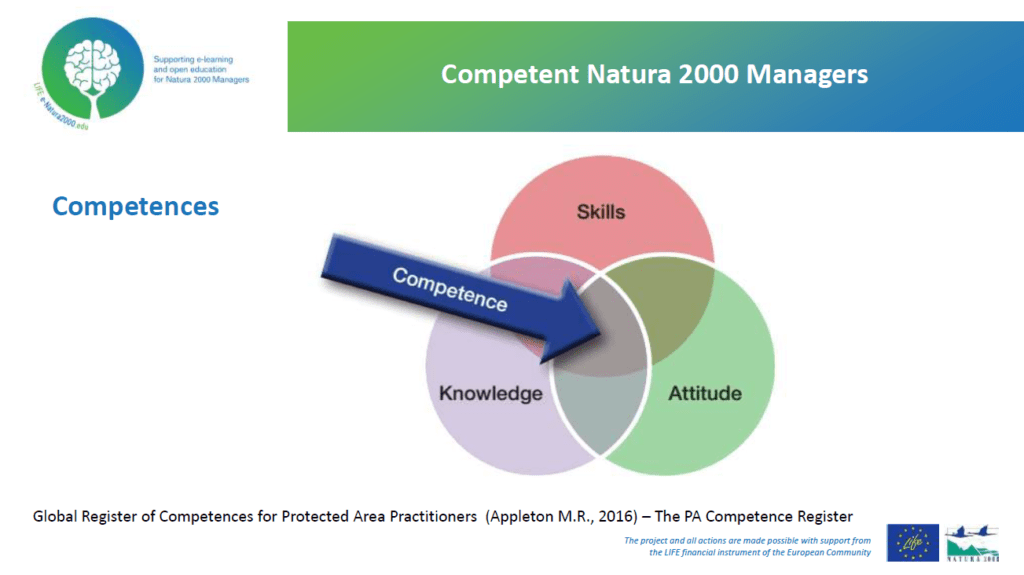
Competence is at the crossroads between Knowledge, Skills and Attitude.
Within the context of this LIFE Preparatory project, the competence-based approach to capacity building refers to providing learning opportunities that enable Natura 2000 site managers to develop or acquire the skills, knowledge and attitude needed to effectively perform tasks required of them by the Nature Directives. As for Protected Area practitioners, competencies (required or desired) by Natura 2000 site managers vary by staff levels and operating contexts. As explained in the report above, the competence needs are correlated with:
- the complexity of a given Natura 2000 site;
- its management objectives and implementation activities;
- the overall context, the type of management setting and governance arrangements;
- the specific responsibilities of involved organisations; and, available resources.
These are some of the multiple factors which need to be considered when identifying the competencies required by individual Natura 2000 site managers and when designing approaches to capacity building.
4) Building Capacity
The project Partners will deliver 3 core competence Modules in 2020, which will focus on:
- Biodiversity conservation: policy, planning & projects for Natura 2000 (led by ProPark) ;
- Effective communication & collaboration for Natura 2000: engaging local communities & working with cultures (Led by FUNGOBE);
- Powerful communication for Natura 2000 managers (Led by EUROPARC)
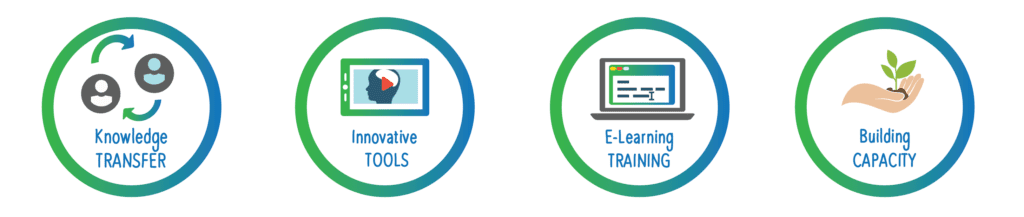
Within the project, there will 3 blended-learning opportunities for Natura 2000 & Protected Area Managers. Registrations will open at the end of 2019.
Natura 2000 and Protected Areas
The relationship between Natura 2000 sites and Protected Areas varies across different Member States: in many countries, Protected Areas were formally established years before Natura 2000 sites were designated. Unlike Natura 2000 sites, Protected Areas are not designated legally by the EU: various country-specific, national or regional, legal protection mechanisms are applied for Protected Areas.
In some cases, Natura 2000 sites may lie within a Protected Area, but not always, and there may be different management arrangements and requirements. Probably reflecting the fact that Protected Areas generally precede Natura 2000 sites, dedicated teams are not always in place for Natura 2000 site management.
However, although the legal status of Natura 2000 sites is different to Protected Areas, there is clearly a significant overlap in terms of the primary responsibilities and functions of Natura 2000 site managers and Protected Area practitioners. Often, the same people are involved working for the conservation needs of a Natura 2000 site and a Protected Area: even when different people are involved, the same nature conservation practices, skills, knowledge and expertise are required.
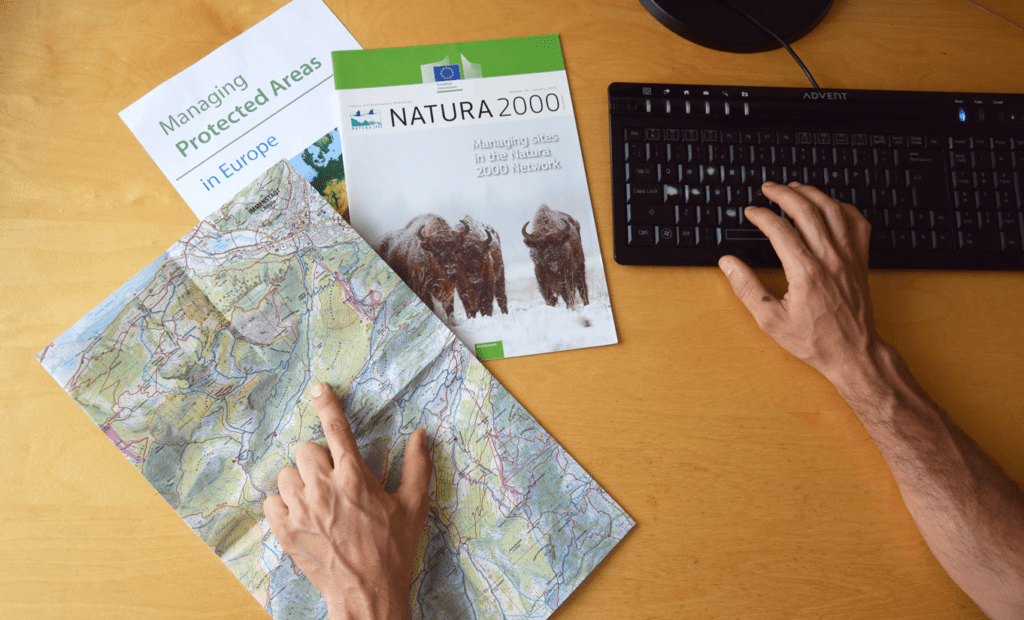
The report has been produced by Propark Foundation for Protected Areas, project partner responsible for project implementation Action, ‘A.1’, in collaboration with the EUROPARC Federation. This report is a project deliverable of the LIFE Preparatory project LIFE e-Natura 2000.edu (LIFE17PREDE003). The project is funded by LIFE financial instrument of the European Community and implemented by EUROPARC Federation with support of five partners: ProPark, Fungobe/ EUROPARC Spain, TESAF University of Padova, European Landowners Organisation, and the Kullaberg Nature Reserve.
2 job opportunities in EUROPARC Federation: Financial Manager and Office Administrator
EUROPARC Federation Logo © EUROPARC Federation
Position: Financial Manager – full-time position
Location: Regensburg, Germany
Do you like Nature and Numbers?
The EUROPARC Federation is the umbrella organization of Europe’s protected areas. It is registered as a German non-profit organization (gemeinnütziger eingetragener Verein).
EUROPARC is seeking a full-time Finance Manager/ Chief Accountant who is responsible for leading the finance and accounting of the Federation, based on EUROPARC’s mission and values.
Working in a small and committed team in Bavaria, the candidate will have the opportunity to liaise with protected areas across Europe.
The main duties of the Finance Manager/ Chief Accountant will be and not necessarily limited to:
- Coordination and implementation of internal and external accounting:
- Settlement payments;
- Completion of the financial statements;
- Independent preparation of tax returns;
- Coordination of internal cost and management accounting with monthly reports;
- Calculation of different types of costs and support to the creation of a budget;
- Support of the Council/Directorate in the preparation of financial reports.
- Support for the membership management
- Support for the billing of membership fees.
- Assistance in project applications and reporting
- Provision of financial data for application;
- Preparation of cost calculations;
- Provision of financial data and receipts for reporting.
Required skills, knowledge and experience
Essential
- Fluent in German;
- High proficiency in English;
- High-level computing skills in Microsoft Office applications; especially Excel;
- Experience in the field of accounting (HGB);
- Experience with the preparation of tax returns (NON-PROFIT organization);
- Experience in dealing with relevant Accounting Software;
- Ability to multi-task and approach challenges with an open mind;
- Ability to support and work within a multi-national team environment;
- Highly organised and resourceful.
Desirable
- Experience in working with public subsidy providers and managing grant projects;
- User Knowledge of Lexware professional software.
Position Conditions
- Duration: 2 years
- Full time – 40 working hours a week
Starting date
- Ideally August – September 2019
Applications
Please send a 1-page motivation letter and your CV to Ms. Michaela Zeller ( m.zeller@europarc.org ) indicating “Financial manager application” in the subject line until the 31st of May 2019.
You can download all the necessary information here!
Due to the expected number of applications, only short-listed candidates will be contacted for interviews.
Position: Office Administrator – part-time position
Location: Regensburg, Germany
The EUROPARC Federation is Europe’s biggest network, supporting and representing the work of Europe’s protected areas. As a member organisation with interests in nature conservation, sustainable tourism development, capacity building and European environment policy development and implementation, strategic and effective administrative processes are central to our work.
The Office Administrator will provide comprehensive administrative support to enable the Federation to operate effectively, efficiently and to comply with statutory, legal, contractual and funding requirements.
We are looking for a highly organized and resourceful administrator, with an interest in nature and a willingness to work in an NGO culture. The administrator is ideally a German native speaker and speaks English fluently, as the office language is predominantly English. Additional European languages are desirable.
The work is varied and interesting, encompassing all aspects of NGO administration, personnel, membership administration, and office management. A background or experience in business administration is desirable, as are excellent IT skills.
Operating from the headquarters in Regensburg the Office Administrator will contribute to the small dedicated team.
Principle Tasks
- Administrative support to the organization management including basis
preparation and support for decision making in the fields of finances
and law on associations - Project administration and assistance in project applications and project
reports preparation - Membership Administration
- Office Management: preparation of presentations and reports, correspondence,
post and phone, maintenance of files, archives, and databases - Organization and follow-up of council and member meetings as well as advising
the management on issues of law on associations - Administration of service contracts; review of processes and contracts
with service providers - Personnel administration (13 staff members), supervision of interns
- Membership administration (400 members in 37 countries)
- Arrange travel, prepare itineraries, administer expense report tools
- Representation of the Federation at international seminars and workshop.
Position Conditions
- Duration: limited till March 2020, as a replacement to parental leave
- Part-time: around 20 hrs per week
Starting date
- As soon as possible
Applications
Please send a 1-page motivation letter and your CV to Ms. Monika Trojer ( m.trojer@europarc.org ) indicating “Office Administrator position” in the subject line until the 31st of May 2019.
You can download all the necessary information here!
Due to the expected number of applications, only short-listed candidates will be contacted for interviews.