Delivering the European Charter for Sustainable Tourism in Practice
Interested to hear from real-world cases on sustainable tourism in Protected Areas? Discover new case studies on our Knowledge Hub!
Delivering the European Charter for Sustainable Tourism in Practice: Local initiatives supporting sustainable tourism across Protected Areas
Protected Areas across the EUROPARC network are continuing to implement the European Charter for Sustainable Tourism through practical local initiatives and strong stakeholder cooperation. Recent case studies highlight how ECST partners are using collaborative governance, education and strategic tools to support sustainable destination management while strengthening links between nature conservation, communities and visitor experiences.
Case Study 1: ECST delivered via LEADER best practice and a 20‑partner community network

Some of the partners in Lahemaa National Park
In Estonia’s Lahemaa National Park, the implementation of the European Charter for Sustainable Tourism has been supported through an active cross-sector cooperation model, combined with LEADER funding and a structured sustainable tourism strategy. To support this process, Charter actions have been delivered through LEADER — the EU rural development programme — enabling coordinated initiatives between the protected area authority, municipalities, conservation organisations and tourism businesses.
The experience shows that structured collaboration can provide continuity for the ECST implementation, with the case study noting that LEADER cooperation offers a “replicable best-practice model for ECST delivery.”
Full Case StudyCase Study 2: Agrilab, an educational kitchen for food culture, nutrition and agrobiodiversity
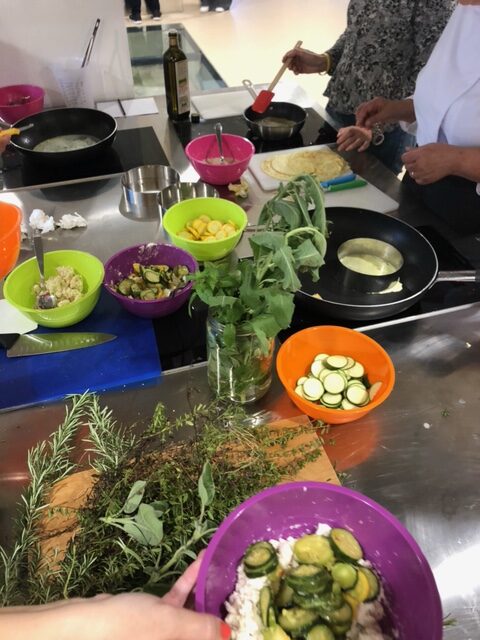
Picture credit: Parchi del Ducato
At the Parchi del Ducato – Western Emilia Parks, and more specifically in the River Taro Park in northern Italy, the Agrilab educational kitchen
promotes sustainable tourism by linking environmental awareness with local gastronomy. Through cooking workshops and hands-on activities centred on seasonal products, participants explore the connections between food traditions, biodiversity and responsible consumption.
The initiative encourages visitors “to discover local foods and their stories… and understand our impact on the planet,” helping strengthen relationships between protected areas and surrounding communities. Agrilab shows how experiential learning can enhance visitor engagement while supporting more sustainable lifestyles.
Full Case StudyCase Study 3: Development of a toolkit to support Sustainable Tourism in Wallonia
Picture Credit: Thomas Meunier
In Wallonia, Belgium, the Federation of Walloon Natural Parks has led the development of a practical toolkit to strengthen sustainable tourism planning and stakeholder engagement across regional nature parks. Designed to help park authorities and tourism partners communicate sustainability principles more effectively, the initiative provides guidance materials, examples and communication resources to promote responsible visitor behaviour and integrate biodiversity objectives into tourism strategies.
Aligned with the European Charter for Sustainable Tourism, the initiative supports capacity-building and more coordinated action across protected areas in the region.
Full Case StudyDo you have interesting initiatives that you would like to share with us? Or would you like to submit a case study? Please visit our Knowledge Hub! We look forward to hearing more stories from on the ground actions.