“Undisturbed”: UK runs campaign to “educate” wildlife photographers and drone operators
Wildlife photographer, photo from pixabay
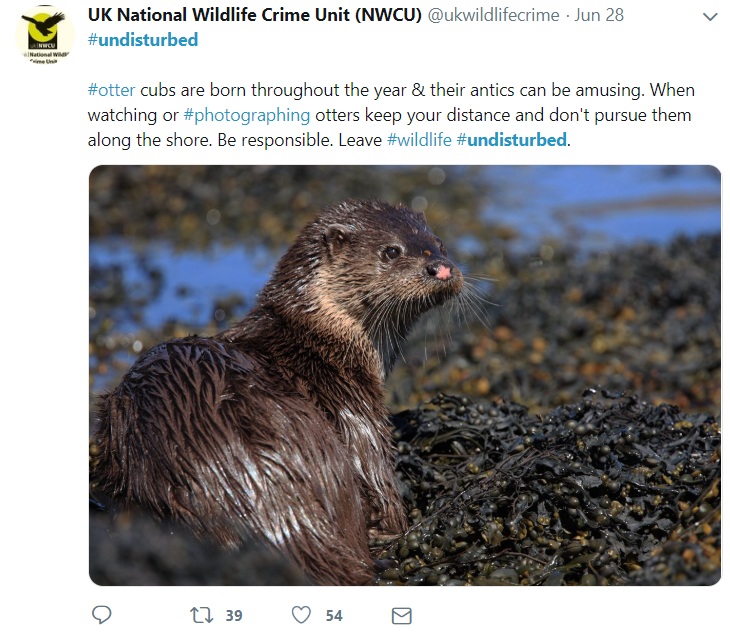
The UK National Wildlife Crime Unit is running a social media campaign targetting wildlife photographers and drone operators… to leave wildlife “undisturbed”. This is the story of their campaign, published in the “Countryside Jobs Service”.
Leave wildlife #undisturbed
Due to the latest advances in technology and more affordable prices in equipment, photography and filming are fast becoming a popular activity in European Protected Areas. Furthermore, in some cases, the use of drones has proved to be a powerful tool for Protected Area professionals, able to provide different types of information in a cost-effective manner.
However, photographers without knowledge of wildlife behavior are approaching animals and popular places for them in search of new pictures – and if the approach is too close and invasive, it could lead to sudden behavior changes of the species, and cause harmful effects on biodiversity.
Some incidents so far reported include causing seal colonies to stampede into the sea, seabirds fleeing cliff ledge nests, dolphins changing behavior due to vessels and raptors lifting from nests due to human presence. In the case of drones, flying close to the animals could cause panic and unnecessary stress.
These incidents were not only seen in Protected Areas, where visitors are usually monitored and controlled, but especially in non-managed areas, where surveillance and enforcement are often absent.
A crime prevention campaign
Under the name of Undisturbed, the UK National Wildlife Crime Unit (NWCU) launched in May 2019 a social media crime prevention campaign. It aims to sensitize wildlife photographers and drone operators about the risks when approaching wildlife to guarantee the welfare of the animals.
This measure complements the UK legislation. The Wildlife and Countryside Act 1981 and Conservation Regulations 1994 sanctions those who intentionally or recklessly disturb protected species with fines that can reach to £5,000 or even 6 months imprisonment. In fact, in the UK, management of wildlife is a devolved power, so the competent authority is allowed to apply licenses to cause disturbance for the purposes of photography. The licenses prevent the photographers from committing an infringement if the animal is disturbed.
Laurie Campbell has over 40 years of experience as a photographer and confirms the rise in the number of wildlife disturbance incidents cause by other photographers. She advises:
As far as possible, one should always research the species of bird or mammal in advance and to determine its protected status within law before attempting to photograph it. Recognising the signs of stress and being aware of any changes in the natural behavior of any animal is vital, both to judge how close you may approach safely, and when to back away. Regardless of whatever the protected status of the species may be, its welfare must always come before the desire to photograph it.
Lou Hubble, Chief inspector and head of the NWCU and Chief says:
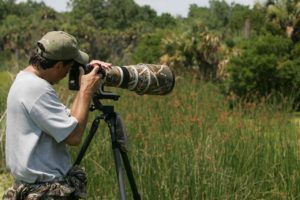
Photo by pixabay
“Wildlife is amazing! It is a real privilege to see animals and birds in their natural habitat. We have such a diverse range of species throughout the UK and it is only natural to want to get close to them. However, this initiative serves to remind people that disturbance could be a criminal offense. Please be responsible when photographing or filming wildlife and birds and allow others to enjoy the experience as you have.”
The campaign is supported by the Partnership for Action against Wildlife Crime in England & Wales, Scotland and Northern Ireland respectively and incidents of disturbance should be reported to the UK’s Police by dialing 101.
You can check the Undisturbed campaign in twitter following @ukwildlifecrime and follow the hashtag #undisturbed
The roots of the future: linking environmental education & health for kids in Italy
Experiencing springwater taste, by Maurilio Cipparone
Article issued by Maurilio Cipparone. IUCN CEC & WCPA member, involved in nature conservation and parks for 50 years, in three continents. Now leading “NèB”, an Italian pilot project for children’s well-being in nature.”
A “special” nature park dedicated to the education and the well-being of “kid-rangers”
Could we transform an old farm in an extraordinary protected area? Could we go back through the years to recreate a wild marshy landscape once reclaimed for harvesting? Could the reborn wilderness be the “trigger” of an educational vision to put in practice the “Healthy Parks Healthy People (HPHP)” global strategy? Moreover, could children be the main actors in this process?
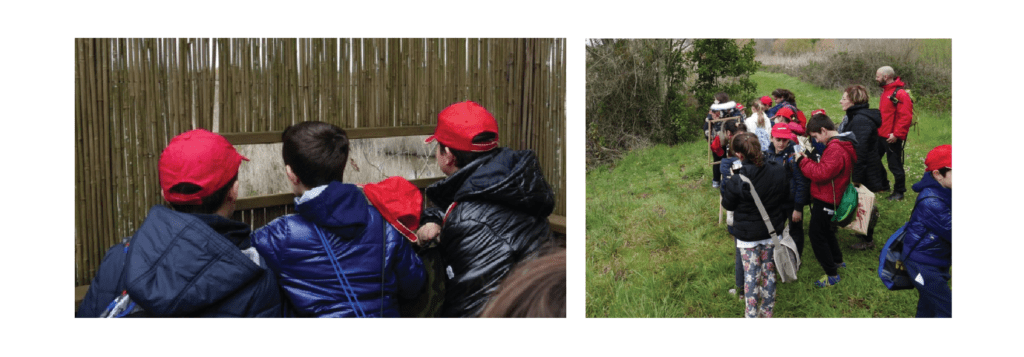
The answer is YES: the protected area has been established and named “Pantanello Nature Park”; the abandoned farm’s landscape has been “reclaimed back”; the HPHP vision has been implemented and more than 2,000 school children have been the main actors of an educational programme started in 2015 and still going on, gaining national relevance as a “pilot project”.
But let’s go back to the Park and to the “Kid-rangers” project.
In Italian, ‘pantanello’ means ‘little swamp’. Until 1993, Pantanello was actually an old farm, bordering the renowned Garden of Ninfa Natural Monument. Both the Garden and Pantanello are owned by the Roffredo Caetani Foundation, which manages the cultural and natural heritage of one of the oldest Italian dynasties. Since Roman times, the land has been an extensive marshland, until it was reclaimed in the early thirties to be harvested by veterans.
The farm was gradually abandoned, the ancient landscape – with its natural and cultural values – began to recover: the Foundation, according to its objectives, committed to creating a Park to conserve nature and culture values. They dug a network of ponds to host migratory bird species, built trails and birdwatching shelters, and restored barns and buildings which are now used as classrooms and environmental education labs.
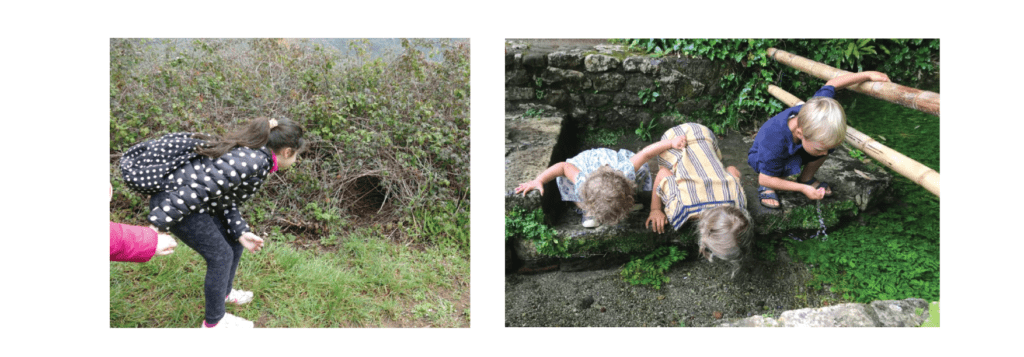
Promoting health and well-being for children
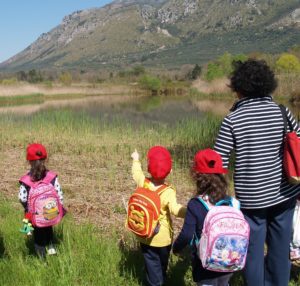
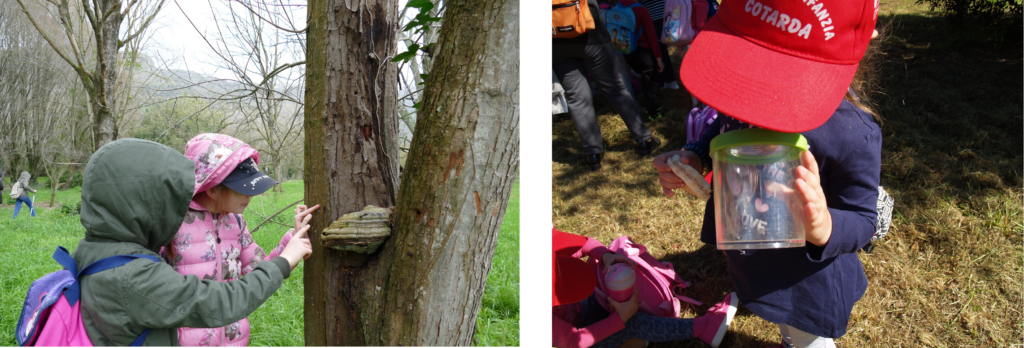
Exploring the ponds
In 2013, Pantanello hosted the second Italian BioBlitz and in 2014 the “Roots of the Future” project started, with the ambition to create the first Italian protected area dedicated to, and possibly managed with, the children from local communities. The educational activities, carried out by a team from the University Consortium CURSA, have been designed for knowledge building and biodiversity conservation, but, gradually, they have been oriented towards activities promoting children’s well-being and their psychophysical development. This unusual path was motivated by the results of research demonstrating how nature can influence children health.
Outdoor play fosters children’s intellectual, emotional, social and physical development
In Pantanello’s environment, all educational objectives have been planned to promote more active lifestyles, to fight obesity, to act against video-addiction, to manage attention-deficit hyperactivity disorder (ADHD) effects.
This unusual Kid-rangers project shares the objectives of the HPHP strategy and, at the same time, it has helped to promote the commitment of the Italian Ministry of Health.
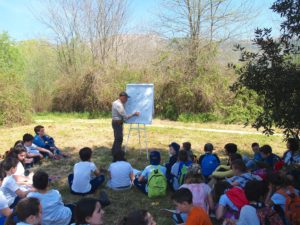
Outdoor classroom
A pilot project “NèB-Natura È Benessere” (Nature IS Well-being) has been launched with the “institutional” objectives to promote knowledge of the health benefits of green spaces for children. Through information and communication campaigns, it aims to raise public awareness and to promote, at different levels of government, the importance of the relationship between nature, biodiversity, human health, and children’s cognitive development through education and training.
Our objective, no less ambitious, is to promote awareness and actions on these issues through all Italian Parks: to keep the project’s benefits alive, building beyond the borders of the Ministry’s support.
To read more:
http://www.frcaetani.it/parco-pantanello/
https://www.facebook.com/piccoleguidepantanello/
https://www.facebook.com/NaturaBenessereBambini/
You found this topic interesting? To find more articles like this one, download the new edition of the EUROPARC Journal Protected Areas In-Sight with a special focus on youth involvement Parks – available in english, german and french!
“Sharing know-how”, a manual on international cooperation by EUROPARC Germany
EUROPARC Germany launched a new manual about international cooperation: “Sharing Know-how” – the Manual is not only the output of a 3-years project funded by the German Government – it is an insight on several good practices that are being implemented by European Protected Areas.
The importance of “Sharing Know-how”
Since 1973, EUROPARC believes that European nature is better protected through international cooperation. In fact, nature knows no borders! (which is especially relevant if we think about the geopolitical changes in Europe over the last century). This mindset of international cooperation is a common belief among all EUROPARC Sections, which despite working on topics more relevant to a specific region or country, often create opportunities for their members to exchange experience and learn from abroad.
That is exactly what EUROPARC Germany has done with the project ANNIKA (Actors from National Natural Landscapes in the International Exchange of Competence), that ran from 2015 to 2018 and allowed professionals of Germany’s natural landscapes to learn & exchange best practice through study tours in several European countries.
Looking at the broader picture softens the boundaries in thinking, finds solutions, and clarifies alternatives, possibilities, new approaches and self-perception,
said a participant in the final workshop of the ANNIKA project.
The brochure covers useful and practical cases of Protected Areas from Austria, United Kingdom, Germany, Finland, and the Netherlands on topics such as:
- Regional development and tourism
- Accessibility and inclusion
- Financing Strategies
- Education for sustainable development
- Volunteer management
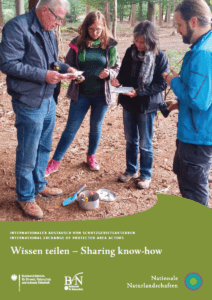
Brochure “Sharing Know-How” – EUROPARC Germany
The publication “Sharing Know-how” is a compilation of practical examples outlined by several authors who took part in visits to protected areas in 2016 and 2017. The manual is available in English and German and serves to continue the focus on international exchange of expertise, experiences and working methods between protected areas professionals.
It is also intended to promote the outcomes of the project. According to EUROPARC Germany, “broadening the horizons through study abroad boosts an intensive method to increase knowledge and competence, provides a helpful distance to self-evidentness and habits, increases motivation through the experience of an international “circle of colleagues”, and allows the establishment of contacts for future cooperation.”
Download the full Manual:
You can also download the brochure only in English or German separately or even ask for a printed version to EUROPARC Deutschland:
English Version – Sharing Know-How
German Version – Wissen Teilen
The ANNIKA project was supported by the Federal Agency for Nature Conservation (BfN) with funds from the Federal Ministry for the Environment, Nature Conservation and Nuclear Safety (BMU).
Italian Julian Alps: the new UNESCO Man and Biosphere Reserve
Prealpi Giulie Nature Park, Italy © Barbara Pais
The Italian Julian Alps MaB was announced recently in Paris as one of the newest UNESCO’s Man and Biosphere Reserve (MaB) established in Italy. Congratulations! Here is all you have to know about this new Man and Biosphere Reserve… who is also a special member of the EUROPARC Network!
The Italian Julian Alps MaB
The new MaB Unesco Biosphere Reserve “Italian Julian Alps” encompasses a territory of 11 Italian municipalities of the north-eastern part of the Friuli Region. The official designation includes the term Julian Alps in order to reinforce the will to cooperate with the neighboring Slovenian Biosphere Reserve Julijske Alpe.
We wish to have in the future a unique Transboundary Biosphere Reserve of the Julian Alps,
said Stefano Santi, Director of the Prealpi Giulie Nature Park.
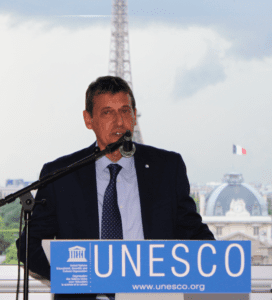
Stefano Santi, Director of Prealpi Giulie Nature Park, in Paris June 2019, receiving the Certificate of the new establish UNESCO MaB Reserve Italian Julian Alps
UNESCO appreciated not only the extraordinary biodiversity and amazing landscapes of the area but also the strict relation with Slovenia witnessed by the Transboundary Ecoregion Julian Alps certified by EUROPARC Federation both as Transboundary Park and with the European Charter for Sustainable Tourism.
The new Biosphere Reserve will give to all the area an extraordinary possibility to become a pilot area in the testing of new forms of sustainable development with a transboundary shared vision.
The President of the Prealpi Giulie Nature Park Andrea Beltrame thanked all the people and institutions that supported the candidature, especially the Young Advisory Board of the Park, fundamental for recognition of the strong involvement with the local community that the Park pursues.
A Transboundary Park, a Sustainable Destination and a UNESCO MaB region… all in one?
The Prealpi Giulie Nature Park, the entity that managed the UNESCO MaB application process and will be in charge of the coordination activities of the MaB Reserve, is a very special member of the EUROPARC network: since 2007 they are following the EUROPARC’s Transboundary Parks Programme, working side-by-side with its Slovenian neighbour – Triglav National Park. Together, they form the Transboundary Ecoregion of the Julian Alps, sharing natural and human resources, projects, monitoring data, and visitors!
In 2016, the park authorities across borders gave another unifying step and became the first Transboundary Park working together to become a Sustainable Destination. By following the methodology of the European Charter for Sustainable Tourism in Protected Areas, the Parks have now a common vision for tourism development in the region and work every day to make this vision real.
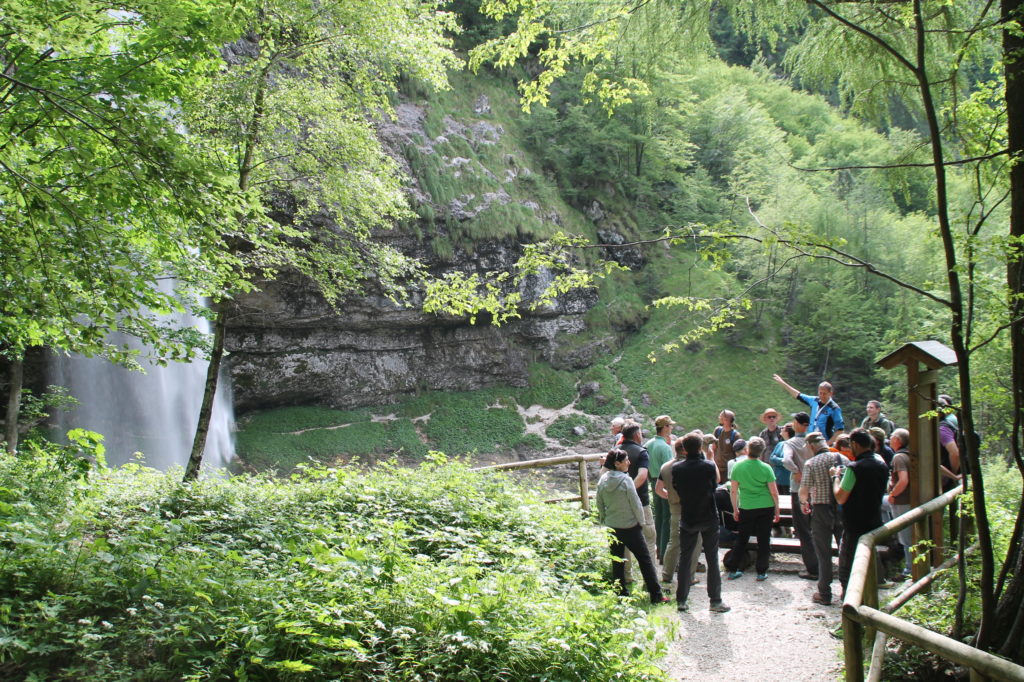
Field trip in Prealpi Giulie Nature Park (IT) 2017 – TransParcNet Meeting in the Julian Alps Transboundary Ecoregion