Get to know Sud Randos, Star Awards winner 2019
Photo: Sud Randos, ©Gregory Rohart
Congratulations! Star Awards 2019 winner “Building my Community”
“Sud Randos” is the EUROPARC Star Awards 2019 winner in the category of “Building my community“. This association of tour operators brings a unique experience for the visitors and an opportunity for developing the community in Cévennes National Park and beyond. In this category, EUROPARC has evaluated the contribution to the cultural and social fabric of the community.
Following the steps of locals
Culture and traditions are at the core of stays and experiences that Sud Randos organises. They bring visitors and tourists together in direct and intimate contact with locals businesses and workers. Therefore, farmers, artisans, craftsmen, artists, and local nature are the protagonist and objects of discovery for the tourists. By this mean, they strengthen the community and support traditional preservation practices with new incomes.
Each experience carry a relationship of fair exchange, acquaintances and true awareness.
They take care of each detail in their infrastructure, making sure that most parts of the equipment, material or food come from fair trade, local businesses, and organic production. Habitats, species and potential environmental threats are taken into account when setting itineraries, seasonality, numbers of participants and ways of transport.
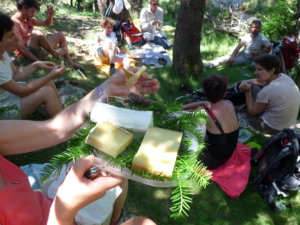
Photo: Sud Randos
Their impact on local development is also addressed by their hiring policy, giving job opportunities to students, for example.
Raising environmental awareness
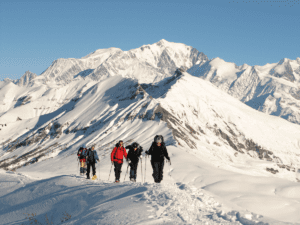
Photo: Sud Randos, ©Chantal Breuillaud
Natural heritage has been deeply rooted in their know-how for many years. Sud Randos has a strong connection with Cévennes National Park. Withing the region, they have collaborated and launched several projects entirely focused on the protection of sensitive areas. Networking and community involvement are outstanding characteristics of this organisation.
Agropastoralism, management of karst habitats, wetlands, fresh water ecosystems, forestry and Natura 2000 sites are just some examples of issues they cover. Moreover, Sud Randos support the Forest Protection Office in the management of species at local level. Recently, they set up a reception place in a sensitive area to educate visitors.
An online public voting is now running, to select one winner out of the five awarded, who will be invited to present their business at EUROPARC Conference 2020. VOTE NOW!
Get to know La calma, cultura i lleure, Star Awards winner 2019
Dessert buffet, La calma, cultura i lleure.
Congratulations! Star Awards 2019 winner “Reducing the impacts on the environment”
“La calma, cultura i lleure“, which means “The calm, culture and leisure” in Catalan, is the EUROPARC Star Awards 2019 winner in the category of “Reducing the impacts on the environment“. They manage “El Bellver” a 100% energy efficient restaurant, which is a must when visiting El Montseny Natural Park and Biosphere Reserve. In this category, EUROPARC has evaluated the efficient ways undergone to reduce energy, waste, resources consumption in order to have a lighter impact on the environment.
Supporting the environment and the community
The restaurant is located in a big “Masía“, an old traditional country house, in the heart of Montseny Natural Park, and only reachable by foot. They also offer other services to the visitors and clients, for instance, they manage an interpretative museum about traditional knowledge where educative and guiding activities are organised. As an outstanding sustainable destination, they collaborate economically or by logistics with local farmers, companies and regional projects related to nature conservation to create a network that improves the situation of the Park.
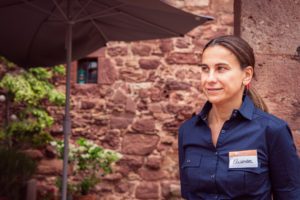
Photo: La Calma
The use of local products is the main company’s seal of identity. Around 80% of them come from the region or from Catalonia, including material used for business and management. Besides, almost half of them are ecologically produced, such as eggs, flour, dairy products, meat, fruits, and vegetables.
Furthermore, they manage their consumption carefully to avoid waste. By transporting all the products on their own, the use of unnecessary packaging is minimal. In the kitchen, the organic waste is composted of if possible, used to feed the animals. They also have a biologic depurative system for the grey waters, the process ends in a lagoon with vegetation and filtering gravel that treats the water and sends it back to the rivers.
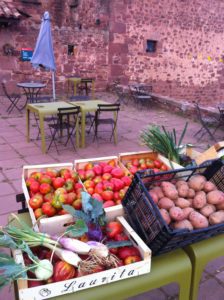
Photo: La Calma
The flavour of self-sufficiency
El Bellver count with systems and infrastructures that allows it to be 100% self-sufficient in terms of energy and water. Among those it can be found:
- Lightning and low consumption appliances
- Solar panels
- Energy Accumulation Batteries
- Movement sensors
- Inverted gasification biomass boiler with a thermal buffer tank
We don’t need to be connected to the electric service, so we don’t pay any bill
Thanks to the presence of a mine underground, a supply of water filtered by the grasslands and pastures of Montsenty mountain massive is always available. To make the most of it, they recycle the water used in the kitchen if possible for the orchard. They even use the water of the rooftop for cleaning. Other measures are:
- Water’saving measures in the bathrooms
- Informative panels for the clients
Photo: La Calma
An online public voting is now running, to select one winner out of the five awarded, who will be invited to present their business at EUROPARC Conference 2020. VOTE NOW!
Get to know Deltapolet Natura i Sabers, Star Awards winner 2019
Photo: Delta Polet
Congratulations! Star Awards 2019 winner “Contribution to conservation”
“Deltapolet Natura i Sabers“, the catalan name for “Deltapolet Nature and Knowledge”, is the EUROPARC Star Awards 2019 winner in the category of “Contribution to conservation“. Their actions and services are based on sustainability and conservation, and support enormously the Delta del Ebro Nature Park (Spain). In this category, EUROPARC has evaluated the efforts dedicated to protecting natural and cultural heritage and the ways to enhance their awareness and understanding.
Essence, Awareness, and experience. More than tourism…
…is how they define themselves. Throughout their activities such as guided tours, educative activities and even an ecocultural safari, they create a different experience for the visitors that want to live the essence and roots of the Ebro Delta. They aim to make everyone love their park as much as they do.
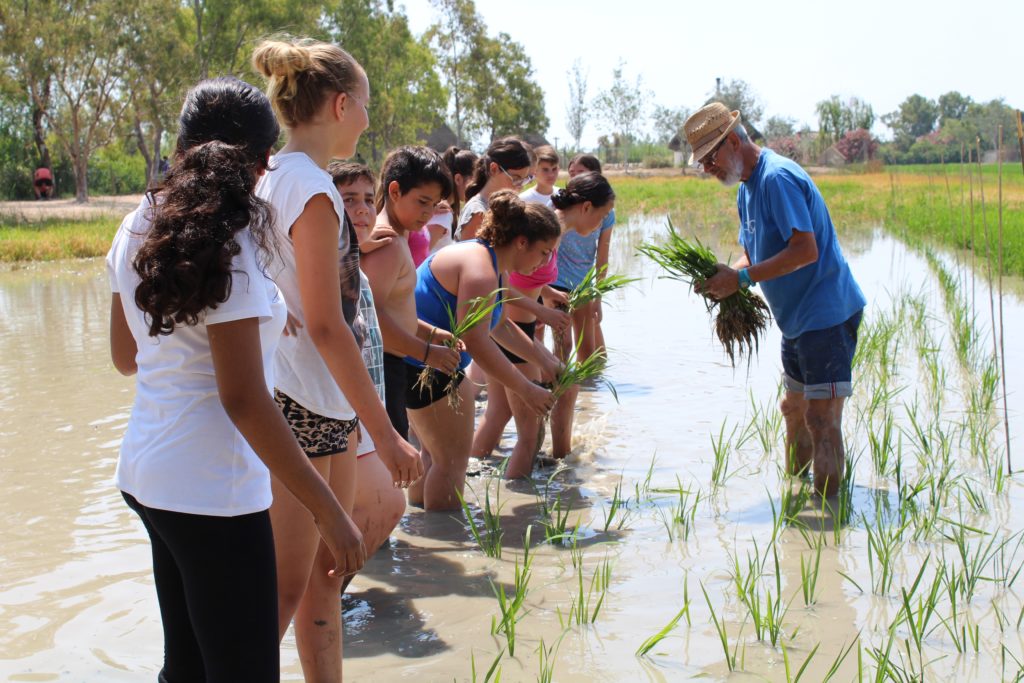
Photo: Delta Polet
Delta Polet’s values and communicating actions are strongly based on the recovery of the traditional knowledge of the Delta. The manual rice cultivation, traditional fishing and the work and handcraft of vegetal fibers are the core of the knowledge they want to spread and maintain as a vehicle to guarantee the sustainability of food outside of oil industry and the preservation of the fauna and flora of the Park.
Tourism is art, passion, imagination, culture and hospitality.
At the end of the activities, each visitor becomes a new ambassador of sustainable tourism and is awarded with an ecotourism certificate. Making society understand the threats of massive tourism and the importance of the transition to sustainable tourism contributes to the well-fare of both nature and Parks. By this mean, the visitors compromise themselves to prioritise sustainable destinations in the future. These values are well remarked in each one of the services provided, as they respect the environment by avoiding visits to fragile and threatened areas of the park and measuring and respecting the charge capacity.
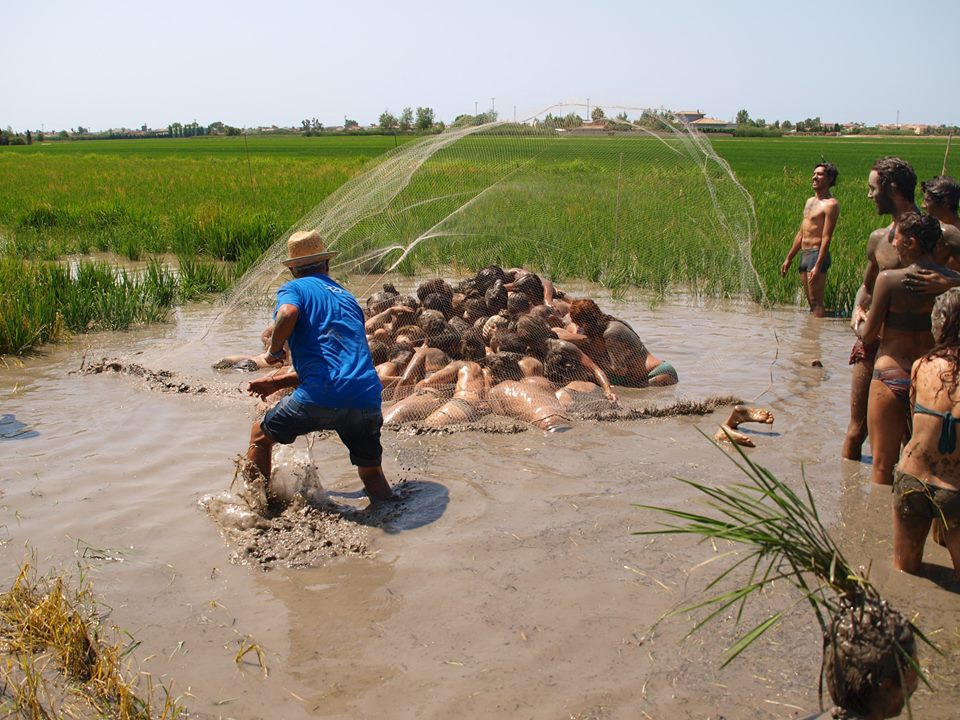
“Tirant to rall a l’Arrossar” – Photo: Delta Polet
Furthermore, they collaborate with the Park and other NGOs in conservation activities both directly in the field and also through publications and social media. Since 2005, they support and are part of the European Charter of Sustainable Tourism.
More than 30 years of history
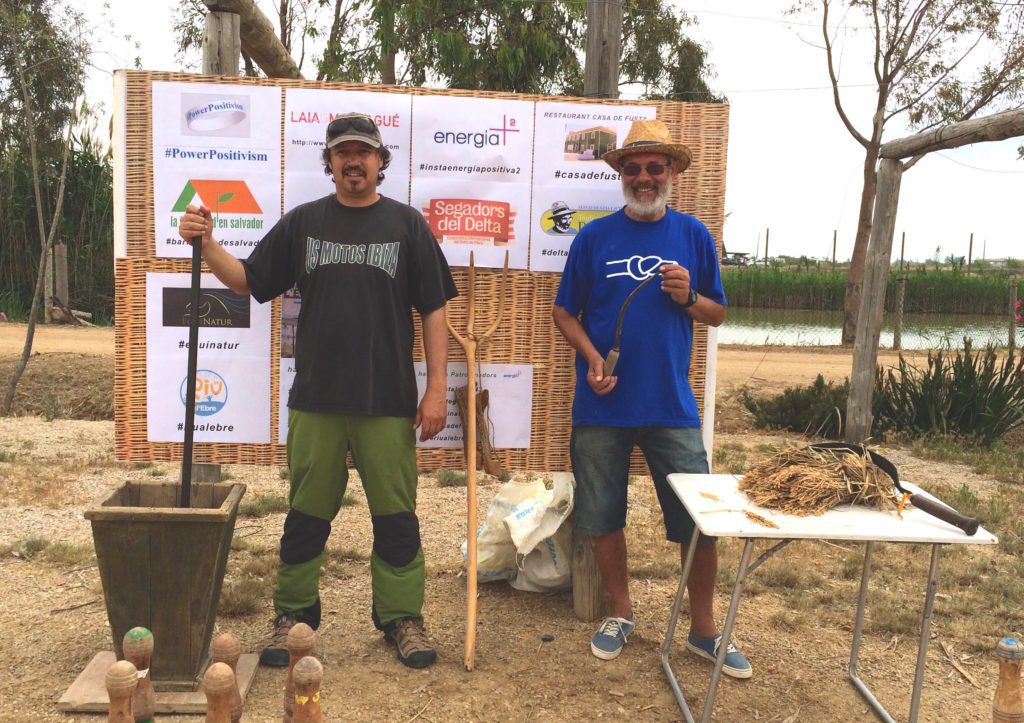
Photo: Delta Polet
Deltapolet follows the philosophy of Polet, the owners’s father, who lived in the period when all Ebro Delta’s traditional practices started to disappear as machines were taking over the work. He decided to maintain the knowledge of his ancestors and to be able to get resources without using machines or chemical products.
In 1983, Polet fought to create the Ebro Delta Natural Park and avoid the creation of a vacacional resort. Nowadays, Deltapolet follows the tenacity of their father to share the cultural heritage with the world to save one of the most biodiverse places on the Mediterranean Spanish coast.
Thanks to their work, they became a reference for sustainable tourism and preside and participate in several associations of stakeholders in the region and Spain.
An online public voting is now running, to select one winner out of the five awarded, who will be invited to present their business at EUROPARC Conference 2020. VOTE NOW!

Restoring semi-natural grassland with landowners and farmers: a case study from Estonia
Alvar -LIFE to alvars project Website
Alvars are a semi-natural grassland, very limited in their global distribution. One third of them are in Estonia. LIFE to Alvars cooperates with landowners and farmers in order to maintain the second richest ecosystem of the country. As a recognition of the hard work, the project received a Natura 2000 Award in the category “Socio-economic benefits” in 2018.
The decline of pastures, decline of biodiversity
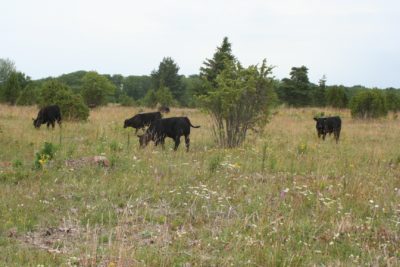
Alvar grasslands are semi-natural grasslands with thin lime-rich soil on limestone bedrock. The number of vascular plants is the richest in species in Estonia after wooded meadows.
Within the European Union, alvars are only found in Sweden and Estonia, with minor areas in south-west Finland. The decrease of alvar grassland habitat area started in the 1950s when the traditional extensive agricultural activities were widely replaced by intensive land-use. In 2013 less than 30% of the Estonian Alvar surface (around 2000 ha) were under annual management, which is necessary for the long-term persistence of this habitat type.
Read also these two studies about grassland management in protected areas in post-communist countries and about the management of wet-grasslands.
The emergence and survival of these semi-natural communities, or heritage communities, is closely linked to traditional activities. Pastoralism is the main human activity that allows these enormously biodiverse grasses to persist.
Decline in grazing has led Alvars to overgrow with shrubs (mainly Juniperus communis) and trees (mostly Pinus sylvestris). The abandonment and afforestation are a threat to its integrity.
Why should we protect them?
Alvar
- Exceptional biodiversity as compared with intensively managed pasture, providing habitat for wildlife.
- Valuable carbon store, especially without reseeding and fertilizers.
- Responsible for major part of the environmental public goods of European farming.
- Other ecosystem services such as preventing erosion and nutrient migration and filtering water.
From the Iberian dehesas to the Nordic wooded meadows, they’ve been actively farmed for centuries, being an integral part of the forage system.
The Actions: Forestry and community involvement
Carried by the Estonian Environmental Board, the five years-project (which ended in September 2019) has worked out and successfully used a completely novel approach to alvar restoration. It has also contributed to the Estonian Nature Conservation Development Plan 2020.
The following actions were taken within the project:
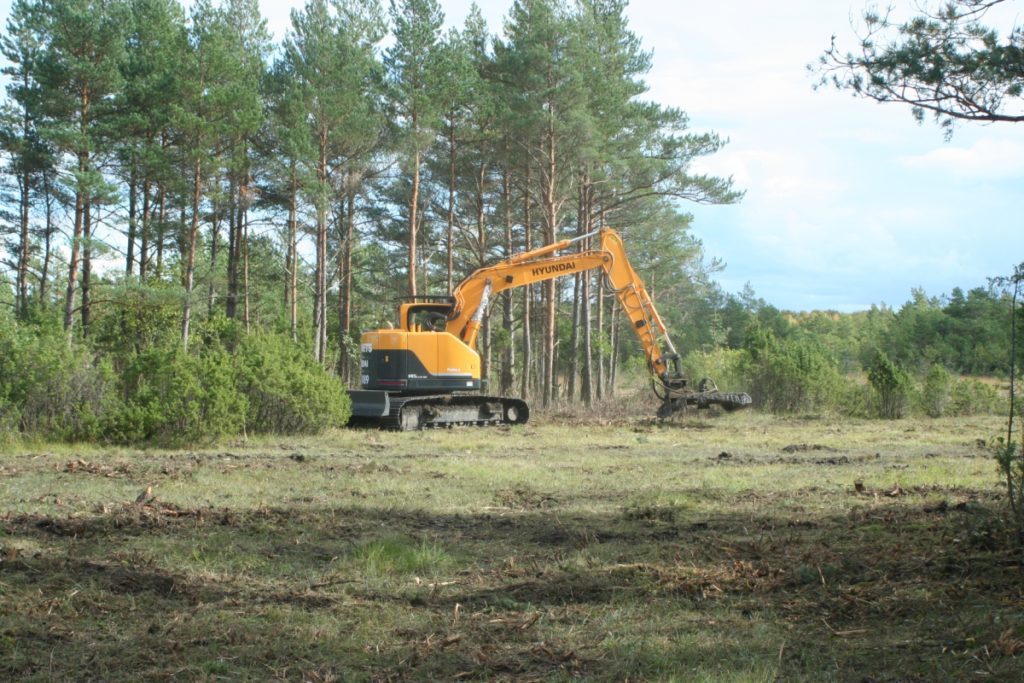
- Removing trees and shrubs with common forestry and communal machinery.
Chain crusher – LIFE to alvars project Website
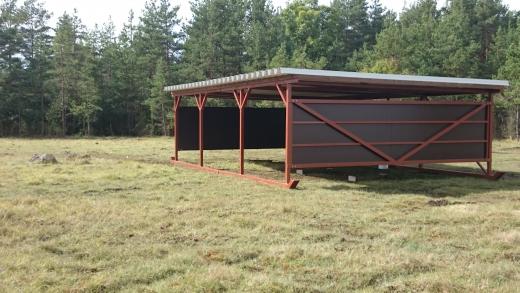
- Providing equipment, so that each restored area is equipped with grazing infrastructures such as shelters and access to water and roads to ensure continuous management.
- Partnership contracts were signed with land-owners, farmers and the project.
- Dissemination actions
- Annual public meetings, working groups, and study trips were held.
- Promotion of the project with information boards, leaflets, exhibitions and media work.
Animal shelter – LIFE to alvars project Website
Results:
LIFE to alvars project Website
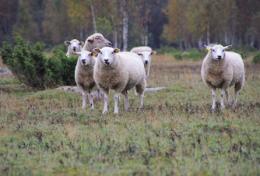
- Altogether, 2500 hectares of most valuable alvar grasslands were restored and the areas have joined the CAP semi-natural grassland management scheme.
- All the restored areas are equipped with grazing infrastructure for their subsequent management by local farmers.
- 600 landowners and 41 local farmers and farming companies were involved in the restoration activities
- Restoration has resulted in a significant increase in plant species richness, particularly in former afforested and shrub-covered areas.
It is all about people. The opinion of the general public and people involved in the project is a key element in gaining success in large scale restoration on private land.
“The community involvement is fundamental when working in private land. A lot of effort has been put into communication and convincing. Finding trustworthy local farmers interested in management and making agreements for continuous management is the second most important key element in maintaining the restoration result long term,” said Ms Annely Holm, from the Estonian Environmental Board and Project Manager of LIFE to Alvars.
LIFE to alvars project was financed by the European Commission LIFE + Nature programme in 2014. Project identification code is LIFE13NAT/EE/000082. The project is co-financed by the Estonian Environmental Investment Centre and by the partners’ self-financing. Project budget is 3 725 865 euros. Lead partner is the Estonian Environmental Board and partners are the University of Tartu, Estonian University of Life Sciences and Seminatural Communities Conservation Association.