Junior Ranger Case Studies: Kullaberg Nature Reserve
Excursion to explore life on the beach.
To provide guidance and information on how to run the Junior Ranger programme, EUROPARC started to gather case studies describing how the programme is structured and managed in different parks.
These case studies, in form of short interviews, are mainly intended to provide inspiration and ideas to Protected Areas willing to start the programme.
About Junior Ranger Kullaberg
Kullaberg Nature Reserve started the Junior Ranger Programme in 2012 and in 2014 the local scout group was asked to join it. In the first years, the programme consisted mainly of scouts doing volunteer work during the summer, helping the park management and at the visitor centre.
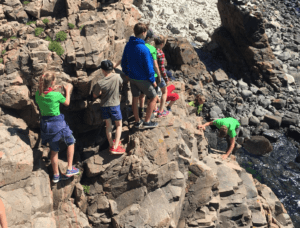
Exploring the cliffs and caves of Kullaberg.
The good thing about cooperating with the scouts is that we reach many young people. The hard part is distinguishing the Junior Ranger work from the ordinary scout activities. “When am I a Junior Ranger and when am I a scout?”
How are your activities organised?
In the last two years Kullaberg Junior Rangers have organised Junior Ranger weeks in the summer – five day-camps led by a mentor and focusing only on the EUROPARC Junior Ranger programme to distinguish it from the scout activities. Every week included parts of learning about nature and the PA, doing practical work and nature conservation and of course having fun.
Our activities include work in the nature reserve, nature conservation, beach cleaning events as well as bird watching, bat excursions and workshops.
Over the rest of the year Junior Ranger activities take place more or less every month. Some are included in the scout program, while some are not. These activities include work in the nature reserve, nature conservation, beach cleaning events as well as bird watching, bat excursions and workshops. There is also a weekend Junior Ranger camp in the nature reserve.
How do you recruit young people? How many Rangers/Mentors are involved and how many Junior Rangers?
We have recently started working on opening up the group so that more can join. As well as not all scouts are interested in being Junior Rangers, of course there are also young people who would like to be a Junior Ranger without being a scout. Contacts have been made with a network of nature science teachers in the area to promote the programme in their schools.
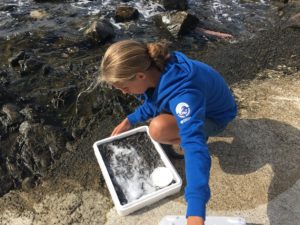
Kullaberg Junior Rangers releasing glass eel in the marine nature reserve.
We will also use social media to attract more young people with the goal of having 20 junior rangers and 20 volunteer rangers. We are aiming to start a Youth+ programme next fall. All this will require more rangers/mentors involved than there is today.
What are the main results and benefits for young people and for the Protected Area?
The participation in the Junior Ranger programme provides knowledge about the PA, extends the young people’s network and gives them new skills in presentation and much more. The exchange camps have been arranged to provide the young people with a wider network and enhance their feeling of engagement and understanding of EUROPARC on a broader perspective.
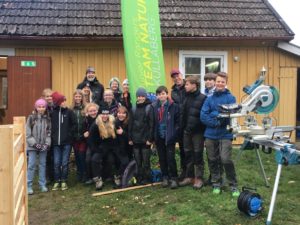
Preparations to build a shed for firewood at a popular campsite where the Kullaberg Junior Ranger team previously has built a fireplace and removing old insecure fireplaces.
What are the main costs and how do you finance them?
The main costs are connected to providing the Junior Ranger groups with the mentor for the summer day-camps as the mentor is not employed by the park. We strongly believe that it is necessary to have the mentor at all times during the camps to provide a necessary continuity for the young people.
There are also some costs connected to arranging exchange camps. Due to lack of funding we do not have as much equipment (bat detectors, binoculars etc.) as we would like to but we are trying to get money from different foundations that may be prepared to support the Junior Ranger work.
Do you also want to share your experience with running the Junior Ranger Programme in your park? We will be happy to spread your ideas around – just drop us a mail: f.minozzi@europarc.org
Junior Ranger Case Studies: The Bavarian Forest National Park
To provide guidance and information on how to run the Junior Ranger programme, EUROPARC started to gather case studies describing how the programme is structured and managed in different parks.
These case studies, in form of short interviews, are mainly intended to provide inspiration and ideas to Protected Areas willing to start the programme.
About Junior Ranger Bavarian Forest
Our Junior Ranger (JR) program starts at the age of 11 at the end of the 5th class. Kids can accompany a ranger during Pentecost or Summer Holidays for 4 days, it usually runs from Monday till Thursday. The groups are of 7 kids max, accompanied by a ranger and a Volunteer ranger. They don’t stay over night – kids are brought by their parents in the morning and picked up in the afternoon.
They usually visit one of our information centres, the animal enclosures, go for hikes and get to know their Protected Area. The parents pay 10 € contribution for expenses. The kids get a JR cap, a button and our updated JR booklet.
As our Junior Rangers get older and know more about the park, they take over more responsibility and become Volunteer Rangers.
After they finish these 4 days, there is a closing ceremony where they get a certificate showing that they are now real Junior Rangers, which is also included in the 10 €. If they want, they can join our association (annual membership is 12 € per person). If they do so, they get invitations for monthly meetings with a ranger. We usually have two groups as the park is very large and it would take a lot of time for parents if they only meet in one point. Only sometimes we do activities for the whole group.
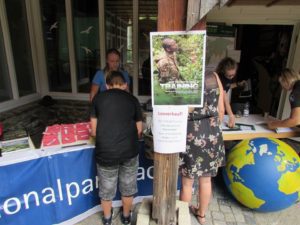
They go hiking both in summer and winter, build nesting boxes, learn about endangered species living in the park and so on… As they get older and know more about the park, they take over more responsibility and at the age of about 16, we call them Volunteer Rangers. At that age, they help rangers with ranger tasks (at information stands, patrols, informing visitors, with the JR program etc.).
How do you recruit young people? How many Rangers/Mentors are involved and how many Junior Rangers?
In spring, our rangers visit the schools in the Park vicinity and invite all kids in 5th class to join us for the 4 days. They get a leaflet with all the necessary information and a form they can fill out and send back to us to register for the 4 days (we limited the number of participants to 120 kids a year).
For the basic program, there are about 10 rangers taking over a group of Junior Rangers. During the year, we have a group of 5 constant rangers running the activities with alternating rangers assisting in some activities. The number of Junior Rangers participating varies – sometimes there are only 5, other times there are 20.
How are your activities organised?
Both local groups meet about once a month (sometimes it’s less during summer due to the basic program).
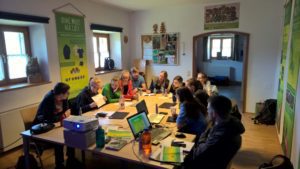
Sometimes it‘s only an afternoon, other times it‘s a whole day. The constant rangers usually talk about the activity they prepare and set up a plan (what’s the topic of the activity, which material do we need, what would we like to teach the kids etc.). Rangers help each other and give tips to make every activity a success.
What are the main results and benefits for young people and for the Protected Area?
Better acceptance of the park in the area, the park gets highly motivated and well-trained volunteers who are assisting in different fields (research, ranger services etc.).
Concerning benefits for the young people, they’re outside which is good for their health, they are more confident, well trained, gather experience which might be helpful in their later life, decision support in their later field of study or choice of work and future workplace.
With the JR Programme, the park gets highly motivated and well-trained volunteers who can assist in different fields.
What are the main costs and how do you finance them?
I think we might be a special case as we have set up a registered association in Germany. This means, we are independent from the park in terms of money. We finance ourselves through membership fees, donations and sale of merchandise. I think our biggest expense factor are the journeys to national / international camps. We try to offer it to our Junior Rangers at no cost but sometimes the parents need to pay a small amount. We also have a website for the association that is financed by us.
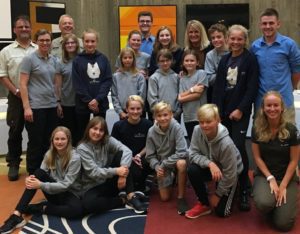
Is there any other information that you think would be useful to share?
You can download a PDF with a presentation about our JR programme. If you need any more information, feel free to contact me at any time: kris.biebl@web.de.
Do you also want to share your experience with running the Junior Ranger Programme in your park? We will be happy to spread your ideas around – just drop us a mail: f.minozzi@europarc.org
Junior Ranger Case Studies: Alpi Marittime
To provide guidance and information on how to run the Junior Ranger programme, EUROPARC started to gather case studies describing how the programme is structured and managed in different parks. These case studies, in form of short interviews, are mainly intended to provide inspiration and ideas to Protected Areas willing to start the programme.
About Junior Ranger Alpi Marittime
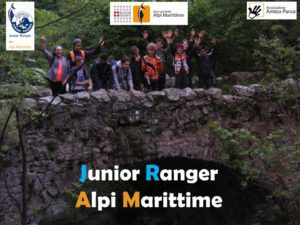
Junior Ranger Alpi-Marittime (JRAM) is a project running in the Alpi Marittime Natural Park since 2011 – in Valle Gesso, although we did a prologue in 2005 by participating in the International Junior Ranger Camp in the Gesause national Park. Since 2016, after our Protected Area merged with the Marguareis Park, we have extended the program to the young people of the Pesio valley.
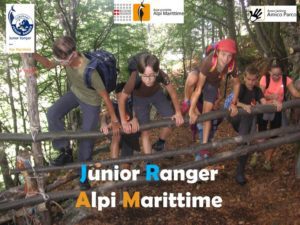
Activities take place with the aim of “learning by doing”. The experiences are carried out as extra-curricular activities, but taking into account the didactic indications of the teachers, so that effective and fruitful synergies are established between Schools and the Park.
How do you recruit young people? How many Rangers/Mentors are involved and how many Junior Rangers?
Every year, at the beginning of spring, an activity program is proposed which lasts until late autumn. For each participant who signs up, a contribution of € 20 per year is required for their enrollment in the “Amico Parco” which is a Volunteer Association that works in synergy with the Park Authority. The current president of Amico Parco is Patrizia Rossi, who was formerly president of EUROPARC. The subscription to Amico Parco allows us to give everyone a Liability insurance.
We have boys and girls who started at the age of 11, now they are 18 and are proud to be Junior Rangers.
Some numbers: in 2011 we had 12 participants, in 2012: 20, 2013: 27, 2014: 16, 2015: 18, 2016: 26, 2017: 35, 2018: 46, 2019: 46.
Actually, many Junior Rangers (JR) continue to follow us over time, we have boys and girls who started at age 11 and now have 18 who are proud to be JRs.
How are your activities organised?
Generally we distribute the activities across 12-14 meetings over the year. This year for example we have introduced the “mountain safety” theme, which is being integrated in all the outdoor activities we are running (snowy environments, first aid, emergency management, etc.). We also carry out volunteer activities, such as cleaning paths, garbage collection, questionnaires to raise awareness about the wolf or the ibex, presence and representation in the occasion of Park events.
We have created a special JRAM card. With that JRs receive special gadgets and rewards when they have reached a certain step: JRAM brown shirt, notebook and pen, JRAM cap, backpack; knife-compass set, torch. At the last step they return the brown t-shirt and receive the blue JRAM t-shirt, which sets the end of their JR path.
Among the most significant activities we have organised:
- In 2012 and 2015 we participated in the international release of the Bearded Vulture, one of which has the name “Junior Ranger”.
- In 2012, with the support of the Municipality of Valdieri, we produced a video on waste management, to raise citizens’ awareness on waste recycling.
- Since 2016 we have participated in the event “Youth at the Top”: two days in the mountains, with an overnight stay and excursions (Project coordinated by Alparc with the contribution of the German Ministry for the Environment).
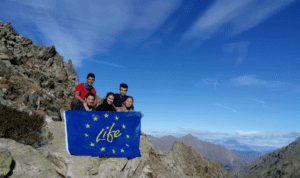
- In 2017 we worked on the natural return of the wolf in the Alps, with actions related to the LIFE Wolfalps project, and we stayed 3 days in Lessinia, a territory hostile to wolves from the socio-political point of view, meeting a delegation of local farmers and making visits to the pastures.
What are the main achievements and benefits for young people and for the Protected Area?
First of all, by participating in the EUROPARC Junior Ranger program, young people from the Maritime Alps become part of a great network of boys and girls living in the territories of European natural parks.
The participation in the JRAM promotes cooperative exchanges and experiences, with a social consideration and proactive intent, encouraging young people to behave responsibly towards their environment and cultural heritage.
Participating in the EUROPARC Junior Ranger program, young people from the Maritime Alps become part of a great network.
There is a strong impact on families and consequently an excellent perception of the educational role and mission of the park on the territory. This is well seen by our leaders and the political bodies of the Park, therefore as mentors we feel we are bearers of a great responsibility.
A better knowledge of one’s own territory and of major projects is promoted by the Park Authority.
What are the main costs and how do you finance them?
The Park Authority allocates 2,000 euros a year to the Junior Ranger program and provides staff, two teaching service employees and four park wardens. With the registration fees at Amico Parco we can manage any activity costs. We try to include in the JRAM program actions related to Alcotra or Life projects that have funds for educational activities. We participate in calls for tenders or financed events.
Any other information that you think would be useful to share?
At the beginning of the season we hold a presentation meeting with parents and young potential JRAM participants. We have created a Watshapp Group for fast communications with families. For general information we use e-mail sending the information about two weeks before the event to get the number of participants and manage the activities in the best way. We work hard!
Do you also want to share your experience with running the Junior Ranger Programme in your park? We will be happy to spread your ideas around – just drop us a mail: f.minozzi@europarc.org
3 Blended-learning courses: Call for applications – Life eNatura2000
The LIFEedu project offers an exciting new opportunity to build professional capacities to protect Europe’s most precious nature. The call for applications was launched at the EUROPARC Conference 2019 in Latvia. There will be 3 blended-learning courses that you can choose from… Don’t miss the opportunity and apply before 30th October!
Supporting e-learning and capacity building for Natura 2000 managers
On 24 September at the 2019 EUROPARC Conference in Latvia, the call for applications for the “LIFE e-Natura 2000.edu” project, “LIFEedu” for short, was launched. Applications are invited from individuals with responsibilities for Natura 2000 management. A total of 60 applicants will be selected to form the project’s core cohort of participants. In addition, the project will create wider opportunities for more than 500 participants who can join in the project’s online learning events.
In 2020, LIFEedu will run three courses developed to advance the specific skills, knowledge and attitudes required by Natura 2000 managers and protected area professionals.
Applicants will be selected by the end of 2019. In 2020, LIFEedu will run three courses developed to advance the specific skills, knowledge and attitudes required by Natura 2000 managers and protected area professionals.
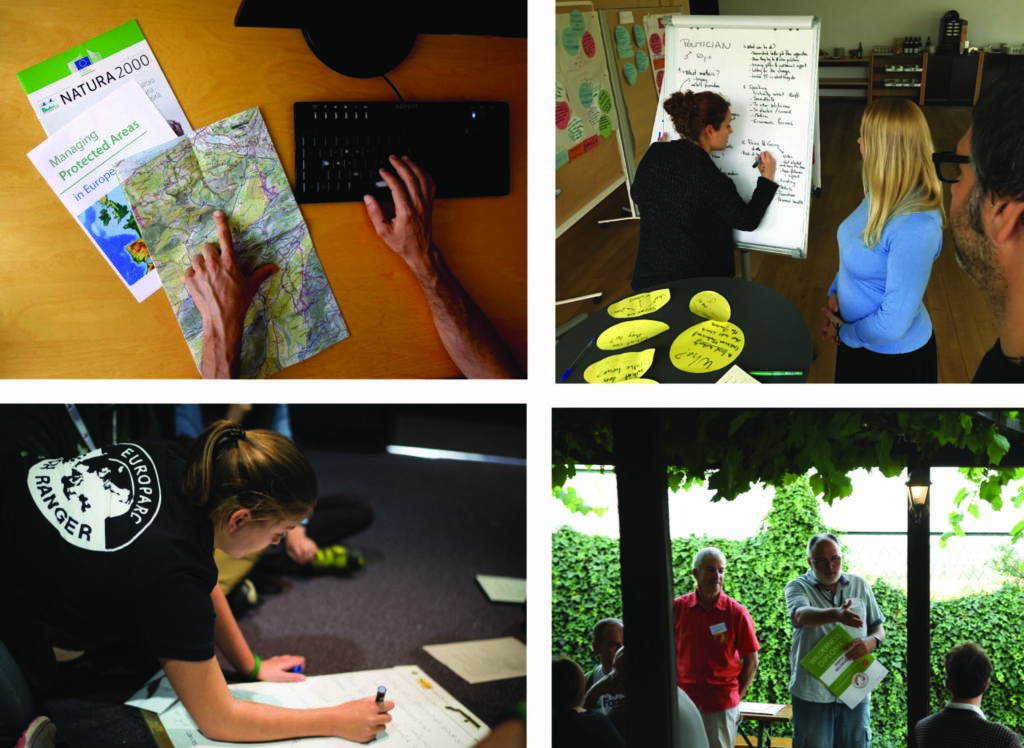
Project participants will work together in a mix of face-to-face workshops and a summer school, and use a range of online and digital tools, such as webinars, demonstration videos and a new smartphone app to support networking.
Blended-learning courses: Call for applications
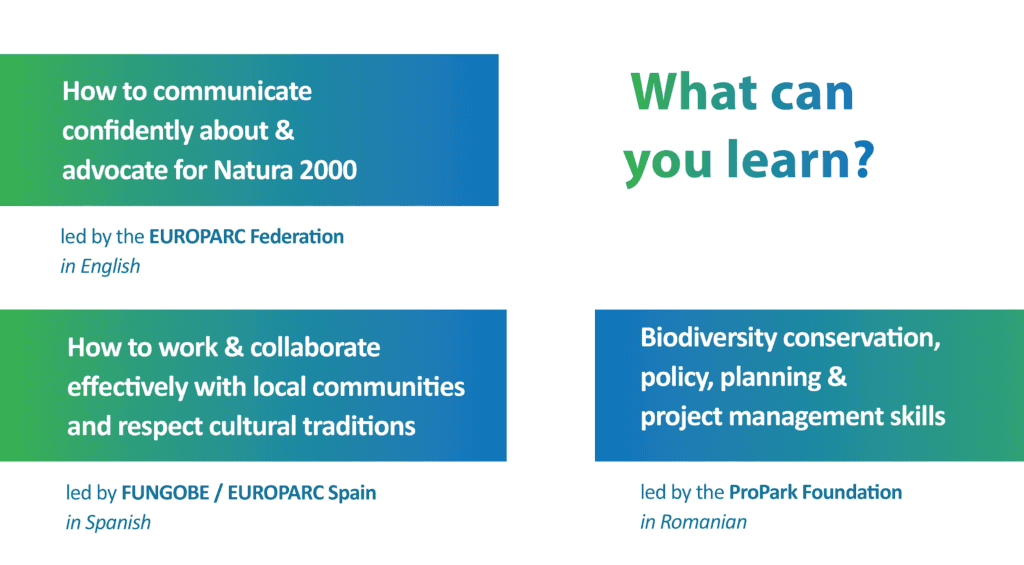
Organised in three groups of 20 people, applicants can apply for the courses to be delivered in three languages led by EUROPARC’s project partners. The course in Romanian covers biodiversity conservation, policy and planning and project management skills, and is led by the ProPark Foundation. The course in Spanish is led by FUNGOBE/ EUROPARC Spain and addresses how to work and collaborate effectively with local communities and respect cultural traditions. The EUROPARC Federation course will be delivered in English for 20 people from across the Europe: it focuses on competent inclusive communication for Natura 2000. Applications are open until the 30th October.
Registration for the Courses in English, Romanian or Spanish:
http://bit.ly/life-edu-english
http://bit.ly/life-edu-romanian
http://bit.ly/life-edu-spanish
Natura 2000 managers need to be expert communicators. They need to be able to work effectively together with people so that nature’s priorities become people’s priorities.
Check the online brochure to learn all about the LIFE e-Natura2000.edu project!
Download the brochure!
Neil McIntosh, LIFEedu’s Project Manager said, “LIFEedu is an innovative three-year project which enables peers to connect and learn about what Natura 2000 managers need to know and be able to do to improve their management practices.”
Core competencies include being able to establish inclusive participatory processes, which respect cultural traditions and economic interests.
The project is led by EUROPARC Federation together with five partners, ProPark Foundation for Protected Areas, Fundación interuniversitaria Fernando González Bernáldez para los espacios naturales (FUNGOBE), University of Padova, Dept Land, Environment, Agriculture and Forestry (TESAF), The European Landowners Organization and Kullaberg Nature Reserve, Sweden. All project partners work extensively with Natura 2000 and Protected Area managers, including private landowners, site managers, field staff, rangers, local communities, public administrations, environmental agencies and non-governmental organisations.
More information about the LIFE Programme can be found on the European Commission’s website.